The release of Grand Theft Auto 6 (GTA 6) has officially recalibrated the benchmarks for success in the interactive entertainment industry. One week following its highly anticipated launch, Rockstar Games’ latest magnum opus has generated an unprecedented $3.79 billion in single-day sales, a figure that dwarfs the opening weekends of even the highest-grossing Hollywood blockbusters. Beyond the raw financial metrics, the title has fundamentally altered the landscape of digital content creation, effectively pivoting the focus of major livestreaming platforms back toward long-form gaming engagement.
The road to this historic launch was marked by years of anticipation, multiple strategic delays, and a marketing campaign that relied more on organic community fervor than traditional promotional spend. Initially slated for a November 2025 release, the title underwent two separate delays, heightening the tension among a massive global player base. This anticipation culminated in an August reveal that drew nearly 4 million concurrent viewers, setting a precedent for the massive digital footprint the game would eventually command upon its arrival.
A Chronology of Unprecedented Engagement
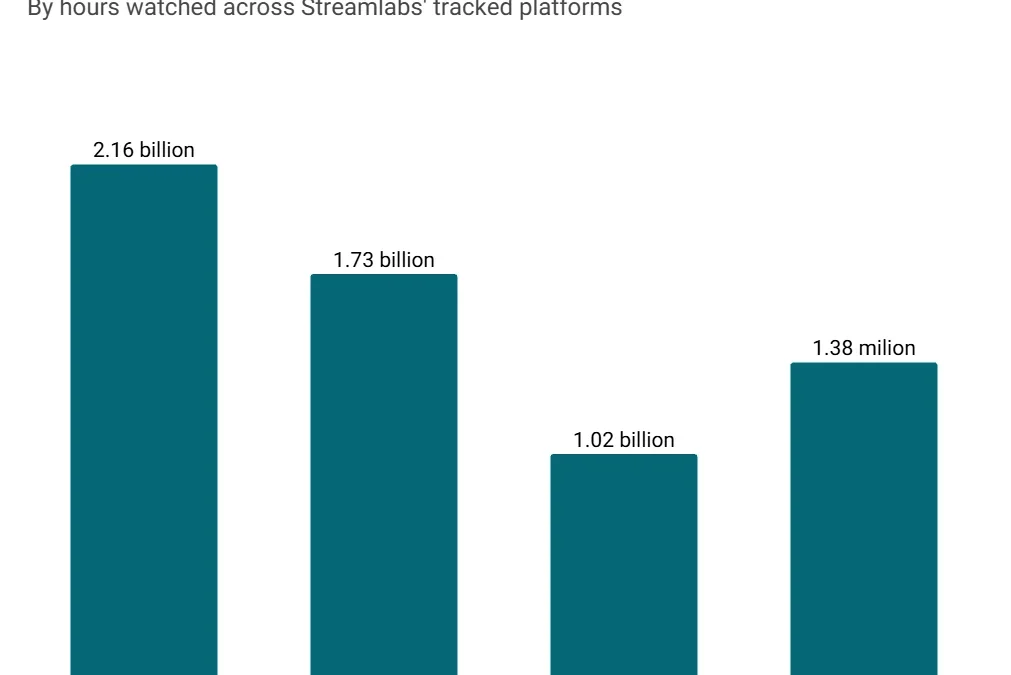
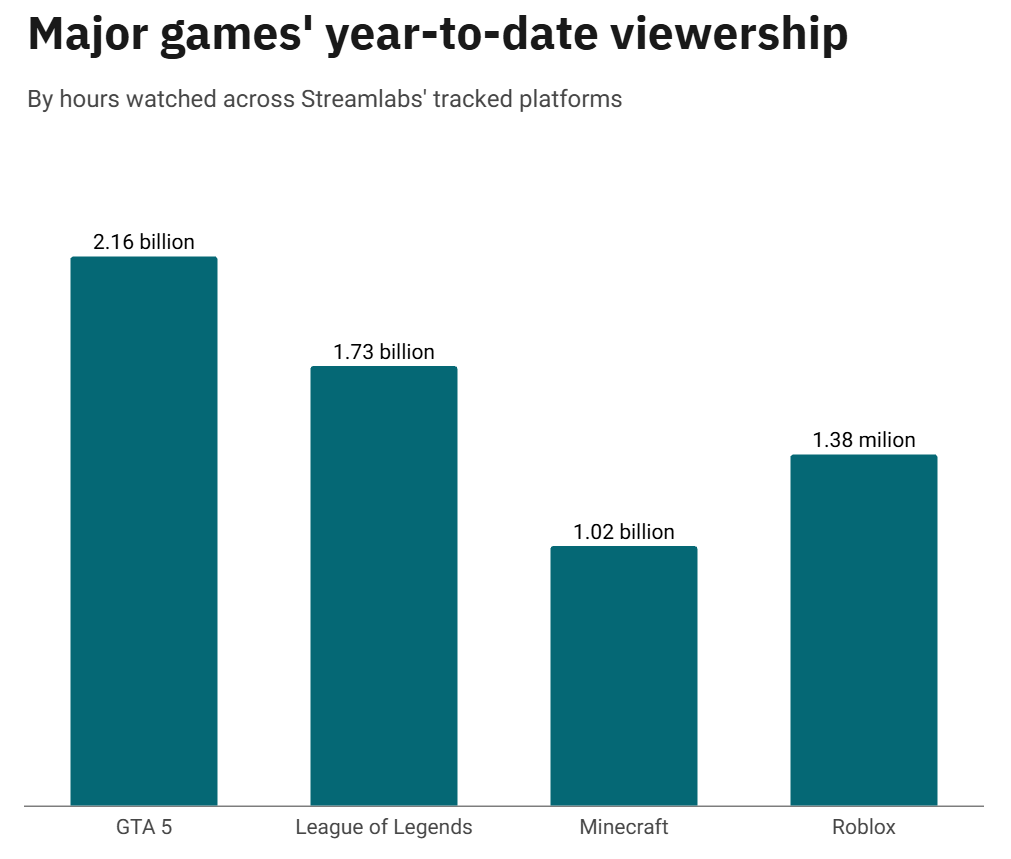
The trajectory of GTA 6 in the digital space began long before the first player successfully navigated the game’s open world. In the months leading up to the November 18, 2026, release, analytics firm Streamlabs observed a significant uptick in content related to the franchise, with GTA 5—a title that debuted in 2013—maintaining viewership numbers that consistently outperformed more contemporary AAA titles. This sustained interest served as a foundational runway for the sequel’s eventual launch.
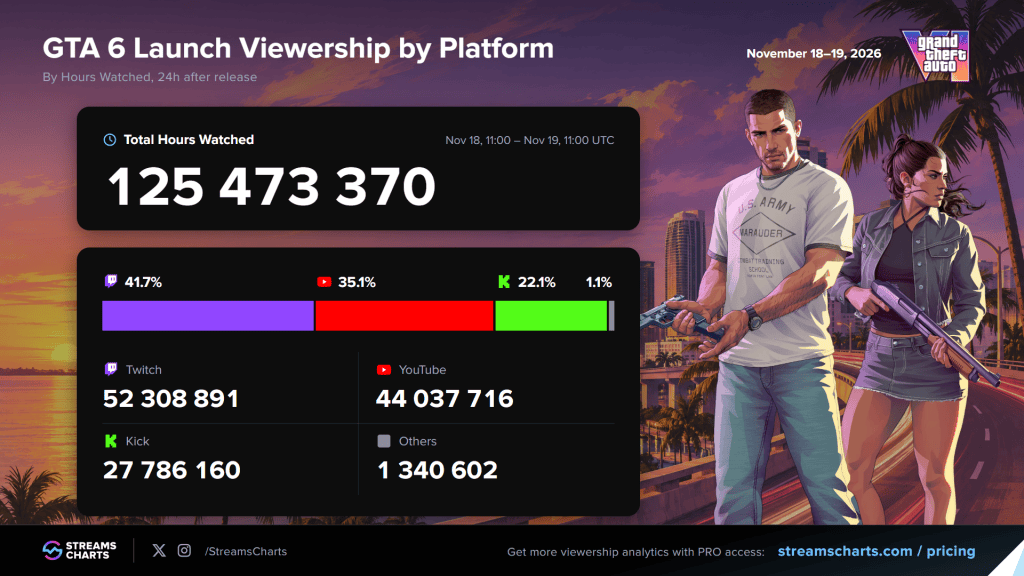
The launch window itself acted as a stress test for global streaming infrastructure. Between November 18 and November 19, the title generated over 125 million hours of watch time. Data from Streams Charts indicates that in just two days, GTA 6 easily surpassed the previous one-week watch time records held by competitors like Valorant. By the end of its first week, the game had accumulated 420 million hours of viewership across all major platforms, with a peak concurrent viewership of 7.91 million.
Platform Dynamics and the Battle for Viewers
The competitive landscape between Twitch and YouTube was intensified by the launch. While YouTube recorded an impressive 3.5 billion global views for videos containing "GTA 6" in the title on release day, Twitch ultimately secured the lead in livestreaming watch hours. This success for Twitch was bolstered by strategic initiatives, including the platform’s decision to offer in-game copy giveaways and the integration of custom emotes, badges, and platform-wide interactive elements tailored specifically for the game’s aesthetic.
Kick, the rising challenger in the streaming space, also secured a significant portion of the audience, capturing 22.1% of the livestreaming market share during the initial 24-hour launch window. This three-way competition highlights a broader trend: the consolidation of the gaming audience around "tentpole" releases that command attention across all demographics. Sensor Tower reported that mobile app downloads and daily active users for major streaming platforms spiked by over 80% during the initial launch period, underscoring how deeply GTA 6 permeated the digital habits of the general population.
The Rise of the Professional GTA Creator
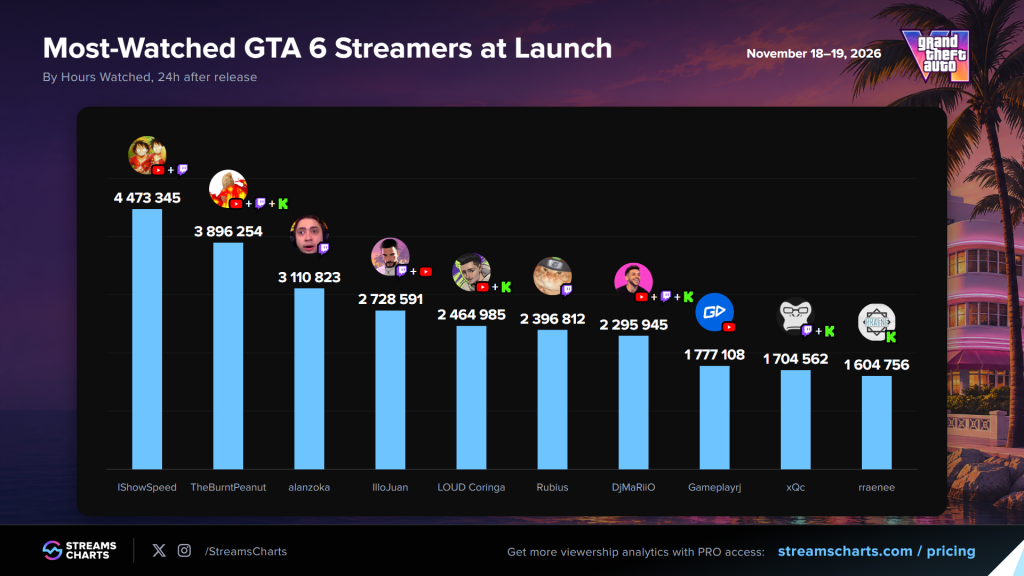
The success of the launch was not merely a matter of developer marketing, but the result of a meticulously prepared creator economy. Established personalities such as Andre "Typical Gamer" Rebelo, who commands a following of 16.3 million on YouTube, had been curating their content strategies for over a year. Industry analysts note that these creators utilized a dual-pronged approach: live, interactive gameplay sessions for immediate audience engagement, and polished, pre-recorded Video-on-Demand (VOD) content designed to provide guides, lore, and "Easter egg" hunts for viewers who were too busy playing the game themselves to watch live streams.
This preparation paid dividends in record-breaking fashion. Streams Charts reports that 1,056 individual channels reached new all-time peak viewership records during the first week of GTA 6 coverage. For nearly 20% of these creators, the launch of the game resulted in a tenfold increase in their typical concurrent viewer counts. This shift suggests that for the creator economy, GTA 6 acted as a "rising tide" that elevated established and mid-tier streamers alike.
Gaming as the New Cultural Anchor
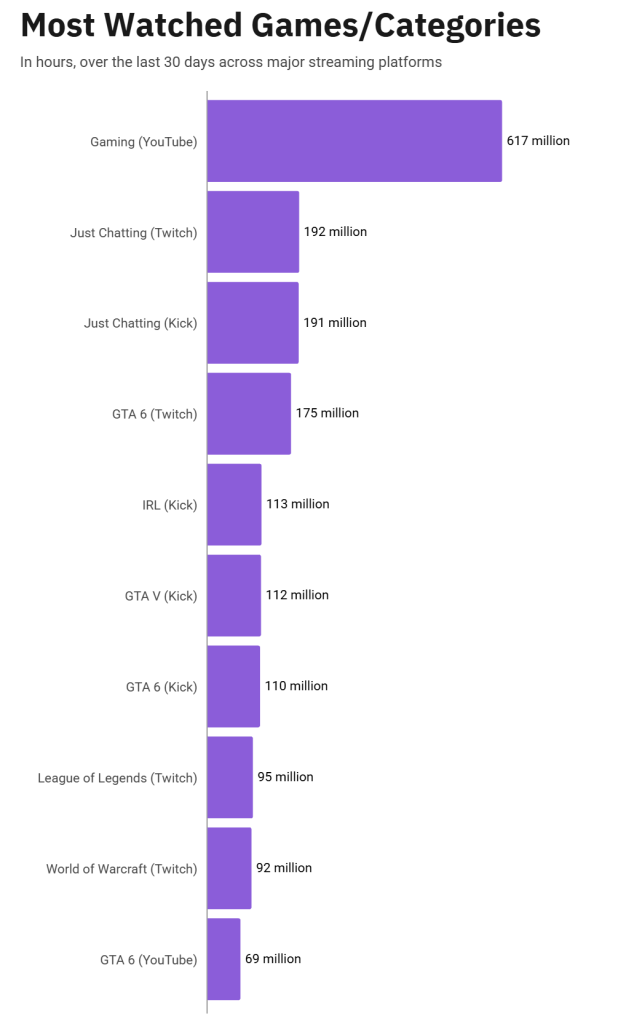
Perhaps the most significant long-term implication of the GTA 6 launch is the reversal of a trend toward "Just Chatting" and non-gaming content on platforms like Twitch. Throughout the first half of 2026, general conversation and lifestyle content had overtaken dedicated gaming streams in terms of total watch time. The massive influx of GTA 6 content has effectively reset this hierarchy.
Gaming, as a category, has returned to the top of the viewership charts on YouTube and sits comfortably in the top tier on Twitch. Even the predecessor, GTA 5, has seen a resurgence in its category ranking, proving that the release of a high-quality, long-tail title can revitalize interest in an entire franchise and the gaming category at large. This shift implies that advertisers and brands looking to capture the attention of digital-native audiences must recalibrate their strategies to prioritize deep, gaming-centric integrations rather than superficial product placement.
The Organic Nature of the Hype
A critical analysis of the marketing data provided by the influencer marketing agency Linqia reveals a startling reality: the hype surrounding GTA 6 was almost entirely organic. Of all the creators posting content related to the game between April 1 and November 18, 2026, 97.8% were doing so without any form of sponsorship from Rockstar Games.
This statistic stands in stark contrast to the standard operating procedure for most modern game launches, which often rely on massive influencer marketing budgets to manufacture social media trends. When sponsored content did occur, it was largely disconnected from the gaming industry, with brands like the prediction market Kalshi attempting to capitalize on the buzz. Furthermore, Linqia’s data suggests that sponsored posts explicitly mentioning the game performed 3% worse than the average sponsored content from the same creators, suggesting that audiences are highly sensitive to "forced" marketing when they are already deeply invested in the organic narrative of a release.
Keith Bendes, chief strategy officer at Linqia, characterized this as a "big missed opportunity" for brands. By failing to integrate their messaging into the authentic, community-driven discourse surrounding the game, many non-gaming brands missed the chance to participate in the most significant cultural event of the year.
Socio-Cultural Responses and Future Implications
The discourse surrounding the game was not limited to gameplay mechanics. Online communities saw a split in sentiment, with some of the conversation driven by reactionary responses to the game’s narrative choices, specifically those regarding the protagonist’s personal relationships. This polarized engagement, while contentious, contributed to the overall visibility of the title, as the game’s mention count exceeded 3.2 million across more than 55,000 channels.
As the industry looks forward, the success of GTA 6 serves as a definitive case study in the power of quality-first development and community-led marketing. The game’s ability to dominate the digital landscape without the need for traditional paid influencer campaigns suggests a maturation in how global audiences discover and interact with entertainment media.
For Rockstar Games, the challenge now shifts to long-term player retention and the inevitable expansion of the game’s online ecosystem. For the creator economy, the next several months will likely be defined by a "GTA-first" strategy, as streamers and video creators continue to mine the game for content. The data gathered in the first week confirms that GTA 6 is not just a commercial product; it is a central pillar of the modern digital experience, capable of shifting platform trends and setting financial records that may remain unchallenged for years to come. The era of the "blockbuster game" as a cultural phenomenon has not only arrived; it has reached a new, record-shattering peak.