The digital publishing landscape faces an escalating structural challenge following the simultaneous rollout of next-generation artificial intelligence personal assistants by technology conglomerates Meta and OpenAI. The tools, respectively marketed under the monikers Muse and Dots, are designed to act as autonomous, always-on digital deputies capable of executing complex life administrative tasks, managing personal schedules, processing communications, and aggregating real-time journalism. However, the deployment of these applications has exposed a profound vulnerability in the modern web ecosystem: they extract commercial and informational value from third-party journalism while systematically stripping media owners of visibility, consent, and revenue generation opportunities.
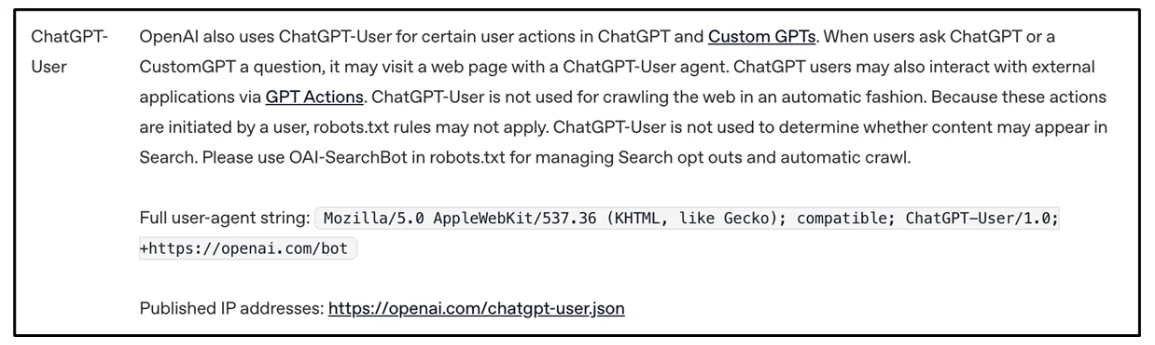
The core controversy centers on a legal and technical loophole utilized by the developers. Meta and OpenAI justify the continuous scraping and summarization of protected news content on the grounds that these actions are "human-triggered." Under this operational logic, if an individual end-user establishes a prompt instructing their personal assistant to compile a daily briefing from specific media outlets, the resulting automated extraction is classified as a user-initiated request rather than an autonomous bot crawl. Consequently, developers argue that traditional web governance mechanisms, such as robots.txt exclusion protocols and programmatic paywalls, do not legally or technically apply to these interactions.
This paradigm shift marks a critical evolution in how artificial intelligence interfaces with human audiences. Unlike foundational large language models that ingest vast corpuses of text during pre-training phases to learn language patterns, Muse and Dots operate dynamically at the point of consumption. They interface directly with live web environments, utilizing headless browsers—automated software agents that mimic standard user navigation without declaring themselves as traditional search engine crawlers—to retrieve up-to-the-minute content. For digital publishers, distinguishing between a genuine human reader utilizing standard browser software and an AI-driven headless browser routing requests on behalf of a personal assistant has become technically prohibitive, requiring sophisticated infrastructure that many smaller newsrooms cannot afford.
The Chronology of the Autonomous Briefing Mechanism
The technical mechanics underpinning these personal assistants reveal a frictionless ability to bypass traditional site restrictions. In practical application, the deployment of these tools follows a streamlined user journey designed to maximize convenience at the expense of publisher controls.

During the initial setup phase, a consumer activates the assistant via a conversational messaging interface. This environment is purposefully architected to replicate human interpersonal communication, fostering psychological trust and long-term engagement. Once active, the user can designate continuous tasks, moving beyond the traditional query-and-response paradigm of standard chatbots. Instead of asking a question once, the user establishes ongoing automated routines—such as demanding a customized morning briefing on global economics, technology policy, or local municipal developments drawn from preferred journalistic sources.
Tests conducted shortly after the release of Muse and Dots demonstrated the immediate efficacy of these workflows. With a single conversational instruction, users were able to configure automated daily scraping routines targeting the homepages of prominent legacy news organizations, including the British Broadcasting Corporation (BBC) and The Daily Telegraph. Significantly, both institutions had previously implemented explicit technical blocks within their server architectures to prevent OpenAI’s known web-fetching crawlers from indexing their material. Nevertheless, because the extraction was initiated via a user-prompted personal assistant workflow, the platforms bypassed these defensive measures, treating the human-triggered instruction as a legal and operational override of standard site-level permissions.
The Economic Imperative and the Threat of High Switching Costs
From a commercial perspective, artificial intelligence developers are aggressively prioritizing the adoption of these consumer-facing assistants because they offer vastly superior and more predictable economic models compared to the foundational models that power them.
Foundation models—such as the underlying architectures used for raw text generation and reasoning—suffer from exceptionally high capital expenditure costs, massive inference energy demands, and intense market commoditization. In contrast, personal assistants build deep, proprietary contextual understanding of individual users over time. By centralizing daily schedules, financial data, professional communications, shopping preferences, and media consumption habits, these applications generate formidable switching costs for consumers.
Switching from one AI assistant provider to another requires the user to abandon accumulated contextual data, forcing them to endure a friction-filled initialization period where a new digital helper must relearn their habits, preferences, and operational rhythms. This dynamic significantly dampens price elasticity. Industry analysts project that as consumers become increasingly dependent on these ecosystems, they will readily absorb subscription fee increases rather than risk the operational disruption of migrating to a competing platform.
For news publishers, however, this ecosystem consolidation spells economic peril. When a consumer consumes journalism entirely within the sanitized, homogenised interface of an AI assistant, the traditional monetization architecture of the web is dismantled. Advertisements displayed on publisher homepages are never seen, programmatic ad impressions vanish, and subscription conversion funnels are bypassed entirely. Furthermore, readers engaging with news through a curated, algorithmic briefing lose the serendipitous discovery of reporting—finding unexpected stories they did not actively seek out—which forms the economic and cultural bedrock of investigative journalism.
The Policy Debate: Human Agency Versus Systemic Exploitation
The philosophical defense offered by artificial intelligence developers hinges on a highly liberal interpretation of user autonomy. The argument asserts that if a human possesses the theoretical right to visit a public website, read an article, and summarize it for their own personal use, they should be equally entitled to delegate that labor to a software agent.
Publishers and legal scholars, however, argue that this analogy collapses under commercial scrutiny. The distinction between individual human consumption and automated commercial aggregation is well-established in other media and intellectual property domains. Purchasing a cinema ticket grants an individual the right to view a film, but it does not confer the legal right to record the screening and broadcast it to a wider audience or commercialize the content. Similarly, a commercial hospitality venue may hold a domestic subscription to a sports broadcasting service, but utilizing that broadcast in a public commercial setting requires a distinct licensing framework and pricing tier. The legality is defined not merely by who triggers the action, but by the nature and scale of the use being made of the copyrighted material.
Industry stakeholders emphasize that developers are knowingly exploiting a regulatory lag. Locked in an aggressive race for market share and consumer mindshare, the architects of systems like Muse and Dots have calculated that capturing dominant positioning in the personal assistant market outweighs the immediate legal and reputational risks of publisher litigation or prospective regulatory interventions. By the time courts or legislative bodies establish clear boundaries regarding agentic AI scraping, these platforms aim to have integrated themselves so deeply into daily consumer routines that dislodging them will be politically and economically impossible.
Broader Implications Across Digital Commerce

While the immediate crisis is acutely felt within the news media sector, the deployment of human-triggered AI assistants poses an existential question for the entire open web. The vulnerabilities exposed by Muse and Dots are shared equally by digital retailers, job boards, real estate listing portals, online forums, and specialized databases. Any digital platform that relies on displaying structured information to human users in exchange for direct engagement, advertising exposure, or transactional fees is susceptible to automated disintermediation by autonomous agents.
As these tools transition from the early adopter phase described by Rogers’ diffusion of innovation curve into mainstream consumer adoption, pressure is mounting for web operators to establish a unified front. Industry groups are increasingly arguing for a straightforward regulatory and technical principle: if an automated system performs functions with copyrighted or proprietary content that extend beyond merely displaying the material to a human user within a standard web browser as originally published by the copyright holder, the platform must secure explicit, granular permission to do so.
With AI personal assistants still in their relative infancy and actively building their initial user bases, publishers and digital operators maintain a narrow window of opportunity to establish collective standards. Whether through synchronized legal challenges, coordinated technical countermeasures, or concerted legislative advocacy, the digital publishing community faces a definitive choice: assert control over the digital supply chain now, or cede permanent ownership of web traffic and monetization to a handful of dominant technology platforms.