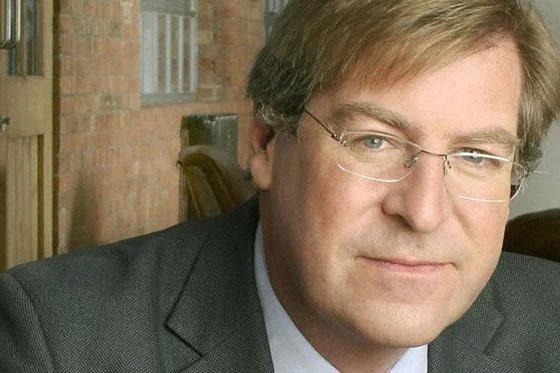
Colleagues across the British broadcasting landscape have united in mourning the passing of Edward Stourton, the distinguished former Radio 4 Today presenter, who has died at the age of 68. Stourton, a towering figure in news and current affairs for over four decades, was celebrated for his intellectual rigour, profound knowledge, and unflappable on-air presence that made him a trusted voice for millions. His extensive career spanned foundational roles at Channel 4 News, pioneering international correspondence for ITN, and a decade at the helm of BBC Radio 4’s flagship ‘Today’ programme, cementing his status as one of the UK’s most respected journalists.
A Career Defined by Depth and Global Reach
Born in Nigeria and raised in the United Kingdom, Edward Stourton’s academic foundation was laid at Trinity College, Cambridge, where he read English literature. This early grounding in critical thought and narrative would profoundly influence his journalistic approach, allowing him to dissect complex issues with clarity and provide nuanced perspectives. His professional journey commenced at ITN, where his sharp intellect and keen understanding of international affairs quickly became evident. He was instrumental in the nascent stages of Channel 4 News, joining as a founding member, contributing to its innovative and analytical approach to current events.
A significant milestone in his early career at ITN was his appointment as the programme’s first Washington correspondent in 1986. This posting placed him at the heart of American politics during a pivotal era, allowing him to report on the Reagan administration’s latter years and the dawn of a new geopolitical landscape. His dispatches from the US were noted for their insightful analysis and ability to contextualise complex policy for a British audience.
Stourton’s transition to the BBC marked a new chapter, where he truly became a household name. He joined Radio 4’s ‘Today’ programme, eventually becoming a host for a decade, a period during which he shaped the national discourse on critical issues. The ‘Today’ programme, known for its rigorous interviewing and in-depth reporting, provided the perfect platform for Stourton’s style. His calm demeanour and forensic questioning were a hallmark of his tenure, earning him widespread respect from politicians, experts, and listeners alike.
Beyond the studio, Stourton distinguished himself as a fearless and empathetic foreign correspondent, reporting from some of the most perilous and historically significant global events of his time. He was on the ground in Baghdad during the first Gulf War, providing crucial updates as events unfolded. He also covered the harrowing siege of Sarajevo during the Bosnian War, delivering reports that conveyed the brutal realities of conflict with sensitivity and journalistic integrity. Furthermore, his reporting from Moscow in the dying days of the Soviet Union offered a front-row seat to one of the 20th century’s most profound geopolitical shifts, capturing the atmosphere of uncertainty and change. These experiences not only enriched his understanding of the world but also deepened his commitment to factual, impartial reporting, which became a hallmark of his distinguished career.
The "Posh" Controversy and Parliamentary Backlash
Edward Stourton’s career, while largely lauded, was not without its moments of public contention, most notably the widely reported incident in 2008 concerning his departure from the ‘Today’ programme. In what became a significant media story and a point of public debate, Stourton learned of his impending sacking not from BBC management directly, but from a reporter at the Independent on Sunday. This highly unusual and arguably disrespectful manner of notification sparked immediate outrage within journalistic circles and among the listening public.
The rationale for his removal, as widely reported at the time, was attributed to a perceived drive by the BBC to modernise its on-air talent and perhaps diversify its perceived demographic appeal, with the unofficial explanation often cited as him being "too posh." This suggestion touched a raw nerve, leading to accusations of class prejudice and a perceived disregard for experience and intellectual merit in favour of superficial considerations. The incident became a symbol for many of a broader concern about the direction of public service broadcasting and the BBC’s editorial independence and accountability to its licence fee payers.
The reaction was swift and robust, extending beyond media commentary into the political arena. More than 90 Members of Parliament signed an Early Day Motion (EDM) in the House of Commons, a parliamentary device used to draw attention to specific issues and gauge opinion. The motion was unequivocal in its condemnation, stating: "That this House deplores the sacking of Edward Stourton as a presenter of the Today programme; calls upon the Chairman of the BBC Trust, who represents the licence fee payer, to investigate how his sacking came to be notified to him by a journalist from the Independent on Sunday; notes that Mr Stourton commands huge respect for the undoubted impartiality and intellectual rigour he brings to the Today programme; further notes that Jonathan Ross has been retained by the same BBC management team that has dispensed with Mr Stourton; and calls on the BBC to reinstate Mr Stourton as a presenter on the Today programme forthwith."
This powerful parliamentary intervention highlighted several critical issues: the perceived lack of professionalism in how Stourton was informed, the value placed on impartiality and intellectual rigour in public broadcasting, and a pointed comparison with the BBC’s retention of Jonathan Ross, whose high-profile contract and controversies had also drawn significant public scrutiny. The EDM served as a clear signal of cross-party concern regarding the BBC’s management decisions and its relationship with its talent and audience.
In the face of such widespread criticism and political pressure, the BBC partially backtracked. While Stourton did not return to his regular ‘Today’ presenting slot, he was subsequently given "special" foreign assignments for the programme and stints presenting other prominent Radio 4 shows, including ‘The World at One’ and ‘The World This Weekend’. This resolution, while offering Stourton continued opportunities, was widely seen as a compromise, allowing the BBC to retain his considerable talents and appease critics, without fully reversing its initial decision regarding ‘Today’. The controversy underscored the complex interplay between public perception, political oversight, and editorial decisions within a major public service broadcaster.
Tributes Pour In: A "Rolls Royce of Broadcasting"
The news of Edward Stourton’s death triggered an outpouring of tributes from across the broadcasting industry, underscoring the deep respect and affection in which he was held. Colleagues, both current and former, spoke of his professionalism, intellectual depth, and profound impact on their own careers and the wider journalistic landscape.
Jonathan Munro, the Deputy Director of BBC News and Stourton’s producer during his tenure as ITN diplomatic editor, expressed profound sorrow, remarking, "it’s far too soon to lose Ed." Munro fondly remembered Stourton as "unflappable then and ever after," highlighting a consistent trait that defined his on-air presence regardless of the intensity of the news cycle. This characteristic calm under pressure was a testament to his experience and ability to maintain composure during live broadcasts covering major global events.
Mohit Bakaya, the Controller of BBC Radio 4, lauded Stourton as an "absolutely outstanding broadcaster." Bakaya’s tribute highlighted the unique blend of attributes Stourton brought to his work: "He brought intelligence, authority and an extraordinary hinterland to everything he did. When Ed was behind the mic… you felt you understood the world a little bit better." This sentiment captures the essence of Stourton’s appeal – his ability to distil complex information and offer clarity, making listeners feel more informed and engaged with global events.
Rebecca Keating, the current editor of the ‘Today’ programme, echoed these sentiments, affectionately remembering Stourton as the "Rolls Royce of broadcasting." This powerful metaphor speaks volumes about the quality, reliability, and gravitas he brought to his role. Keating further praised "his sharp mind and vast knowledge of the world brought to bear on any story with zero fuss," underscoring his efficient and impactful approach to journalism. He was known for his thorough preparation and ability to grasp the nuances of any subject, delivering insights without unnecessary fanfare.
Jim Naughtie, Stourton’s former co-host on the ‘Today’ programme, offered a moving personal tribute, describing him as "a man of great integrity and humanity… he had the kind of infectious decency which lifted people up." Naughtie’s words reveal the personal qualities that made Stourton not just a respected journalist but also a cherished colleague. His integrity was not merely professional but personal, influencing those around him positively.
Broadcaster Evan Davis, another prominent voice in British news, added his perspective, noting Stourton was "one of those people you’re really glad to have around… all substance, minimum ego, deeply knowledgeable, totally reliable." This description paints a picture of a journalist who prioritised content and accuracy over personal acclaim, embodying the best traditions of public service broadcasting.
Even Nick Robinson, a current ‘Today’ presenter, whose career overlapped with Stourton’s, offered a succinct yet poignant message: "he’ll be badly missed." These tributes collectively paint a picture of a journalist universally respected for his intellect, integrity, and profound contribution to the understanding of news and current affairs. His legacy is not just in the stories he covered, but in the standard of journalism he upheld.
Beyond the Newsroom: Author, Advocate, and Man of Faith
Edward Stourton’s contributions extended well beyond the confines of the news studio. He was a prolific author, penning eight books that showcased his diverse interests and intellectual curiosity. His most recent work, the 2023 memoir titled ‘Confessions’, offered a deeply personal insight into his life and career. It was within the pages of this memoir that Stourton courageously revealed his diagnosis of prostate cancer, which he had received almost a decade prior.
His decision to speak openly about his illness in a public forum was met with widespread appreciation and had a significant impact on public health awareness. Amy Rylance, the Director of Health Services, Equity and Improvement at Prostate Cancer UK, publicly expressed the organisation’s gratitude to Stourton. She credited him with "speaking openly about his diagnosis in his memoir," acknowledging that his candour played a crucial role in "raising lifesaving awareness with men across the country." This act of personal bravery transformed his private struggle into a powerful tool for public education, encouraging countless men to be more vigilant about their health and seek early diagnosis.
Stourton was also a devout Catholic, and his faith was an integral part of his life and professional identity. He skillfully navigated the intersection of faith and public discourse through his work as the host of the religious affairs programme ‘Sunday’ on Radio 4. This programme, a staple of Sunday morning broadcasting, allowed him to explore complex theological and ethical questions with sensitivity and intellectual rigour, appealing to both believers and those curious about the role of religion in contemporary society. His commitment to exploring faith was further demonstrated by his presentation of the four-part BBC Two documentary series ‘Absolute Truth’, which delved into the history and intricacies of the Catholic Church. In these roles, Stourton brought his characteristic depth and impartiality to subjects often fraught with personal conviction, enriching public understanding of religious matters.
A Legacy of Excellence and Influence
Throughout his distinguished career, Edward Stourton’s commitment to journalistic excellence was consistently recognised. In 1997, he received the prestigious Sony Radio Gold Award, a testament to his outstanding contributions to radio broadcasting. This was followed in 2001 by the Amnesty International Award, acknowledging his impactful reporting on human rights issues and his dedication to bringing often-overlooked stories to a wider audience. These accolades underscore his versatility and the high regard in which his work was held across different facets of journalism.
Edward Stourton’s passing marks the end of an era for British broadcasting. His legacy is not merely in the vast number of news reports he delivered or the influential programmes he presented, but in the unwavering standard of journalism he embodied. He was a journalist’s journalist, respected for his meticulous preparation, his ability to ask incisive questions, and his commitment to truth and fairness. His career trajectory, including the public controversy surrounding his departure from ‘Today’, also serves as a crucial case study in the evolving landscape of public service broadcasting, touching upon themes of editorial independence, presenter diversity, and accountability to the licence fee payer.
His influence on listeners was profound; he educated, informed, and challenged, fostering a more engaged and knowledgeable public discourse. He consistently demonstrated that serious journalism could be both accessible and deeply engaging, without resorting to sensationalism or superficiality. Stourton’s work provided a vital window into a rapidly changing world, from the Cold War’s end to modern geopolitical shifts, always with a focus on understanding the human impact of global events.
Edward Stourton is survived by his wife, Fiona Murch, a senior television producer, and their four children. His family, friends, and countless colleagues will remember him not only for his remarkable professional achievements but also for the integrity, humanity, and quiet strength he brought to every aspect of his life. As ‘Today’ presenter Nick Robinson succinctly put it, reflecting the sentiment of many, "he’ll be badly missed." His voice, his intellect, and his unwavering dedication to the craft of journalism will leave an indelible mark on the landscape of British news for generations to come.