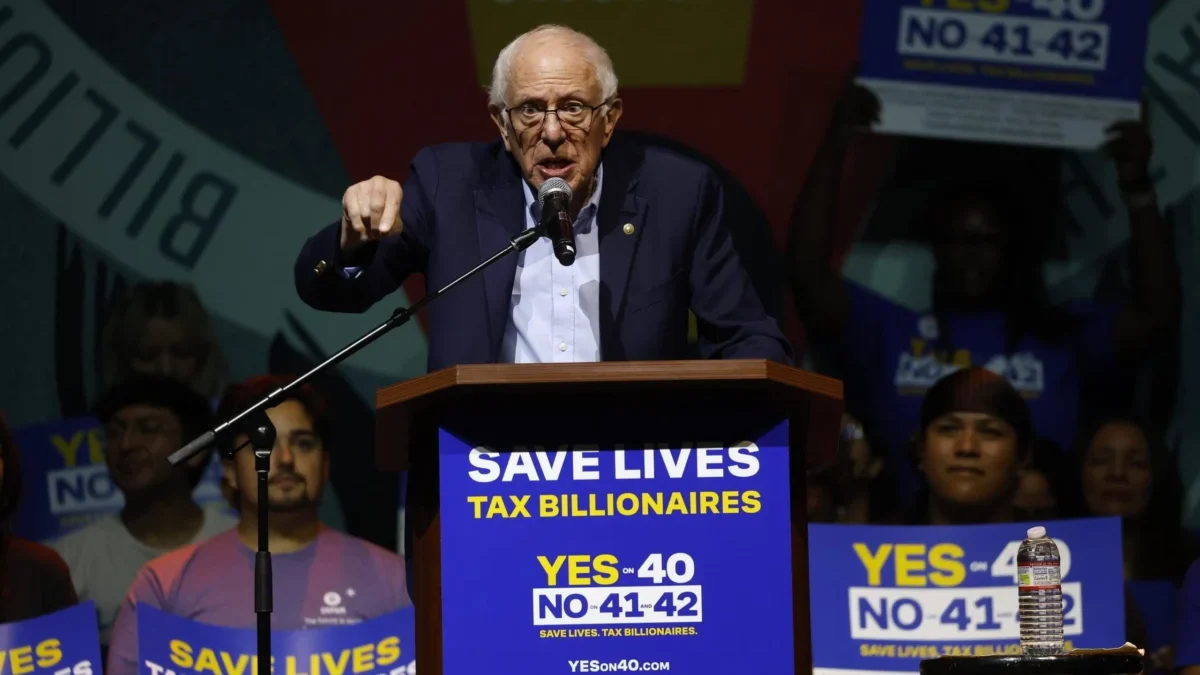
As California voters prepare to cast their ballots on Proposition 40, a high-stakes proposal to impose a one-time 5% wealth tax on the state’s ultra-high-net-worth residents, the debate has become inextricably linked to the ghost of a nearly 50-year-old political movement. Proposition 40, which would target individuals worth over $1 billion, is being framed by its proponents as a necessary corrective to fiscal inequality. However, economists and policy analysts warn that the measure may be treating a symptom rather than the systemic condition of California’s tax code. At the heart of this fiscal dilemma lies Proposition 13, the 1978 ballot initiative that fundamentally altered the state’s relationship with property taxation and set the trajectory for the current, highly volatile revenue landscape.
The Legacy of 1978: Prop 13 and the Tax Revolt
The political climate of the late 1970s was defined by a widespread "tax revolt," a grassroots surge of taxpayer frustration that culminated in the passage of Proposition 13. This measure was a landmark achievement of the conservative movement, capping property taxes at 1% of assessed value and restricting annual increases to a maximum of 2%. Furthermore, the law mandated that properties be reassessed at market value only upon sale or substantial renovation.
The immediate consequence of Prop 13 was a drastic reduction in local government revenue. To compensate, the state of California underwent a seismic shift in how it funded its operations. Over the subsequent decades, the state increasingly relied on progressive income taxation to fill the gap. Today, California boasts the most aggressive income-tax structure in the United States, with a top marginal rate of 13.3%. When federal obligations are factored in, the total tax burden on the state’s highest earners can exceed 50%. This reliance on the top 1% of earners has created a "boom-and-bust" cycle for state coffers, which now fluctuate wildly in tandem with the performance of the stock market and capital gains realizations.
The Mechanics of Proposition 40
Proposition 40 seeks to extract a one-time 5% levy on the assets of the state’s wealthiest residents. Proponents, primarily backed by labor unions, argue that this measure could generate as much as $100 billion in revenue. This windfall, they contend, is essential to stabilize the state budget and provide a buffer against potential federal reductions in healthcare spending. Supporters point to the rapid growth of the artificial intelligence sector and the unprecedented concentration of wealth in Silicon Valley as evidence that the state’s billionaires can afford a larger contribution to the public good.
However, the proposal faces fierce opposition from business groups and economic experts. Critics argue that the tax will trigger a "brain drain," forcing startup founders to divest large portions of their companies to satisfy tax obligations, thereby stifling innovation and capital investment. Perhaps more concerning for the state’s long-term fiscal health, opponents highlight a recent study from Stanford University, which suggests that the exodus of ultra-wealthy residents—prompted by the tax—would result in a net loss of revenue to the state over time.
A Structural Alternative: The Case for Property Tax Reform
For many economists, including Princeton’s Owen Zidar and the University of Chicago’s Eric Zwick, the focus on billionaire-specific wealth taxes is a misdirection. In their research and recent commentary, Zidar and Zwick argue that the "original sin" of California’s fiscal structure is the continued enforcement of the rules set by Proposition 13. By shielding homeowners from market-based tax assessments, the state has effectively abandoned a massive, stable, and consistent source of revenue.
Data indicates that California homeowners currently pay an average of just 0.8% in effective property taxes, a figure that generated approximately $100 billion in revenue for the 2025 fiscal year. By contrast, Texas—a state often cited for its lack of a state income tax—imposes an average property tax rate of roughly 2%. If California were to implement a similar structure, Zidar and Zwick estimate that overall residential property tax revenue would more than double, while simultaneously exerting downward pressure on home prices by roughly 13%, potentially alleviating the state’s ongoing housing affordability crisis.
The Political and Economic Risks
The path to property tax reform is fraught with political peril. Any attempt to dismantle or significantly alter Proposition 13 would likely trigger a massive voter backlash from homeowners who rely on the protection of capped tax increases. Furthermore, the experience in states like Texas demonstrates that high property taxes are not a panacea; they frequently lead to their own voter revolts, as local governments often increase levies to meet budget demands, resulting in a heavy cumulative burden on residents.
Beyond the political challenges, the implementation of a new, untried wealth tax like Proposition 40 introduces significant legal uncertainty. Laura Tyson, a former White House economic adviser, and Lenny Mendonca, a former chief economic adviser to Governor Gavin Newsom, have cautioned that the measure would likely invite a "tidal wave of litigation." They note that the state has already seen signs of capital flight, with six billionaires—who would have been responsible for roughly 25% of the projected revenue from the measure—reportedly relocating outside of California in anticipation of the tax.
Broader Implications for State Revenue
California’s fiscal position is currently strained, with the state planning to spend $540 billion in the current fiscal year. The concentration of revenue among a few hundred high-net-worth individuals is viewed by many as an inherently fragile strategy. "It is simply not possible to fund the state’s needs by leaning on a few hundred people, as politically appealing as that may be," Zidar and Zwick wrote.
Instead of targeting the billionaire class with volatile and potentially litigious wealth taxes, experts suggest that a more sustainable approach involves broadening the tax base. Tyson and Mendonca have proposed several alternatives that would arguably be more efficient, including:
- Increasing corporate tax rates to align with competitive benchmarks.
- Taxing both realized and unrealized capital gains.
- Closing structural loopholes such as the "carried interest" provision.
- Reforming inheritance and estate taxes to ensure long-term revenue stability.
Conclusion: A Turning Point for California
The debate over Proposition 40 is more than a disagreement over tax policy; it is a fundamental clash over the future of the California model. On one side, proponents argue that the current disparity in wealth requires bold, immediate intervention to maintain social services and public infrastructure. On the other, critics warn that such measures risk undermining the economic dynamism that has historically fueled the state’s growth.
As the election approaches, the shadow of 1978 looms large. The legacy of Proposition 13 has created a unique, albeit flawed, economic environment that has forced the state into a corner. Whether voters choose to embrace the proposed wealth tax or demand a more comprehensive, systemic reform of property and capital taxes, the outcome of this vote will likely define California’s fiscal policy for the next generation. The challenge for policymakers remains clear: finding a way to balance the need for public revenue with the reality of an increasingly mobile and globalized capital class. If the state is to avoid the volatility of its current revenue streams, it may eventually have to confront the very policies that voters championed nearly half a century ago.