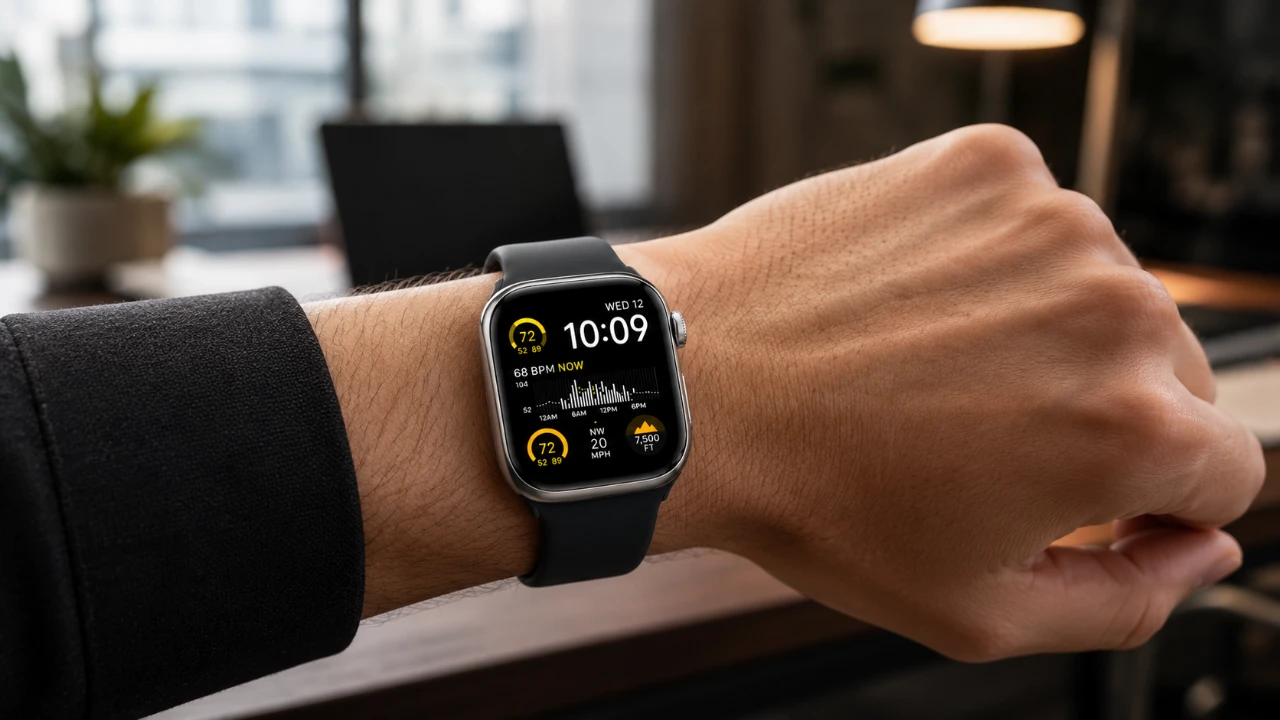
The Apple Watch Series 12, anticipated to launch in September 2023, is poised to deliver a range of notable enhancements while maintaining its signature design. Although the long-awaited blood sugar monitoring feature is unlikely to debut, Apple is focusing on incremental advancements in performance, security, and health monitoring. These updates aim to refine the user experience and reinforce the Apple Watch’s position as a leader in wearable technology. The video below from Matt Talks Tech gives us more details about the Apple Watch 12.
The Quest for Non-Invasive Blood Glucose Monitoring: A Long-Term Vision
For over a decade, Apple has been reportedly investing significant resources into developing non-invasive blood sugar monitoring technology, a pursuit that, if successful, could revolutionize the management of diabetes and pre-diabetes worldwide. This ambitious project, often described as one of Apple’s most challenging hardware endeavors, aims to bypass the need for traditional finger pricks, offering a more convenient and less painful alternative for millions of individuals who rely on daily glucose readings. The technology is understood to leverage advanced optical sensors, potentially employing spectroscopic analysis or laser-based systems, to detect glucose levels through the skin.
However, the path to achieving medical-grade accuracy and reliability for such a complex biometric reading has proven to be exceptionally difficult. Experts in biomedical engineering and sensor technology have highlighted the myriad challenges, including the precise calibration required to account for individual physiological differences, environmental factors like skin temperature and hydration, and the sheer complexity of isolating glucose signals from other bodily compounds. While Apple’s dedicated engineering teams are said to be making progress, the current state of the technology is still believed to be in the proof-of-concept or advanced development phase. Regulatory approval for a device that provides critical health data like blood glucose levels requires rigorous clinical trials and validation, a process that can take years. Therefore, while the promise of integrated blood sugar tracking on the Apple Watch remains a compelling prospect for the future, it is widely understood that the Series 12 will not be the device to bring this breakthrough to market. Apple’s commitment to this technology underscores its long-term strategy to position the Apple Watch as an indispensable tool for proactive health management, moving beyond simple activity tracking to address chronic conditions.
Design Continuity: A Strategic Focus on Refinement
In line with Apple’s product release patterns, the Apple Watch Series 12 is expected to retain the established, sleek, and instantly recognizable design language that has been a hallmark of the Apple Watch since its inception, and notably refined with the Series 10. This strategic decision to maintain the current aesthetic is not merely about brand consistency; it carries significant practical implications for consumers. By preserving the existing form factor, Apple ensures backward compatibility with the vast ecosystem of existing Apple Watch bands and accessories. This thoughtful approach allows current users to seamlessly transition to the new model without the need for additional purchases, thereby enhancing the perceived value and convenience of upgrading.
While some industry observers and consumers might have anticipated a more radical design overhaul, this continuity suggests a deliberate focus on internal innovation and performance enhancements for the Series 12. Apple often employs a cycle of significant design changes followed by iterative refinements, and the Series 12 appears to fall into the latter category. This strategy prioritizes functional improvements and user experience over drastic visual alterations. Looking ahead, rumors and analyst projections indicate that a more substantial design evolution may be reserved for the subsequent generation, potentially the Apple Watch Series 13. Speculation suggests that future iterations could explore new materials, different casing dimensions, or even significant alterations to display technology or battery integration, signaling Apple’s continuous exploration of the wearable form factor. For the Series 12, however, the emphasis remains on delivering a polished and familiar user experience, bolstered by internal upgrades.
Performance Leap: The S11 or S12 Chipset
A cornerstone of the Apple Watch Series 12’s anticipated upgrades is the integration of a next-generation System-on-Chip (SoC), expected to be designated as the S11 or S12. This crucial hardware advancement is engineered to deliver substantial improvements across several key performance metrics, including processing speed, power efficiency, and the capacity for real-time data analysis. Such an upgrade is vital for the Apple Watch to keep pace with the increasing demands of modern applications and sophisticated health monitoring algorithms.
The enhanced processing power will translate directly into a more fluid and responsive user experience. Users can anticipate swifter interactions with Apple’s intelligent assistant, Siri, and the broader Apple Intelligence ecosystem. Applications are expected to launch faster, multitasking will become more seamless, and complex operations, such as advanced fitness tracking analysis or on-device machine learning tasks, will be handled with greater agility. This increased efficiency is not solely about raw speed; it also plays a critical role in power management. While a dramatic leap in battery life is not typically the primary focus of a single chip generation, the S11/S12 is projected to contribute to a modest, yet noticeable, improvement in battery endurance. Early estimations suggest a potential increase in daily usage time, possibly extending by up to two hours compared to the preceding model. This incremental enhancement, while seemingly small, significantly contributes to the overall user experience, reducing the frequency of charging and reinforcing the Apple Watch’s utility as a reliable, all-day companion. This focus on practical performance enhancements aligns with Apple’s overarching philosophy of delivering tangible benefits that improve the daily lives of its users.
Touch ID Integration: A New Frontier in Wearable Security
A significant and highly anticipated security enhancement for the Apple Watch Series 12 is the reported integration of Touch ID, Apple’s industry-leading fingerprint recognition technology. Industry sources suggest that this biometric authentication feature will be discreetly embedded within the device’s side button, a strategic placement that offers both convenience and robust security. The introduction of Touch ID on the Apple Watch marks a pivotal moment, extending a familiar and trusted authentication method from Apple’s iPhone and iPad lineups to its most personal wearable device.
This feature promises to streamline a multitude of everyday interactions. Users will be able to unlock their Apple Watch, authorize Apple Pay transactions, and secure access to sensitive data with a simple, quick fingerprint scan. This level of biometric security is a significant upgrade from current methods, which often rely on passcode entry or device unlocking via a paired iPhone. By integrating Touch ID, Apple is reinforcing its unwavering commitment to user privacy and data protection. In an era where personal data is increasingly valuable and vulnerable, providing users with a secure, convenient, and reliable means of authentication is paramount. The implementation of Touch ID on the Apple Watch is not merely an addition of a new feature; it is a fundamental enhancement to the device’s practical utility, making it an even more secure and intuitive extension of the user’s digital life. This move also signals Apple’s ongoing effort to make its wearable technology more independent and self-sufficient, reducing reliance on other devices for core functionalities.
Sensor-Integrated Bands: Expanding Health Horizons
The Apple Watch Series 12 may introduce a groundbreaking innovation in the form of sensor-integrated watch bands, a development that could significantly expand the device’s health and fitness monitoring capabilities. This potential advancement moves beyond the sensors integrated into the watch casing itself, proposing that the bands could house additional biometric sensors. These sensors could be designed to measure new physiological metrics or to enhance the accuracy and depth of existing health data collection.
While specific details regarding the types of sensors and the metrics they might track remain speculative, possibilities range from advanced skin temperature monitoring for reproductive health tracking to more precise hydration level assessments, or even non-invasive blood pressure monitoring. Such an innovation would align perfectly with Apple’s strategic emphasis on transforming the Apple Watch into a comprehensive health and wellness hub. By incorporating sensors directly into the bands, Apple could unlock new avenues for personalized health insights and proactive well-being management. This development, if realized, would further solidify the Apple Watch’s position as a leader in the competitive health and fitness wearables market. It underscores Apple’s dedication to empowering users with sophisticated tools to monitor, understand, and ultimately improve their physical and mental health. The development of these sensor bands represents a significant step towards a more holistic and integrated approach to personal health monitoring.
Pricing and Release: Maintaining Tradition Amidst Evolution
Consistent with Apple’s established product launch cadence, the Apple Watch Series 12 is widely anticipated to be unveiled and made available to consumers in mid-September 2023. This timeframe aligns with Apple’s historical practice of refreshing its wearable lineup in the fall, often alongside new iPhone models. This predictable release schedule allows consumers to plan their upgrade cycles and provides a consistent benchmark for industry anticipation.
Regarding pricing, industry analysts and supply chain reports suggest a modest increase compared to previous generations. The estimated price hike is projected to range between $50 and $70 USD for comparable models. This adjustment is attributed to the incorporation of advanced components, including the new S11/S12 chipset, the potential integration of Touch ID, and the research and development costs associated with pioneering features like sensor-integrated bands. Despite this anticipated price increment, the substantial upgrades in performance, enhanced security features, and the continued refinement of health monitoring capabilities are expected to present a compelling value proposition for many consumers. The Apple Watch has consistently demonstrated its ability to justify its premium positioning through a combination of cutting-edge technology, seamless integration within the Apple ecosystem, and a commitment to user-centric design and functionality.
Refining the Wearable Experience: A Strategic Step Forward
The Apple Watch Series 12 represents a significant, albeit evolutionary, step forward in the realm of wearable technology. It is poised to deliver meaningful upgrades that will enhance the user experience through improved performance, robust security features, and a continued focus on advancing health monitoring capabilities. While the highly sought-after feature of non-invasive blood sugar monitoring, a development that has captured the imagination of many in the health tech community, is not expected to debut with this iteration, the Series 12’s strategic emphasis on refining existing functionalities and introducing practical innovations is noteworthy.
For consumers who value enhanced speed, greater security, and more sophisticated health insights, the Apple Watch Series 12 is anticipated to be a highly compelling choice. The integration of Touch ID, the performance boost from the new chipset, and the potential for expanded health tracking through sensor bands all contribute to a more capable and user-friendly device. However, for those individuals who are specifically anticipating more radical changes or the groundbreaking inclusion of blood glucose monitoring, it may be prudent to look towards future generations, such as the rumored Apple Watch Series 13. As Apple continues its relentless pursuit of innovation, the Series 12 stands as a testament to the company’s commitment to delivering practical enhancements that are deeply integrated into the user experience, reinforcing the Apple Watch’s enduring appeal and its position as a leader in the wearable technology market.
Source & Image Credit: Matt Talks Tech