Navigating the Digital Transformation: A Comprehensive Guide to Wholesale CRM Solutions in 2026

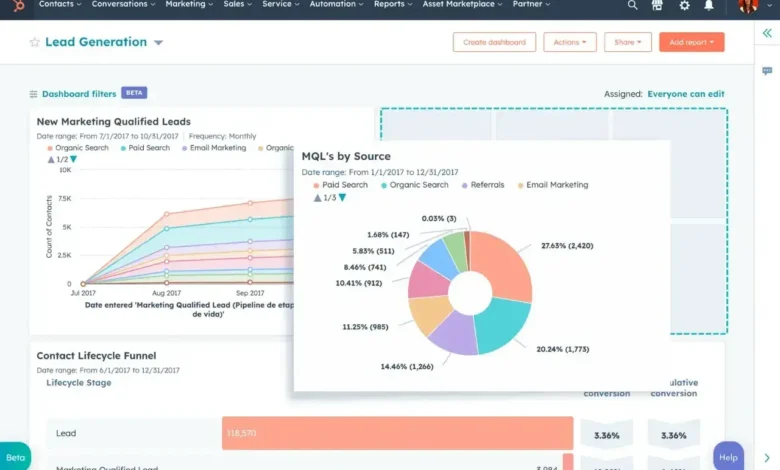
Wholesale businesses, operating at the critical juncture between manufacturers and retailers, face a distinct set of challenges that demand more than a conventional customer relationship management (CRM) system. The complexities inherent in business-to-business (B2B) distribution—characterized by intricate account-specific pricing, vast product catalogs, high volumes of repeat orders, and the imperative for sales workflows to integrate seamlessly with inventory and fulfillment systems—underscore the need for specialized CRM solutions. When these crucial processes remain siloed and disconnected, the ripple effects are significant: quoting cycles lengthen, operational errors proliferate, and the ability to capitalize on revenue opportunities diminishes. The year 2026 is poised to further emphasize this digital imperative, as market pressures and customer expectations continue to escalate.
The Evolving Landscape of Wholesale Distribution
The wholesale sector, projected to see sustained growth driven by global trade and e-commerce expansion, is undergoing a profound digital transformation. According to recent industry analyses, the global wholesale trade market is expected to reach substantial valuations by the mid-2020s, with a CAGR driven by technological adoption and evolving supply chain demands. This growth is not without its challenges. Wholesalers are increasingly contending with fluctuating material costs, complex international logistics, and the need for agile inventory management. More critically, their B2B customers, accustomed to the seamless digital experiences of consumer e-commerce, now demand similar efficiency and personalization in their wholesale interactions. This shift necessitates a robust technological infrastructure, with CRM at its core, capable of bridging the gap between sales and operational realities.
Historically, wholesale operations often relied on disparate systems: spreadsheets for pricing, standalone accounting software for orders, and manual processes for customer interactions. This fragmented approach, while once sufficient, is now a significant impediment to efficiency and growth. The transition to integrated digital platforms, particularly specialized CRMs, is no longer a luxury but a strategic necessity for maintaining competitiveness and fostering robust customer relationships.
Beyond Generic: Why Wholesalers Need Specialized CRMs
A generic CRM system, while adept at managing contacts and tracking sales activities for many industries, often falls short in addressing the granular requirements of wholesale distribution. The fundamental distinction lies in the complexity of B2B relationships and transactional processes.
- Account-Specific Pricing: Unlike retail, where pricing is generally uniform, wholesale involves highly individualized pricing structures. This includes contract pricing negotiated over long terms, volume-based discounts, tiered pricing models, and bespoke promotional rates. A specialized wholesale CRM must embed this logic, allowing sales teams to generate accurate quotes instantaneously without manual overrides that are prone to error.
- Extensive Product Catalogs: Wholesalers typically manage vast inventories, often with thousands of SKUs, each with multiple variations (size, color, material) and intricate bundling options. The CRM needs to efficiently organize and present this data, enabling quick product lookup and seamless addition to orders.
- Repeat Order Workflows: Repeat business is the lifeblood of wholesale. The CRM should not just record past orders but facilitate easy reordering, track purchasing patterns, and even proactively suggest reorders based on historical data or predictive analytics.
- Integration with Core Business Systems: The sales process in wholesale is inextricably linked to inventory levels, purchasing, and fulfillment. A wholesale CRM must integrate deeply with Enterprise Resource Planning (ERP) systems, inventory management software, and order processing platforms. This connectivity ensures that sales teams can quote based on real-time stock availability, preventing overselling or promising unavailable products, and providing customers with accurate delivery estimates.
Without these specialized capabilities, wholesale teams face significant friction. Quoting becomes a time-consuming, multi-step process involving cross-referencing various systems. Errors in pricing or stock availability lead to customer dissatisfaction and costly returns. Revenue opportunities are missed due to a lack of holistic customer insight or slow response times. Industry experts frequently emphasize that the agility derived from a well-integrated CRM can be a primary differentiator in a competitive market, transforming what were once operational bottlenecks into strategic advantages.

Key Features Defining a Superior Wholesale CRM
For a CRM to truly empower wholesale distributors, it must possess a suite of features tailored to their unique operational DNA.
- Customer-Specific Pricing and Quoting: The bedrock of wholesale sales. The CRM must support dynamic pricing rules, allowing for the application of volume discounts, contract rates, and tiered pricing directly within the quoting module. This ensures sales representatives can generate accurate, professional quotes rapidly, reducing delays and enhancing customer trust.
- ERP and Inventory Integration: Seamless connectivity to ERP and inventory management systems is paramount. This integration provides sales teams with real-time visibility into stock levels, order status, and historical purchase data, enabling informed selling and accurate fulfillment promises. It eliminates the need for manual checks, reducing errors and speeding up the order-to-cash cycle.
- Comprehensive Product Catalog and SKU Management: Ability to manage large, complex product catalogs with ease. This includes detailed product descriptions, images, multiple SKUs for variations, and the capacity to group products for bundles or promotions. An intuitive search and filtering function is vital for sales reps navigating extensive inventories.
- Robust Repeat Order and Reorder Workflows: Given the nature of wholesale, the CRM should simplify repeat purchases. Features like one-click reordering, automated reminders for recurring orders, and historical purchase analysis to identify reorder patterns are crucial for customer retention and consistent revenue.
- Territory Management and Account Ownership: Wholesale sales teams often operate within defined territories or manage specific key accounts. The CRM needs robust tools for assigning and tracking account ownership, managing sales territories, and providing performance reporting tailored to these structures. This ensures equitable workload distribution and clear accountability.
- Mobile Access for Field Sales Teams: Many wholesale sales reps operate in the field, visiting clients, taking orders, and building relationships. A powerful, intuitive mobile application is essential, providing offline access to customer data, product catalogs, pricing, and order entry capabilities from any location.
- Advanced Reporting and Revenue Visibility: The CRM must offer comprehensive reporting dashboards that connect sales activities directly to revenue outcomes. This includes pipeline forecasting, sales performance metrics by rep, territory, or product line, and analysis of customer buying trends to inform strategic decisions.
- Automation for Sales and Operations Workflows: Automation is key to reducing manual overhead. This includes automating lead assignment, follow-up reminders, quote approval processes, and even triggering order fulfillment steps upon deal closure. Workflow automation streamlines operations, ensures consistency, and frees up sales teams to focus on relationship building.
Leading CRM Solutions for Wholesale Distributors in 2026
The market offers several powerful CRM solutions, each with distinct strengths, catering to varying sizes and complexities of wholesale operations. The selection for 2026 underscores platforms that prioritize integration, scalability, and wholesale-specific functionalities.
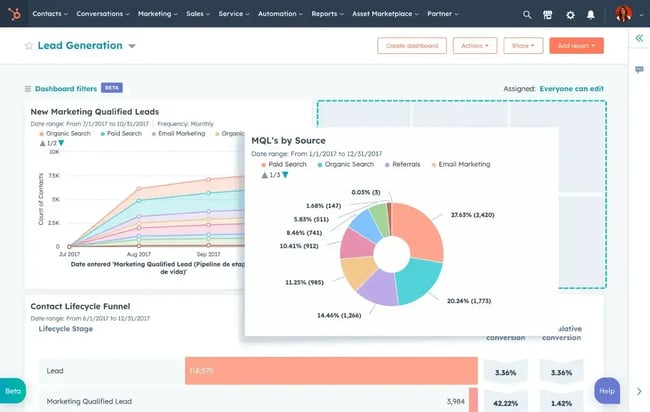
1. HubSpot Smart CRM: A Unified Platform for Growth
HubSpot Smart CRM stands out for wholesalers seeking a comprehensive, unified platform to manage sales, marketing, and customer service. Its AI-powered system centralizes account, contact, deal, and activity data. For distributors, HubSpot excels with its product libraries, customizable quotes, and robust workflow automation, all designed to support seamless quote-to-order processes. Its Commerce Hub further integrates quoting, billing, and payments, reducing friction between sales and finance departments. HubSpot’s strength lies in its ability to connect these core CRM functionalities with ERP, inventory, and order management systems via its extensive marketplace and API capabilities, providing a holistic view of the customer journey. It’s particularly well-suited for wholesalers aiming to streamline complex B2B relationships without incurring excessive operational overhead, benefiting from AI tools like Breeze for task prioritization and execution. Pricing scales from free tools to Professional ($45/month/seat, annual promo) and Enterprise ($75/month/seat) tiers.
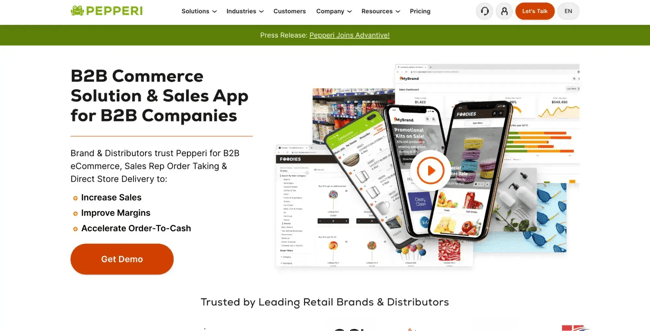
2. Pepperi: Mobile-First for Field Sales and B2B Commerce
Pepperi is specifically engineered for wholesale distributors and brands with a strong emphasis on field sales execution and B2B e-commerce. It combines CRM functionalities with mobile order taking and robust B2B commerce capabilities. Sales representatives benefit from offline mobile access, route-based selling tools, and the ability to present customer-specific catalogs and price lists on the go. Buyers, in turn, can access tailored purchasing experiences online. Pepperi’s deep focus on the unique needs of mobile sales teams and customer-specific buying portals makes it an excellent choice for distributors looking to enhance their direct sales force efficiency and provide personalized digital buying experiences. Pricing is available upon request, reflecting its specialized nature.
3. Prospect CRM: Real-time Inventory Visibility for Sales
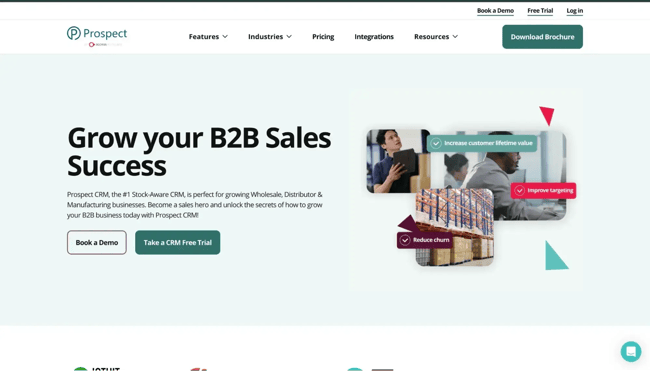
Prospect CRM positions itself as a "stock-aware CRM" built explicitly for product-selling B2B businesses. Its core strength lies in its ability to connect customer, product, sales, and inventory data, giving wholesale teams real-time visibility into stock levels directly within the CRM. This enables sales reps to quote accurately based on available inventory, manage backorders effectively, and identify cross-sell opportunities driven by purchasing patterns. Prospect CRM is ideal for distributors where inventory fluctuations directly impact sales capabilities and where precise stock awareness is critical for every sales interaction. Its purpose-built nature ensures that sales efforts are always aligned with product availability. Pricing starts at approximately $243 for four users, offering a clear value proposition for stock-centric businesses.
4. Zoho CRM: Affordable Customization for SMBs
Zoho CRM offers a highly customizable and affordable solution, particularly attractive to small and mid-sized wholesale teams. It provides strong sales automation, pipeline management, and territory management features without the enterprise-level price tag. Wholesalers can integrate Zoho CRM with other Zoho applications, such as Zoho Inventory, to manage sales activities in conjunction with inventory and order workflows. Its flexibility in configuration and robust integration options within the Zoho ecosystem make it a cost-effective choice for businesses willing to configure their workflows or those already leveraging other Zoho products. Pricing is highly competitive, starting from $20/user/month for its Standard plan, making it accessible for growing businesses.
5. Salesforce Agentforce Sales (formerly Sales Cloud): Enterprise-Grade Power and Flexibility
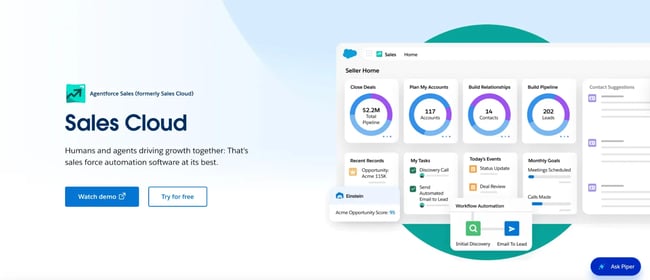
Salesforce Sales Cloud, now presented as part of Agentforce Sales, is a highly configurable platform suitable for larger, enterprise-level wholesalers with complex organizational structures. It offers deep customization capabilities, advanced AI features, sophisticated forecasting tools, robust territory management, and comprehensive product and price book management. Wholesale distributors can tailor Salesforce to handle intricate account structures, multi-layered pricing models, and complex approval workflows across multiple teams. While requiring a significant investment in implementation and administration, its extensive ecosystem of apps and unparalleled flexibility make it a powerful choice for organizations with the resources to leverage its full potential. Pricing starts higher, with its Professional edition at $80/user/month (billed annually).
6. Microsoft Dynamics 365 Sales: Seamless Integration within the Microsoft Ecosystem
Microsoft Dynamics 365 Sales caters to sales teams deeply embedded within the Microsoft ecosystem. It offers tight integration with Microsoft 365, Power BI, Teams, and Dynamics ERP tools. This allows wholesalers to connect sales activities with product, pricing, quoting, ordering, and fulfillment context within a familiar environment. It is particularly well-suited for businesses that already rely heavily on Microsoft products or desire a highly cohesive integration between their CRM and ERP systems. Its built-in support for complex pricing models and sales territories further enhances its appeal for wholesale operations. Pricing starts from $65/user/month, making it a compelling option for Microsoft-centric organizations.
The Tangible Benefits: Driving Efficiency and Growth
The adoption of specialized CRM software for wholesalers yields significant, measurable benefits across operational efficiency, customer retention, and revenue generation.
- Operational Efficiency (Faster Quote-to-Cash): Industry data suggests that businesses using integrated CRM and ERP systems can reduce their order processing times by up to 30%, directly impacting cash flow. By centralizing pricing, product, and customer data, CRMs streamline the entire sales cycle from quote generation to order fulfillment. This eliminates manual data entry, reduces errors, and accelerates approvals, leading to a much faster quote-to-cash cycle.
- Stronger Retention and Account Growth: In B2B wholesale, customer lifetime value is paramount. A CRM provides a 360-degree view of every account, consolidating historical orders, communication logs, and engagement data. This unified record empowers sales teams to understand customer needs deeply, proactively identify cross-sell and upsell opportunities, and maintain continuity even with changes in sales personnel. According to various studies, businesses with strong customer relationship management strategies experience significantly higher customer retention rates and increased average order values.
- Revenue Impact and CRM ROI: The direct impact of CRM adoption on revenue is multifaceted. Faster sales cycles mean more deals closed. Improved rep productivity allows sales teams to manage more accounts effectively. Enhanced pipeline visibility leads to more accurate forecasting, enabling better inventory planning and resource allocation. For wholesalers, the ability to capture more repeat orders and strategically pursue growth opportunities translates directly into increased top-line revenue. The ROI of a well-implemented CRM can be substantial, often measured through metrics like increased sales conversion rates, reduced sales cycle length, and improved customer satisfaction scores. Analysts often cite improvements in sales productivity ranging from 15-20% post-CRM implementation.
Strategic Selection: A Step-by-Step Approach
Choosing the right CRM for a wholesale business is a critical strategic decision that requires a structured approach.
- Map Current Processes: Begin by thoroughly documenting existing sales, quoting, ordering, and customer service workflows. Identify bottlenecks, manual touchpoints, and areas prone to error. This detailed understanding will inform the specific features and integrations required from a new CRM.
- Define Integration Requirements: Create a comprehensive list of all existing systems (ERP, accounting, inventory management, e-commerce platforms) that must seamlessly integrate with the new CRM. Evaluate each potential CRM’s native integration capabilities and assess the need for middleware solutions or custom API development.
- Calculate Total Cost of Ownership (TCO): Look beyond initial subscription fees. Consider implementation costs (setup, data migration), training expenses for staff, ongoing customization needs, and potential third-party integration costs. A robust TCO analysis provides a realistic financial picture.
- Involve Key Stakeholders: Engage representatives from sales, customer service, operations, and IT in the decision-making process. Their insights are invaluable for ensuring the chosen CRM addresses the needs and challenges of all departments that will interact with the system.
- Test with Real Scenarios: Leverage free trials or detailed demos to test CRMs using actual business scenarios. Create sample quotes, simulate complex orders, manage test accounts, and evaluate the user-friendliness and efficiency of the interface for daily tasks.
- Plan for Scalability: Select a CRM that can grow with the business. Consider future expansion plans, potential increases in user count, and the need for advanced features as the company evolves. A scalable platform avoids the costly and disruptive process of switching CRMs down the line.
Industry Outlook and Future Implications
Looking ahead to 2026 and beyond, the role of CRM in wholesale distribution will only intensify. The continued advancements in artificial intelligence and machine learning will further enhance CRM capabilities, enabling predictive analytics for demand forecasting, personalized product recommendations, and automated customer engagement at scale. The trend towards hyper-personalization, driven by detailed customer data, will allow wholesalers to offer truly bespoke experiences, strengthening loyalty and competitive advantage. Furthermore, the integration of CRM with emerging technologies like IoT (Internet of Things) for inventory tracking or blockchain for supply chain transparency could unlock unprecedented levels of efficiency and trust.

Wholesale businesses that embrace these integrated, intelligent CRM solutions will be better positioned to navigate market volatility, optimize their supply chains, and cultivate enduring customer relationships in an increasingly digital and demanding global economy. The decision to invest in a specialized wholesale CRM is, therefore, an investment in the future resilience and growth of the enterprise.
Meet HubSpot, a top CRM choice for wholesale distributors.
HubSpot continues to solidify its position as a flexible and powerful CRM solution for wholesale distributors aiming to modernize operations, streamline quote-to-order workflows, and cultivate stronger, more profitable customer relationships. Its appeal for wholesale businesses stems from several key advantages: a unified platform that centralizes sales, service, and marketing data; robust automation and AI tools designed to enhance efficiency and decision-making; and a highly flexible integration ecosystem that ensures seamless connectivity with essential ERP and inventory systems. These capabilities empower wholesale teams to reduce quoting delays, gain clearer account visibility, and ultimately drive sustainable growth in a competitive landscape.
Wholesalers ready to transform their operations can begin with HubSpot’s comprehensive suite of free tools, encompassing essential CRM functionalities like contact management, deal tracking, and reporting. As businesses expand and their needs evolve, they can incrementally adopt advanced sales, marketing, service, automation, and commerce features, ensuring the CRM grows alongside their aspirations.
Editor’s note: This post was originally published in July 2025 and has been updated for comprehensiveness and to reflect anticipated industry trends for 2026.