The landscape of digital marketing undergoes a profound transformation as artificial intelligence, workflow consolidation, and consumer intelligence platforms mature into enterprise-grade necessities. Industry data underscores this shift: recent forecasts from major research institutions indicate that the automated execution of marketing workloads is projected to double, surging from 16 percent to 36 percent. For digital strategists, brand managers, and enterprise organizations navigating this complex ecosystem, selecting the appropriate software stack is no longer merely a matter of convenience—it is a critical determinant of market survival and return on investment.

Modern social media software extends far beyond native application features, bridging fragmented channels, automating labor-intensive scheduling tasks, and synthesizing vast consumer data sets into actionable intelligence. As enterprises contend with multichannel sprawl, the demand for unified operating systems has never been more urgent. This comprehensive analysis evaluates the premier social media tools across scheduling, analytics, listening, artificial intelligence, design, and creator management, providing organizations with the framework necessary to optimize their digital operations.
Evolution of the Social Media Management Stack
Over the past decade, social media software has evolved from basic RSS-feed schedulers into sophisticated operational hubs. Historically, marketing teams relied on disparate applications for publishing content, monitoring brand reputation, designing graphics, and analyzing performance metrics. This fragmented approach frequently resulted in disjointed workflows, data silos, and increased vulnerability to brand crises.

By 2026, the industry has decisively shifted toward integrated ecosystems. Comprehensive platforms such as Hootsuite Social OS exemplify this paradigm shift by embedding publishing tools, advanced listening algorithms, customer care inboxes, and generative artificial intelligence directly into a unified dashboard. Concurrently, specialized tools retain immense value for niche requirements, ranging from CRM-tied enterprise applications like HubSpot to creator-discovery engines like Upfluence and Insense.
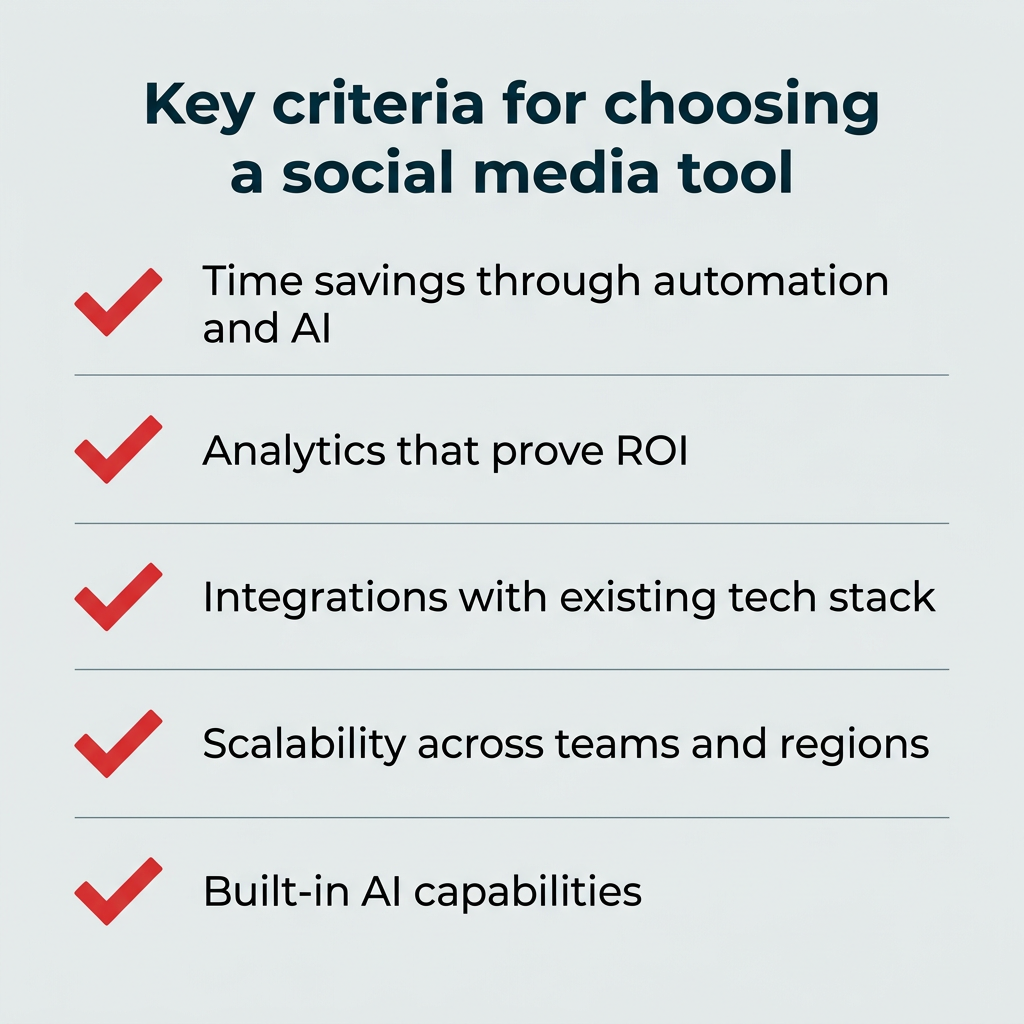
To successfully navigate the market, organizations typically evaluate software solutions across six primary pillars: time-saving automation, robust analytics capable of proving return on investment, integration capabilities with existing enterprise tech stacks, organizational scalability, built-in artificial intelligence, and reputation protection features.
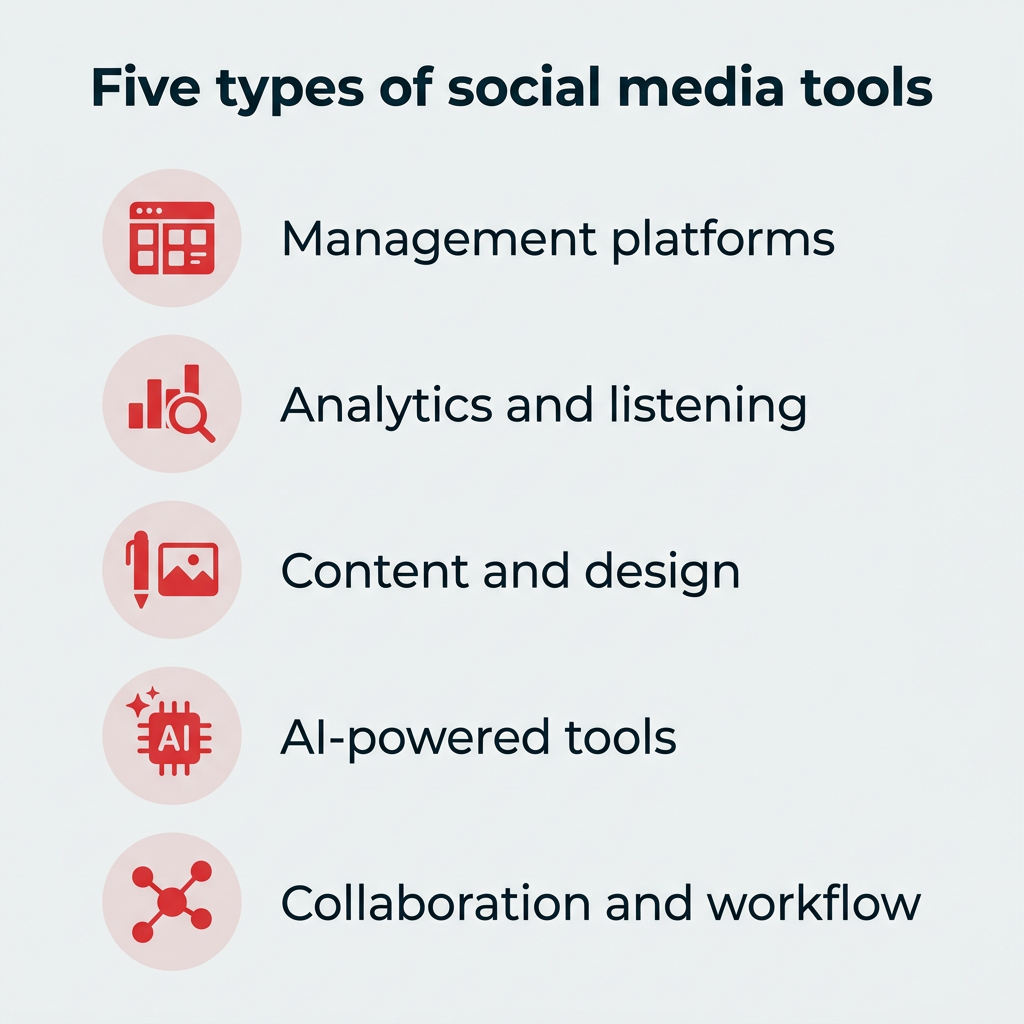
All-in-One Management Platforms: The Enterprise Backbone
At the core of most high-performing marketing operations lie all-in-one management platforms. These systems eliminate the friction of switching between multiple tabs by centralizing scheduling, multi-channel publishing, community engagement, and performance measurement.
Hootsuite Social OS
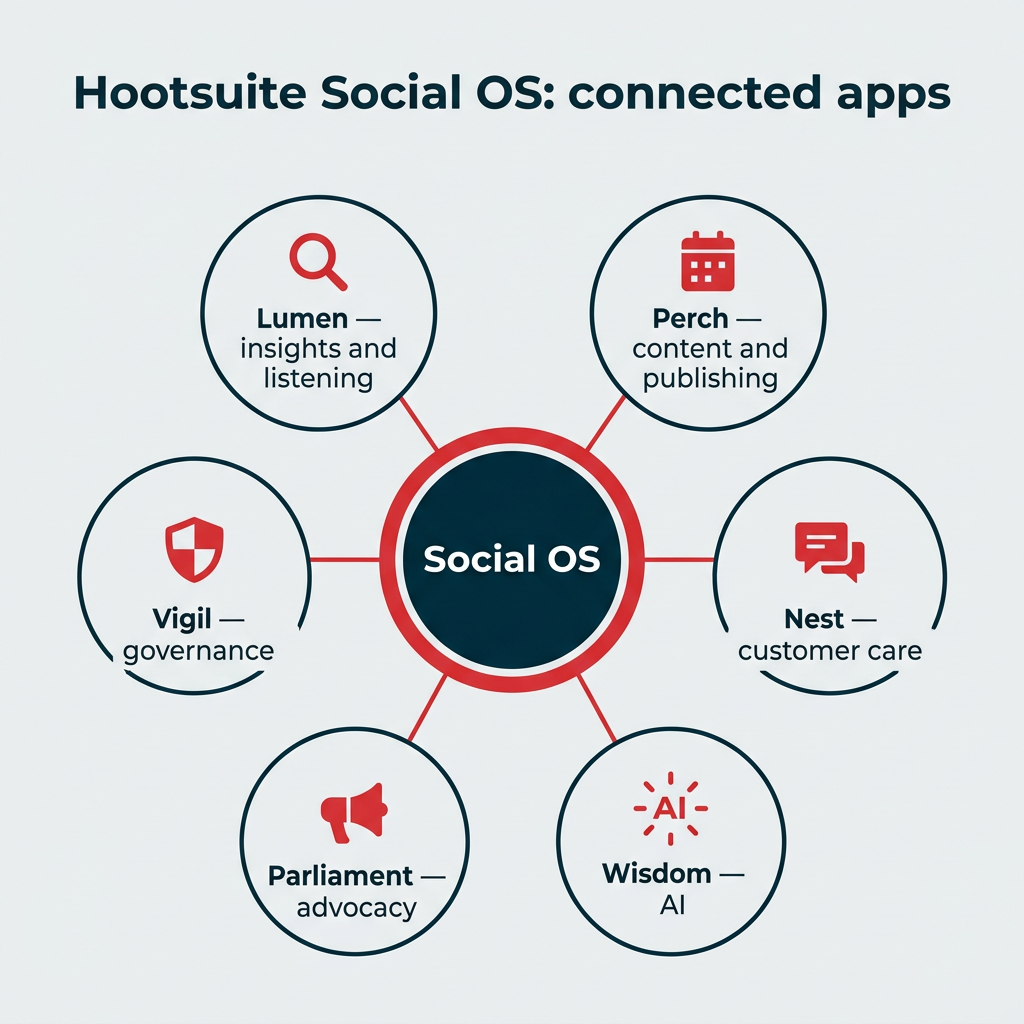
Positioned as a comprehensive social operating system, Hootsuite Social OS integrates disparate functions—such as publishing, listening, customer care, and governance—onto a single data foundation. Its publishing suite supports major networks including Instagram, X, LinkedIn, TikTok, Facebook, Pinterest, and YouTube, allowing for bulk scheduling, algorithmic best-time-to-post recommendations, and direct asset retrieval from integrated Canva accounts.
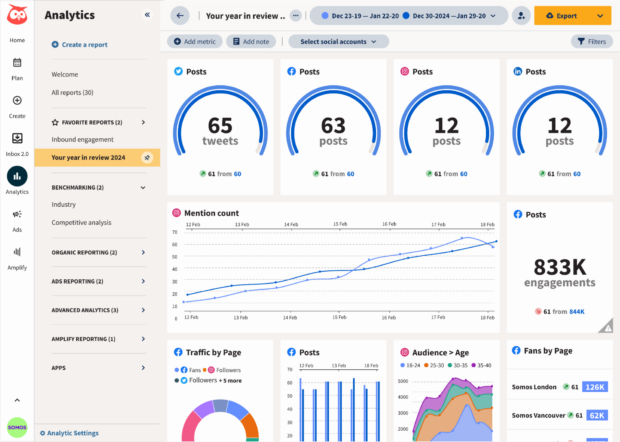
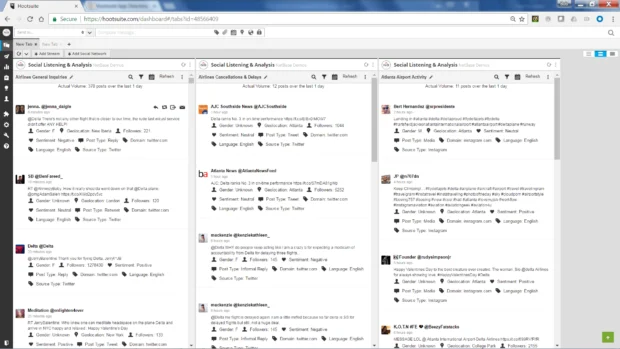
For market intelligence, the platform incorporates Lumen, an advanced listening technology derived from Talkwalker capabilities that analyzes more than 150 million sources across 187 languages. Lumen monitors brand sentiment, competitor activity, and early crisis signals, utilizing artificial intelligence to surface conversation clusters before trends peak. Furthermore, the Nest engagement module unifies direct messages and reviews, while offering native ticketing integrations with platforms like Zendesk for seamless customer support handoffs. Standard pricing begins at $99 per user per month, scaling upward for advanced and custom enterprise tiers.
HubSpot
For organizations prioritizing inbound marketing and deep sales alignment, HubSpot offers robust social media management capabilities deeply interconnected with its overarching Customer Relationship Management (CRM) database. The distinct advantage of HubSpot lies in its attribution modeling: when a target audience member interacts with a brand’s social content and subsequently converts via a landing page, sales teams can view those touchpoints on a unified timeline. While its native social features are lighter than dedicated management suites, HubSpot remains an indispensable asset for business-to-business enterprises with extended sales cycles. Free tiers are available, with paid marketing packages scaling according to organizational needs.

Analytics and Listening: Decoding Consumer Sentiment
As executive leadership demands rigorous accountability for marketing budgets, analytics and listening tools have transitioned from optional luxuries to essential diagnostic instruments.
NetBase Quid
Designed for midsize to enterprise-level corporations, NetBase Quid delivers comprehensive consumer and market intelligence. By aggregating real-time data from social networks, news outlets, web forums, product reviews, and patent filings, the platform provides deep visibility into brand health, consumer sentiment, and macroeconomic trends. Its broad data ingestion makes it exceptionally valuable for both public relations crises management and long-term market research. Pricing is customized and quote-based following product demonstrations.
Google Business Profile
For local enterprises, brick-and-mortar storefronts, and multi-location businesses, Google Business Profile remains a cornerstone reputation-management tool. It enables organizations to monitor and respond to customer reviews, publish localized business updates, and analyze geographical discovery metrics at no financial cost. Integration capabilities with comprehensive dashboards like Hootsuite allow local operators to manage their Google listings alongside traditional social channels efficiently.
Content Creation and Design: Producing Scroll-Stopping Visuals
Visual storytelling dictates digital engagement, yet many marketing teams operate without dedicated graphic design personnel. Content creation software bridges this gap through intuitive interfaces and automated asset libraries.
Canva
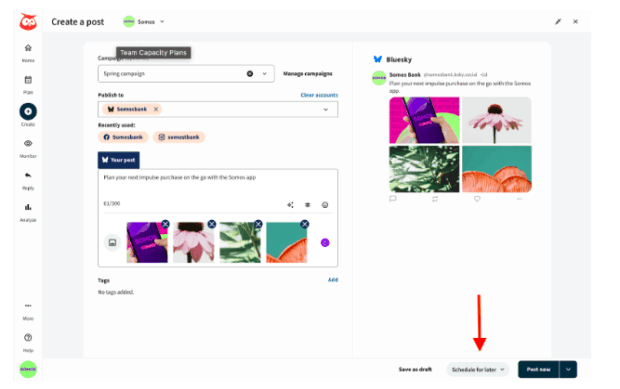
Canva has established itself as an industry standard for rapid, on-brand graphic production. Equipped with AI-driven design assistants like Magic Studio, the platform empowers non-designers to generate professional imagery, video clips, and presentation decks rapidly. Direct integrations with publishing platforms enable marketers to pull completed assets directly into campaign composers, streamlining the journey from ideation to distribution. Canva offers a robust free tier, with professional team pricing structured via annual or monthly subscriptions.
Adobe Stock
For creative teams embedded within the Adobe Creative Cloud ecosystem, Adobe Stock offers direct access to millions of curated high-resolution photographs, vectors, and video assets. By connecting Adobe Stock to publishing platforms, creative professionals can license and deploy high-quality visuals without disrupting their active workflows. Subscription models are credit-based, supplemented by standard trial periods.

Artificial Intelligence Integration: From Novelty to Infrastructure
Artificial intelligence has fundamentally reshaped digital marketing workflows. With over 80 percent of marketing technology leaders actively implementing or piloting AI agents, intelligent automation is no longer experimental; it is operational infrastructure.
Wisdom by Hootsuite
Rather than forcing users to navigate separate chatbot windows, Wisdom operates natively within the Hootsuite Social OS environment. It allows marketers to query performance metrics in plain language, generating contextual insights backed by verifiable citations from live social data. Wisdom intelligently routes operational requests across the platform’s application hub—directing sentiment inquiries to listening tools while routing content variations to publishing queues—thereby drastically reducing administrative friction.
Lately AI
Specializing in content repurposing, Lately AI ingests long-form assets—such as corporate blogs, podcasts, and webinar recordings—and automatically slices them into optimized social media caption sequences. By analyzing historical audience engagement data, the platform tailors messaging for specific channel algorithms, maximizing output from single foundational resources.
ChatGPT
As a versatile general-purpose assistant, ChatGPT remains a staple for preliminary campaign brainstorming, structural outlining, and headline drafting. While standalone models traditionally lacked direct access to proprietary brand analytics, emerging Model Context Protocol (MCP) connectors increasingly allow AI interfaces to query live social data securely, bridging the gap between ideation and analytics.

Influencer and Creator Management
With global creator economies surpassing historic financial milestones and micro-influencers capturing a substantial share of partnership budgets, specialized management tools are vital for scaling ambassador programs.
Upfluence
Upfluence serves as a comprehensive influencer marketing platform, enabling brands to discover, vet, and collaborate with creators across Instagram, TikTok, YouTube, Twitch, X, and Pinterest. The platform analyzes audience authenticity and engagement metrics, while offering native workflow integrations that push approved content straight into scheduling calendars.

Insense
Tailored specifically for direct-to-consumer (DTC) brands and e-commerce enterprises, Insense automates the production of user-generated content (UGC). The platform matches brands with vetted creators, manages legal briefs, and oversees ad-creative workflows designed to maximize conversion rates across paid social channels.
Collaboration and Workflow Coordination
Executing cohesive multichannel campaigns requires rigorous internal coordination. Project management solutions adapted for marketing workflows ensure operational alignment across distributed teams.

- Monday.com: Offers customizable visual boards and automated workflow triggers tailored for complex content calendar management.
- Airtable: Combines relational database architecture with spreadsheet simplicity, making it ideal for managing large asset libraries and multi-tier influencer pipelines.
- Notion: Functions as a centralized organizational wiki, providing documentation hubs for brand guidelines, campaign briefs, and strategic ideation.
Strategic Implications and Decision-Making Framework
Choosing the correct social media software stack requires a methodical internal audit. Solo practitioners and small businesses managing limited channels can often operate effectively utilizing free tiers of design applications, native platform schedulers, and basic review monitoring tools. Conversely, midsize enterprises and global brands managing multiple regions and regulatory frameworks require centralized governance, role-based permissions, automated approval workflows, and sophisticated attribution analytics.
Ultimately, the objective of any social media technology investment is the reduction of operational redundancy. By consolidating disparate functions into unified ecosystems—or intentionally integrating specialized tools via robust application programming interfaces—marketing organizations can reclaim valuable hours, protect brand reputation, and decisively prove the tangible business impact of their social strategies in an increasingly automated digital economy.