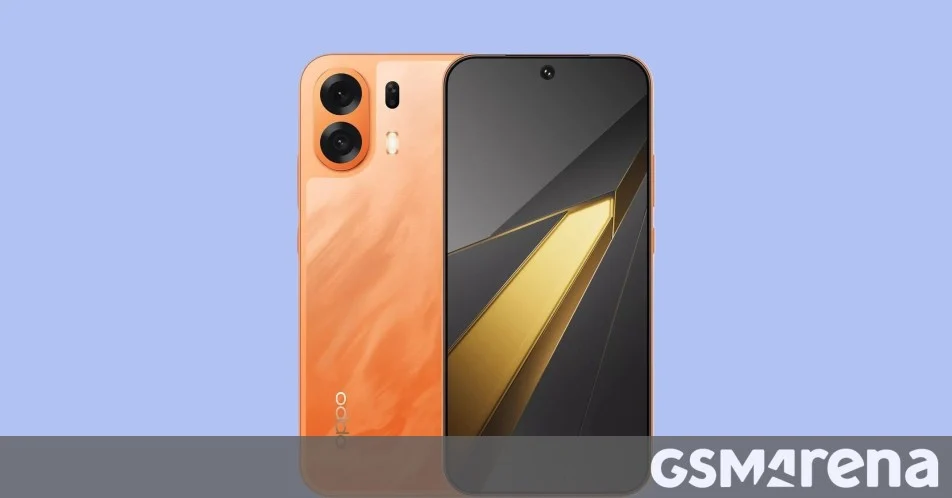
The Indian smartphone landscape is bracing for a significant addition to the mid-range segment as Oppo prepares to officially unveil the K14 Plus on September 29. Following a strategic reveal through the e-commerce giant Flipkart, which initially showcased the handset’s aesthetic and primary hardware capabilities, Oppo has now bolstered its digital presence by launching a dedicated product page on its official Indian website. This move provides prospective buyers with a definitive look at the device, confirming the design language, internal configurations, and advanced technical specifications that define this new iteration in the K-series lineup.
Aesthetic Design and Build Philosophy
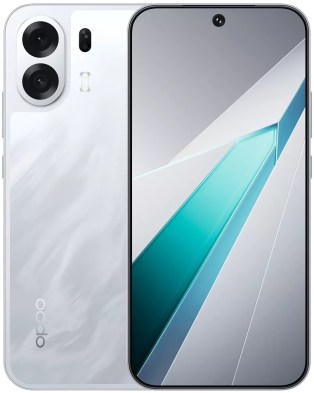
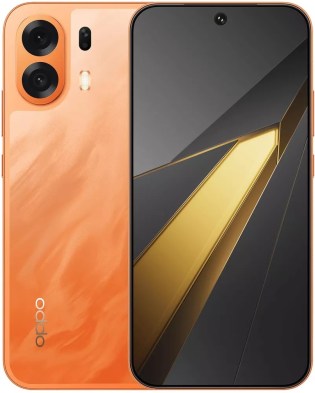
The Oppo K14 Plus marks a departure from standard minimalist designs, opting for a textured aesthetic that emphasizes durability and personality. Available in two distinct colorways—Star White and Solar Orange—the device features a consistent, intricate pattern across its rear panel. The design is punctuated by a functional and stylistic design choice: a small text inscription in the bottom right corner reading "Stay Cool. Stay Powered," which serves as a subtle nod to the phone’s primary selling points: its advanced thermal management and long-lasting battery life.
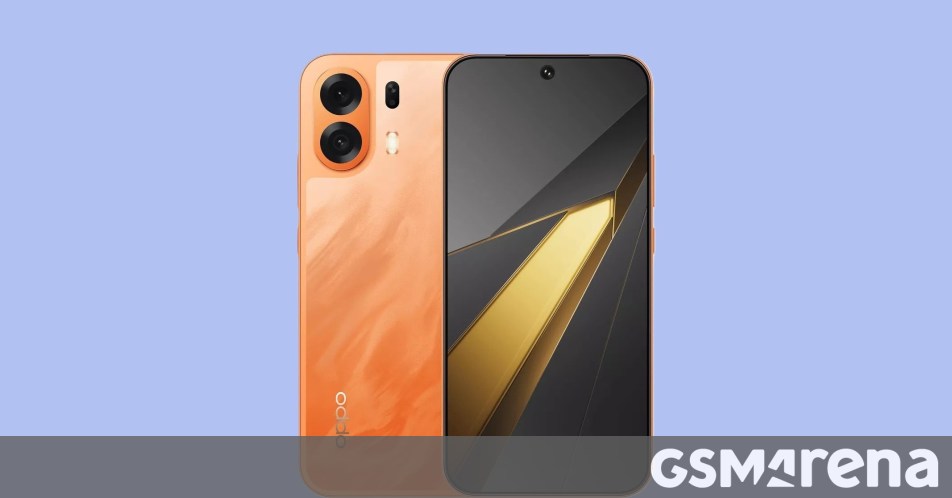
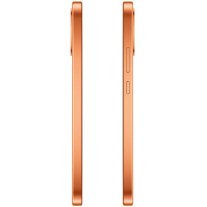
From a structural standpoint, the K14 Plus utilizes a chassis construction that foregoes traditional antenna lines on the frame, suggesting a polycarbonate plastic build. This choice is common in the mid-range sector, as it allows for better signal penetration while maintaining a lightweight profile. The layout is ergonomically focused, with the volume rockers and the power button situated on the right-hand side. The base of the device houses the USB-C port, a primary microphone, a speaker grille, and the SIM card tray, while the top of the handset contains a secondary noise-canceling microphone, indicating a commitment to clear voice quality during calls and media recording.
Technical Specifications and Performance Metrics
At the heart of the Oppo K14 Plus lies the MediaTek Dimensity 7360 Max SoC, a chipset designed to bridge the gap between efficiency and high-performance mobile gaming. This silicon is paired with significant memory and storage options to cater to a diverse range of users. Official confirmation from Oppo clarifies that while the top-tier model offers 8GB of RAM paired with 256GB of internal storage, consumers will also have access to more budget-conscious configurations, specifically a 6GB/128GB base model and an 8GB/128GB intermediate option.
The visual experience is driven by a 6.77-inch AMOLED display, which boasts a 1.5K resolution. Perhaps the most competitive aspect of this screen is its 144Hz refresh rate, a specification usually reserved for dedicated gaming smartphones. This high refresh rate ensures fluid scrolling, reduced motion blur, and a highly responsive touch interface, which, when coupled with the ColorOS 16 operating system, promises a seamless software experience.
Battery Longevity and Thermal Management
One of the most noteworthy features of the K14 Plus is its power capacity. The device is equipped with an 8,000 mAh battery, a massive inclusion that far exceeds the industry standard of 5,000 mAh typically found in modern smartphones. To mitigate the time required to charge such a substantial cell, Oppo has integrated 45W fast-charging technology.
To ensure that the performance remains consistent under heavy load, the device incorporates a 5,000 mm² Vapor Chamber (VC) cooling system. This thermal solution is essential for managing the heat generated by the Dimensity 7360 Max during extended gaming sessions or high-resolution video recording. The presence of such a large cooling surface area directly addresses the "Stay Cool" branding found on the back of the chassis.
Imaging and Durability Standards
In the realm of mobile photography, the Oppo K14 Plus utilizes a balanced approach. The front-facing camera is a 16MP Sony IMX480 sensor, designed to deliver high-fidelity selfies and stable video calls. The rear camera module, while dual-lens, is headlined by a 50MP primary sensor featuring Optical Image Stabilization (OIS). OIS is a critical addition for a mid-range device, as it significantly improves low-light performance and reduces shake in video capture. The secondary lens is a 2MP bokeh sensor, intended to assist with portrait mode depth-of-field effects.
Beyond the internal hardware, Oppo has prioritized structural resilience by certifying the K14 Plus with an IP69K rating. This is a significant differentiator in the market, as it offers protection against high-pressure, high-temperature water jets and dust ingress, a level of durability typically reserved for ruggedized devices. Rounding out the hardware feature set is an in-display fingerprint scanner and dual stereo speakers, which should provide a robust multimedia experience.
Market Context and Strategic Significance
The launch of the K14 Plus comes at a time when the Indian smartphone market is witnessing a resurgence in demand for devices that prioritize battery life and endurance without sacrificing aesthetic appeal. By opting for a massive 8,000 mAh battery, Oppo is clearly targeting "power users"—individuals who travel frequently, consume large amounts of media, or engage in mobile gaming and require a device that can comfortably last through a full day, and potentially into a second, on a single charge.
This product launch fits into a broader timeline of Oppo’s 2024 expansion strategy. Throughout the year, the company has focused on refining its mid-range K-series to compete more aggressively with offerings from Xiaomi, Realme, and Vivo. By emphasizing the IP69K rating and the 144Hz AMOLED display, Oppo is attempting to elevate the expectations for what a mid-range phone should offer, potentially pressuring competitors to improve their own build quality and screen technologies.

Industry analysts suggest that the decision to include such a high-capacity battery is a calculated risk. While it increases the weight and thickness of the phone, it creates a unique value proposition that is easy to market. The "Stay Cool. Stay Powered" campaign is a direct response to common consumer complaints regarding battery drain and thermal throttling, two issues that frequently plague devices in this price bracket.
The Road to September 29
As the launch date of September 29 approaches, the focus now shifts toward the official pricing strategy and availability details. While the specs are largely known, the success of the K14 Plus will ultimately depend on its price-to-performance ratio. If Oppo can position the device in the highly competitive INR 20,000 to INR 30,000 bracket, it could prove to be a disruptive force in the Indian market.
Oppo’s decision to utilize both Flipkart and its own official channels for the rollout suggests a dual-pronged sales strategy. By leveraging the reach of a major e-commerce platform, the company ensures maximum visibility among tech-savvy shoppers, while the official website allows for a direct relationship with the brand and access to exclusive loyalty programs or trade-in incentives.
Conclusion and Future Implications
The unveiling of the Oppo K14 Plus is more than just a routine product launch; it is a signal of the shifting priorities in the mid-range smartphone segment. As hardware becomes increasingly commoditized, manufacturers are forced to focus on specific, high-impact features—in this case, the 8,000 mAh battery and the IP69K certification—to differentiate themselves.
The integration of the Dimensity 7360 Max, a capable if not cutting-edge processor, ensures that the device remains relevant for software updates and multitasking for several years. With the official event just days away, the technical specifications have solidified the K14 Plus as one of the most interesting handsets to arrive in the Indian market this quarter. For the consumer, the device offers a compelling combination of endurance, visual quality, and durability, setting a new benchmark for what is possible in the mid-tier category. As the industry watches the reception of this model, it is likely that other manufacturers will evaluate their own portfolios to see if they can match the endurance metrics set by Oppo’s latest entry.