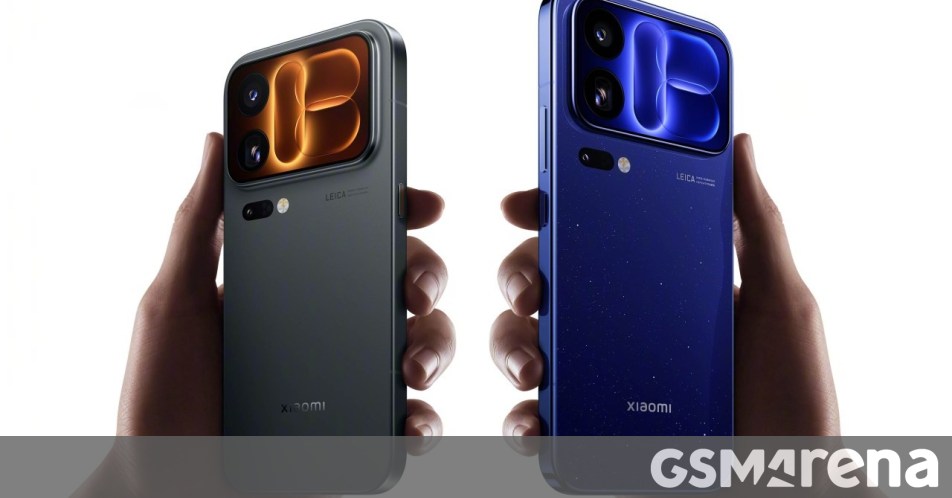
The mobile industry has reached a significant inflection point with the official unveiling of the Xiaomi 18 Pro and Xiaomi 18 Pro Max. Hot on the heels of the recent debut of the Snapdragon 8 Elite and its high-performance "Extreme" counterpart, Xiaomi has moved aggressively to integrate these silicon advancements into its latest flagship hardware. These devices, which are already available to consumers in China, represent a departure from previous design philosophies, focusing heavily on sensor resolution, battery density, and the integration of secondary rear-facing displays. As the company confirms its intent to bring the series to the global market, the industry is closely monitoring how these devices will compete in a landscape currently defined by rapid AI integration and rising manufacturing costs.
Chronology of the Launch and Global Rollout
The sequence of events leading to this release began with the high-profile announcement of the Snapdragon 8 Elite Gen 6 series. Xiaomi, leveraging its long-standing strategic partnership with Qualcomm, utilized this momentum to finalize its own product roadmap. Following the initial domestic launch in China, Xiaomi confirmed that the 18 Pro series is slated for an international release, though the specific regional rollout schedule remains fluid.
Industry analysts have noted a discrepancy in initial communications; while the primary corporate announcement indicated that the entire "series" would see a global launch, regional divisions—specifically Xiaomi India—have thus far only explicitly referenced the standard Xiaomi 18 Pro. This suggests that the distribution strategy may vary by market, potentially based on local demand for ultra-premium devices versus the more accessible Pro model.
Hardware Specifications and Engineering Upgrades
The hardware upgrades present in the Xiaomi 18 Pro and 18 Pro Max are substantial, particularly regarding the imaging stack and power management systems.
The Xiaomi 18 Pro Max, serving as the flagship offering, features a 6.9-inch display and is powered by the "Extreme" variant of the Snapdragon 8 Elite. The most notable architectural change in the Max model is the complete overhaul of its camera array. Xiaomi has replaced the previous 50MP primary sensor with a massive 200MP, 1/1.28-inch sensor. Similarly, the 50MP 5x periscope telephoto lens has been substituted with a 200MP 3.2x/75mm module. While the optical zoom reach is technically shorter than the 115mm lens on the 17 Pro Max, the increased resolution allows for sophisticated in-sensor cropping, which Xiaomi claims maintains high detail fidelity while offering more versatility in varying focal lengths.
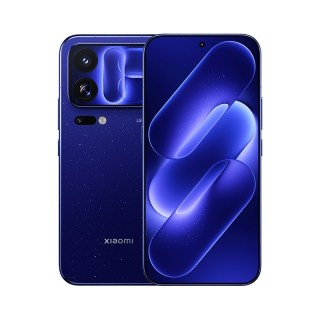
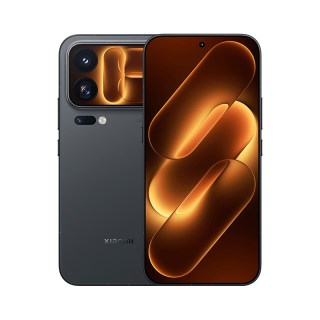
The standard Xiaomi 18 Pro has undergone a similar evolution, now sporting a 6.4-inch display. Despite the increase in screen size, the device maintains a slim profile, with the engineers having managed to expand the display by 0.1 inches while increasing the overall height by only 0.7mm and width by 0.2mm, largely due to the optimization of bezel thickness.
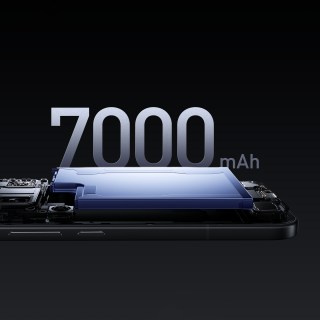
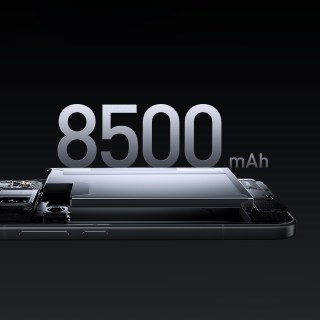
Power capacity has also seen a marked increase across the board. The 18 Pro Max now houses an 8,500mAh battery, representing a 1,000mAh increase over its predecessor. The standard 18 Pro has received a 700mAh boost, bringing its total capacity to 7,000mAh. These figures are significantly higher than the industry standard for flagship devices, raising questions about international logistics. Industry observers are currently speculating whether Xiaomi will adopt strategies similar to those used by other manufacturers to circumvent strict international shipping regulations regarding high-watt-hour battery capacities.
Integration of Secondary Displays and AI Utility
Both the Pro and the Pro Max feature secondary displays embedded directly into the rear camera islands—measuring 2.9 inches and 2.7 inches, respectively. While these screens have historically served as viewfinders for high-resolution selfies using the main camera array, Xiaomi is pivoting the utility of these screens toward software-defined tasks.
A central pillar of the new marketing strategy is the integration of proprietary AI tools. Xiaomi has introduced a feature allowing the AI to generate and execute lightweight applications specifically designed to run on these secondary displays. This ecosystem approach aims to reduce the frequency with which users need to fully unlock their devices, instead offloading notification management and simple app interactions to the rear-facing interface.
Pricing Structure and Market Implications
The pricing for the Chinese market provides a baseline for the global transition. The Xiaomi 18 Pro, equipped with 12GB of RAM and 256GB of storage, is priced at approximately CNY 6,000 (roughly $895 USD). The more premium Xiaomi 18 Pro Max, with equivalent base specifications, starts at CNY 7,000 ($1,050 USD).
Economic experts suggest that these price points are likely to increase once local taxes, import tariffs, and distribution costs are factored into the international retail prices. The smartphone sector is currently experiencing a period of "premiumization," where even entry-level and mid-range devices have seen price hikes due to the increasing cost of semiconductors and memory modules. The Xiaomi 18 Pro series enters a market where consumers are increasingly wary of the cost-to-value ratio, making the company’s ability to justify these costs through AI-driven software and hardware longevity critical to its success.

Comparative Analysis of the Flagship Segment
To understand the impact of these devices, one must look at the legacy hardware. The Xiaomi 17 Ultra and Xiaomi 17, which remain strong sellers in many regions, are currently being positioned as lower-cost alternatives to the incoming 18-series. The move from 50MP sensors to 200MP sensors in the 18 Pro series represents a clear shift in Xiaomi’s imaging strategy—prioritizing high-resolution data capture that can be processed via AI, rather than relying solely on traditional optical focal length.
The implications for the broader market are twofold. First, the industry is clearly moving toward "super-battery" configurations. If Xiaomi’s 8,500mAh implementation proves stable and efficient, it will likely pressure competitors to abandon the 5,000mAh standard that has defined the market for the last three years. Second, the reliance on secondary displays suggests a design trend aimed at combating "screen fatigue," by enabling users to interact with their devices in a more limited, focused capacity.

Official Stance and Future Outlook
While Xiaomi has not yet released a definitive date for the global retail availability, the company has emphasized that the 18 Pro series is a cornerstone of its 2026 growth strategy. The focus on the Snapdragon 8 Elite architecture ensures that these devices will remain at the top of performance benchmarks for the foreseeable future, providing a competitive edge against manufacturers that are slower to implement Qualcomm’s latest silicon.
As the industry awaits the international launch, the primary challenge for Xiaomi will be maintaining the balance between the "Extreme" performance of the 18 Pro Max and the power efficiency required to support its massive battery. If the company can successfully navigate the logistical hurdles of the global rollout and maintain the performance promises made during the China launch, the 18 Pro series could set a new benchmark for what is expected from a high-end, AI-integrated flagship device. The transition from the 17-series to the 18-series is not merely an iterative update; it is a fundamental shift in how Xiaomi envisions the interaction between the user, the camera, and the power management systems that sustain the modern mobile experience.