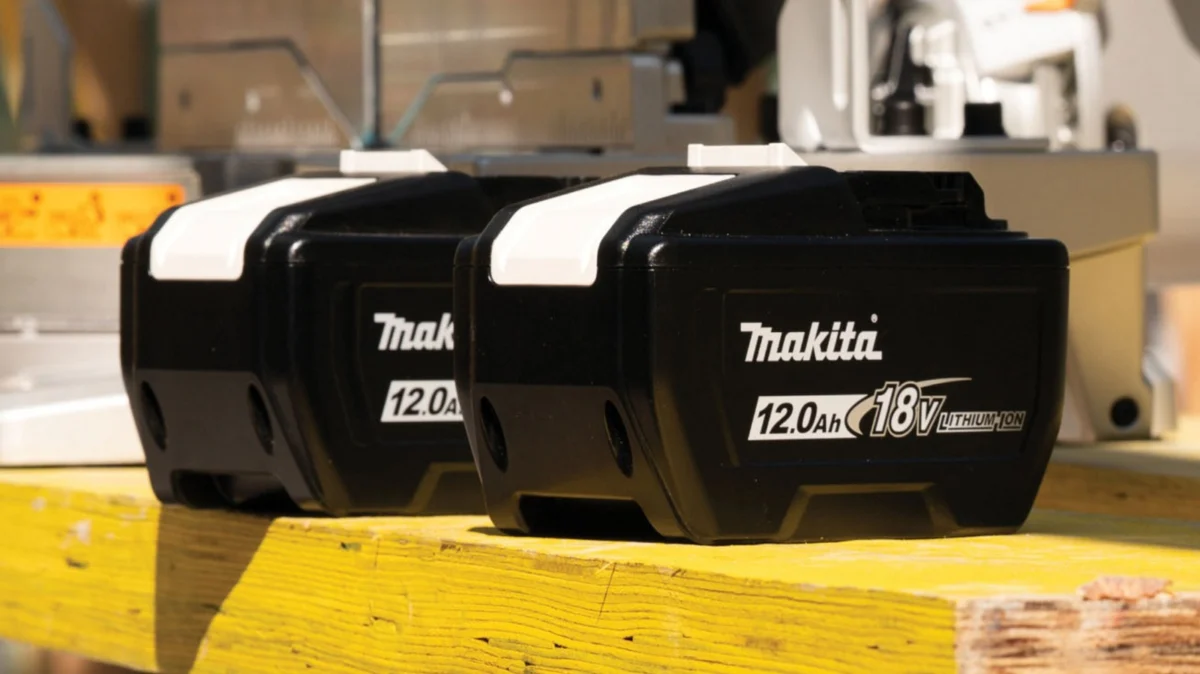
For professional contractors and power tool enthusiasts in the United States, the Makita 18V LXT ecosystem represents a benchmark for reliability and performance. However, a significant gap exists between the domestic market’s offerings and the international landscape, specifically regarding high-capacity lithium-ion power packs. While U.S. consumers are largely capped at a 6.0Ah (amp-hour) battery capacity for standard 18V tools, international markets, particularly Australia and New Zealand, enjoy access to 9.0Ah and 12.0Ah units. This disparity has created a niche, albeit complex, gray market for enthusiasts seeking to maximize the runtime of their most power-hungry tools.
The Landscape of Lithium-Ion Capacity
To understand the significance of these batteries, one must first look at the evolution of lithium-ion technology in power tools. Since the inception of the 18V LXT system, Makita has focused on balancing weight, form factor, and energy density. The 6.0Ah battery, which serves as the current ceiling for the U.S. market, utilizes high-quality 18650 or 21700 battery cells configured to provide a balance of power and portability.
In contrast, the 12Ah battery (model 1915J2-8) is a beast of a different nature. By utilizing a dual-row configuration of high-discharge cells, this unit effectively doubles the energy storage of the standard 6Ah pack. For the end-user, this translates to a significantly extended duty cycle, allowing tools like cordless miter saws, heavy-duty blowers, and rotary hammers to operate for extended durations without requiring a swap or a recharge. The 9Ah variant (model BL1890) sits as an intermediate offering, providing a substantial boost over 6Ah models while maintaining a slightly lower profile than the 12Ah flagship.
A Chronology of Market Segmentation
The regional exclusivity of these high-capacity batteries is not a recent development. For years, Makita has adjusted its product catalogs based on regional demand, regulatory environments, and logistical feasibility. In Australia and New Zealand, the construction industry often involves remote work sites where access to rapid charging infrastructure is limited. Consequently, the demand for "all-day" battery life drove the local distribution of higher-capacity units.
Conversely, the U.S. market has historically prioritized the weight-to-power ratio. Makita’s internal research and distribution strategies for North America have favored the 5Ah and 6Ah batteries, which are lighter and less cumbersome for the average carpenter or residential contractor. While Makita has not issued a formal statement explaining the absence of the 12Ah unit in the U.S., industry analysts suggest that shipping regulations, specifically regarding the transportation of high-density lithium-ion batteries by air, play a significant role. Lithium-ion batteries exceeding certain watt-hour ratings are subject to stringent international shipping restrictions, which can make the logistics of importing these units into the U.S. prohibitively expensive or legally complex for a large-scale manufacturer.
The Mechanics of the Gray Market
Because Makita does not authorize the sale or distribution of these specific models in the United States, users looking to acquire them must navigate secondary markets. Online platforms such as eBay and niche international tool retailers have become the primary conduits for these products.
This procurement process, however, is fraught with complications. The first hurdle is the "hidden" cost. Beyond the premium price tag associated with a 12Ah battery, the buyer must account for international shipping fees, customs duties, and the lack of a domestic warranty. Makita’s standard warranty policies are typically region-specific; a battery purchased from an Australian retailer and imported into the U.S. will generally not be covered under the standard Makita U.S. service agreement.
Furthermore, the secondary market poses a genuine safety risk. Lithium-ion batteries are volatile components that require sophisticated Battery Management Systems (BMS) to regulate charging, discharging, and thermal runaway protection. When purchasing from non-verified third-party sources, there is an increased risk of receiving counterfeit products. These knock-offs often lack the safety circuitry of genuine Makita components, posing a genuine fire hazard during use or while on a charger.
Technical Implications and Performance Analysis
From a performance perspective, the integration of a 12Ah battery into an 18V tool offers tangible benefits for specific use cases. The primary advantage is the reduction of voltage sag under high-draw applications. When a tool like a cordless miter saw encounters a knot in dense hardwood, it draws a significant current spike. A higher-capacity battery with a greater number of parallel cells can provide that current with less resistance, resulting in more consistent power delivery and less strain on the tool’s motor.
However, the increased capacity comes at the cost of weight and ergonomics. A 12Ah battery is physically larger and heavier than a 6Ah unit. For tools that are handheld—such as impact drivers or drills—the added weight can lead to operator fatigue and diminished control. The "heavy-duty" benefit is largely restricted to stationary or semi-stationary tools, such as vacuums, blowers, and table saws, where the weight of the battery serves as a negligible factor compared to the benefit of extended runtime.
Evaluating the Cost-Benefit Ratio
For the average professional, the move to a 12Ah battery may not represent a sound investment. Most contractors in the U.S. utilize a "rotation system" where multiple 5Ah or 6Ah batteries are charged in parallel using multi-port chargers. This strategy effectively eliminates downtime without the need for high-capacity, single-cell batteries.
The procurement of these international units is typically reserved for a very specific subset of the population:
- Specialized Contractors: Professionals using high-draw equipment in environments where power access is non-existent.
- Technological Enthusiasts: Users who prioritize the "maxed-out" capabilities of their tool platforms.
- Collectors: Those interested in the full breadth of the Makita 18V catalog.
For anyone considering this route, the recommendation from industry professionals is to prioritize safety and authenticity. If a price seems too good to be true, it likely indicates a counterfeit product. Furthermore, verifying the legitimacy of the vendor is paramount. Many legitimate Australian tool suppliers provide international shipping, but the user must be prepared for the reality that they are essentially forfeiting the robust after-sales support that defines the Makita brand experience in the United States.
Broader Implications for Tool Manufacturers
The existence of this gray market highlights a growing demand for higher-energy density solutions in the power tool sector. As cordless platforms continue to replace corded, gas-powered, and pneumatic tools, the energy requirements of these devices will only increase.
Makita’s continued expansion of its 40V Max XGT line is, in many ways, the official corporate answer to the limitations of the 18V LXT platform. By moving to a higher voltage, Makita can provide the power required by heavy-duty tools without the need for massive, cumbersome 18V battery packs. The XGT platform offers a more efficient energy-to-weight ratio for high-drain applications, potentially rendering the need for 12Ah 18V batteries obsolete in the long run.
Conclusion: Weighing the Risks
The fascination with the 12Ah Makita battery is a testament to the brand’s reputation for quality. However, for the vast majority of U.S.-based users, the existing 18V LXT lineup is more than capable of handling the most demanding tasks. The "hoops" required to obtain international batteries—the shipping costs, the lack of warranty, and the safety risks associated with gray-market electronics—far outweigh the benefits for all but the most niche users.
As the industry shifts toward higher voltage platforms like XGT, the demand for such extreme-capacity 18V batteries may diminish. Until then, those who choose to pursue the 12Ah path should do so with extreme caution, ensuring that their tools are protected and their batteries are sourced from reputable entities. Ultimately, the best way to ensure productivity on the job site remains a robust, well-managed system of standard-capacity batteries and the professional support that comes with domestic authorization.