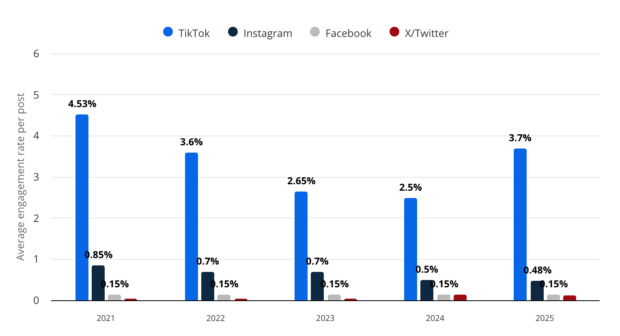
Modern digital publishing has reached a paradoxical crossroads where the volume of content produced daily outstrips human consumption capacity by orders of magnitude, yet exceptional creative assets routinely languish in obscurity due to structural publishing oversights. Creating high-caliber material is merely the foundational first step in a complex ecosystem; without a systematic distribution framework, even the most meticulously researched whitepapers, engaging video productions, and insightful articles fail to achieve their intended market penetration. As organic visibility metrics face continuous downward pressure across major digital networks—exemplified by average per-post engagement rates hovering below one percent on platforms like Facebook and Instagram—marketing executives and content strategists are forced to reevaluate how they push material to market. This structural evolution has turned content distribution from an afterthought into the primary determinant of digital marketing ROI.

To understand the current imperative for structured distribution, one must examine the macroeconomic shifts in digital publishing over the past decade. Historically, publishing a blog post or launching a video asset on an owned domain was sufficient to secure steady streams of inbound traffic. However, algorithm updates, market saturation, and the algorithmic prioritization of paid placements have fundamentally altered the discovery landscape. Contemporary digital strategies now require an integrated approach that harmonizes owned, earned, and paid distribution vectors. Owned channels—comprising company blogs, email newsletters, and organic social profiles—provide a secure baseline for brand control and audience nurturing. Earned channels, such as organic social shares, industry press coverage, backlinks, and user-generated content, lend invaluable third-party credibility that brand-controlled media cannot replicate. Meanwhile, paid channels—including targeted social ads, search engine marketing, and strategic creator partnerships—act as a scalable accelerant, injecting capital to amplify top-tier assets to precisely defined demographic segments.
The necessity of a formalized distribution blueprint extends far beyond mere visibility; it is fundamentally an exercise in operational efficiency and asset longevity. Content creation is resource-intensive, demanding substantial investments of time, specialized talent, and financial capital. Allowing a comprehensive webinar or a proprietary research report to exist as a single-use asset violates core principles of modern resource management. A mature distribution architecture transforms a single flagship project into a diversified portfolio of derivative assets. For instance, a 45-minute industry webinar can be systematically disassembled into bite-sized video clips optimized for TikTok and YouTube Shorts, visualized as multi-slide carousels for LinkedIn, summarized into key data points for executive X (formerly Twitter) threads, and curated into a deep-dive email newsletter sequence. This methodical repurposing alleviates the chronic burnout often observed in corporate content teams, shifting the operational focus from relentless creation to intelligent adaptation and syndication.
Furthermore, consumer behavior dictates that audience segments do not congregate in monolithic spaces, nor do they consume information through uniform formats. Modern audiences demand flexible consumption options; a prospective client may reject a lengthy whitepaper but eagerly consume a 30-second vertical video breakdown or skim an infographic on mobile devices. A robust distribution strategy bridges this gap by ensuring brand messaging appears natively across the specific channels where target demographics already spend their professional and personal hours. By tailoring the packaging, tone, and format of an asset to match the cultural norms of each specific platform—ensuring a B2B insight feels professional on LinkedIn yet conversational and dynamic on short-form video networks—brands can maintain continuous top-of-mind awareness without exhausting their creative pipelines.

Building a resilient content distribution framework requires a disciplined, sequential methodology that begins with objective setting and concludes with data-driven iteration. Strategic execution must commence with the establishment of clear, measurable business objectives rather than vanity metrics. Whether an organization seeks to build brand authority, drive direct website conversions, generate qualified sales leads, or foster community engagement, the overarching goal dictates the selection of Key Performance Indicators (KPIs). For authority-building campaigns, tracking backlink acquisition and brand mentions is paramount, whereas traffic-focused initiatives prioritize click-through rates and referral traffic volume. Industry analysts consistently emphasize that measuring every platform against a uniform benchmark is a critical strategic error; a LinkedIn thought-leadership post serves a fundamentally different purpose than a transactional search engine ad, and their success metrics must reflect those functional divergences.

Once objectives are codified, strategists must conduct rigorous audience mapping to align distribution channels with actual consumer behavior rather than aspirational guesswork. Industry practitioners note that content distribution channels must reflect where the target market actively consumes information, rather than where marketers wish they would look. Analyzing existing social media analytics, web traffic patterns, and social listening data provides empirical clarity on audience concentrations. Following this audience alignment, each designated channel must be assigned a specific operational mandate within the marketing mix. For example, search engines and blogs can be tasked with capturing high-intent inquiries over long horizons, while social media networks serve as dynamic discovery engines designed to capture fleeting attention spans and build top-of-funnel brand affinity.

The operational backbone of any distribution strategy relies on a comprehensive content audit and a structured repurposing workflow. Before committing resources to new production pipelines, organizations must inventory existing assets, scoring them for their potential to be successfully refashioned across alternative formats. Industry leaders increasingly leverage advanced artificial intelligence tools to streamline this workflow, using large language models to ingest long-form transcripts, extract core thematic takeaways, and draft initial platform-native adaptations. This technological integration allows marketing teams to transition from manual, ad-hoc distribution to automated, multi-wave promotional cadences. Rather than exhausting all distribution efforts on a single launch day, sophisticated teams map out phased release schedules—deploying foundational reports on day one, executive thought-leadership commentary on day two, and granular video breakdowns weeks later—to sustain momentum over extended periods.
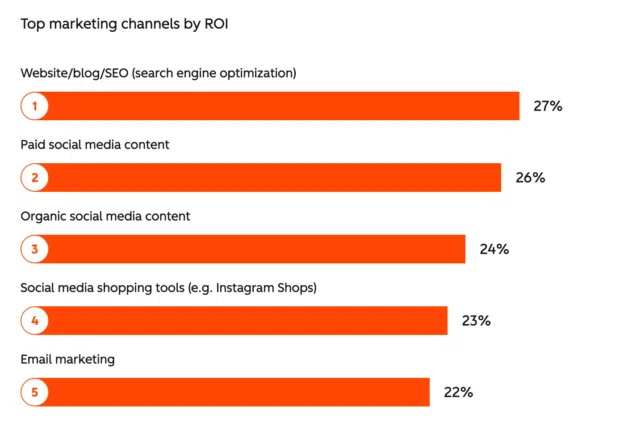
The selection of distribution channels requires a nuanced understanding of the unique advantages and inherent limitations of each medium. Social media continues to dominate as a primary discovery mechanism, with recent industry research indicating that a significant majority of consumers discover new brands and products through social channels annually. The primary advantage of social media lies in its unmatched flexibility and viral potential, allowing brands to pivot rapidly between organic community-building and highly targeted paid amplification. However, social channels are perpetually constrained by declining organic reach algorithms and short content lifespans, necessitating constant vigilance and frequent publishing cadences to maintain visibility.

Conversely, search engine optimization and owned website infrastructure operate on user intent, capturing prospects at the precise moment they are actively seeking solutions to specific problems. Unlike social posts that experience rapid decay within hours of publication, properly optimized evergreen content can generate compounding returns in traffic and lead generation over months or years, frequently ranking as the highest-ROI channel in annual marketing surveys. The primary drawback of search-based distribution is the protracted timeline required to achieve competitive rankings, demanding sustained patience and rigorous technical execution.
Influencer and creator marketing represent another vital pillar of modern distribution, capitalizing on the deep trust consumers place in independent creators over traditional corporate entities. Empirical data shows that consumers frequently follow significantly more creators than corporate brands and view creator recommendations as highly authentic sources of information. By partnering with aligned influencers, brands bypass banner blindness and tap directly into hyper-engaged, niche communities. Nevertheless, creator partnerships introduce challenges related to cost, brand safety, and the loss of absolute creative control over messaging.

Email marketing remains perhaps the most reliable and underrated distribution channel, offering direct access to an audience that has explicitly granted permission to deliver messaging into their personal inboxes. Email campaigns yield exceptional conversion rates and protect brands from the volatile algorithmic shifts characteristic of third-party social networks. However, maintaining a healthy email ecosystem requires continuous list hygiene, compelling copywriting to combat crowded inboxes, and careful management of unsubscribe rates.
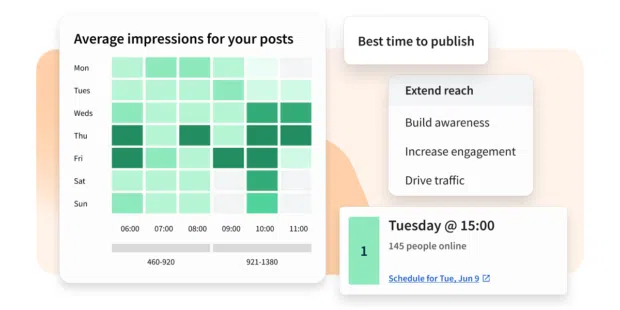
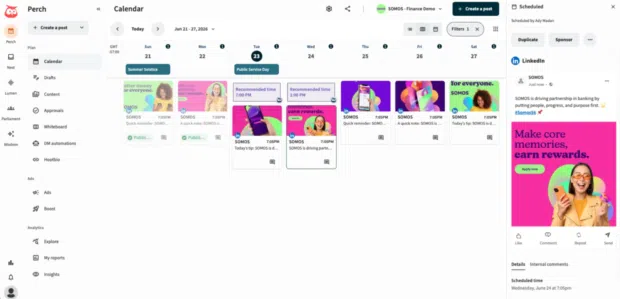
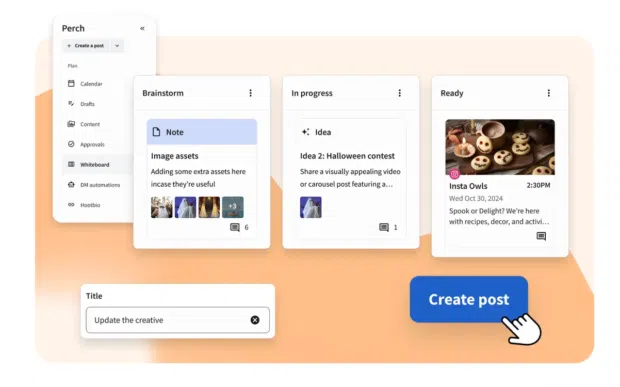
To operationalize these multi-channel strategies effectively at scale, organizations increasingly rely on specialized, all-in-one marketing platforms designed to unify planning, scheduling, and analytics. Tools like Hootsuite’s Perch provide centralized drag-and-drop calendars that enable marketing teams to map complex distribution waves, customize assets for disparate networks, and enforce rigorous approval workflows as organizations scale. Simultaneously, integrated artificial intelligence assistants such as Wisdom empower teams to rapidly transform flagship content into channel-optimized variations, scheduling posts automatically for peak engagement windows derived from real-time audience analytics.

Ultimately, the transition from unstructured publishing to an engineered content distribution strategy represents the maturation of digital marketing. By recognizing that great content is only as valuable as its reach, organizations can maximize the utility of their creative investments, meet their audiences on preferred platforms with native formats, and achieve sustainable growth in an increasingly crowded digital economy.