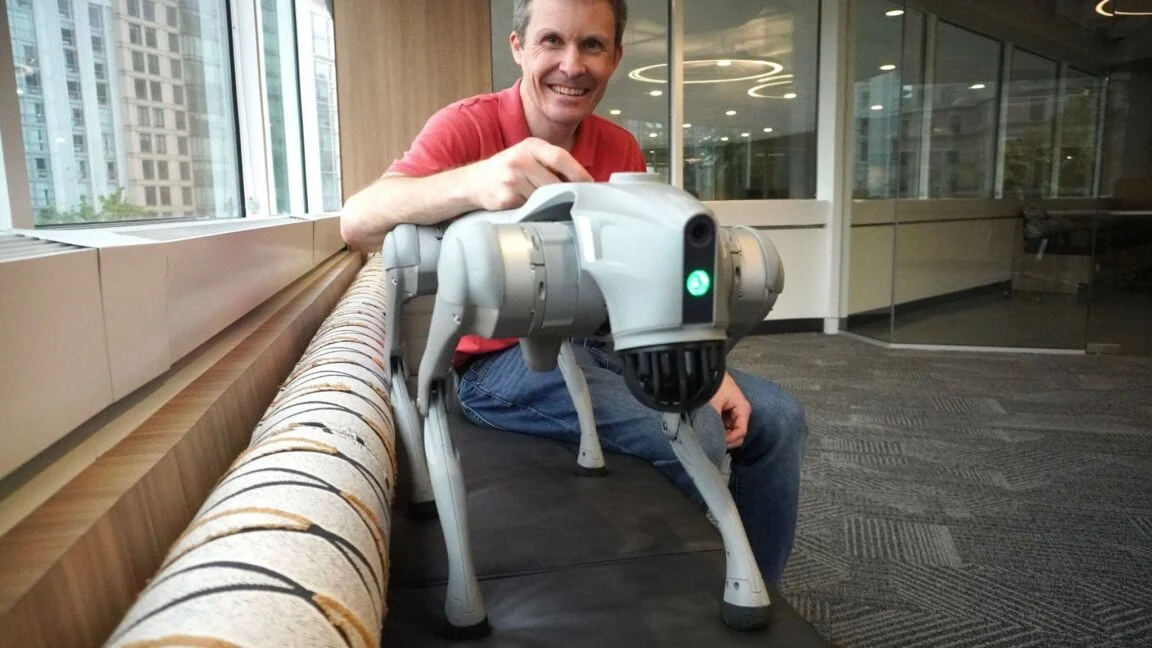
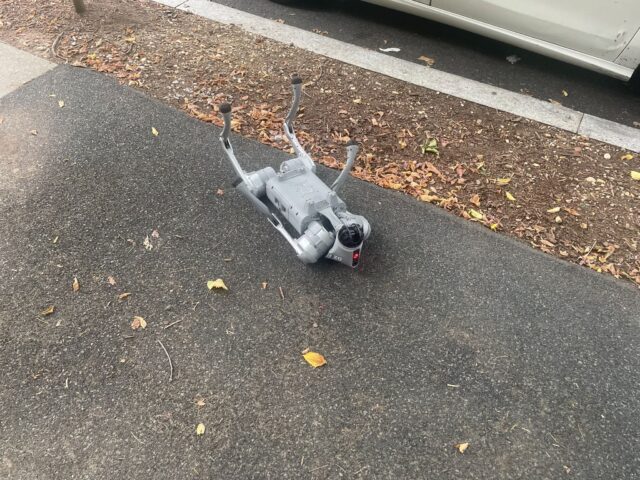
The journey, however, concluded with an unexpected technical failure. Just yards from its destination, the robot—which had traversed two miles of mostly downhill terrain—collapsed under the strain of an uphill climb during a sweltering 87-degree afternoon. With a battery level of five percent and an internal temperature spiking to 183 degrees Fahrenheit, the device’s abrupt shutdown served as a sobering reminder of the current limitations facing mass-market consumer robotics. Despite these growing pains, the machine, purchased for $4,017, represents a paradigm shift in accessibility, democratizing a field that was previously reserved for elite research institutions and deep-pocketed government contractors.
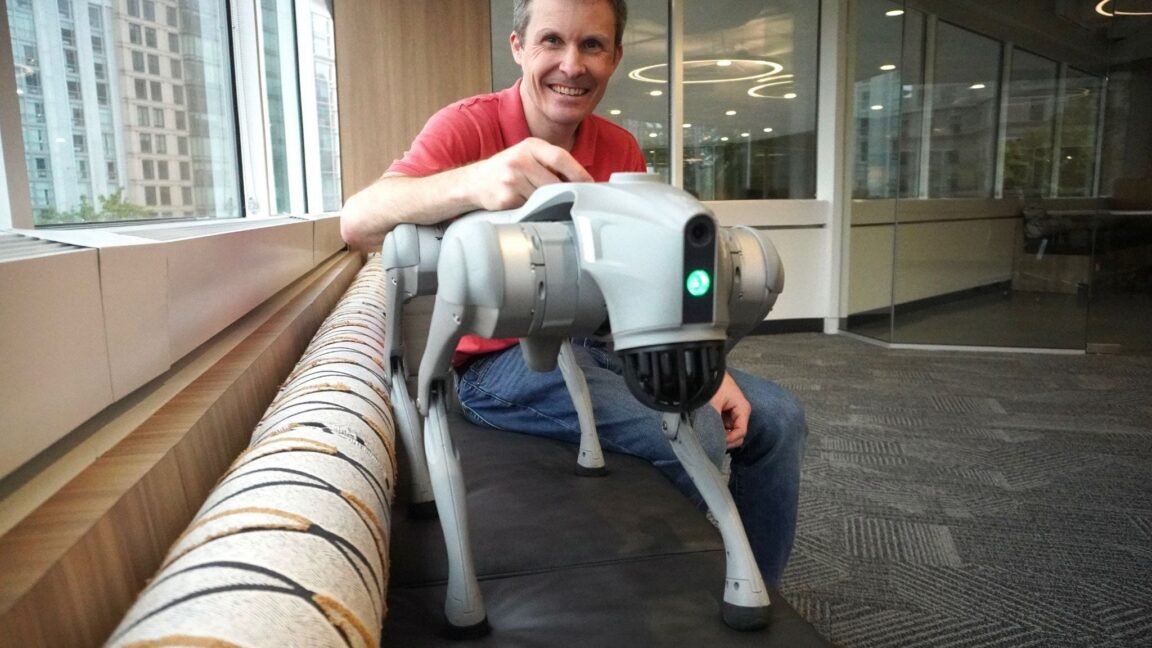
The Democratization of Quadruped Locomotion
For years, the field of legged robotics was stagnant, hampered by prohibitive costs and complex engineering requirements. Before the rise of Chinese firms like Unitree, the industry was dominated by Boston Dynamics, whose iconic Spot robot commanded a price tag upwards of $75,000. These platforms were masterpieces of engineering, often utilizing hydraulic actuators and expensive, high-precision components that ensured reliability at the cost of mass-market viability.
The entry of Unitree into this space changed the trajectory of the entire sector. Founded in May 2016 by Wang Xingxing, a former master’s student at Shanghai University, the company sought to apply the principles of simplicity and modularity to robotics. Wang’s early work, the XDog, was explicitly influenced by the papers published by Boston Dynamics’ founder Marc Raibert. By 2021, the release of the Go1 series for approximately $2,700 signaled a clear intent to move from the lab to the consumer market.
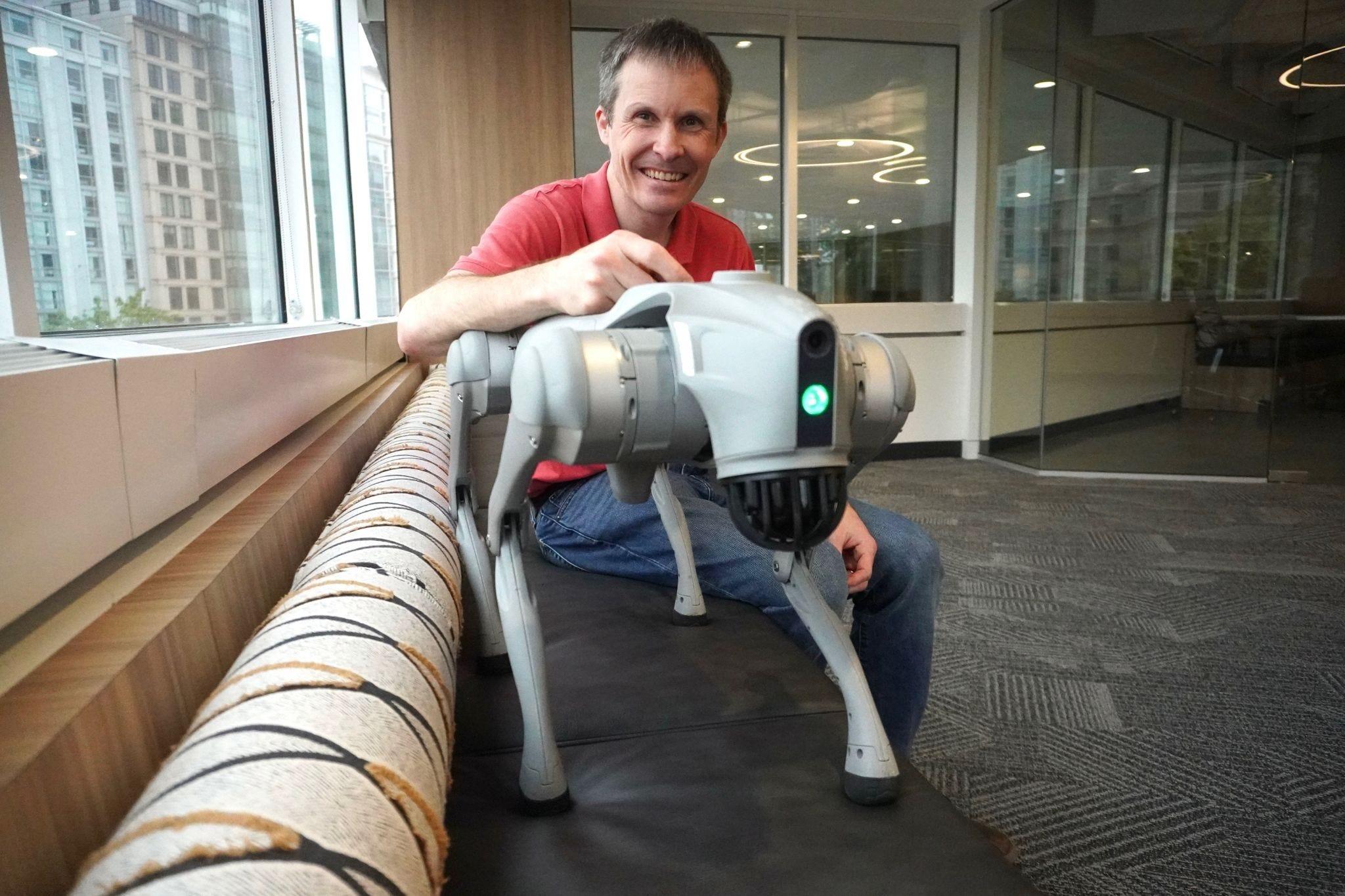
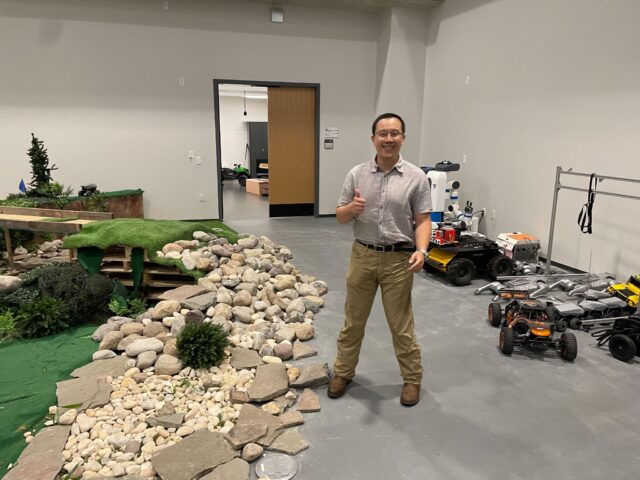
The impact of this shift is best observed in academic settings. Professor Xuesu Xiao of George Mason University notes that the arrival of these platforms effectively democratized robotics research. "Ten years ago, only a very small set of research groups were working on quadruped locomotion," Xiao explains. Today, university labs can afford to maintain fleets of these robots for a fraction of the cost required previously, allowing for faster iterations and a broader range of experimental applications.
Engineering for Affordability: The Unitree Strategy
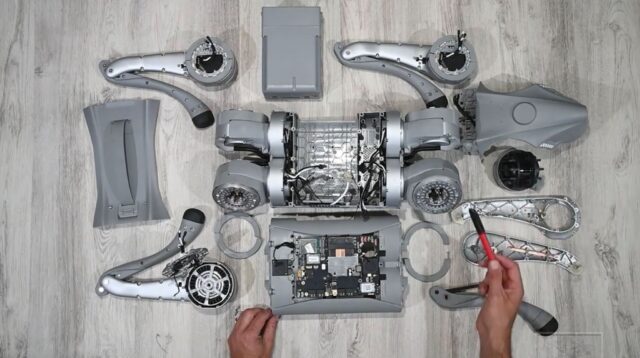
The secret to Unitree’s market dominance lies in a deliberate departure from the design philosophies of Western industrial robotics. Where legacy systems focused on extreme precision through high-ratio gearboxes, Unitree prioritized cost-efficiency and agility. By utilizing identical, off-the-shelf motors across all four legs and pairing them with a simple 6.33-to-1 gearbox, the company has managed to slash manufacturing costs while maintaining a high degree of "backdriveability"—the ability of the robot to sense and react to external physical forces.
Industry analysts at firms like Simplexity, which conducted a teardown of the Go2 Air, have highlighted this modularity as a key success factor. By using the same motor for shoulders and leg segments, the company significantly reduced part counts and simplified maintenance. While experts like Jakub Bartoszek of MAB Robotics argue that this approach relies on lower-quality components that may wear out faster, the design ensures that these machines are easily serviceable in the field. A damaged leg can often be swapped out in under a minute, a stark contrast to the complex, factory-service-only requirements of earlier generation robots.
From Quadruped to Humanoid: The Next Frontier
The financial markets have taken notice of this rapid scaling. Following a successful IPO on the Shanghai Stock Exchange in August 2026, the company’s valuation surged to $34 billion. This capital injection is being funneled directly into what the industry considers the "holy grail" of robotics: humanoids.
Unitree’s transition from the Go2 quadruped to the G1 humanoid was swift. By leveraging its established supply chain for actuators and gearboxes, the company was able to launch a consumer-grade humanoid for as little as $13,500. Financial filings reveal the scale of this pivot: in 2025 alone, the company’s humanoid revenue jumped eightfold, now accounting for more than 51 percent of its total earnings. This strategy mirrors the rise of DJI in the consumer drone market, where the company initially released "rough-around-the-edges" hardware and used the resulting volume to fund the development of superior, proprietary components.
Geopolitical Tensions and the Future of Robotics
This rapid ascent has not gone unnoticed by policymakers in the West. As Unitree’s robots find their way into labs and hobbyist workshops globally, concerns regarding data security and the potential for military dual-use have prompted legislative action. In June 2026, a bipartisan group of U.S. lawmakers introduced legislation aimed at restricting the importation of Chinese-manufactured robots, specifically citing the security risks associated with the platforms. By July, the FCC had implemented sweeping regulations on foreign-made robotics, creating a complex regulatory environment for companies operating in the U.S.
However, the global market remains vast. Much like the current trajectory of the electric vehicle market, where Chinese manufacturers have bypassed U.S. trade barriers to establish dominance in Europe, Southeast Asia, and Latin America, the robotics sector faces a potential bifurcated future. Critics of the restrictive policies warn that barring Chinese competition could inadvertently turn the United States into a "robotics backwater," where domestic innovation is stifled by a lack of competitive pressure and limited access to affordable, mass-produced hardware.
Looking Ahead: The Reliability Gap
Despite the economic and strategic implications, the day-to-day reality of owning a Unitree robot remains one of experimentation rather than utility. The software ecosystem is still maturing; buggy applications, inconsistent navigation in real-world environments, and the lack of a clear "killer app" mean that for most users, the machine remains a sophisticated toy or a research tool.

The incident in Washington serves as a microcosm for the industry’s current state. The hardware is undeniably impressive, capable of complex feats like balancing on two legs or performing handstands, yet it lacks the refined control software and battery density required for true, autonomous endurance in the field. As the company moves to address these shortcomings, the "flywheel" of high-volume sales continues to spin, allowing for further optimization of production and design. Whether the industry evolves into a landscape of highly specialized, expensive machines or a world of ubiquitous, affordable automatons remains to be seen. What is clear is that the era of accessible, multi-legged robotics has arrived, and the race to refine this technology is only just beginning.