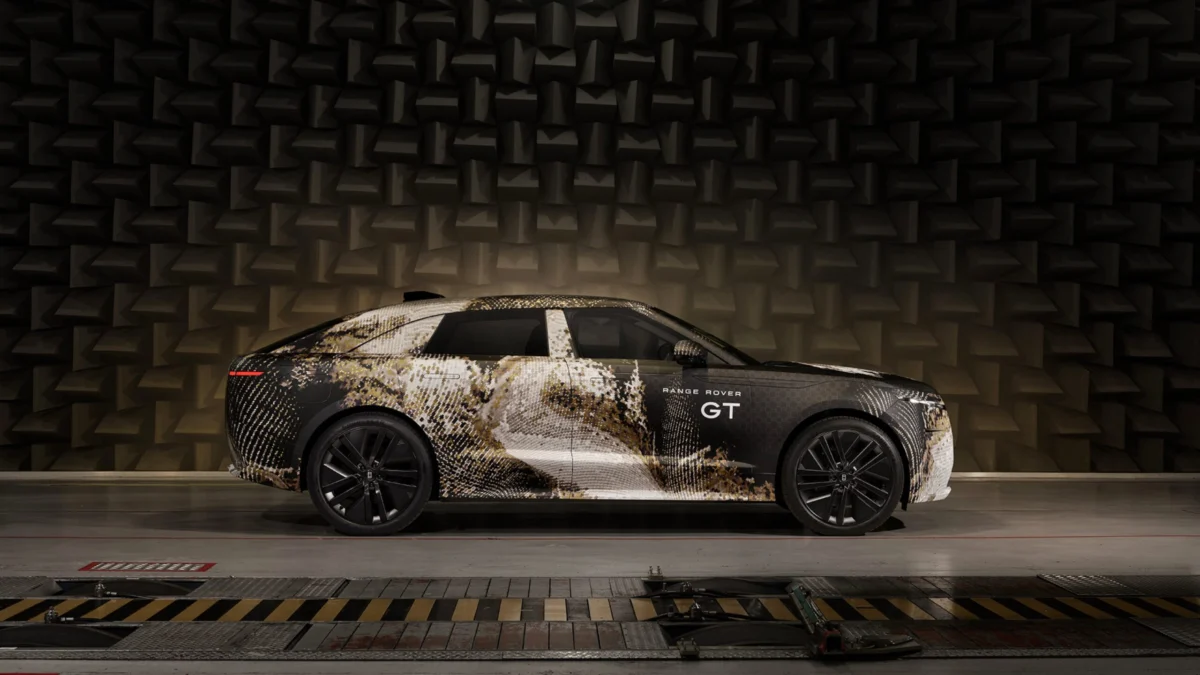
Range Rover is poised to redefine the luxury grand touring segment with its upcoming electrified model, codenamed the GT, built upon the company’s innovative EMA architecture. This new platform marks a significant evolution for the iconic British marque, promising a harmonious blend of sophisticated on-road refinement, cutting-edge electric performance, and the legendary all-terrain capability that has become synonymous with the Range Rover name. The company has been meticulously refining the core principles of the grand tourer formula, reinterpreting them through a distinctively Range Rover lens, according to Martin Limpert, managing director of Range Rover.
"We have spent the last few years working obsessively on the fundamentals of the GT formula, reinterpreted in a sophisticated, uniquely Range Rover way," Limpert stated. "The result is the most car-like, yet unmistakably capable, Range Rover ever created, now possible on our electrified EMA architecture—complementing our existing powertrain portfolio to deliver a complete set of options for every customer need. Its blend of effortless EV performance, first-class long-haul refinement and all-terrain capability is pure Range Rover; while its calming interior previews our vision of a modern grand tourer."
This strategic development signifies Range Rover’s commitment to an electrified future, with the EMA platform being the third in its portfolio of electrifiable architectures. It follows the established MLA platform, currently underpinning Range Rover’s flagship SUVs, and the JEA platform, which Jaguar is developing for its forthcoming Type 01, another four-door grand tourer expected to debut later this year. The shared architectural foundation between the Range Rover GT and the Jaguar Type 01 hints at a collaborative approach to electrification within the broader Jaguar Land Rover (JLR) group, aiming to leverage economies of scale and accelerate the transition to zero-emission mobility.
A New Design Philosophy: Ultraminimalist Interior Meets Functional Design
Range Rover provided a glimpse into the GT’s interior, revealing a departure from the familiar cabin design of its existing SUV lineup. The showcased interior adopts an ultraminimalist aesthetic, a bold move that signifies a new direction for the brand’s interior design language. This minimalist approach, however, does not compromise on functionality or regulatory compliance. Range Rover has evidently prioritized user experience and safety, ensuring that the cabin adheres to stringent safety standards mandated by European and international regulators, which increasingly require physical controls for critical functions. The company’s commitment to this principle is underscored by its understanding of evolving safety requirements, as evidenced by past discussions on the necessity of physical buttons for optimal safety scores.
A notable aspect of the GT’s interior design is the deliberate absence of a third screen for the front passenger. Instead, Range Rover has focused on integrating essential information and controls through a dual-screen setup: a main instrument display and an infotainment touchscreen, both utilizing advanced OLED technology for superior clarity and responsiveness. The inclusion of a standard head-up display further enhances the driver’s ability to access information without diverting their attention from the road, contributing to both convenience and safety. This thoughtful integration of technology aims to create a serene and intuitive driving environment, embodying the concept of a "calming interior" that Limpert alluded to.
The EMA Platform: A Foundation for Electrified Performance and Versatility
The EMA platform is central to Range Rover’s electrification strategy for this new GT model. As the third electrifiable architecture within JLR, it represents a significant investment in future-proofing the brand’s product offerings. While the specifics of the EMA platform’s technical capabilities are still under wraps, its role in supporting a "car-like" yet "unmistakably capable" Range Rover suggests a focus on agile handling, responsive acceleration, and efficient energy management.
The integration of the EMA platform allows Range Rover to offer a complete suite of powertrain options, catering to a diverse customer base. This includes not only fully electric powertrains but also likely hybrid configurations, ensuring that customers can choose the solution that best aligns with their driving needs and environmental preferences. The mention of "effortless EV performance" suggests that the GT will deliver immediate torque and smooth acceleration characteristic of electric vehicles, while "first-class long-haul refinement" points to a focus on ride comfort, noise insulation, and overall passenger experience during extended journeys.
Broader Implications: Range Rover’s Strategic Vision and Market Positioning
The introduction of the Range Rover GT and its underlying EMA platform signifies a crucial step in the brand’s strategic evolution. By venturing into the dedicated grand tourer segment with an electrified offering, Range Rover is aiming to capture a new segment of discerning buyers who seek a luxurious, high-performance vehicle that bridges the gap between sportiness and everyday usability. This move also positions Range Rover to compete more directly with established players in the premium grand tourer market, while leveraging its unique brand heritage and off-road prowess to create a distinct offering.
The success of the GT will hinge on its ability to deliver on the promise of a "sophisticated, uniquely Range Rover way" of interpreting the grand tourer. This means not only achieving impressive electric performance and luxury but also retaining the brand’s core DNA of capability. The challenge will be to integrate advanced electrification and a more car-like driving dynamic without compromising the ruggedness and versatility that has defined Range Rover for decades.
The collaboration with Jaguar on the JEA platform for the Type 01 also highlights a shared vision for the future of luxury automotive design and engineering within JLR. This synergy could lead to faster development cycles, shared technological advancements, and a more robust product portfolio for both brands.
Looking Ahead: Unveiling the Production Model
While the details provided offer a compelling glimpse into Range Rover’s future direction, the full revelation of the GT, including its exterior design and detailed specifications, is anticipated later this year. The camouflage worn by the prototypes suggests that the design team is still in the final stages of refining the vehicle’s aesthetic. However, the emphasis on a "car-like" yet capable profile hints at a potentially sleeker, more aerodynamic silhouette compared to the boxier designs of traditional Range Rover SUVs.
The automotive industry is undergoing a profound transformation, driven by electrification, autonomous driving technologies, and evolving consumer expectations. Range Rover’s proactive approach with the GT and the EMA platform demonstrates its commitment to not only adapting to these changes but also shaping the future of luxury mobility. The company’s ability to successfully blend cutting-edge electric technology with its established brand identity and legendary capability will be key to the GT’s success in the competitive luxury market. The forthcoming unveiling will undoubtedly be a closely watched event, providing a definitive look at Range Rover’s ambitious vision for the modern grand tourer.