Mushroom hunting, a pastime celebrated for its allure and the promise of unique culinary discoveries, carries inherent risks. Beyond the thrill of the hunt lies the potential for misidentification, leading to severe illness, or the disappointment of discovering your carefully guarded foraging spots have been compromised by fellow enthusiasts or nature’s own scavengers. For many, the dream is to replicate the ease of vegetable gardening, cultivating beloved varieties like shiitake, morel, or lion’s mane mushrooms in the comfort of their own homes or backyards. However, the journey from spore to harvest is far from straightforward, demanding a precise balance of environmental conditions, a suitable food source, and an often elusive humid atmosphere.
Fungi, unlike plants, possess a unique biology that makes indoor cultivation a challenging endeavor. Their intricate life cycles and sensitivity to light, heat, and contamination create a delicate ecosystem that can easily be disrupted. Furthermore, many prized mushroom varieties, such as porcini and chanterelles, engage in crucial symbiotic relationships with tree roots, a complex interaction that is exceptionally difficult to replicate in a controlled domestic setting.
This article delves into the practical realities of home mushroom cultivation by examining five distinct methods tested by a busy parent over the course of a year. The narrative, while recounting personal trials and tribulations—including an epic mess involving chopped straw in a bathroom—aims to provide a grounded perspective for aspiring mycologists. The following exploration details the author’s experiences, highlighting successes, failures, and lessons learned, offering valuable insights for anyone curious about bringing the magic of mushroom growing into their own space.
Method 1: The Mushroom Log – A Natural Approach with Caveats
The mushroom log represents one of the most natural, straightforward, and cost-effective methods for cultivating fungi. These logs, typically hardwood, are pre-inoculated with mushroom spawn, the vegetative part of a fungus, and are designed for outdoor cultivation. A notable example is the shiitake mushroom log kit offered by Williams Sonoma. While aesthetically pleasing with its smooth waxed ends and a rustic metal tag indicating its creation date, this particular indoor-oriented log presented a significant learning curve.
The process typically involves soaking the log for 24 hours, with the expectation of mushroom "pinning"—the initial stage of fruiting—within approximately 30 days. However, the author’s experience with a shiitake log, identified as a "younger log," indicated a longer colonization period, expecting fruiting seven to nine months from its stamped date. Despite soaking the log multiple times, the anticipated pins remained elusive. The log, currently residing on a dining room table, is covered with a plastic produce bag to maintain humidity, and a slight green mold has appeared, a common challenge when managing moisture levels outdoors while simultaneously preventing undesirable fungal growth. This experience echoes previous unsuccessful attempts with similar outdoor logs, underscoring the inherent difficulties in controlling environmental variables for this method.

For those with outdoor space, the option exists to purchase spawn plugs from companies like North Spore and inoculate their own logs. This involves drilling holes into a suitable log, inserting the spawn plugs, and sealing the holes with wax. North Spore provides resources, including a helpful tutorial, to guide users through selecting the appropriate wood for different mushroom varieties. This approach offers greater control but requires more hands-on effort and knowledge of wood types and fungal colonization.
Method 2: Spray-and-Grow Boxes – Accessible Entry for Beginners
For individuals new to mushroom cultivation, seeking simplicity, and content with common varieties, the spray-and-grow box offers a highly accessible entry point. These kits, often featuring oyster mushrooms due to their hardiness and rapid growth, require minimal effort. Oyster mushrooms are known for their mild flavor and versatility in cooking, making them an excellent choice for beginners.
Brands such as Back to the Roots and North Spore offer popular boxed kits. The Back to the Roots kit typically includes a dehydrated fruiting block. The user’s role involves soaking the block for several hours, placing it in a location with indirect light, and misting it regularly to maintain humidity. Successful fruiting can occur within days.
North Spore’s blocks, priced around $30, are shipped fresh and bypass the rehydration step, offering multiple flushes of mushrooms. However, their higher moisture content can attract fungus gnats. The author encountered this issue and found a solution recommended by North Spore: a mixture of dish soap, vinegar, and baking soda sprayed onto the block. This proved challenging when mushrooms had already fruited, leading to a messy application. For future endeavors, the author suggests treating fresh blocks with a non-fungicidal insecticide, such as a dissolved mosquito dunk, immediately upon opening to preemptively manage potential pest issues.
North Spore also offers lion’s mane spray-and-grow kits for approximately $35, though the author has not personally tested this specific product. Their experience with lion’s mane in a different setup, however, was successful.
Method 3: Sawdust Spawn in the Garden – Natural Integration and Soil Improvement
For those who prefer a more natural integration of mushrooms into their existing garden landscape, spreading sawdust spawn directly into the garden offers a viable alternative to inoculating logs. This method is particularly well-suited for wine cap mushrooms. The mycelium of wine caps, a network of fungal threads, effectively breaks down wood chips or other substrates, naturally improving soil structure and suppressing weeds. Wine caps are also edible, adding a culinary benefit.

This technique can be implemented by mixing spawn with wood chips between garden beds or by incorporating it into straw, which acts as both a mulch and a food source for the fungus. The author’s attempt to cultivate wine cap and morel spawn (from different sources) in wood chips was unfortunately thwarted by squirrels, which dug up and consumed the spawn before it could fruit. The experiment did yield some Leratiomyces ceres, or chip cherry mushrooms, which are not edible. This highlights the potential for wildlife interference in outdoor cultivation projects.
Method 4: Fruiting Blocks in a Monotub – A System for Consistent Harvests
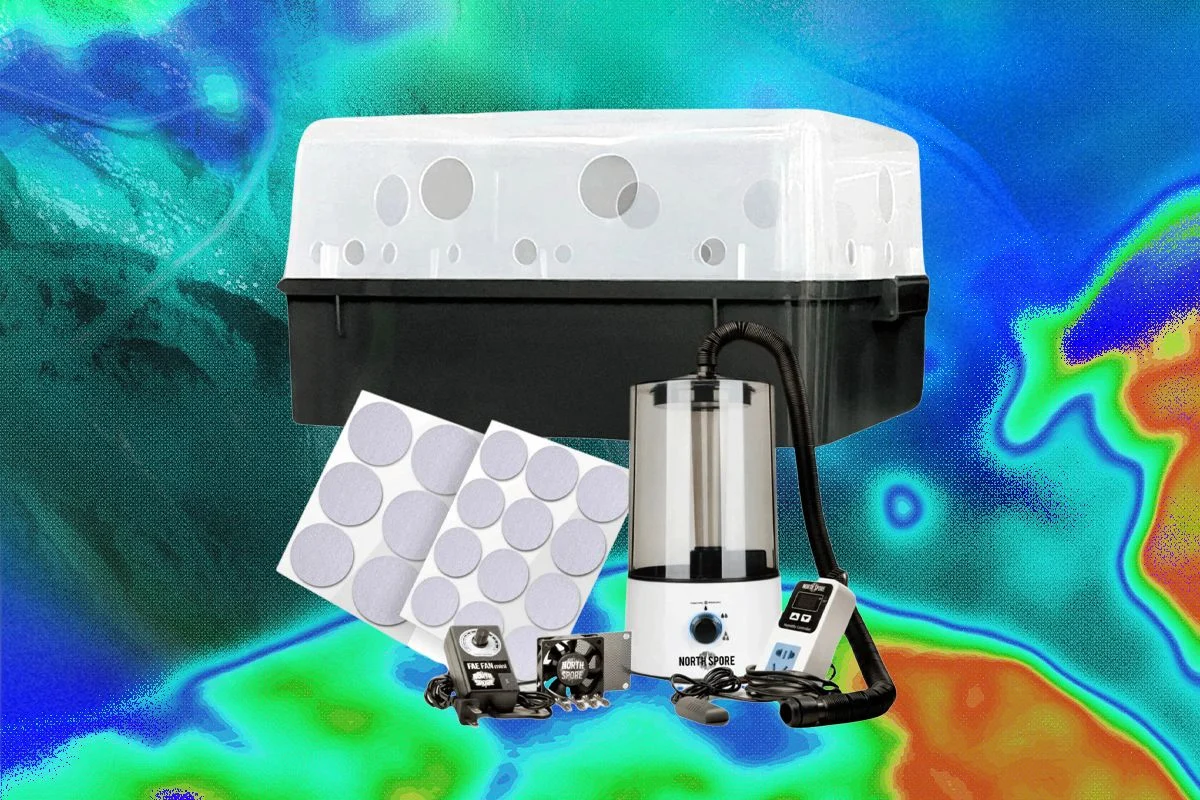
The monotub setup has emerged as the most successful and reliable method for the author’s home mushroom cultivation efforts. A monotub is essentially a plastic bin with a lid, designed to create a controlled environment for mushroom growth. For those seeking advanced environmental control, automated versions are available, managing crucial elements like carbon dioxide, oxygen, and humidity.
While DIY monotubs can be constructed, companies like North Spore offer pre-fabricated setups. These are compatible with both fruiting blocks and spawn. The author successfully used fruiting blocks within a North Spore monotub, experiencing consistent and bountiful harvests of pink, blue, and yellow oyster mushrooms, as well as lion’s mane. The system requires minimal ongoing maintenance, primarily ensuring the humidifier is adequately filled and the hose is correctly positioned.
The author notes that North Spore also offers a larger, five-rack fruiting chamber called the "BoomRoom" for those interested in scaling up production, potentially for commercial purposes, although this has not been personally tested. The success with the monotub system, particularly with fruiting blocks, underscores its effectiveness for achieving substantial yields.
Method 5: Bucket Tek – High-Volume Cultivation
The "bucket tek," or bucket technique, is a popular method for cultivating mushrooms in larger volumes, often employed by those looking to produce mushrooms for sale or distribution. North Spore, with its origins in supplying mushrooms to restaurants in Portland, Maine, has a strong foundation in this method. Co-founder Matt McInnis recommends packing a bucket with chopped straw and grain spawn.
North Spore offers a "MushBucket" oyster mushroom bucket grow kit, priced around $70, which includes chopped straw, a burlap bag, a strap, grain spawn, and a pre-drilled bucket. Refills of straw and spawn are available for approximately $40. The process involves preparing the straw by either soaking it in cold water for a few hours or boiling it at 180 degrees Fahrenheit for an hour, followed by drip-drying. Layers of straw and grain spawn are then packed into the bucket.

The author’s attempt with this method involved soaking the straw and packing it into the burlap bag, then filling the bucket. The bucket was covered with an opaque garbage bag and kept in an empty bathtub for two weeks. Unfortunately, this resulted in mold growth rather than the desired colonization. The author suggests that pasteurizing the straw and attempting the process outdoors during cooler seasons, like fall or spring, might yield better results. This method, while capable of producing high yields, requires careful attention to sterilization and environmental conditions to prevent contamination.
Conclusion: A Rewarding, Yet Demanding, Pursuit
The journey into home mushroom cultivation, as illustrated by these diverse methods, is a testament to the intricate and often demanding nature of fungi. While the allure of fresh, homegrown mushrooms is undeniable, success hinges on understanding and meticulously managing the specific environmental needs of each species. From the natural simplicity of mushroom logs to the controlled environment of a monotub, each method presents its own set of challenges and rewards.
The data suggests that while outdoor methods like log cultivation and garden spawn can be sustainable and beneficial for soil health, they are susceptible to environmental factors and wildlife interference. Indoor methods, particularly the monotub setup, offer greater control and consistency, leading to more reliable harvests, albeit with a higher initial investment in equipment. The spray-and-grow boxes and bucket tek cater to different scales of production and levels of experience, providing accessible entry points for beginners and higher-volume options for the more dedicated grower.
Ultimately, cultivating mushrooms at home is a rewarding endeavor that requires patience, research, and a willingness to learn from both successes and failures. As the demand for locally sourced and unique food items continues to grow, understanding these cultivation techniques becomes increasingly valuable, offering a pathway to fresh, flavorful mushrooms and a deeper connection with the natural world.