In the dynamic and often resource-constrained world of arts and culture, a new breed of digital strategist is emerging, one who prioritizes consistency, strategic logistics, and a refined sense of taste over the pursuit of fleeting virality. At the forefront of this evolution is Dustin Kuhns, a Quakertown, Pennsylvania-based consultant who, since 2023, has leveraged Buffer to manage social media for a diverse portfolio of cultural organizations. His journey reflects a growing recognition within the digital marketing sphere: that true impact stems not from chasing every trend, but from meticulous planning, disciplined execution, and an unwavering focus on an organization’s core mission. Kuhns’ unique approach, which he terms "arts and culture supply chain management," underscores a shift from reactive content creation to proactive, data-informed strategic communication, meticulously supported by platforms that adapt to complex workflows rather than dictating them.
The Architect of Digital Consistency: Redefining Social Media Management
Dustin Kuhns doesn’t readily identify as a mere social media manager. Instead, he perceives his role as akin to a logistics expert, an architect of digital pipelines ensuring that an organization’s vision translates seamlessly into public-facing content across multiple channels. "I specialize in arts and culture supply chain management," Kuhns explains, detailing a process that tracks content from "leadership vision to a creative team and get put out into social media, email, the website, or advertising." This holistic perspective positions him as a crucial intermediary, bridging the gap between artistic intent and audience engagement. His clientele is as varied as the arts themselves, encompassing small teams of two or three individuals to established institutions like religious nonprofits, vibrant film festivals, historic theaters, and myriad arts organizations. Each entity, despite its unique mission and scale, shares a common challenge: effectively communicating its value and engaging its community in an increasingly crowded digital landscape.
Kuhns’ early career insights were pivotal in shaping his current philosophy. He observed that the primary impediment to success for many cultural organizations was rarely a lack of creative talent or a compelling brand. "It wasn’t a stellar brand or better creative content that most of these organizations were missing," he notes. "It was consistency." This fundamental realization highlighted a critical need for robust, adaptable tools that could facilitate sustained engagement without imposing rigid, counterproductive workflows. The digital realm, with its incessant demands for fresh content, often overwhelms organizations with limited staff and budgets. Kuhns recognized that the right technological partner could alleviate this burden, enabling organizations to maintain a consistent, high-quality online presence that nurtured their audience and advanced their mission. His own background, deeply rooted in music and the arts—from playing in church and producing shows to design, construction, and ultimately communications, alongside curating fine art exhibitions—has endowed him with a discerning eye and a profound understanding of the cultural sector. This innate sense of taste, he believes, is a cornerstone of his consultancy: "Clients come to me to feel confident about what they produce," he states. "They trust my taste." This blend of artistic sensibility and logistical acumen positions Kuhns uniquely in the social media management field.
Navigating the Nuances of the Arts and Culture Sector
The challenges faced by arts and culture organizations in the digital age are multifaceted. Many operate with constrained budgets, relying heavily on grants, donations, and community support. Their success often hinges on their ability to cultivate strong, loyal audiences and articulate their unique cultural contributions. However, a 2023 study by the National Endowment for the Arts highlighted that while most arts organizations recognize the importance of digital engagement, many struggle with the technical expertise and consistent resource allocation required to excel. Social media, in particular, demands not just content creation but strategic distribution, audience analysis, and continuous adaptation. For organizations whose core mission is cultural preservation, artistic expression, or community enrichment, the technicalities of social media algorithms and analytics can be daunting. Kuhns steps into this void, offering a specialized service that not only manages their digital presence but also optimizes the entire content delivery process, ensuring that their message resonates effectively and consistently with their target demographics. His approach acknowledges that for these entities, digital platforms are not merely marketing tools but vital conduits for community building, education, and cultural discourse.
The Strategic Choice: Buffer’s Focused Power

Dustin Kuhns’ decision to stick with Buffer as his business scaled was, for him, an unequivocal choice. In a market saturated with all-encompassing software solutions, Buffer stood out for its commitment to excelling at a focused set of tasks. This philosophy aligns perfectly with Kuhns’ preference for efficiency and adaptability. "I’ll choose a tool that has 75% of what I need and find workarounds for the other 25% before I’ll use one that has 200% of what I need," he asserts, "and then let all that extra capacity get in the way." This statement encapsulates a critical critique of modern software development, where feature bloat can often hinder productivity rather than enhance it. For a consultant managing over 10 social media channels for diverse clients, the clarity and simplicity of a tool like Buffer are invaluable. It allows him to focus his mental energy on client-specific strategies and content nuances, rather than wrestling with an overly complex interface or navigating extraneous features.
Buffer, founded in 2010, has long been recognized for its user-friendly interface and reliable scheduling capabilities. Its evolution has seen it maintain this core philosophy while gradually expanding its offerings to meet the growing demands of digital marketers. For Kuhns, the platform’s ability to seamlessly adapt to his varied client needs, rather than imposing a "one-size-fits-all" workflow, is paramount. Each client, from a small non-profit to a large institution, has distinct priorities, brand voices, and audience engagement metrics. Buffer’s flexibility means Kuhns can tailor his approach without being constrained by the tool itself, allowing his expertise and taste to drive the strategy. This adaptability is crucial in the arts and culture sector, where authenticity and bespoke communication are highly valued.
A Philosophy of Purpose-Built Tools
Kuhns’ preference for lean, purpose-built tools reflects a broader trend among sophisticated digital professionals. As the digital landscape becomes increasingly complex, with new platforms and functionalities emerging constantly, the temptation for software providers to offer everything under one roof is strong. However, this often leads to compromises in performance, usability, and specialization. For consultants like Kuhns, who operate with precision across multiple accounts and client strategies, a tool that does its core job exceptionally well, leaving room for integration with other specialized tools if necessary, is far more valuable. This approach minimizes cognitive load, reduces the learning curve for new team members, and ensures that the technology serves the strategy, not the other way around. The implication for SaaS developers is clear: while breadth of features can be attractive, depth of functionality and user experience in core areas often create stronger, more loyal user bases, especially among professionals who demand efficiency and control over their workflows.
Unlocking Deeper Insights: The Analytics Revolution
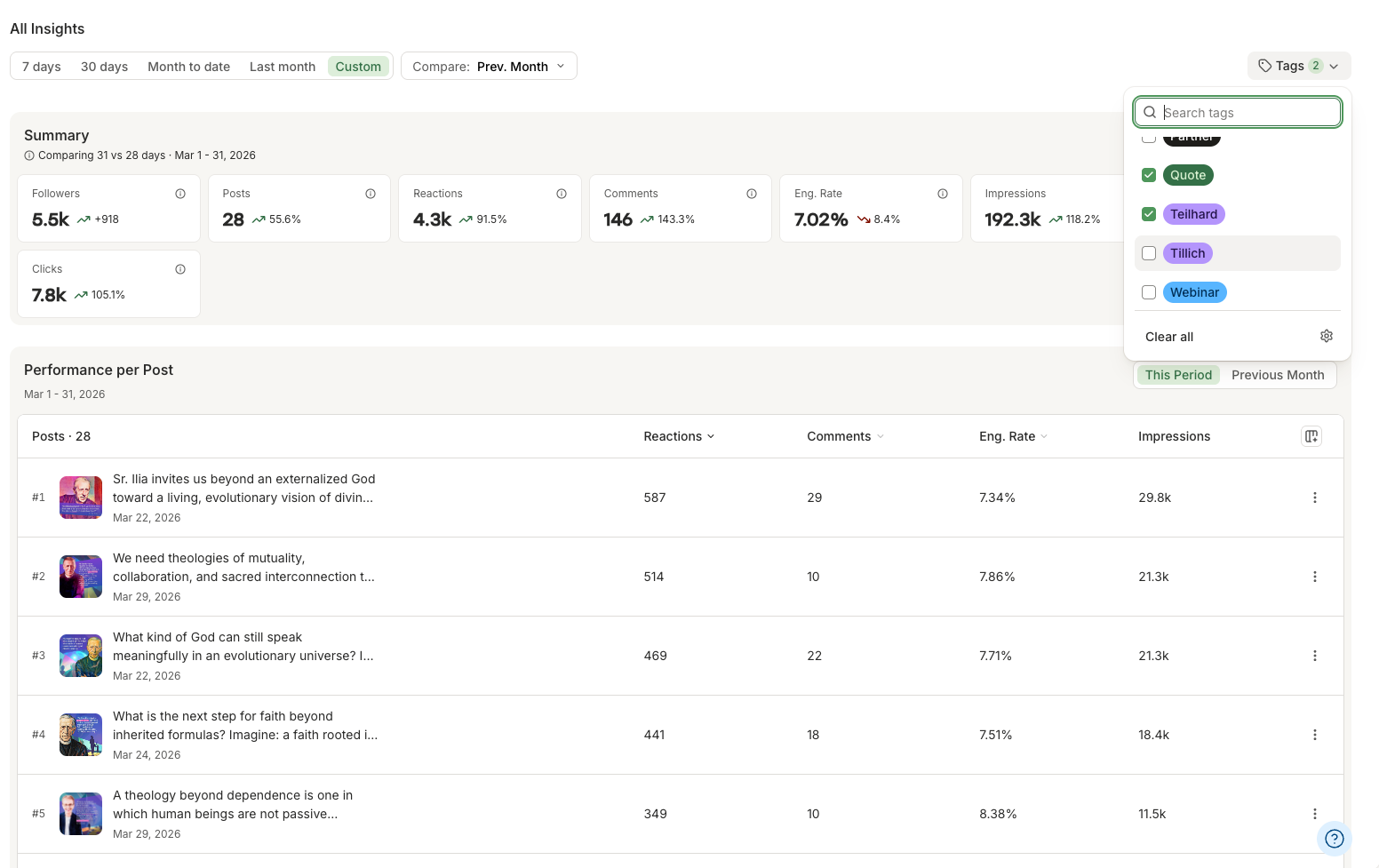
Initially, Kuhns sought external solutions for advanced social media analytics, a common "workaround" for many marketers until Buffer introduced its "Insights" feature. The advent of Insights within Buffer proved to be a transformative development for his practice. Insights, Buffer’s dedicated analytics, tracking, and reporting suite, quickly became an indispensable component of Kuhns’ toolkit, and he was an early adopter. Two specific features within Insights have particularly revolutionized his workflow: the ability to view performance data from every managed channel in a single, consolidated dashboard, and the robust tagging system.
The single-view performance data is a monumental advantage when reporting across a dozen or more accounts. Previously, compiling such comprehensive reports would involve navigating multiple platforms, extracting data, and manually aggregating it—a time-consuming and error-prone process. Insights streamlines this, offering a bird’s-eye view that allows Kuhns to quickly identify overarching trends, compare channel performance, and pinpoint areas of success or concern across his entire client portfolio. This efficiency frees up valuable time, allowing him to focus more on strategic analysis and client consultation.
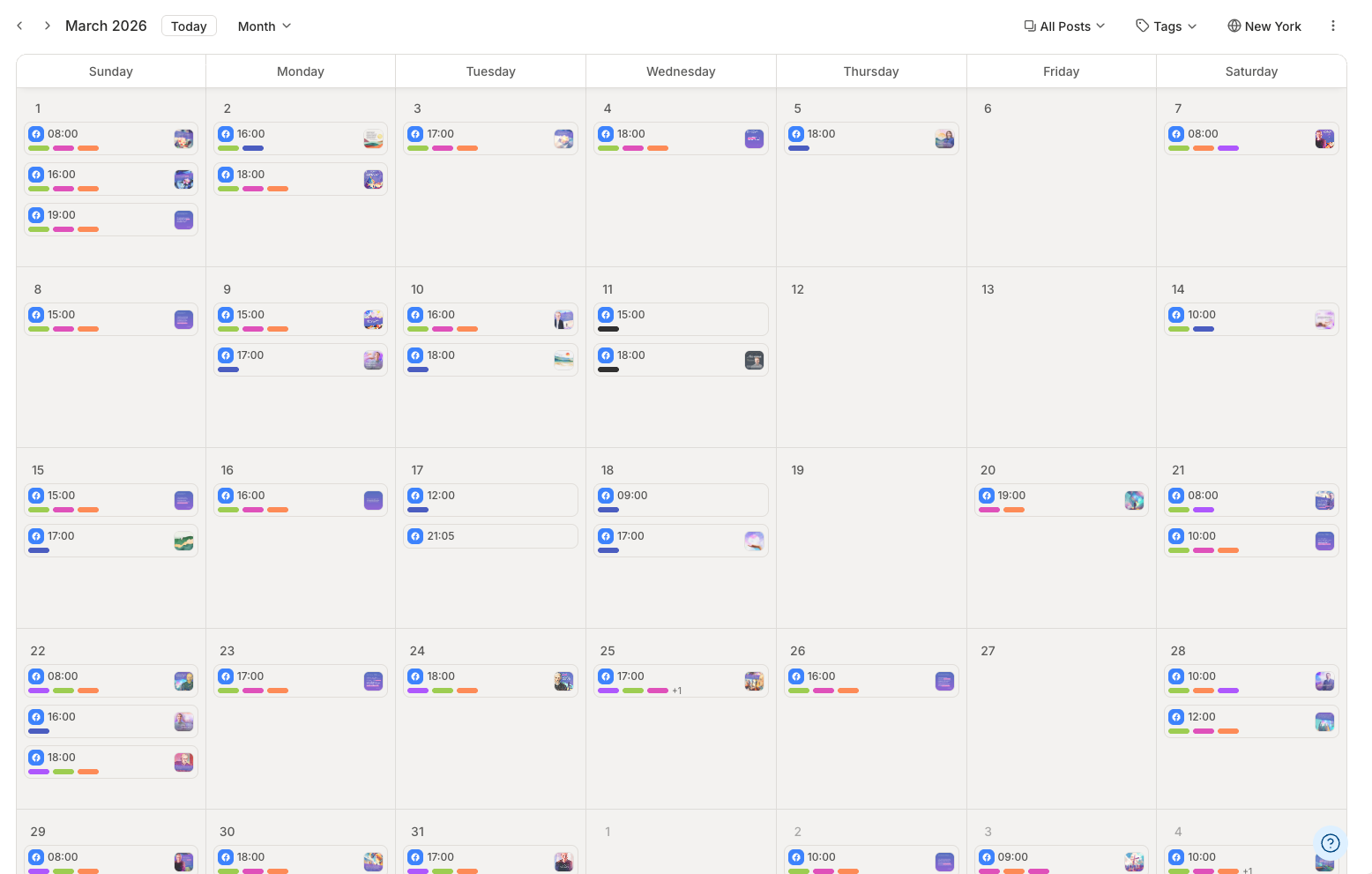
However, it is the tagging feature that Kuhns relies on most heavily. Tags, which allow posts to be sorted into color-coded categories, feed directly into Insights, providing a granular level of analysis previously unattainable. Kuhns can group posts by campaign, theme, subject matter, or even specific content types, and then meticulously review their performance over time. He vividly describes an example involving a nonprofit client whose content frequently revolved around influential ideas and quotes from experts. By creating various quote graphics featuring different writers and subjects, and then organizing them with distinct tags in Buffer, Kuhns could quickly compare their engagement metrics. "In a matter of minutes, across a bunch of campaigns over a year, I can see how content from specific thinkers, on specific subjects, resonates with an audience and how that engagement changes," he explains.
From Data Points to Strategic Direction
The true value of these insights, according to Kuhns, lies not just in identifying what performs well, but in translating that data into actionable, strategic recommendations for his clients. He emphasizes that these findings transcend mere social media adjustments. "These insights don’t just inform the social media," he says. "I can go back and say, people really resonate with this, and that can shape the client’s programming." For instance, if data reveals strong engagement with content featuring a particular thinker or a specific subject, Kuhns can advise the client to develop a webinar on that topic, dedicate a newsletter or blog series to the relevant expert, or even adjust their broader artistic programming. A tag, therefore, becomes more than a categorization tool; it evolves into a powerful diagnostic instrument, providing a deep "read on the audience" that informs not only future social media posts but also the client’s overarching strategic direction and content development across all platforms. This demonstrates how sophisticated analytics, when applied thoughtfully, can bridge the gap between digital marketing and core organizational objectives, fostering a truly integrated communication strategy.
The Art of Interpretation: Marrying Data with Taste
While embracing the power of analytics, Dustin Kuhns remains steadfast in his conviction that data alone is insufficient. "We need to see which things work best so we know what to focus on," he acknowledges, but he vehemently argues that the element most frequently overlooked is "taste." This qualitative judgment, honed by his extensive background in the arts, serves as the critical filter through which data must pass.
Kuhns articulates a pervasive problem in contemporary social media: "Everyone’s critique of social media these days boils down to a central problem: taste never entered the conversation when we started using data to drive engagement at any cost." He illustrates this with a compelling example: a religious nonprofit could easily generate significant engagement by chasing controversial topics. While such content might garner numerous views and interactions, much of that engagement would likely be hostile or counterproductive. "It’s engagement. It’s getting me the views. But does it further my client’s mission? Probably not," Kuhns states. The data reveals what is performing, but his cultivated judgment determines which of those high-performing results are genuinely aligned with the client’s mission and ethical values, and therefore truly worth pursuing. This discernment prevents clients from falling into the trap of sacrificing their integrity or alienating their core audience for superficial metrics. For Kuhns, Buffer’s Insights is a tool to understand audience response, enabling informed decisions about future actions, rather than an imperative to blindly chase whatever generates the most clicks.
Ethical Considerations in Digital Engagement
This principle extends to his appreciation for Buffer’s approach to artificial intelligence. In an era where many platforms are aggressively integrating generative AI, often "shoving it in [users’] faces," Buffer has maintained a more subtle stance. "The one thing I love about Buffer right now is that it’s the only platform I work with that isn’t shoving generative AI in my face," Kuhns notes. He understands that for his arts and culture clients, authenticity and a distinct voice are paramount, and AI-generated content might not resonate well with their communities. Insights, similarly, operates with intelligence running discreetly in the background, surfacing patterns and anomalies for human review, rather than attempting to automate or replace the nuanced, human-driven aspects of content creation and strategy. This respectful integration of technology aligns perfectly with Kuhns’ belief in leveraging data as an aid to human judgment, not a substitute for it. The ethical implications of AI in content creation, particularly for mission-driven organizations, are significant, and Buffer’s measured approach provides a valuable counterpoint to the prevailing trend of unbridled automation.
Broader Impact and Industry Resonance
Dustin Kuhns’ model of "arts and culture supply chain management," powered by tools like Buffer and informed by a discerning eye, has significant implications for various sectors.
Empowering Under-Resourced Organizations: For the often under-resourced arts and culture sector, Kuhns’ approach provides a lifeline. By bringing consistency, strategic oversight, and data-driven insights, he enables these organizations to punch above their weight in the digital realm. Effective social media can democratize access to art, build stronger community ties, and attract crucial funding, all of which are vital for the longevity and impact of cultural institutions. His work demonstrates that strategic digital engagement is not a luxury but a necessity for cultural survival and flourishing in the 21st century.
The Evolving Role of the Digital Strategist: Kuhns embodies the evolution of the social media manager from a mere content poster to a sophisticated digital strategist, a "logistics" expert who understands the entire content lifecycle from inception to impact. This redefinition highlights the growing demand for professionals who can blend creative intuition with analytical rigor, bridging the gap between artistic vision and audience engagement. It suggests a future where digital roles are more integrated into an organization’s core strategy, rather than being siloed as purely marketing functions.
For SaaS Tools and Product Development: Buffer’s success in retaining users like Kuhns offers a powerful lesson for software developers. The emphasis on focused functionality, adaptability, and intelligent, non-intrusive analytics resonates deeply with power users who demand efficiency and control. In an increasingly complex digital ecosystem, tools that empower users to maintain their unique workflows and brand voices, rather than imposing standardized methods, will likely garner stronger loyalty and drive more meaningful results. The thoughtful integration of analytics, as seen in Buffer’s Insights, proves that robust data capabilities can exist without sacrificing user autonomy or ethical considerations.
A Call to Purpose-Driven Digital Strategy
Dustin Kuhns’ journey with Buffer stands as a testament to the power of combining astute human judgment with sophisticated, yet user-centric, technology. For creators, social media managers, and agency owners who, like Kuhns, trust their instincts as much as their metrics, Buffer’s Insights offers a compelling solution. It empowers users to zoom out for a holistic view of all channel performance side-by-side, or to dive deep into specific charts at the channel or tag level. This versatility ensures that both macro-level strategic planning and micro-level content optimization are well-supported.
Buffer’s Insights also includes several other handy features, such as customizable reporting dashboards, competitive analysis tools, and audience demographic breakdowns, all designed to provide a comprehensive yet digestible view of social media performance. Crucially, many of Insights’ features are available on Buffer’s free plan, lowering the barrier to entry for smaller organizations and individual consultants to begin optimizing their digital strategies with data. This accessibility further aligns with the goal of empowering a broader range of cultural entities to achieve digital consistency and impact.
In conclusion, Dustin Kuhns’ strategic application of Buffer’s capabilities, particularly its new Insights feature, exemplifies a modern, effective approach to digital content management in the arts and culture sector. By prioritizing consistency, employing a "supply chain management" mindset, and crucially, allowing refined taste to guide data-driven decisions, Kuhns is not just managing social media; he is shaping the digital presence and broader strategic direction of vital cultural institutions. His story underscores the enduring importance of human intuition and ethical consideration in an increasingly automated and data-saturated digital world, positioning Buffer as a key enabler for purpose-driven digital strategies.