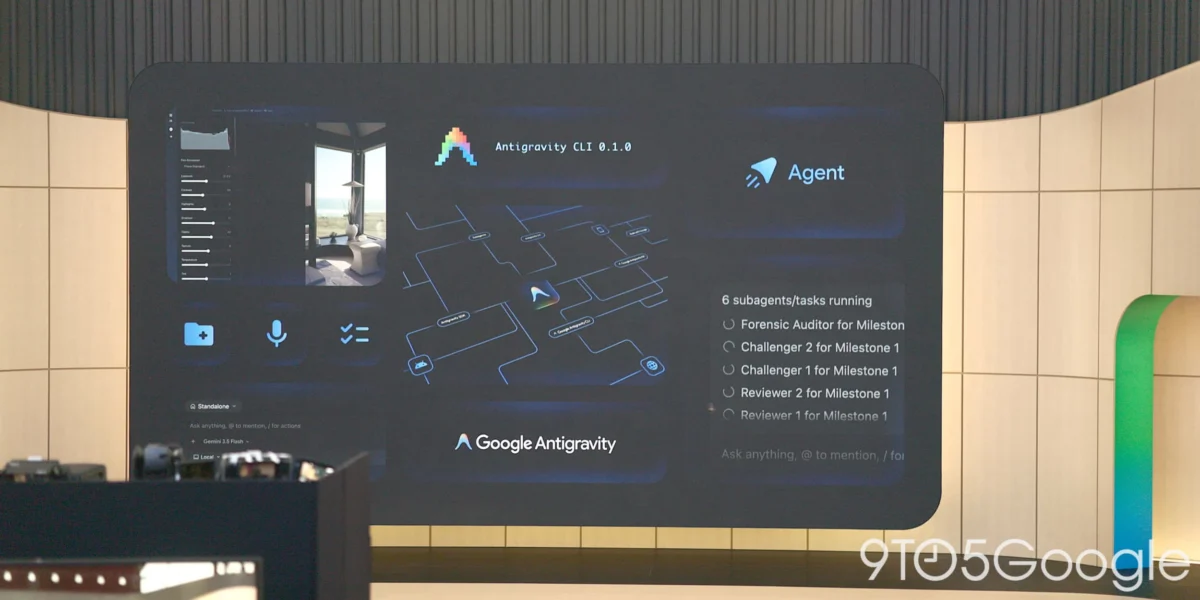
Google has officially announced a significant restructuring of its artificial intelligence model availability within the Antigravity platform. As of late November 2026, the company is democratizing access to its most powerful generative AI capabilities, transitioning the high-performance Gemini 4 Carbon model from its ultra-premium enterprise tier to the standard AI Pro subscription level. This move signals a broader shift in Google’s monetization strategy for its AI ecosystem, prioritizing user adoption and competitive positioning over restricted access.
The update, which follows a rapid sequence of model releases throughout the month, reflects a refined approach to how Google allocates computational resources. By moving Carbon from the $99.99/month AI Ultra tier to the $19.99/month AI Pro tier, the company is effectively lowering the barrier to entry for power users who require high-level reasoning and complex task execution.
A Strategic Shift in Model Tiering
The core of this announcement centers on the reclassification of the Gemini 4 model family. Historically, Google maintained a strict hierarchy that gated its most sophisticated models behind the most expensive subscription brackets. With Gemini 4 Carbon now available to AI Pro subscribers, the company is acknowledging the increased demand for high-performance models in professional workflows.
Simultaneously, Google confirmed that the Hydrogen model—previously reserved for early-access or specific developer channels—will be made available to all users. This tiered rollout serves a dual purpose: it incentivizes Pro subscriptions by offering a substantial value proposition, while ensuring that the broader, non-paying user base has access to reliable, capable models that maintain engagement with the ecosystem.

Industry analysts suggest this move is a direct response to the aggressive pace of the AI market. As competitors introduce modular and cost-efficient LLMs (Large Language Models), Google’s strategy of "upgrading models across tiers" helps preserve the relevance of the Antigravity platform. By pushing more capable models down to lower-cost tiers, Google is effectively defending its market share against open-source alternatives and specialized enterprise competitors.
Recent Chronology of Antigravity Updates
The infrastructure supporting Antigravity has seen near-constant iteration over the past month. A timeline of these developments highlights the rapid pace of engineering:
- Mid-November 2026: A wave of model releases flooded the Antigravity platform, necessitating an immediate review of resource management.
- November 21, 2026: Engineering teams implemented significant caching improvements across the backend architecture. These optimizations reportedly increased the throughput of user queries by 22%, allowing for more extensive task completion within existing usage quotas.
- November 22, 2026: Following the caching updates, Google performed an initial quota reset for all users to accommodate the new performance benchmarks.
- November 23, 2026: Varun Mohan, a key figure in the development of the platform, confirmed the rollout of the new Orchestrator settings. This update allowed users to manually configure their preferred model pairs and effort levels—a feature previously handled entirely by the system’s backend heuristics.
- November 24, 2026: The official announcement regarding the migration of Gemini 4 Carbon to the Pro tier was disseminated, accompanied by a secondary, comprehensive quota reset for the entire user base.
The Role of the Orchestrator and User Agency
One of the most significant functional improvements in this update is the overhaul of the "Orchestrator" settings within the Antigravity interface. The Orchestrator is the logic layer that directs user prompts to the most appropriate AI model for the task, balancing speed, cost, and accuracy.
Previously, this process was largely opaque, with the system making autonomous decisions about which models (such as Neon, Hydrogen, or Carbon) to deploy. With the latest update, users can navigate to Settings > Models > Orchestrator Settings to exert granular control over their experience. This interface allows users to define the "pair" of models being used—the Orchestrator (which plans the task) and the Executor (which carries it out)—along with specific "effort levels."
This evolution reflects a maturing user base. As developers and power users become more sophisticated, they require the ability to optimize their workflows for specific cost-to-performance ratios. For instance, a user might choose to pair the Neon High model with Hydrogen High to maximize output quality for a complex research task, or scale down to lower effort levels for rapid, iterative brainstorming.

Impending Model Sunsetting
While the platform is gaining new capabilities, it is also undergoing a "spring cleaning" of its older assets. Google has set a firm deadline of November 30, 2026, for the removal of Gemini 4 Argon and Gemini 3.8 Flash from the Antigravity environment.
The deprecation of these models is standard practice in the AI lifecycle. By sunsetting older iterations, Google reduces the technical debt associated with maintaining legacy model weights and inference hardware. This, in turn, allows for the reallocation of GPU compute cycles toward the newer, more efficient models that define the current iteration of the Gemini family. Users who have relied on Argon or 3.8 Flash are encouraged to migrate their workflows to the current suite of models—primarily the Carbon and Hydrogen variants—before the end-of-month cutoff.
Technical Implications and Resource Management
The frequent quota resets witnessed over the past few days are not merely administrative; they are a necessary byproduct of the platform’s underlying efficiency gains. When Google improves its caching mechanisms, the "cost" of a prompt in terms of compute cycles changes. A quota system is designed to prevent the monopolization of system resources; when the efficiency of those resources increases, the quota must be recalculated to ensure fair distribution.
The 22% increase in productivity enabled by the recent caching improvements is substantial. In the context of large-scale AI deployment, a 20%+ improvement in throughput effectively translates into a 20% increase in total available capacity without the need for additional server hardware. This optimization is critical for maintaining the sustainability of the AI Pro subscription model, which offers a fixed price for what could otherwise be unpredictable usage costs.
Broader Impact on the AI Ecosystem
The consolidation of the Gemini model lineup and the move toward more transparent orchestration represent a broader industry trend toward "AI as a Utility." Much like cloud storage or compute, generative AI is moving toward a state where performance is commoditized, and value is found in the interface and the reliability of the system.

By providing users with the ability to tune their model usage through the Orchestrator, Google is effectively treating AI inference as a configurable service. This transparency builds trust with enterprise and power users who are often skeptical of "black box" AI systems that make arbitrary decisions about model selection.
Furthermore, by moving Gemini 4 Carbon to the AI Pro tier, Google is setting a new standard for what a mid-tier subscription should provide. If a competitor wants to challenge Google’s market position, they must now offer a comparable or superior model at the $19.99 price point. This competitive pressure is ultimately beneficial for the end consumer, as it forces faster innovation and lower costs for high-end intelligence.
Conclusion and Future Outlook
The updates to Google Antigravity, while appearing as incremental feature tweaks, point to a larger strategy of optimization and accessibility. By refining the Orchestrator, providing users with more control over their model environment, and recalibrating the subscription tiers, Google is positioning Antigravity as a highly professionalized, efficient, and user-centric platform.
As the industry moves into the final month of 2026, the focus will likely shift from the sheer number of model releases to the integration and stability of these models within existing workflows. With the sunsetting of legacy models and the implementation of more robust caching and orchestration, Google is laying the groundwork for a more stable and predictable AI experience. Users should remain alert to further documentation updates from the Antigravity team as they continue to iterate on the platform’s performance metrics and resource allocation strategies in the coming weeks.