
Entering the world of automotive repair and vehicle maintenance is an endeavor that balances technical precision with mechanical intuition. While modern vehicles are increasingly reliant on complex electronic control units and sophisticated sensor arrays, the foundational hardware—the nuts, bolts, and chassis components—remains grounded in traditional mechanical physics. For the aspiring DIY enthusiast, the barrier to entry is often perceived as a financial or skill-based obstacle; however, the reality is that a modest, well-curated collection of high-quality hand tools can handle the vast majority of routine maintenance tasks. Establishing a professional-grade kit does not require an industrial investment, provided the user prioritizes durability and utility.
The Evolution of the DIY Mechanic
The landscape of automotive repair has shifted significantly over the last two decades. In the early 2000s, vehicle maintenance was largely mechanical, requiring heavy-duty tools to manage carburetors, manual linkages, and hydraulic systems. Today, while diagnostic software and OBD-II scanners have become essential, the physical requirements of a home garage remain consistent. Historical data from the Automotive Aftermarket Suppliers Association (AASA) indicates a steady rise in "DIY-ers" over the past five years, a trend accelerated by the rising costs of professional labor and the increased accessibility of online technical tutorials.
The transition from a novice to a proficient home mechanic is typically marked by a shift from disposable, budget-tier tool sets to professional-grade equipment. This progression is not merely about brand prestige; it is about safety and the prevention of collateral damage to a vehicle’s critical systems.

Precision Fastening: The Case for Hex Socket Sets
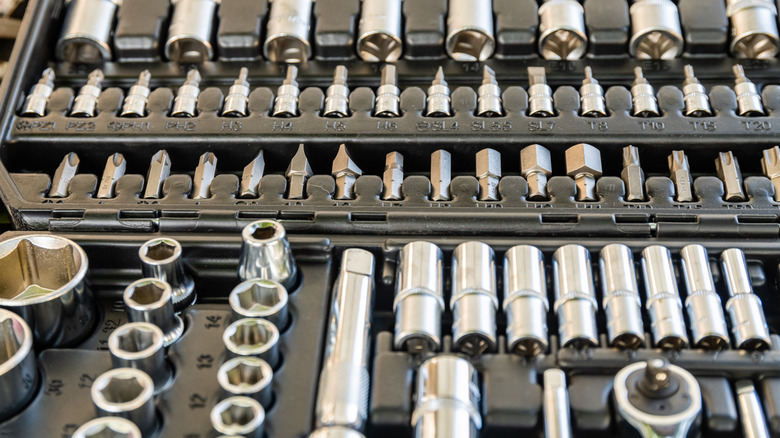
At the core of any automotive toolkit lies the socket set. Vehicles are held together by thousands of fasteners, each requiring specific torque specifications. Industry standards for fastener integrity suggest that using the wrong tool for a bolt head is the primary cause of stripping, which can transform a ten-minute job into a multi-hour extraction nightmare.
Experts in the field advocate for the use of six-point hex sockets over their 12-point counterparts for high-torque applications. A six-point design provides a larger contact surface area with the fastener head, significantly reducing the risk of slippage. When selecting a set, professionals recommend a comprehensive range that includes both shallow and deep-well sockets. Shallow sockets are essential for work in confined engine bays, while deep-well sockets are required for fasteners located on long, threaded studs. According to a 2023 industry survey of independent shop owners, investing in high-carbon steel sockets—specifically those with a chrome-vanadium coating—offers the best balance between oxidation resistance and structural rigidity.
The Strategic Utility of Screwdrivers
While it is a common misconception that screwdrivers are secondary to wrenches in automotive work, their role is foundational for interior work, trim removal, and the delicate management of electrical connectors. A modern vehicle’s dashboard, door panels, and engine sensors are frequently secured by Phillips, flathead, and Torx-head screws.
The material science behind these tools is critical. Chrome-molybdenum steel has become the gold standard for heavy-duty screwdrivers due to its exceptional toughness and resistance to shearing under high torque. Furthermore, the ergonomic design of the handle—specifically the use of cellulose acetate or dual-density rubber grips—plays a vital role in preventing user fatigue during long diagnostic sessions. Mechanics advise against using cheap, mass-market sets, as the soft metal of budget tips often deforms, causing damage to the screw head that can render it impossible to remove without specialized drilling tools.

Leverage and Force: The Role of the Breaker Bar
A common frustration for amateur mechanics is the "frozen" bolt—a fastener seized by years of heat cycles, road salt, and corrosion. When a standard ratchet fails to move a bolt, the application of excessive force on the ratchet’s internal gears can cause catastrophic failure of the tool. This is where the breaker bar becomes indispensable.
A breaker bar functions as a high-leverage lever, designed to distribute force across a single, solid piece of hardened steel rather than a complex ratcheting mechanism. By increasing the handle length, a mechanic can multiply their physical input, often achieving the necessary torque to break a seized bond without the need for thermal assistance like a blowtorch. Safety protocols dictate that a breaker bar should always be used with a six-point socket, as the increased torque can easily shatter a cheaper, thinner-walled socket.
Advanced Visibility: Lighting Solutions
The environment of a vehicle’s undercarriage or engine bay is inherently light-starved. Traditional incandescent work lights have largely been phased out in favor of high-lumen, rechargeable LED solutions. The shift toward LED technology has provided mechanics with a "cool" light source—one that does not risk melting plastic components or causing burns upon contact.
Modern shop lighting is categorized into three types: the localized inspection flashlight, the magnetic light bar, and the high-output area lantern. Data from shop safety studies suggest that improved lighting correlates directly with a decrease in injury rates and a 15% improvement in diagnostic accuracy. By eliminating shadows in the engine bay, a mechanic can identify leaks, cracks, or loose connections that would otherwise go unnoticed.
Material Integrity: The Soft-Faced Hammer
The final essential for a well-rounded kit is the soft-faced hammer. In automotive assembly, parts are often pressed together with high-friction interference fits. When a part refuses to seat correctly, the instinct to use a steel ball-peen hammer is a recipe for bodywork damage.
A soft-faced hammer, typically composed of rubber, urethane, or brass, allows for the application of striking force without damaging the substrate. This is particularly vital when working on sensitive components like aluminum brake calipers, wheel hubs, or plastic trim clips. By using a mallet that is softer than the part being struck, the mechanic ensures that the tool absorbs the shock of the impact rather than the vehicle’s finish.
Broader Implications for the DIY Market
The democratization of automotive repair tools has broader implications for the automotive sector. As vehicles become more complex, the divide between "consumer-serviceable" parts and "dealer-only" systems is widening. However, by mastering the use of these five categories of tools, the average vehicle owner can effectively manage the vast majority of wear-and-tear items—such as spark plugs, belts, hoses, and brake pads—thereby extending the service life of their vehicle and significantly reducing long-term ownership costs.
Ultimately, the goal of a DIY mechanic should not be to replicate a professional shop’s capabilities, but to gain the independence necessary to maintain a vehicle reliably. Through the careful selection of durable, mission-specific tools, the daunting nature of automotive repair gives way to a predictable, methodical process of maintenance.