Alphabet Inc. released its financial results for the third quarter of 2026, offering a comprehensive look into YouTube’s evolving business model. While the platform experienced a minor deceleration in advertising revenue growth, it offset this with explosive gains in subscription services, connected television viewership, creator monetization ecosystems, and artificial intelligence integration.
The latest financial disclosure indicates that YouTube generated $11.2 billion in advertising revenue during the third quarter. While substantial, this figure represents a year-over-year growth rate of 9%, marking a slight slowdown compared to the 13% ad revenue growth recorded in the second quarter of 2026. Industry analysts note that while traditional ad-supported streaming markets are maturing, YouTube’s diversified revenue streams—specifically subscriptions and commercial partnerships—are successfully stabilizing its financial trajectory.
Subscription Growth and the Rise of the Living Room
A primary driver of YouTube’s recent financial health is its subscription ecosystem, which includes YouTube Music and YouTube Premium. Alphabet reported an 11% overall increase in Google’s collective subscription revenue for Q3 2026, a surge directly bolstered by YouTube’s growing subscriber base, which has now crossed the 150 million milestone.
This represents a major expansion from early 2024, when YouTube officially crossed the 100 million subscriber threshold for its combined music and premium offerings. According to insights shared during Alphabet’s Q2 2026 earnings call in July, a significant portion of this recent momentum stems from connected TV (CTV) viewers. As more households transition away from traditional cable television in favor of digital streaming alternatives, living room audiences are increasingly opting for ad-free or premium subscription tiers on their television sets.
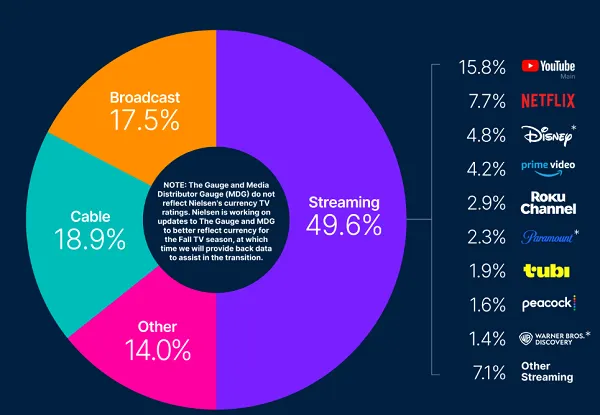
This trend aligns closely with data from Nielsen’s "The Gauge" report published in August 2026, which reaffirmed YouTube’s position as the leading streaming platform in the United States by total TV viewing time. Expanding on this data during the Q3 earnings call, Google Chief Business Officer Philipp Schindler emphasized that the "Living Room" environment has evolved far beyond a secondary viewing device. CTV experiences now account for more than one-third of YouTube’s total advertising revenue, transforming how brands target household audiences on the big screen.
Evolving Creator Economy and E-Commerce Partnerships
Beyond advertising and subscriptions, YouTube continues to aggressively scale its creator economy infrastructure. Schindler noted during the earnings briefing that the YouTube Partner Program now includes more than three million active creators globally.
To further empower this vast community, YouTube has placed a heavy strategic emphasis on e-commerce integrations. More than 1.3 million channels are currently enrolled in the platform’s shopping program. This retail ecosystem received a major boost following the announcement of a strategic affiliate partnership with retail giant Amazon. The agreement allows U.S.-based creators to tag Amazon products directly within their long-form videos, YouTube Shorts, and livestreams, drastically streamlining the path from content consumption to transactional e-commerce.

Concurrently, YouTube continues to see strong adoption of its Demand Gen advertising products among small and medium-sized businesses (SMBs), proving that the platform remains a vital customer acquisition channel for enterprises of all sizes.
Generative AI Integration and Content Creation Tools
Artificial intelligence remains a central pillar of Alphabet’s product strategy for YouTube, touching both content creation and ad-targeting infrastructure. With over 20 million videos uploaded to the platform every single day, managing and scaling creative output requires advanced technological solutions.
During the earnings discussion, Schindler highlighted the expanding suite of generative AI tools integrated into YouTube Studio. These include conversational editing assistants designed for Shorts and YouTube Create, which aim to lower the technical barrier for aspiring content creators.
The platform’s aggressive rollout of AI capabilities has followed a steady timeline over the past year:
- March 2026: YouTube launched an AI-powered "reimagine" option for Shorts, allowing viewers to generate alternative video variations inspired by existing creator clips.
- Mid-2026: The platform tested an "Extend with AI" feature, giving creators the capability to generate alternative video endings seamlessly.
- October 2026: YouTube published an internal insights report indicating that 61% of users who have published video content on the app over the preceding 12 months expressed a strong interest in using AI tools to seamlessly insert themselves into video scenes.
While digital media watchdogs continue to monitor the broader cultural implications of synthetic media—often referred to broadly as "AI slop"—the platform’s internal metrics suggest that YouTube’s specific, user-centric AI additions are striking a chord with its core audience.
Broader Industry Implications and Future Outlook
The Q3 2026 financial report illustrates a transitional phase for the world’s largest video platform. As digital advertising markets experience natural economic normalization following years of erratic post-pandemic fluctuations, tech giants are increasingly forced to diversify their revenue channels.
YouTube’s pivot toward a hybrid model—anchored by massive connected TV dominance, a rapidly scaling subscription base of 150 million users, robust e-commerce partnerships with global retailers like Amazon, and deeply integrated generative AI tools—demonstrates structural resilience. By positioning itself at the intersection of traditional television viewing, social commerce, and cutting-edge creator tools, YouTube is successfully mitigating the volatility of pure ad-spend reliance.
As Alphabet looks toward the final quarter of 2026 and into 2027, the platform’s ability to balance user-generated content authenticity with advanced AI automation, alongside its continued dominance in the living room, will likely serve as the primary blueprint for the future of digital entertainment and media monetization.