Nearly eight years after the Gutenberg editor first debuted in WordPress core, the platform’s latest major release introduces a radical shift in how developers can interact with the block architecture. WordPress 7.0 officially rolls out PHP-only block registration, a feature designed to let developers build custom blocks using exclusively PHP, eliminating the traditional requirements for React, NPM packages, and complex frontend build pipelines. While the update has sparked widespread debate across the web development community regarding its long-term utility, it serves a very specific, high-value purpose: easing the migration of legacy codebases into the modern block theme era.
Background Context and Evolution of the Block Editor
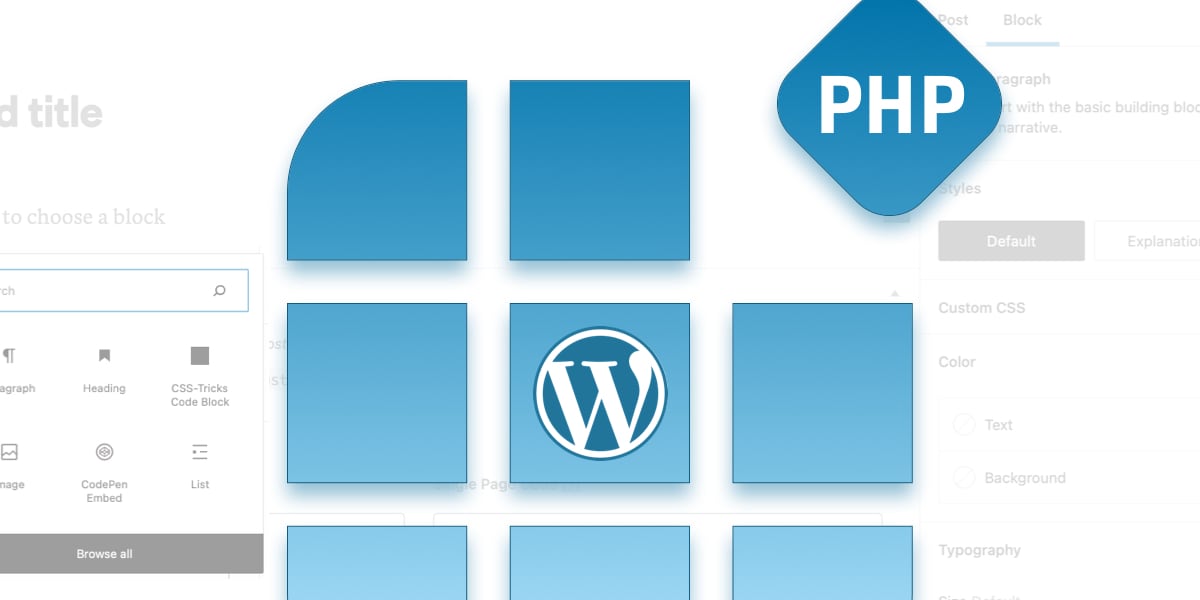
When the block editor was first merged into WordPress core in late 2018 with version 5.0, it fundamentally transformed how content was created and managed on the platform. Moving away from the traditional TinyMCE classic editor, WordPress embraced a component-driven architecture heavily reliant on modern JavaScript frameworks, specifically React.
While this modernization brought powerful capabilities, flexible layouts, and the eventual rise of full-site editing, it created a steep learning curve for a vast segment of the WordPress developer ecosystem. Traditional developers, accustomed to working solely within the LAMP stack (Linux, Apache, MySQL, PHP), faced significant friction. Creating a custom block required duplicating registration logic across both PHP and JavaScript files, managing node modules, configuring Webpack or @wordpress/scripts build pipelines, and handling client-side state stores.
For many agencies and freelancers managing thousands of legacy sites, the cost and time required to rewrite existing PHP-based custom widgets, shortcodes, and theme templates into JavaScript blocks became a primary bottleneck preventing them from adopting modern block themes. WordPress 7.0 directly addresses this historical barrier by streamlining the registration process, allowing the core software to automatically generate the necessary client-side behavior directly from PHP configurations.
Mechanics of PHP-Only Block Registration
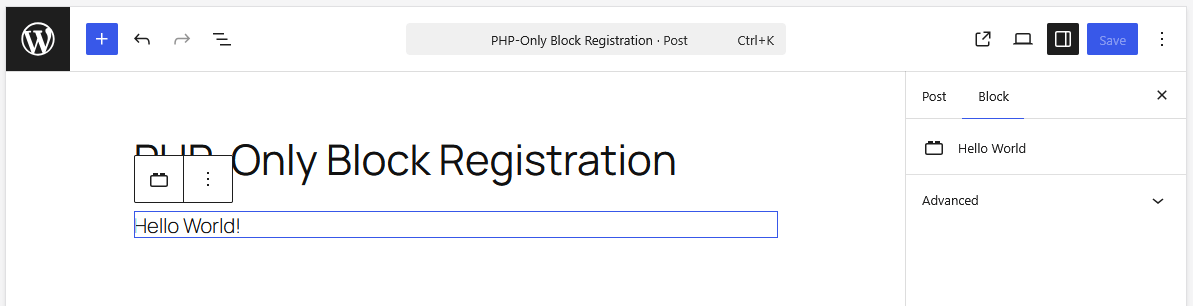
The core mechanism behind this new functionality relies on an autoRegister flag introduced within the register_block_type() function. By setting 'autoRegister' => true in the block’s supports array, developers instruct WordPress to automatically synthesize the required JavaScript handling for the editor preview and client-side registration.
Under this new paradigm, a fundamental "Hello World" block requires only a server-side callback:
function enterprise_hello_world_block()
  register_block_type(
    'enterprise/hello-world',
      [
        'title' => 'Hello World',
        'render_callback' => function ()
          return sprintf(
            '<div %s>Hello World!</div>',
            get_block_wrapper_attributes()
          );
        ,
        'supports' => [
          'autoRegister' => true,
        ],
      ]
  );

add_action('init', 'enterprise_hello_world_block');
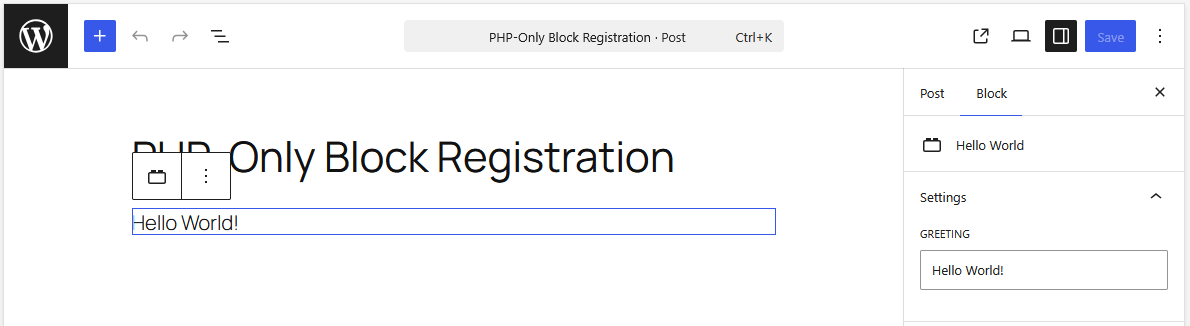
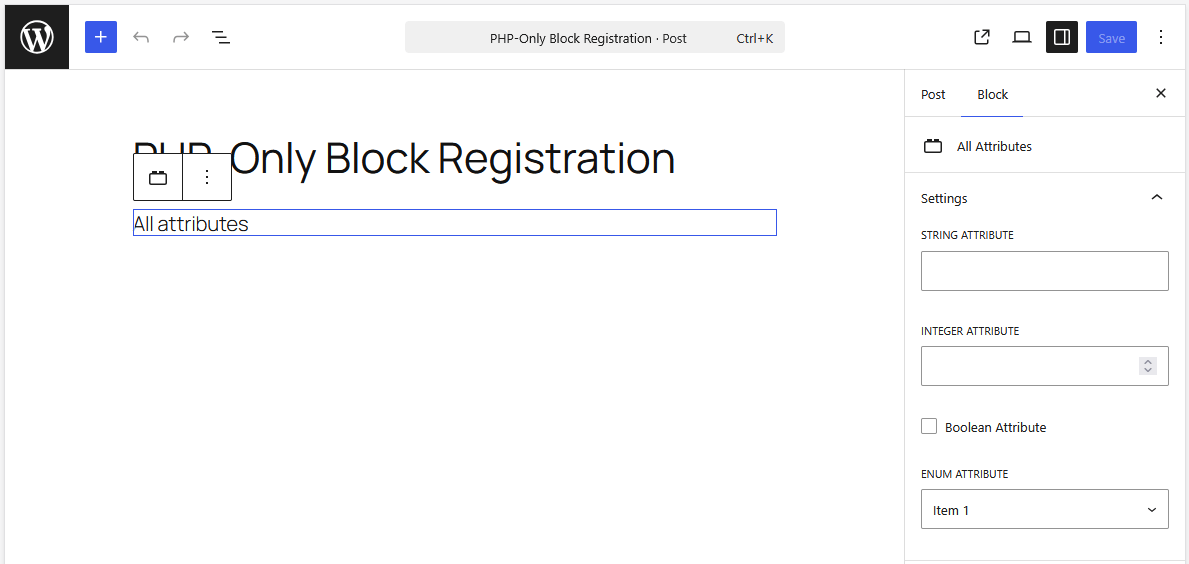
Furthermore, basic attributes can be introduced directly within the PHP array structure. By defining parameters such as strings, numbers, or booleans, WordPress automatically generates corresponding input fields within the block editor’s sidebar settings interface, sparing developers from building custom React inspector controls.
Architectural Limitations and Technical Constraints
Despite the initial appeal of returning to a pure-PHP workflow, core contributors and early testers emphasize that PHP-only blocks are not intended to serve as a complete replacement for JavaScript-powered blocks. Significant architectural limitations constrain what can be achieved without client-side code.
First, PHP-rendered blocks operate outside the single-page application (SPA) JavaScript data store that powers the modern editor. Because the editor fetches HTML asynchronously via a REST API endpoint (v2/block-renderer/) on re-renders, developers cannot easily attach persistent JavaScript event listeners or manipulate the DOM of the block preview reliably. Complex interactive elements—such as sliders, tabs, or frontend search filters—will break or lose functionality within the backend editor interface.
Second, PHP-only blocks lack access to real-time client-side data modifications. Because the rendering routine queries the database directly rather than reading from the active editor state store, changes made to a post title, excerpt, or featured image within the editor will not immediately reflect inside a PHP-rendered block until the post is explicitly saved and the page is reloaded.
Third, the scope of available attribute types and editing interfaces is strictly confined to basic primitives: strings, numbers, and booleans. Advanced UI components, such as multi-select dropdowns with keyed arrays (e.g., storing category IDs while displaying category names), image uploaders, or rich text formatting tools, are currently absent from the PHP-only API.

The Killer Use Case: Legacy Code Migration
Given these constraints, industry experts argue that building new, highly interactive features from scratch using PHP-only registration is an anti-pattern. Instead, the true value of the WordPress 7.0 feature lies in enterprise migrations and modernizing legacy code.
For years, theme authors maintaining classic PHP themes have struggled to transition toward block-based themes because crucial custom components—such as specialized headers, dynamic footers, custom user dashboards, and legacy shortcode outputs—were locked into procedural PHP. Rebuilding these components meant allocating weeks of developer time to learn modern build workflows and rewrite functional code.

With the new PHP-only block registration, developers can wrap existing legacy PHP functions, shortcodes, and template snippets into server-side rendered blocks with minimal refactoring. While the backend editor preview may be rudimentary—sometimes requiring placeholders for complex widgets—the frontend output remains entirely intact. This capability reduces the timeline for migrating complex classic sites to block themes from weeks or months down to mere hours.
Practical Implementation Strategies and Workarounds
Developers adopting this feature in production environments have identified several practical techniques to navigate its limitations:

- Detecting Contextual Rendering: Because standard functions like
is_admin()do not evaluate correctly inside REST API block rendering requests, developers can utilizewp_is_rest_endpoint()combined with query variable checks to distinguish whether a block is rendering on the frontend or inside the backend editor preview, allowing for conditional styling or messaging. - Accessing Post IDs: To bypass the limitation where REST API endpoints do not inherently pass the active post ID during editor rendering, developers can capture the post ID from the
$_GETglobal parameter during initialization and map it to a local block attribute. - Leveraging Block Supports: Core features such as color customization, text alignment, and layout constraints can be safely enabled via the Block Supports API, allowing PHP blocks to respect global theme settings defined in
theme.json. - Embracing Block API Version 3: Ensuring blocks adhere to Block API Version 3 guarantees compatibility with the iframed post editor, preventing administrative CSS styles from leaking into and distorting the block preview.
Broader Implications for the WordPress Ecosystem
The introduction of PHP-only block registration in WordPress 7.0 signals a pragmatic philosophical shift within core development. Rather than taking an absolutist approach that forces every developer into the JavaScript ecosystem, the project maintainers have acknowledged the economic and technical realities of legacy maintenance.
While the feature will not displace advanced JavaScript block development—which remains essential for dynamic, highly interactive user experiences—it successfully lowers the barrier to entry for the broader PHP community. By removing the tooling overhead for legacy integrations, WordPress 7.0 provides a viable bridge, empowering traditional developers to finally cross the chasm into full-site editing and modern block-based architectures without abandoning their core competencies.