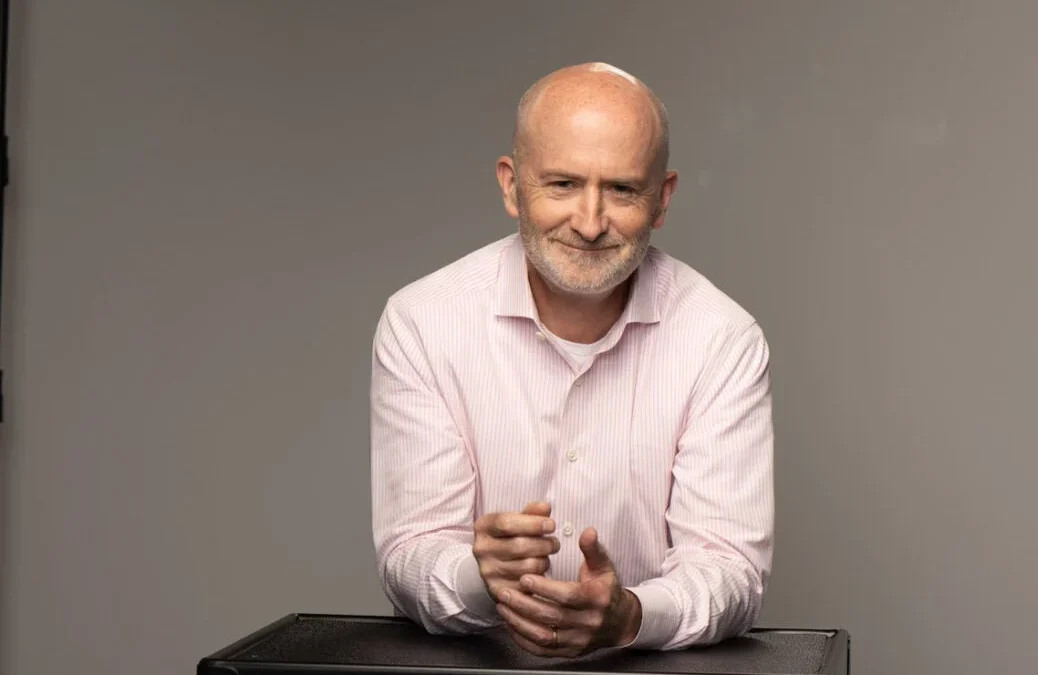
Cameron Barr, the veteran journalist and former managing editor of The Washington Post, has embarked on a profound professional and personal reinvention, trading the fast-paced corridors of American prestige journalism for the burgeoning landscape of subscriber-funded regional news in the United Kingdom. Now serving as the investigations editor for Mill Media, Barr reflects on a storied career defined by high-stakes accountability, the sting of institutional rejection, and a steadfast belief in the core mission of the press. His journey illuminates not only the personal trajectories of modern media leaders but also the structural shifts occurring within the global journalism industry as it grapples with financial pressures, digital transformation, and the persistent challenge of holding power to account.
A Defining Transition and the Move to Mill Media
The pivot from Washington to the historic landscapes of England’s Lake District represents more than a geographic relocation for Barr; it marks a strategic alignment with the grassroots media movement currently reshaping local journalism in the UK. Mill Media, founded by Joshi Herrmann, has emerged as a notable disruptor in an era widely characterized by the contraction of regional newspapers. Operating on a subscriber-funded model, the startup publishes deeply reported, narrative-driven journalism across major urban centers in England and Scotland.
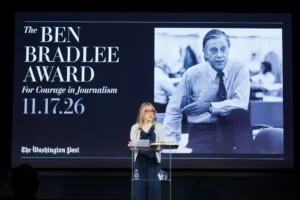
Barr’s path to this venture was paved by a career-defining moment at The Washington Post. Having spent nearly two decades at the publication, Barr served for five years as the managing editor for news and features under executive editor Marty Baron. When Baron stepped down in 2021, Barr emerged as one of four internal finalists for the top newsroom post. Ultimately, the publication’s leadership selected a different candidate, a public disappointment that catalyzed a major life reevaluation. In 2023, Barr and his wife relocated to the UK, where they undertook the restoration of a historic farmhouse. Rather than stepping away from the profession entirely, Barr found himself drawn to Mill Media, where he now applies his decades of elite investigative experience to mentor a younger generation of reporters and elevate regional accountability reporting.
Chronology of a Distinguished Career
To understand Barr’s approach to modern newsroom leadership, one must examine the milestones that shaped his editorial philosophy. His career spans decades of rapid technological and structural evolution in global newsrooms.
- 1990s: Barr establishes himself as a rigorous international reporter, covering complex geopolitical stories, including turbulent events in Southeast Asia.
- September 1999: Dutch freelance journalist Sander Thoenes, reporting for The Christian Science Monitor and the Financial Times, is killed in East Timor amid the violent aftermath of the territory’s independence referendum.
- 2000: Barr leads an exhaustive journalistic investigation into the actions of Indonesian military unit Battalion 745, uncovering definitive evidence linking the troops to the murder of Thoenes and more than 20 other civilians during their withdrawal from East Timor.
- 2004–2021: Barr joins The Washington Post, steadily rising through the ranks from reporting to critical editing roles, culminating in a five-year tenure as managing editor for news and features alongside executive editor Marty Baron.
- 2021: Following Baron’s retirement, Barr is considered for the executive editor position. The selection of an external candidate prompts a period of reflection on his future in journalism.
- 2023: Barr relocates to England, embracing a slower-paced personal life centered around farmhouse renovation and creative writing while joining Mill Media as investigations editor.
- Present: Barr continues to oversee high-impact regional investigative projects, such as Andrew Kersley’s exposé on social care failures in Walthamstow, while lecturing on newsroom leadership at the Reuters Institute for the Study of Journalism.
The Persistent Battle for Personal Accountability
One of the central themes dominating Barr’s current editorial concerns is the systemic resistance to individual accountability within British institutions. While corporate entities and local councils are often willing to issue generic, collective apologies for administrative failures, Barr argues that the architects of these failures frequently evade direct personal scrutiny.
This frustration was underscored earlier this year when Barr edited an investigation by Andrew Kersley for The Londoner. The report meticulously detailed the institutional lapses in social care that directly contributed to the tragic death of a disabled adult living with her vulnerable mother. During the subsequent inquest, Graeme Irvine, the senior coroner for the East London Coroner’s Court, openly criticized Waltham Forest Council for its reluctance to identify the specific officials responsible for the systemic breakdowns. Irvine asserted that meaningful structural reform remains elusive until individuals genuinely face the professional and personal consequences of their actions or inactions. Barr echoes this sentiment, maintaining that the primary duty of investigative journalism is to cut through institutional opacity and name the responsible parties.
The Crown Jewel of Investigative Reporting: The East Timor Inquiry
When asked about his proudest professional achievement, Barr points directly to his investigative work following the tragic death of Sander Thoenes in East Timor. The killing of a fellow journalist covering a humanitarian crisis struck at the core of the profession’s risk and responsibility.
Operating in a high-threat environment, Barr methodically pieced together the movements and actions of the departing Indonesian military forces. By publishing concrete evidence implicating Battalion 745 in the execution of Thoenes and numerous East Timorean civilians, Barr provided a measure of factual clarity that was otherwise suppressed by official military channels. Years later, a close friend of Thoenes informed Barr that his investigative series remained the closest approximation to justice and accountability that the reporter’s loved ones had ever received. For Barr, this validates the enduring power of investigative reporting to puncture impunity and honor the memory of those who lose their lives in pursuit of the truth.
Personal Toll and the Evolution of Newsroom Leadership
Barr is equally candid about the heavy personal costs exacted by decades at the top echelon of American journalism. The relentless demands of a major daily newsroom during the late 2000s and early 2010s contributed to the dissolution of his first marriage and relegated him to a half-time single-parent role for his two children, Leo and Lyle. Reflecting on missed family dinners and the all-consuming nature of high-pressure editing, Barr offers a sobering lesson on work-life balance, paraphrasing Samuel Beckett with a simple resolution: to love again and to love better.
This philosophy of resilience and purposeful engagement directly informs his current work with the Reuters Institute for the Study of Journalism at the University of Oxford. As a co-instructor for the "Leading Newsroom Change" workshop, Barr trains contemporary editors on how to cultivate a deep sense of mission within their teams. In an industry increasingly preoccupied with audience metrics, engagement algorithms, and artificial intelligence integration, Barr stresses that journalists ultimately need to feel that their work possesses inherent moral weight and societal consequence. By anchoring editorial strategy in a clear sense of purpose, newsroom leaders can improve staff retention, foster deep dedication, and elevate the overall ambition of their publications.
Broader Industry Implications and the Future of Local News
Barr’s transition to Mill Media serves as a micro-case study for broader macroeconomic shifts in the journalism sector. As traditional legacy media models in major metropolitan areas continue to face severe advertising revenue declines and cost-cutting measures, decentralized, digital-first, and reader-supported startups are carving out a viable alternative.
By focusing on deep civic reporting, investigative rigor, and community integration, ventures like Mill Media demonstrate that audiences are willing to financially support journalism that directly affects their daily lives. However, the challenges highlighted by Barr—such as institutional stonewalling and the difficulty of enforcing personal accountability among public servants—remain universal hurdles for reporters regardless of platform scale.
As Barr continues his work in the UK, dividing his time between rigorous investigative editing, creative writing, and pastoral reflection inspired by Albert Camus’s philosophical interpretation of Sisyphus, his career stands as a testament to the enduring necessity of the press. For Barr, the struggle for truth, transparency, and institutional fairness is not a finite task with a definitive endpoint, but a continuous, essential endeavor that defines the health of a democratic society.