The landscape of web development is undergoing a rapid transformation, driven by innovative specifications, API integrations, and developer-led tooling designed to streamline complex design patterns. Over recent weeks, the frontend engineering community has introduced groundbreaking proposals and standardized implementations aimed at resolving long-standing UI hurdles. From advanced syntax highlighters leveraging the Custom Highlight API to native solutions for grid tracking, browser vendors and independent developers are actively redefining what is possible using vanilla Cascading Style Sheets and modern HTML.
Main Facts and Developments in UI Engineering
Recent advancements focus heavily on user experience refinements, performance optimizations, and reducing reliance on heavy JavaScript libraries. Among the most notable updates is the emergence of performance-oriented CSS selectors, native interest-based tooltips, experimental layout tools like flex-wrap: balance, and structural layout querying via custom properties.
Furthermore, the introduction of the <geolocation> HTML element aims to simplify location-based services, albeit with distinct implementation requirements. Simultaneously, industry experts have proposed architectural shifts in handling UI states, such as the debate over two-state versus tri-state dark mode toggles, and the conceptualization of the class prefix selector to optimize stylesheet execution.
Chronology of Recent Frontend Innovations
The recent wave of updates began with a renewed focus on tooltip mechanics. Abhishek Jakhar published a deep dive into the necessity of delayed-then-instant tooltips. This pattern addresses a common usability flaw where tooltips trigger accidentally upon cursor movement, but fail to disappear immediately when no longer needed. Jakhar outlined a method to implement this behavior natively, though noting potential edge cases involving small hover regions.
Shortly thereafter, Chris Coyier expanded on this concept by introducing a modern implementation utilizing interest invokers. Supported initially by Chrome, these elements rely on the interest-delay-start and interest-delay-end CSS properties, marking a shift toward native browser-level state management for transient UI components.
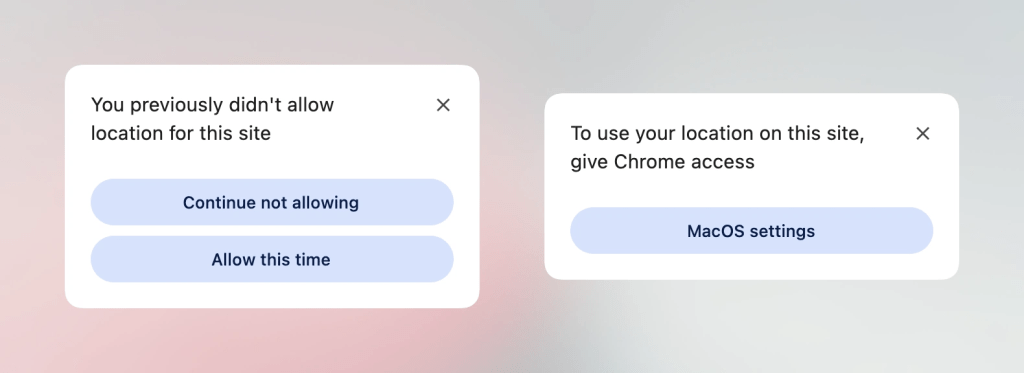
As August progressed, discussions turned toward native HTML integration. The introduction of the <geolocation> element offered a streamlined alternative to the complex JavaScript Geolocation API, which historically required navigating hardware integration and rigid permission loops. Because browser support remains fragmented, developers have adopted progressive enhancement strategies to blend <geolocation> with legacy APIs.
In the realm of syntax highlighting, Dave Rupert released MicroLighter, a lightweight tool built on the Custom Highlight API. This approach bypasses traditional DOM manipulation by applying highlights via CSS pseudo-elements, significantly improving rendering performance for code-heavy pages.
By late August, layout manipulation took center stage. Temani Afif published techniques for extracting CSS grid metrics—specifically row and column counts alongside cell coordinates—into CSS custom properties. This capability unlocked advanced interactions, such as computing hover proximity directly within stylesheets. Concurrently, Bramus proposed the class prefix selector (.something-*), offering a cleaner, more performant alternative to traditional attribute selectors like [class^=""], and introduced @supports named-feature() for fine-grained feature detection.
Supporting Data and Technical Implications
The shift toward native CSS solutions directly impacts page performance, maintainability, and accessibility. Historically, tasks such as syntax highlighting, grid state tracking, and tooltip management required third-party JavaScript libraries, which increased bundle sizes and Main Thread execution times.
- Performance Gains: Utilizing the
::highlight()API through tools like MicroLighter avoids DOM node fragmentation, reducing memory overhead during page rendering. - Selector Efficiency: Traditional attribute selectors (
[class^="..."]) force browsers to scan string fragments across class attribute values, resulting in higher computational costs during style recalculation passes. The proposed class prefix selector (.something-*) aligns more closely with standard class-matching engines, yielding faster evaluation times. - Layout Flexibility: The addition of
flex-wrap: balancemirrors the typographic balance features introduced in recent years, automatically distributing flex items evenly across multiple rows or lines to eliminate orphaned elements in responsive layouts.
Industry Discourse and Diverging Methodologies
As new specifications emerge, industry leaders continue to debate best practices for implementation. A prominent example is the ongoing discussion surrounding dark mode toggling mechanisms. Frontend architect Lea Verou has advocated for a streamlined two-state toggle, while developer and advocate Bramus presented arguments in favor of a tri-state approach (light, dark, and system default). Meanwhile, independent contributors like Vale.Rocks suggested an "auto-until-overridden" two-state model, highlighting the nuanced balancing act between user autonomy and automated system preferences.
Similarly, discussions surrounding the <geolocation> element have centered on styling limitations. While the HTML element simplifies markup and permission management, its integration into existing design systems requires careful consideration of browser-level UI restrictions imposed by user agents.
Broader Impact and Future Outlook
The continuous evolution of CSS and HTML specifications signals a cooperative effort between browser vendors and the developer community to solve native design challenges. Features like @supports named-feature() empower developers to write robust, future-proof stylesheets without resorting to brittle feature-detection scripts.
As these experimental properties transition from single-browser support to cross-browser standardization, web development practices are poised to become significantly leaner. By shifting layout calculations, state management, and visual enhancements from JavaScript to native CSS and HTML primitives, the modern web platform is stepping into a more performant, maintainable era as the industry transitions into the autumn development cycle.