In the fast-paced world of digital advertising, even minor technical oversights can derail a multi-thousand-dollar marketing campaign. For social media managers and digital marketers, accidentally uploading a low-resolution video or a mismatched image format to a major social platform is a common operational hazard. While such errors often stem from honest mistakes, the consequences on campaign performance are severe, frequently translating into diminished audience engagement, wasted ad spend, and depressed conversion rates. Compounding this challenge is the fluid nature of digital ecosystems: social media platforms, particularly Meta’s Facebook, routinely alter their ad dimensions, aspect ratios, and design guidelines to accommodate evolving mobile hardware and user interface updates. Keeping pace with these continuous specification adjustments has consequently become a major logistical hurdle for marketing teams worldwide.
To navigate this complex landscape, industry professionals rely on standardized parameters to ensure creative assets render correctly across diverse devices and placements. Understanding these technical requirements is not merely a matter of aesthetic compliance; it is a fundamental determinant of return on investment (ROI). Advertisers who deploy correctly sized assets avoid the automatic cropping, pixelation, and visual distortion that typically plague improperly formatted uploads. Furthermore, adhering to platform-specific guidelines ensures that critical calls to action and brand messaging remain visible to the consumer, thereby maximizing the efficacy of paid media initiatives.

The evolution of Facebook advertising architecture over the past decade reflects a broader industry shift toward mobile-first consumption and immersive media formats. When Meta originally introduced commercial placements into the platform, ads were primarily restricted to desktop right-column banners and traditional desktop news feed insertions. As smartphone adoption surged globally, the platform aggressively pivoted its product roadmap to prioritize mobile feeds, ephemeral content like Stories, and interactive commerce solutions such as Collection ads and Instant Experiences. This technological transition necessitated a parallel evolution in creative specifications, moving from rigid landscape constraints to flexible, vertical, and square aspect ratios designed to capture attention on smaller screens.
Analyzing the structural implications of ad placement reveals a direct correlation between creative format selection and consumer behavior. Industry data consistently indicates that mobile users exhibit shorter attention spans when scrolling through native feeds, placing a premium on dynamic, high-contrast visual assets that load instantaneously. Consequently, platforms have refined their algorithmic delivery systems to favor ads that seamlessly integrate into the user experience—such as in-feed native placements and full-screen vertical stories—while deprecating legacy formats that interrupt the viewing experience clumsily. For digital marketing agencies and enterprise brands alike, mastering these technical nuances is essential for maintaining a competitive edge in an increasingly saturated digital marketplace.
Facebook In-Feed Ad Specifications and Best Practices

In-feed advertisements remain the cornerstone of digital marketing strategies on the platform, offering an accessible entry point for brands seeking to build product awareness without requiring prohibitive budgets. These native ads appear directly within a user’s primary news feed, intermingled organically with posts from friends, family members, and followed pages. Because they support static images, moving GIFs, and standard video files, in-feed placements offer immense creative versatility for campaigns targeting broad demographics.
To maximize reach and engagement within the feed, marketing strategists frequently leverage advanced visual formats, including panoramic images and 360-degree photography, which invite active user interaction. When deploying static imagery, industry best practices dictate maintaining minimal overlaid text to prevent cognitive overload and ensure compliance with platform rendering standards.
For static image assets, supported file formats are restricted to JPG and PNG, with a maximum allowable file size of 30 megabytes. While the minimum acceptable dimension is 600 by 600 pixels, platform guidelines strongly recommend uploading high-resolution assets of at least 1080 by 1080 pixels to accommodate high-density retina displays. The acceptable image ratio ranges from 1.91:1 to a strict 1:1 square format. Regarding accompanying textual elements, campaigns achieve optimal performance when primary text is held to approximately 125 characters, headlines to 27 characters, and descriptions to 27 characters.
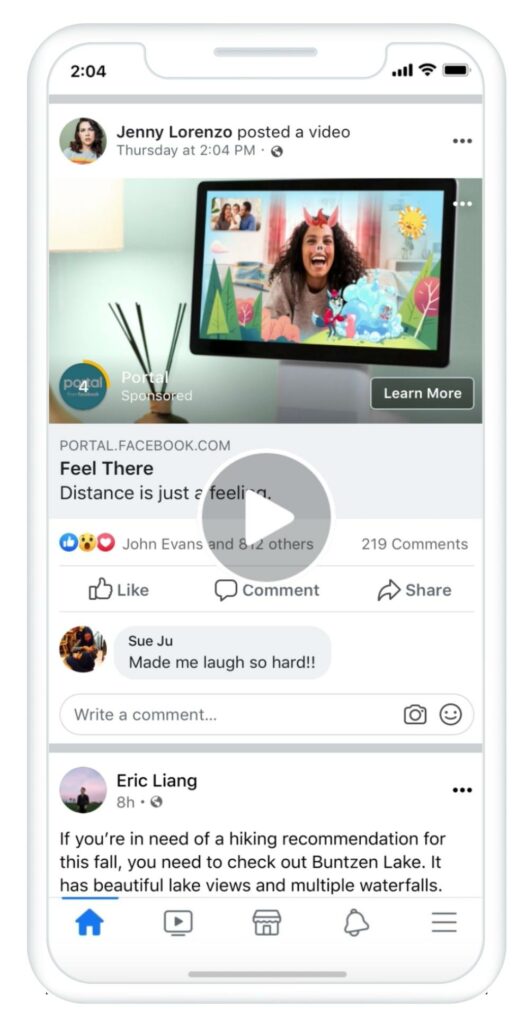
For video-based in-feed campaigns, technical parameters expand to accommodate dynamic motion graphics. Supported file types include MP4, MOV, and GIF. The maximum allowable file size is significantly higher at 4 gigabytes, with a minimum dimension requirement of 120 by 120 pixels and a recommended resolution of at least 1080 by 1080 pixels. Video aspect ratios may be configured as a 1:1 square for cross-device compatibility or a 4:5 vertical ratio optimized specifically for mobile viewing. Durations can span widely from a single second up to a maximum of 241 minutes, though performance data suggests shorter, punchier cuts yield superior engagement rates.
Optimizing for Conversions Through In-Stream Video and Carousel Formats
When an organization’s primary marketing objective shifts from brand awareness to direct website traffic and lead conversion, in-stream video ads provide a powerful mechanism for securing and retaining consumer attention. Operating primarily within mobile environments, in-stream ads can be deployed as single-video assets or through dynamic carousel formats that integrate into live-streaming broadcasts. Specifically, live-feed carousel ads are triggered only after a user has actively engaged with a Facebook Live broadcast for a minimum threshold of 60 seconds.

In-stream video specifications require MP4, MOV, or GIF file types with a maximum capacity of 4 gigabytes. Aspect ratios are typically restricted to 16:9 landscape or 1:1 square, with lengths ranging from five seconds to ten minutes. Accompanying static images used within these campaigns must adhere to 1.91:1 or 1:1 ratios, maintaining a minimum resolution of 1080 by 1080 pixels and a maximum file size of 30 megabytes. Text recommendations advise capping primary text at 125 characters and headlines at 40 characters, while strictly prohibiting unnecessary text overlays on uploaded imagery.
For brands managing extensive product catalogs or seeking to highlight multiple distinct value propositions within a single promotional unit, the in-feed carousel format offers an ideal solution. Carousel ads allow marketers to curate between two and 10 distinct scrollable cards—combining both images and videos—to break down complex product features into digestible visual segments. A key strategic advantage of this format is the ability to assign a unique landing page URL to each individual card, enabling e-commerce retailers to merchandise multiple items simultaneously within a unified ad unit.
Carousel design specifications mandate JPG and PNG formats for images, and MP4, MOV, or GIF for video cards. Maximum file sizes are capped at 30 megabytes for static visuals and 4 gigabytes for moving media. Minimum dimensions require 600 by 600 pixels for images and 120 by 120 pixels for videos, all standardized to a uniform 1:1 aspect ratio with a resolution of at least 1080 by 1080 pixels. Text constraints for carousels are tightly regulated: primary text should not exceed 125 characters, headlines are optimized at 32 characters, and descriptions are limited to 18 characters, accompanied by a mandatory landing page URL for each card.

Advanced E-Commerce Integration: Collection Ads and Instant Experiences
E-commerce enterprises seeking to showcase expansive inventories without overwhelming prospective buyers frequently utilize Facebook Collection ads. Designed to capture immediate mobile attention within the news feed, Collection ads pair a primary hero video or high-resolution image with a grid of three complementary product images sourced directly from a brand’s product catalog.
When a user interacts with a Collection ad, the interface instantly launches a Facebook Instant Experience—a lightning-fast, full-screen native landing page hosted entirely within the mobile application. This frictionless environment allows consumers to browse product details, evaluate specifications, and complete purchases without ever navigating away from the social platform. To execute this effectively, assets must be rendered at a 1:1 ratio with a minimum resolution of 1080 by 1080 pixels, adhering to standard file ceilings of 30 megabytes for images and 4 gigabytes for videos. Primary text should remain concise at 125 characters, paired with a 40-character headline and a designated destination URL.

Complementing these catalog-driven formats are Facebook Instant Articles ads, which target mobile users consuming fast-loading editorial content. This publishing ecosystem optimizes text-based promotional material for rapid mobile consumption, providing businesses with robust interactive features akin to Instant Experiences. Design specifications for Instant Article placements mirror standard native feed requirements: 1:1 image and video aspect ratios, a minimum resolution of 1080 by 1080 pixels, and character limits restricted to 125 for primary copy and 40 for headlines.
Navigating Niche Placements: Marketplace, Right Column, and Stories
Beyond the primary news feed, Meta provides a diverse array of specialized ad placements designed to capture consumer intent across different touchpoints within the digital ecosystem. Facebook Marketplace ads allow businesses to position promotional assets alongside peer-to-peer listings, effectively reaching high-intent consumers actively searching for specific retail goods, automotive vehicles, or residential properties within their geographic vicinity. Marketplace ads support both static imagery and video assets conforming to a 1:1 aspect ratio, with resolutions of at least 1080 by 1080 pixels and text parameters capped at 125 characters for primary text, 40 for headlines, and 30 for descriptions.

Conversely, Facebook right column ads cater exclusively to desktop users, appearing alongside the main interface rather than within the central scrolling feed. Although mobile traffic has vastly outpaced desktop consumption, right column ads remain a viable supplemental tactic for retargeting campaigns. Because of their unique positioning, these ads utilize landscape or square image ratios with a minimum width of 254 pixels and height of 133 pixels, scaling up to high-resolution standards alongside a strict 40-character headline limit.
Vertical, ephemeral media formats continue to dominate modern consumer engagement through Facebook Stories, Messenger Stories, and Audience Network integrations. Stories ads are immersive, full-screen vertical placements (9:16 aspect ratio) that run uninterrupted for up to 15 seconds unless manually dismissed by the user. Due to the interface overlay of platform UI elements, marketers must observe a critical design safety margin, keeping approximately 14 percent—or roughly 250 pixels—of the top and bottom areas entirely free of essential text, logos, or critical visual subjects to prevent obstruction.
Strategic Implications and Campaign Management

Ultimately, selecting the correct ad placement and adhering strictly to platform specifications directly impacts campaign profitability and operational efficiency. Advertisers must carefully evaluate their overarching marketing objectives—whether driving upper-funnel brand awareness or lower-funnel e-commerce conversions—and map those goals to the appropriate creative format and placement matrix.
Modern social advertising management tools, such as enterprise dashboards provided by Hootsuite and Meta Business Manager, enable marketing teams to centralize campaign creation, schedule multi-format assets across Facebook, Instagram, and connected networks, and monitor performance analytics in real-time. By combining rigorous adherence to technical design specs with sophisticated audience targeting and brand safety controls, organizations can safeguard their advertising investments, minimize creative rejection rates, and achieve sustainable return on investment across all digital channels.