The modern digital landscape is defined by an unprecedented volume of user-generated and multi-source content, presenting significant architectural challenges for software engineers and web developers worldwide. Managing media assets—ranging from high-resolution photographs and uncompressed video files to complex documents submitted in arbitrary formats—has historically required custom-built backend pipelines, extensive storage provisioning, and intricate manipulation scripts. Building these capabilities from scratch demands considerable engineering hours, ongoing maintenance overhead, and specialized infrastructure. To address these persistent bottlenecks, engineering teams increasingly turn to dedicated, cloud-native file management utilities designed to handle the complete lifecycle of digital media: uploading, real-time transformation, and high-performance delivery. Among these specialized services, platforms like Filestack have emerged as prominent solutions, offering comprehensive APIs and robust code libraries that abstract away the underlying complexities of media processing.
The evolution of web applications over the past two decades has shifted user expectations dramatically. Applications are no longer expected to simply accept static text inputs; they must seamlessly ingest media from local devices, enterprise cloud storage providers, and popular social media networks instantaneously. When an application receives a file in a non-standard dimension, excessive file size, or unsupported format, the user experience frequently degrades, leading to abandoned uploads and increased bounce rates. Historically, developers solved these issues by writing bespoke ingestion wrappers using libraries like ImageMagick or FFmpeg, coupled with custom Amazon Web Services (AWS) S3 bucket policies and content delivery network (CDN) configurations. However, maintaining these homegrown systems diverts valuable development resources away from core product features. Industry analysts note that outsourcing non-core infrastructure functions to specialized third-party APIs significantly accelerates time-to-market for software-as-a-service (SaaS) products, enabling engineering departments to focus on high-value business logic.
Getting started with modern media infrastructure platforms typically involves a streamlined onboarding process designed to minimize friction for development teams. Services like Filestack provide risk-free evaluation periods, such as 21-day trial structures, granting engineers immediate access to comprehensive software development kits (SDKs), robust API keys, and extensive documentation repositories. In the realm of developer tools, documentation quality serves as a critical differentiator. Detailed code samples, comprehensive API references, and conceptual guides allow integration teams to transition from initial proof-of-concept to production deployment within days rather than months. This rapid implementation cycle reduces initial capital expenditure and provides predictable operational scaling as user bases expand.
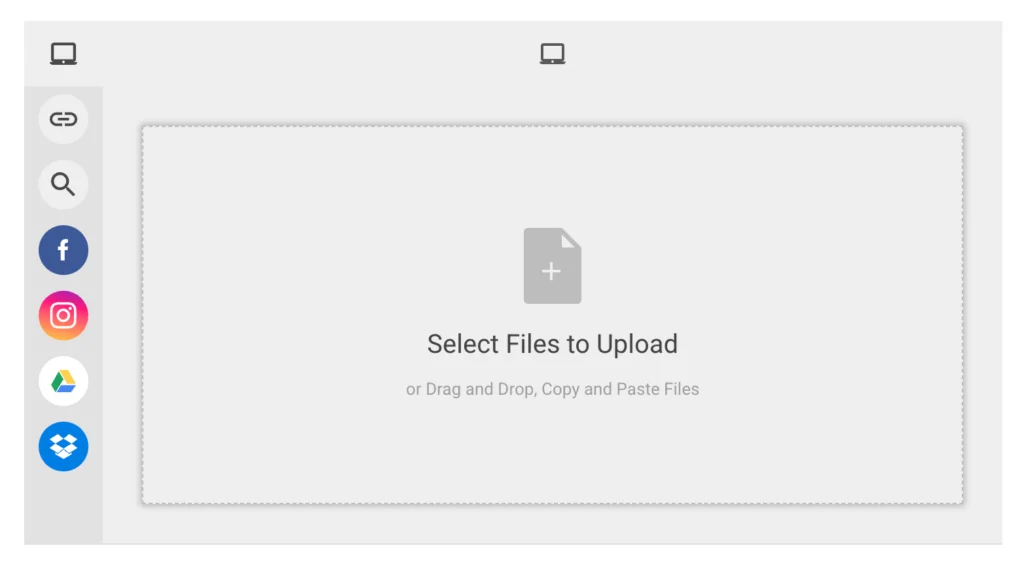
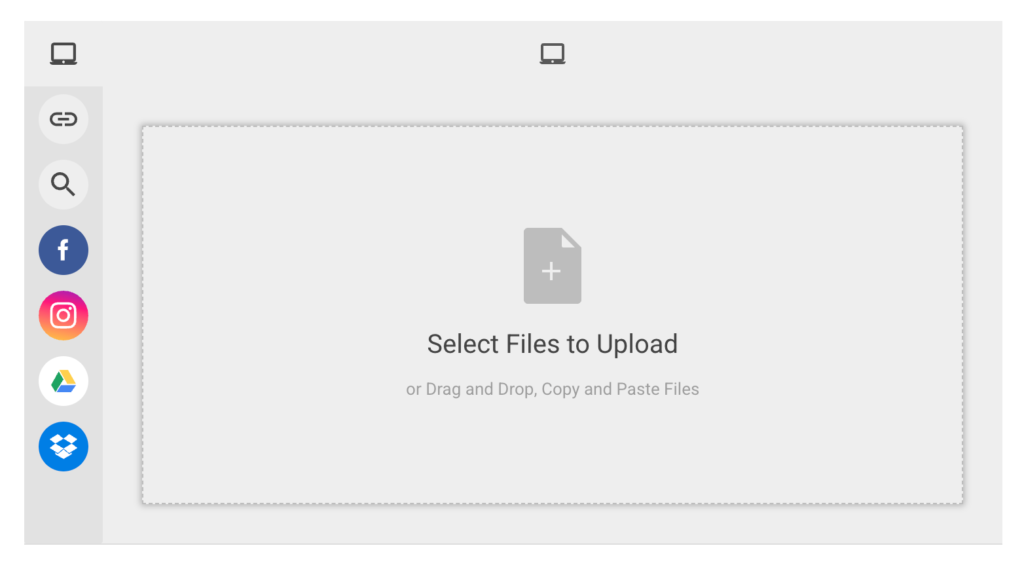
The foundation of any robust media pipeline is the ingestion phase, which must accommodate diverse user behaviors while maintaining strict security and performance standards. Modern file pickers must bridge the gap between local client devices and disparate third-party repositories. Utilizing client-side JavaScript initialization, developers can embed sophisticated file uploading user interfaces with minimal code. By instantiating a client object with a unique API key, applications can invoke a pre-built modal picker capable of handling complex file selections. This interface integrates natively with more than twenty major digital services, including enterprise storage solutions like Google Drive and Dropbox, version control platforms like GitHub, and prominent social networks including Facebook and Instagram. Furthermore, native support for drag-and-drop mechanics ensures that end users experience minimal friction regardless of whether they are uploading a profile picture, submitting a corporate document, or sharing multimedia content.
Beyond client-side implementations, backend architectures frequently require programmatic file ingestion pipelines. For server-side environments utilizing languages such as Python, dedicated SDKs facilitate direct communication with cloud storage destinations like Amazon S3. Developers can configure intricate storage parameters, define specific folder hierarchies, and attach custom metadata or upload tags directly to incoming files during the transfer process. This programmatic flexibility ensures that enterprise compliance requirements, internal data organization standards, and security protocols are strictly enforced before assets ever enter the primary application database. By decoupling the upload mechanism from the primary application server, organizations prevent bandwidth saturation and mitigate potential denial-of-service vectors associated with unoptimized file transfers.
Once media assets are successfully ingested, the subsequent challenge lies in transformation. Users inevitably upload files of varying dimensions, aspect ratios, color profiles, and resolutions. Presenting unoptimized media directly to consumers damages application performance and visual aesthetics. Consequently, real-time file transformation capabilities have become a baseline requirement for modern web architecture. Developers require the ability to manipulate images, videos, and documents dynamically—either on-the-fly via URL manipulation or synchronously through automated workflows—without permanently altering the original master file stored in the cloud.
Image manipulation serves as a primary example of this capability in practice. Through declarative URL parameters, developers can resize, crop, rotate, and apply complex visual filters instantly. For instance, modifying a base content delivery network URL to include specific directives—such as restricting image width to three hundred pixels, applying a selective sepia tone filter, or rendering a vintage polaroid border—instructs the cloud infrastructure to process and serve the altered asset immediately. Subsequent requests for the same transformed asset leverage edge caching, ensuring near-instantaneous load times for global audiences. Beyond basic geometric adjustments, comprehensive transformation suites support advanced operations including optical character recognition (OCR), facial detection, virus scanning, and automated content moderation, safeguarding applications from malicious uploads while extracting valuable metadata.
For scenarios requiring direct user agency over content presentation, modern platforms offer specialized user interface components dedicated entirely to media editing. Instead of relying on external editing software, end users can crop, filter, and annotate their own media directly within the application workflow before finalizing their submissions. This empowers users to curate their contributions precisely, reducing the administrative burden on content moderators and ensuring visual consistency across the platform.
The final critical pillar of comprehensive media management is delivery performance. The speed at which an asset reaches the consumer directly influences user retention, engagement metrics, and conversion rates. Industry studies consistently demonstrate that even minor delays in page load times—measured in milliseconds—can result in measurable drops in e-commerce conversions and user satisfaction. To combat latency, leading file management utilities integrate deeply with globally distributed Content Delivery Networks.
When a transformed or stored asset is requested for the first time, the underlying CDN fetches the file from the origin server, caches the rendered output at the edge location closest to the end user, and delivers it with minimal network transit time. Advanced caching strategies typically maintain these optimized assets for standardized durations—often thirty days—before revalidating against the origin. This architecture offloads heavy computational tasks from primary application servers, reduces database query loads, and guarantees consistent high-speed rendering regardless of geographic dispersion.
As digital ecosystems continue to mature, the reliance on specialized, cloud-based infrastructure for media handling is projected to accelerate. The convergence of artificial intelligence, automated machine learning tagging, and hyper-optimized edge delivery indicates that internal engineering teams will increasingly eschew custom infrastructure development in favor of managed, API-first utilities. By delegating the complexities of ingestion, real-time transformation, and global delivery to dedicated platforms, organizations can maintain a lean engineering focus, ensuring scalable, secure, and performant digital experiences for users worldwide.