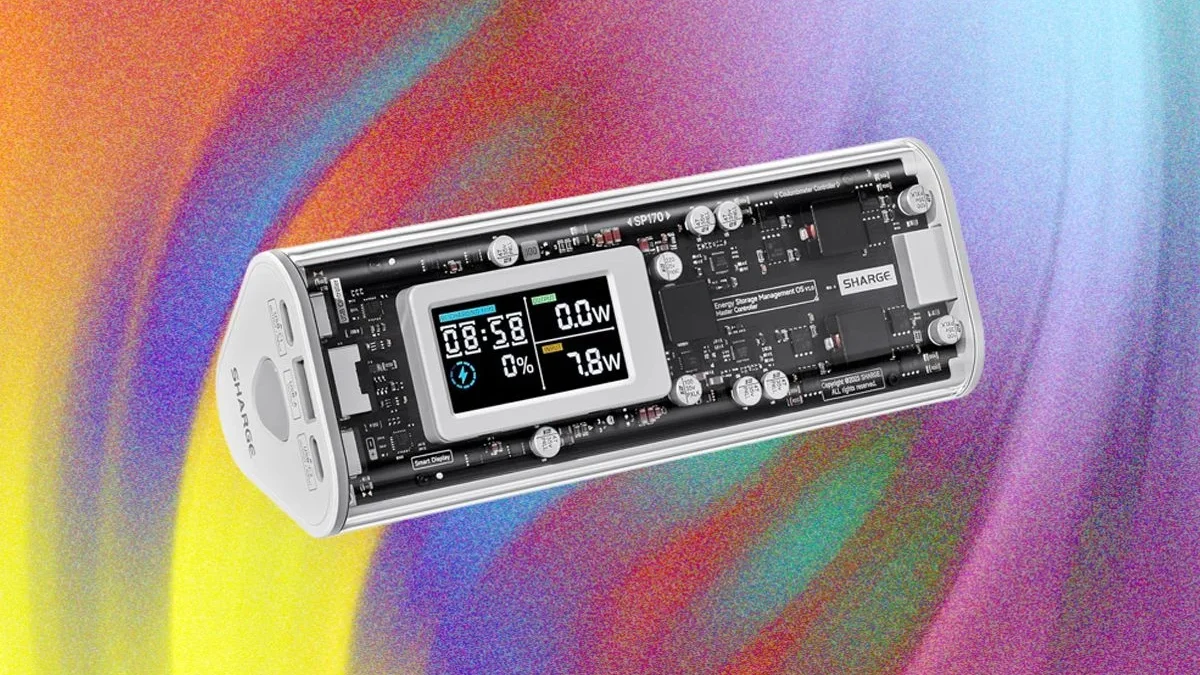
The global market for portable power banks has experienced a massive surge in innovation, driven by shifting consumer habits, advancements in battery chemistry, and stricter global transit regulations. With mobile devices serving as central hubs for communication, work, and navigation, the demand for reliable, high-speed, and safe portable charging solutions has never been higher. Industry analysts project the portable power market to continue expanding steadily through the decade, fueled by the adoption of universal Qi2 wireless charging standards and fast-charging protocols that rival traditional wall outlets. However, navigating this saturated landscape requires careful consideration of capacity, output wattage, and safety certifications.
Understanding Power Bank Capacity and Real-World Efficiency
When shopping for a portable charger, consumers frequently encounter metrics measured in milliampere-hours (mAh). While these numbers provide a baseline for comparison, experts caution that they can be misleading. The actual amount of power delivered to a smartphone or tablet depends heavily on conversion efficiency, thermal dissipation, and the specific charging cable used.
Energy loss is an unavoidable thermodynamic reality in portable power banks. Voltage conversion—stepping up internal battery voltage to standard USB outputs—results in inherent energy dissipation, typically manifested as heat. Consequently, users generally realize between 60 and 80 percent of a power bank’s stated capacity during real-world applications. Wireless charging methods, such as MagSafe or Qi2, introduce further efficiency losses compared to direct wired connections. To combat consumer confusion, a growing number of manufacturers now list a designated "Rated Capacity," offering a more accurate reflection of what the device can deliver under normal operating conditions.
Charging Rates, Protocols, and Compatibility
Charging speeds for mobile devices are quantified in watts (W), calculated by multiplying the output voltage (V) and amperage (A). Modern power delivery (PD) standards allow power banks to intelligently negotiate power output with connected hardware, ensuring optimal charging speeds for everything from wireless earbuds to power-hungry laptops.
Apple’s iPhone lineup, Samsung’s Galaxy series, and various Android flagships rely on universal PD frameworks, though many Android devices incorporate proprietary protocols like Qualcomm Quick Charge or Samsung’s Programmable Power Supply (PPS), which can push up to 45 watts of power. Matching the correct protocol with an appropriate cable is essential for achieving advertised charging velocities.
The Evolution of Battery Safety and Industry Standards
The proliferation of high-capacity power banks has brought battery safety into sharper focus. Historical manufacturing anomalies in the broader consumer electronics space—most notably high-profile incidents involving lithium-ion combustion nearly a decade ago—pushed regulatory bodies and manufacturers to institute rigorous safety protocols.
Modern lithium-ion and emerging semi-solid-state cells rely on precise internal chemistry management systems to control the reactions between negative lithium-carbon compounds and positive metal oxides. Safety failures typically stem from unmanaged thermal buildup, physical manufacturing defects, or the use of unregulated, low-cost charging accessories. Industry watchdogs and safety organizations strongly advise consumers to avoid heavily discounted, uncertified charging bricks and cables, which frequently omit essential insulation and circuit-protection mechanisms.

Air Travel Regulations and Transit Restrictions
Frequent flyers must navigate an increasingly strict regulatory framework regarding lithium-ion batteries in commercial aviation. International aviation authorities mandate that all portable chargers and power banks must be transported strictly within carry-on baggage and are categorically prohibited in checked luggage due to fire risks in cargo holds.
Furthermore, capacity limits remain a strict threshold. Power banks exceeding 100 watt-hours (approximately 27,000 mAh) typically require explicit airline clearance prior to boarding. In response to evolving safety policies, several commercial airlines have implemented supplementary rules regarding operational usage during flights, requiring passengers to keep power banks accessible under the seat in front of them rather than in overhead storage bins, and occasionally restricting active device charging mid-flight.
A Closer Look at Small Power Banks (5,000 mAh)
For users prioritizing pocket-friendly convenience over multi-charge endurance, small-capacity power banks offer a streamlined compromise. These devices generally target single-day smartphone top-ups, sliding effortlessly into small pockets or travel bags.
Among the notable designs in this category is the Peak Design Kickstand Travel Battery, a magnetic Qi2-compatible power bank featuring a textured finish and an integrated aluminum kickstand. Delivering 15-watt wireless charging while doubling as a media viewing stand, it supports pass-through charging when plugged into a USB-C power source, though it commands a premium price and ships without a wall adapter or cable.
Ultra-slim alternatives like the Clutch Pro offer credit-card-like profiles with built-in, pop-out USB-C connectors, catering to minimalists. Meanwhile, Anker’s Nano Power Bank series utilizes a dinky form factor featuring a foldable, rotating connector that slots directly into the base of a smartphone, delivering up to 22.5 watts of wired output.
Innovations in semi-solid-state chemistry have also entered the compact sector, exemplified by models like the BMX SolidSafe Air, which leverages advanced chemical compositions to mitigate fire risks while maintaining a wafer-thin profile. Similarly, Baseus offers the PicoGo Air (AM71), measuring a mere 0.27 inches thick, making it one of the slimmest magnetic solutions available for iPhone and Qi2-enabled Android devices.
Mid-Tier Power Banks (10,000 to 20,000 mAh)
Striking a balance between portability and high-capacity endurance, mid-tier power banks cater to users requiring multiple device charges or sustained power throughout a busy workday.
The Cuktech 15 Air exemplifies modern engineering in this category, packing a 15,000-mAh capacity into a lightweight chassis equipped with a full-color statistics display. It supports up to 65 watts of total output across multiple ports and features rapid 100-watt recharging capabilities, allowing the power bank itself to replenish in approximately 90 minutes.

For travelers seeking integrated hardware solutions, Anker’s Nano Power Bank with Instacord integrates a retractable 2.3-foot cable alongside 45-watt power delivery. In the ruggedized segment, specialized outdoor power banks like the Iniu Outdoor Rugged Power Bank and Elecom Nestout series incorporate IP67 dust and water resistance ratings, heavy-duty shock absorbers, and screw-on port caps, tailoring portable power to hikers, campers, and outdoor professionals.
High-Capacity Power Banks (20,000 mAh and Up)
At the highest tier of portable power generation sit heavy-duty power banks and compact power stations, designed to charge laptops, tablets, and multiple mobile devices simultaneously.
The Ecoflow Rapid Pro and Aohi Starship Power Bank push the boundaries of portable output, delivering up to 300 watts and 240 watts respectively. These high-end units feature multiple high-output USB-C ports capable of driving power-hungry professional workstations and modern laptops at maximum speeds. Similarly, the Anker Prime Power Bank combines a 26,250-mAh capacity with smart-display monitoring and companion app integration, providing users with granular control over power distribution.
Pass-Through Charging: Convenience Versus Longevity
The inclusion of pass-through charging—allowing a power bank to charge its internal battery while simultaneously outputting power to an external device—remains a polarizing feature among hardware manufacturers.
While brands such as GoalZero, Mophie, and Sharge officially support pass-through functionality, others like Anker have selectively reduced or eliminated it in specific product lines. Engineering analyses suggest that simultaneous input and output cycles can cause rapid temperature fluctuations, triggering microscopic thermal stress that eventually degrades battery longevity. Consumers utilizing pass-through charging are advised to monitor device temperatures closely to prevent overheating.
Implications and Future Market Trends
The portable charger market continues to mature rapidly, driven by strict regulatory oversight, consumer demand for faster charging speeds, and a shift toward standardized interoperability through USB-C and Qi2 protocols. As component manufacturers refine semi-solid-state batteries and improve energy-conversion efficiencies, future iterations of power banks are expected to offer higher energy densities within even more compact form factors.
Industry analysts emphasize that while the market features an abundance of budget-friendly options, consumer safety and long-term device health rely heavily on purchasing certified hardware from established, reputable manufacturers. As mobile devices continue to demand more computational power, the reliance on dependable, intelligent mobile power solutions will remain a cornerstone of modern personal technology.