The Rise of Immersive Chat Architectures
The landscape of web-based interaction has shifted rapidly over the past 24 months. While early AI implementations were often relegated to simple text-generation plugins or rudimentary customer support chatbots, the industry has pivoted toward immersive, full-screen chat environments. Platforms such as OpenAI’s ChatGPT, Anthropic’s Claude, Google’s Gemini, and GitHub Copilot have standardized a specific design pattern: a persistent side-navigation for conversation history, a central "main" window for the active exchange, and a fixed input field at the bottom of the viewport.
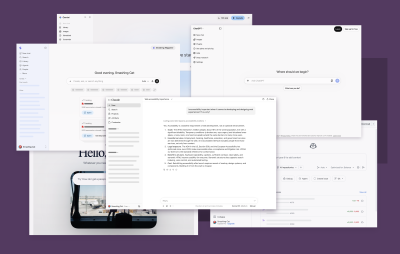
This transition toward "immersive" AI experiences—often built using cross-platform frameworks like Electron or Tauri—means that these applications function as complex desktop software delivered through the web. According to industry data, the adoption of these tools in enterprise environments has surged by over 300% since 2023, making them a central pillar of the digital economy. However, because these interfaces rely heavily on real-time streaming text and dynamic UI updates, they frequently bypass traditional accessibility standards if not engineered with a "design-first" approach to inclusivity.
Understanding the Accessibility Gap
At the core of the current accessibility challenge is what developers describe as "visual bias." Software design in the AI sector is overwhelmingly optimized for sighted users who process information through spatial cues—such as the positioning of speech bubbles on the left or right side of a screen to denote the speaker. For a user utilizing a screen reader, these visual cues are non-existent. When a new LLM response streams onto the screen, the assistive technology remains silent unless the developer has explicitly implemented mechanisms to signal the change.
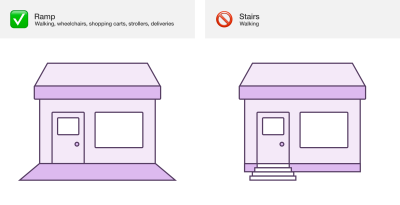
The social model of disability posits that individuals are disabled not by their medical conditions, but by a society and built environment that fails to accommodate their needs. In the digital realm, this means that a lack of "live region" announcements for an AI response is not merely a technical oversight; it is an architectural barrier equivalent to a flight of stairs in a building without a ramp. Without proper implementation, a screen reader user is left in a state of uncertainty, unable to confirm if their prompt was received, if the AI is processing, or if the system has failed entirely.
Technical Implementation Standards
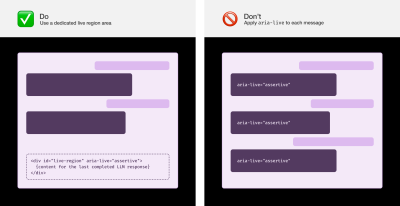
To bridge this gap, engineers are increasingly adopting standardized technical protocols. The primary tool for this is the ARIA (Accessible Rich Internet Applications) live region. Best practices dictate that developers should avoid applying "aria-live" attributes to every individual message, which can lead to redundant or broken screen reader behavior. Instead, a best-practice architecture involves a single, dedicated live region at the end of the Document Object Model (DOM).

When the LLM finishes streaming its response, the system should trigger a single announcement. This ensures that the user receives the full context of the message in a coherent manner, preventing the "juddering" effect that occurs when a screen reader attempts to parse text as it is being typed character-by-character.

Furthermore, loading states present their own unique challenges. User research indicates that providing feedback on processing status is essential. If an LLM is performing a complex task—such as querying a database or summarizing a long document—the system should provide periodic updates. Research suggests that a five-second interval for "loading" announcements strikes an optimal balance between keeping the user informed and avoiding excessive, repetitive audio noise that can interfere with the user’s focus.

Navigation and Structural Integrity
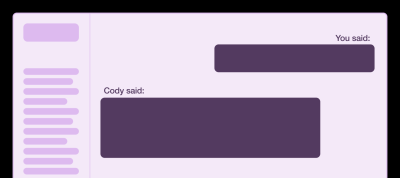
Beyond content delivery, the structural navigation of these applications is vital. Screen reader users often navigate by headings, yet many current AI interfaces lack the necessary header hierarchy to allow for efficient scanning. By inserting visually hidden headings (e.g., "User said," "AI said") before each message, developers can provide the structure necessary for users to jump between sections of a conversation, mirroring the way a sighted user might quickly scroll through a chat history.

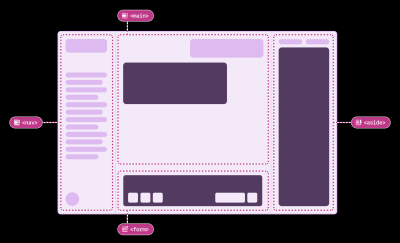
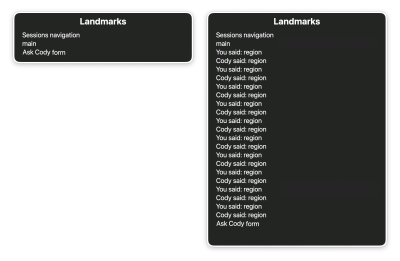
Landmark roles, such as <nav> for history sidebars and <main> for the active chat, help define the page structure. However, moderation is required. Over-tagging the UI—such as assigning a landmark role to every individual chat bubble—can lead to "landmark pollution," where the user’s navigation menu becomes cluttered with hundreds of entries, rendering the feature useless.

Advanced Navigation Techniques: The Return of F6
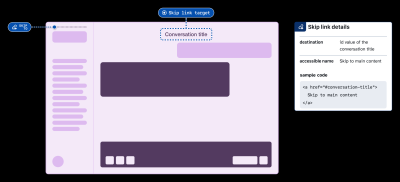
One of the most effective, yet underutilized, techniques for navigating immersive apps is the use of Control + F6 shortcuts. Historically used in desktop software to cycle through application windows, this shortcut can be re-implemented in web-based LLM chats to allow users to jump instantly between the sidebar, the main chat feed, and the input field. By enabling this, developers offer a power-user experience that significantly reduces the motor effort required for navigation, particularly for users with dexterity-related disabilities.
The Role of User Preferences and Customization
Inclusive design is fundamentally about providing choices. A "one-size-fits-all" approach to accessibility is rarely effective in complex applications. Providing granular settings allows users to manage their environment:
- Announcement Granularity: Allowing users to toggle announcements for secondary actions (such as "searching," "thinking," or "reasoning" steps) prevents the chat interface from becoming overly verbose.
- Motion and Sound Control: Enabling users to disable animations and sound effects is crucial for those with attention-related conditions or sensory sensitivities.
- Re-bindable Shortcuts: Providing the ability to customize keyboard shortcuts respects the diverse needs of users who may be utilizing specialized hardware or non-standard keyboard layouts.
Implications and Future Outlook
The cost of inaction is high. Beyond the ethical imperative of inclusivity, organizations face increasing legal scrutiny regarding digital accessibility. The European Accessibility Act (EAA) and the ongoing interpretation of the Americans with Disabilities Act (ADA) regarding digital properties mean that accessibility is shifting from a "nice-to-have" feature to a baseline legal requirement.
The future of AI accessibility will likely see the widespread adoption of the ariaNotify() method, a native browser API designed to replace the current, often hacky, implementations of live regions. While this technology is beginning to see cross-browser support, the current advice from accessibility experts remains focused on tried-and-tested techniques, such as the TetraLogical approach to live regions, until ariaNotify() reaches universal stability.
Ultimately, the goal of these efforts is to ensure that the transformative potential of LLMs is available to everyone. By prioritizing inclusive research and involving disabled users in the testing process, developers can move beyond mere compliance. The goal is to build a digital ecosystem where information, creativity, and opportunity are not filtered by one’s ability to navigate a screen, but are instead universally accessible. As we continue to integrate artificial intelligence into the fabric of daily life, the accessibility of these tools will serve as a barometer for our commitment to a truly open and equitable digital society.