The rapid evolution of the digital landscape has transformed social media from a casual communication channel into a strategic cornerstone for businesses and creators alike. What was once a realm of intuitive posting and hopeful engagement has matured into a data-driven science, where understanding performance metrics is paramount to success. Early forays into consistent LinkedIn posting, for instance, often reveal a perplexing inconsistency in content reception – some posts soar, while others falter without apparent reason. This enigma dissipates only when a systematic approach to social media analytics is adopted, providing clarity through concrete data on what truly resonates with audiences.
The Data Imperative: Unlocking Social Media Performance

The shift towards data-centric decision-making in social media marketing is not merely a trend but a fundamental necessity. Insights derived from social media analytics illuminate critical aspects of content performance, such as the most effective hooks for grabbing attention, optimal posting times for maximum engagement, and the ideal length for various content formats. This data-driven clarity allows marketers to move beyond guesswork, enabling them to replicate successes and refine strategies with precision. The clues to unlocking superior performance are readily available within analytics dashboards, yet harnessing these insights across multiple platforms can be a significant challenge. Manually compiling data from each platform’s native dashboard is not only a time-consuming endeavor but also often reveals frustrating blind spots. For instance, LinkedIn’s native analytics notably lack timestamps on past posts, rendering the identification of peak engagement times a complex, if not impossible, task. This is precisely where third-party social media analytics tools become indispensable, offering aggregated data, enhanced features, and streamlined workflows tailored to diverse needs, from individual creators to large enterprises.
Defining Social Media Analytics and Their Role
Social media analytics encompass the comprehensive metrics that quantify how content performs across various social platforms. Key data points include reach (the number of unique users who saw the content), impressions (the total number of times the content was displayed), engagement rate (the proportion of the audience that interacted with the content), click-through rate (the percentage of users who clicked a link), and follower growth. Tracking these metrics provides more than just a count of likes; it unveils the underlying reasons for a post’s success and offers actionable guidance on future content strategy.
These analytics answer crucial questions such as: Which content types are performing best? Who is my audience, and what are their interests? When is the optimal time to post? Which channels yield the highest ROI? This process is often referred to as social media data analysis, with analytics representing the raw numbers (reach, engagement, follower growth) and data analysis being the act of interpreting these numbers to identify patterns and inform subsequent actions.
While all major social media networks offer native insights within their platforms, relying solely on these can present several issues. Native analytics frequently lack the specific insights required for comprehensive strategy development; as noted, LinkedIn’s omission of timestamps is a prime example. Furthermore, for campaigns spanning multiple platforms, native insights necessitate manual collation, making it arduous to gain a holistic view of collective performance. Third-party social media analytics software addresses these limitations by centralizing performance data, thereby reducing tracking time and freeing up resources for strategic improvement.
Analytics vs. Reporting: A Symbiotic Relationship
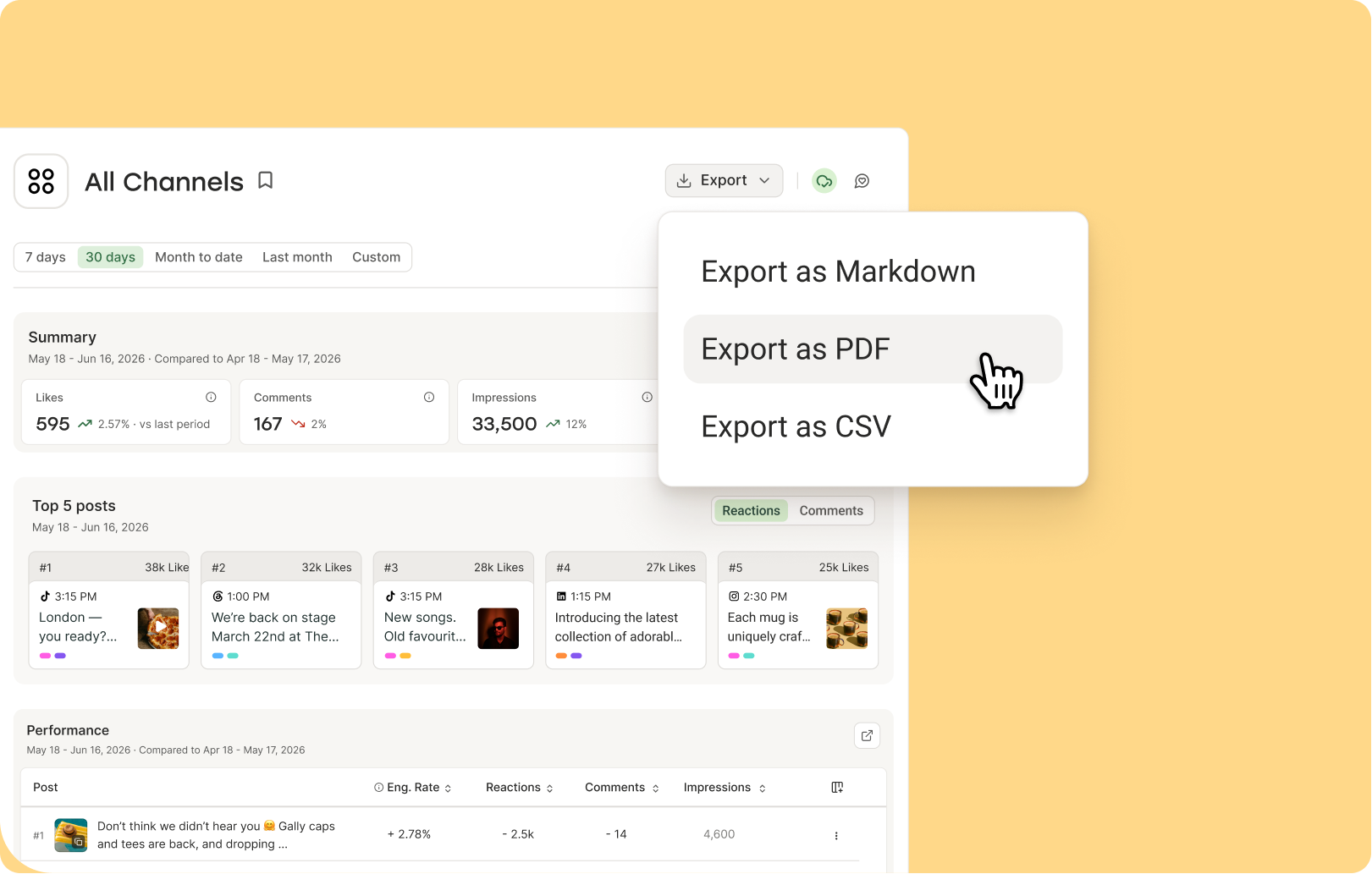
The terms "analytics" and "reporting" are often used interchangeably but denote distinct, albeit interconnected, phases of the same process. Analytics involves the collection and measurement of data, answering "what happened?" and "why did it happen?" Reporting, conversely, translates this analysis into a clear, digestible format suitable for stakeholders, clients, or internal teams. The most effective social media reporting tools seamlessly integrate both functions, pulling raw data (analytics) and presenting it in intuitive dashboards, exportable PDFs, or branded presentations (reporting). Understanding this distinction is vital: a solo creator might primarily require a robust analytics dashboard, whereas an agency managing client accounts would benefit immensely from automated, white-label reporting capabilities.
Categorizing Analytical Approaches
Social media analytics can be broadly categorized into four types, each offering a different depth of insight:
- Descriptive Analytics: This is the most basic form, detailing "what happened." It involves presenting raw data such as impressions, clicks, shares, and follower counts. Most native dashboards primarily offer descriptive analytics.
- Diagnostic Analytics: Moving beyond "what," diagnostic analytics seek to explain "why it happened." This involves drilling down into specific content types, posting times, or audience segments to understand the drivers behind performance peaks or troughs. Identifying correlations between content themes and engagement rates falls into this category.
- Predictive Analytics: This advanced form aims to forecast "what will happen" based on historical data and statistical models. It can predict future trends, audience behavior, or campaign outcomes, allowing for proactive strategy adjustments.
- Prescriptive Analytics: The most sophisticated level, prescriptive analytics answers "what you should do." Leveraging AI and machine learning, these tools provide actionable recommendations to optimize future performance, suggesting specific content types or engagement tactics.
The majority of social media analytics tools concentrate on descriptive and diagnostic analytics, which suffice for most creators and marketers. Premium tools, such as Socialinsider and Talkwalker, extend into predictive and prescriptive territories, albeit at a higher cost, catering to organizations with more complex analytical needs.
Choosing the Right Tool: Dedicated Analytics vs. Management Suites
The decision between a dedicated social media analytics tool and a comprehensive social media management software often depends on specific workflow and strategic requirements. Social media management software typically integrates analytics with other functionalities like post scheduling, audience engagement, and content idea storage. This integrated approach is often ideal for creators, one-person teams, or small marketing teams overseeing their entire social media strategy, offering the convenience of an all-in-one solution.
Conversely, a dedicated social media analytics tool is more suitable for users who have already covered other aspects of their social media strategy (either manually or with separate tools) or who require highly specialized insights that a management tool might not provide. Standalone analytics tools excel in scenarios demanding deep competitive analysis, extensive market research, detailed sentiment analysis, or highly customized reporting. A prudent approach for many is to begin with a management tool that includes analytics, like Buffer, and later augment their stack with a dedicated analytics tool if more specialized features become necessary.
A Deep Dive into Leading Social Media Analytics Platforms
The market for social media analytics tools is robust, with numerous options catering to varied use cases and budgets. After extensive testing, several platforms stand out for their distinct strengths:
-
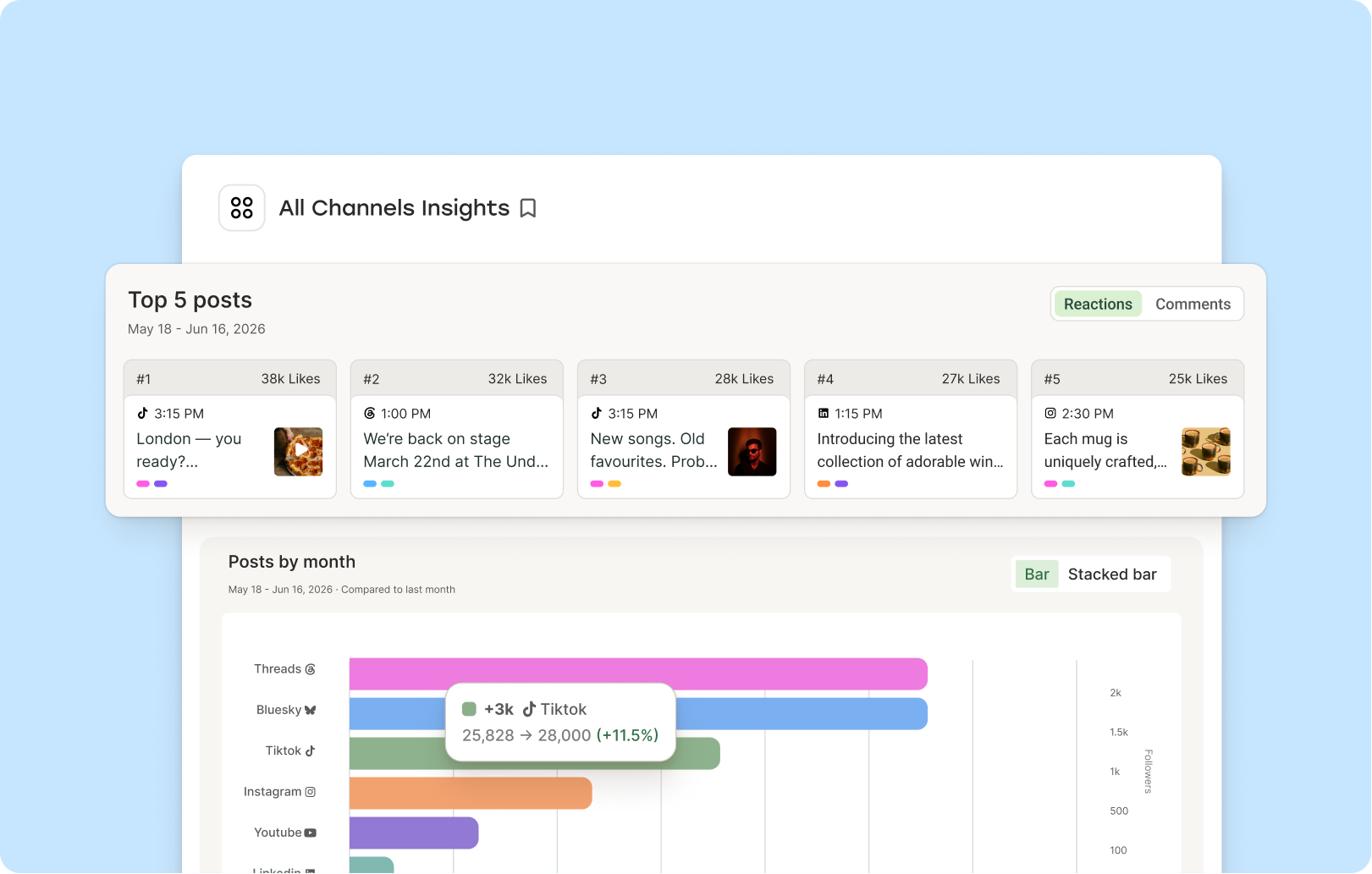
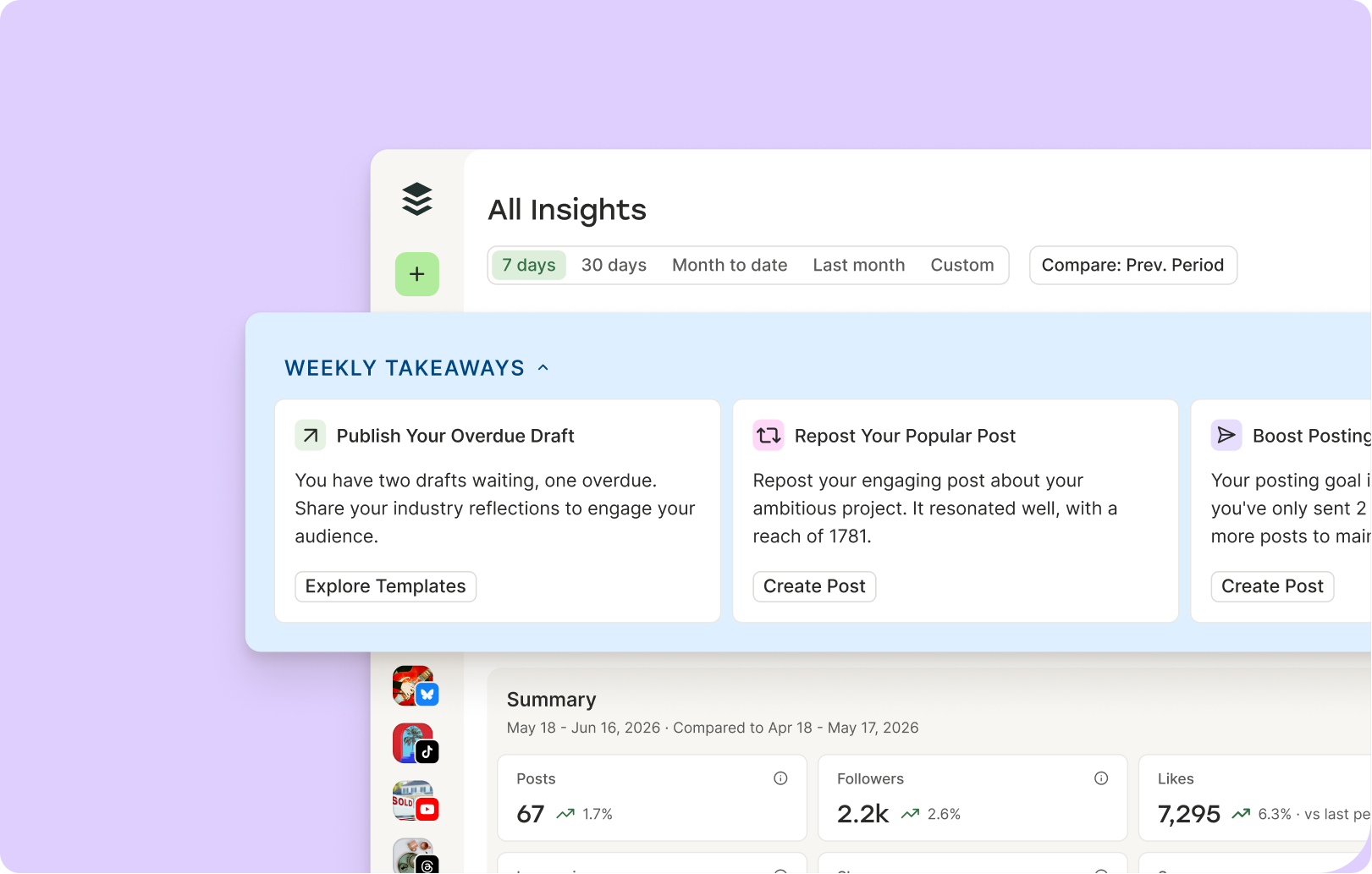
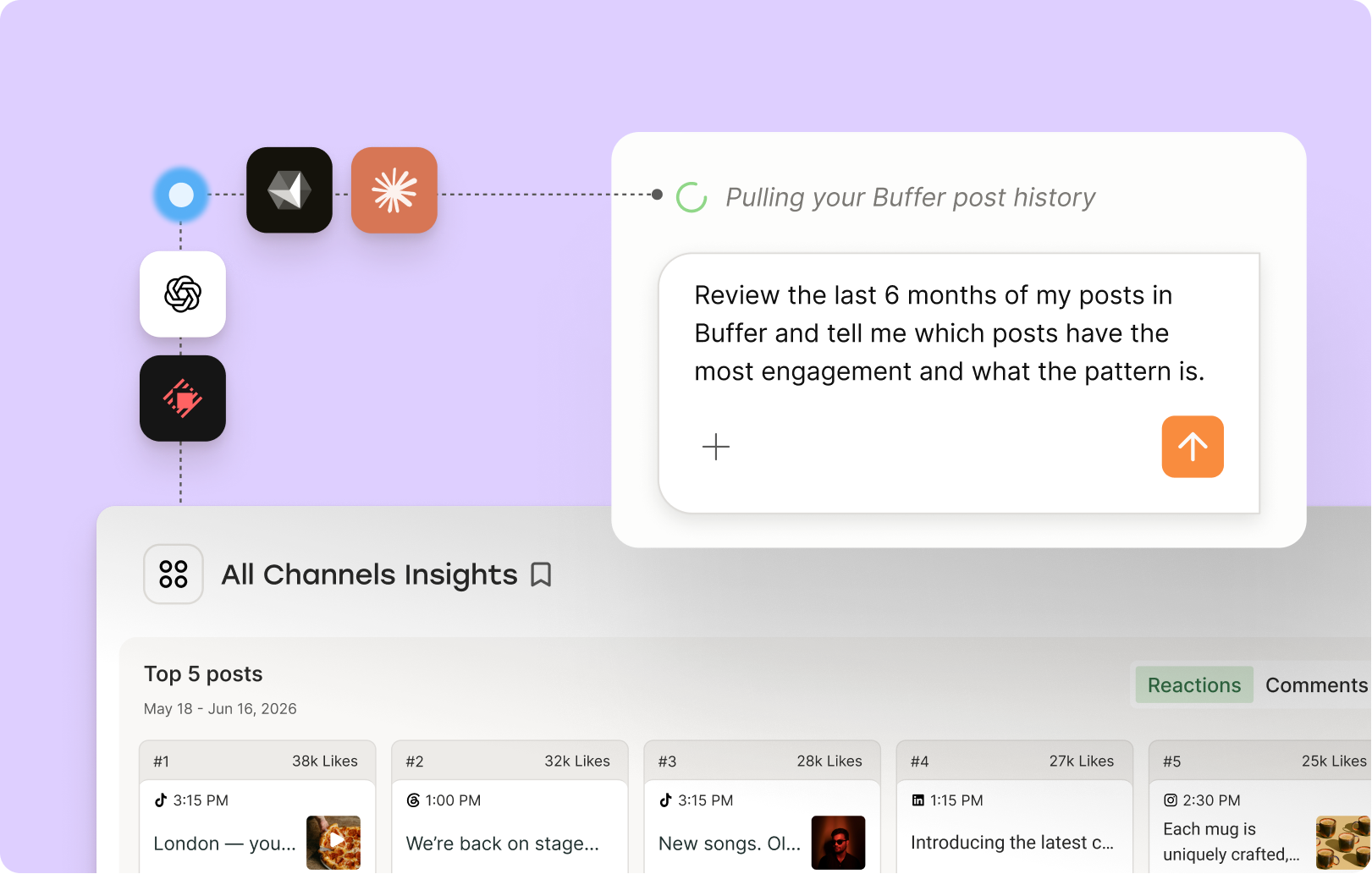
Buffer: Best for creators, growing teams, and agencies. Buffer’s "Insights" dashboard is lauded for its user-friendly interface that prioritizes actionable metrics over raw data overload. Its AI-powered "Takeaways" feature is a game-changer, automatically identifying successful posts, suggesting older content for resharing, and even prompting new content ideas based on past performance. This intelligent guidance is invaluable for time-constrained professionals. Buffer provides comprehensive raw data across all connected channels (Bluesky, Facebook, Instagram, LinkedIn, Mastodon, Pinterest, Threads, TikTok, X, YouTube), allowing for filtering by tags to analyze content pillars or campaigns. Reports can be exported as polished PDFs or CSVs, or data copied directly for AI tool integration, streamlining the reporting process. Pricing includes a free plan for up to three channels with 30 days of data, with paid plans starting from $6/month for historical data and custom features.
-
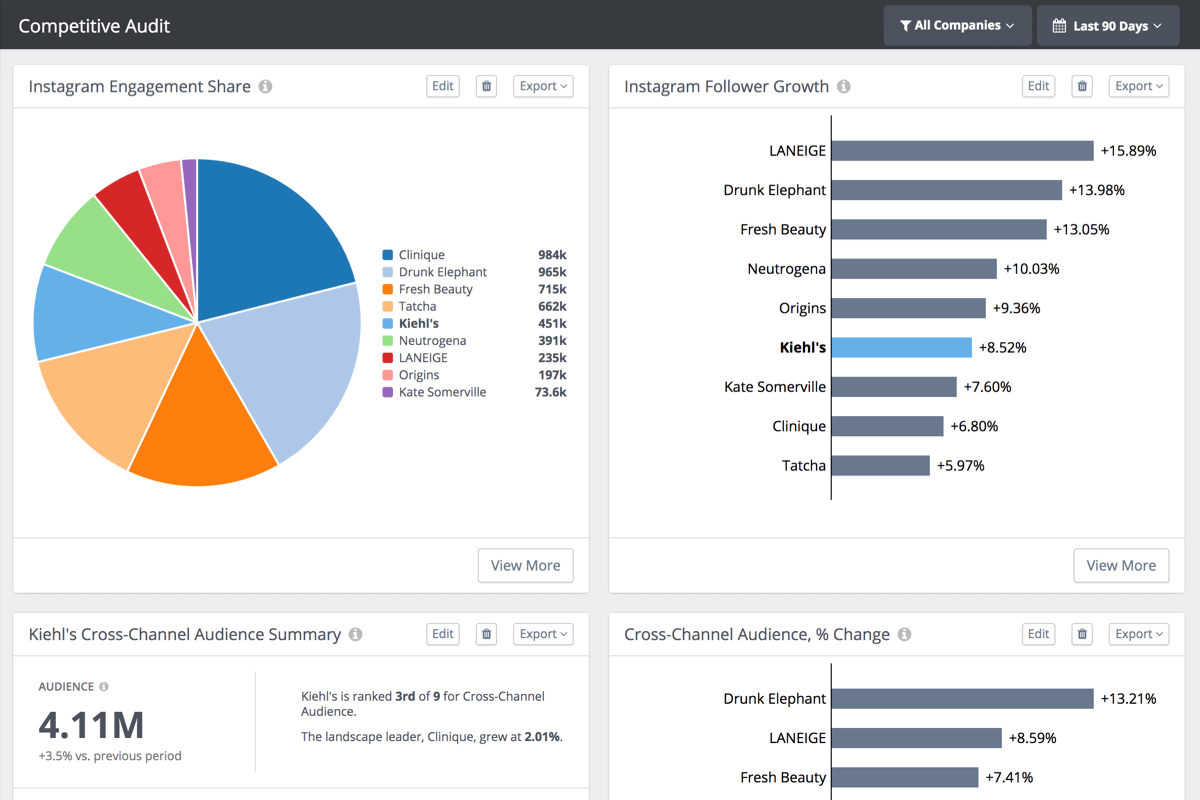
Rival IQ: Best for large agencies. Rival IQ distinguishes itself with its profound competitive benchmarking capabilities, making it a powerful asset for large social media agencies. It integrates deep social media analytics with competitor analysis and social listening, offering a consolidated solution. Its competitive features are particularly strong, revealing boosted competitor posts, comparing brand positioning through social media bios, and benchmarking performance against chosen competitors within specific niches. This level of insight is critical for agencies crafting sophisticated client strategies. Plans start from $239/month, with a 14-day trial.
-
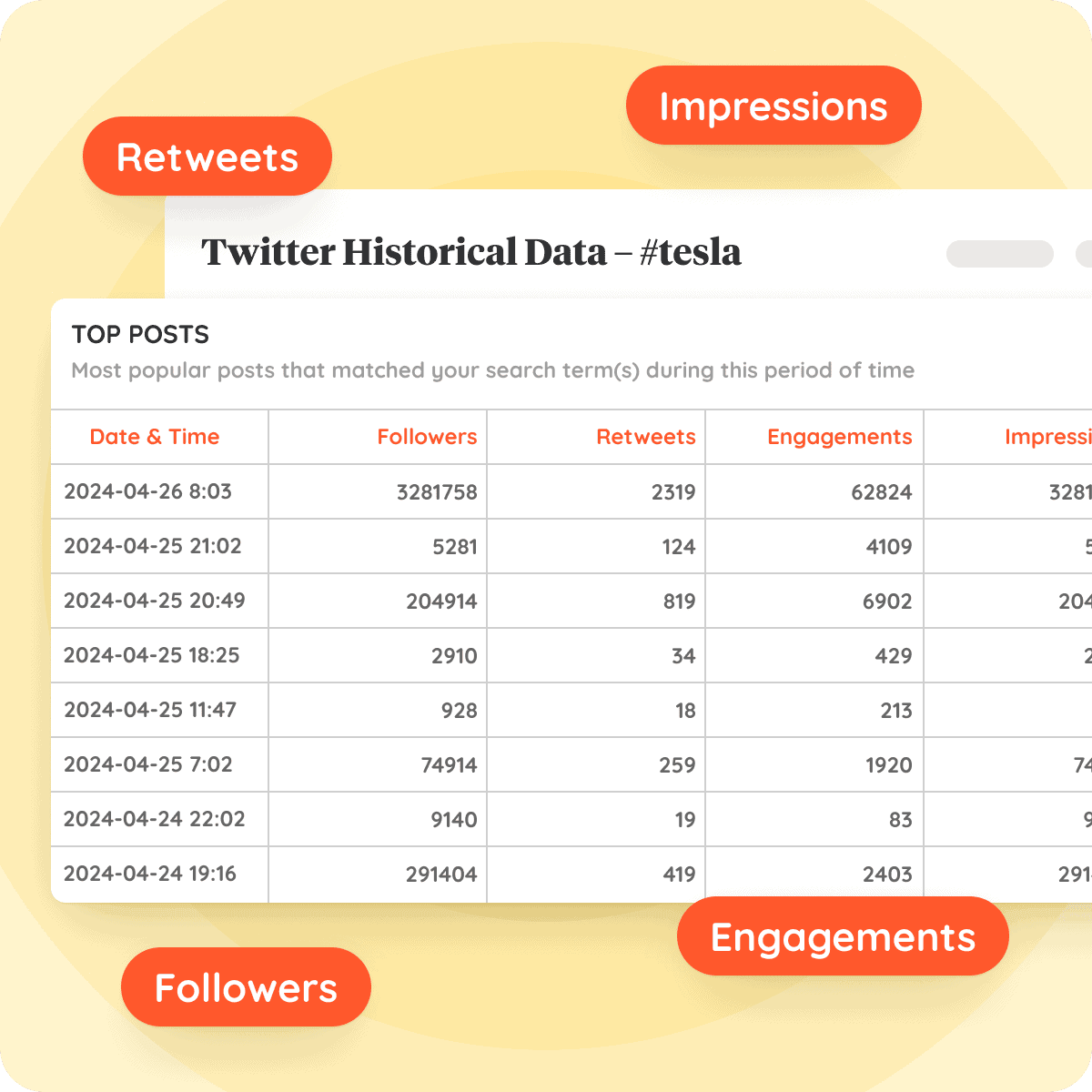
Keyhole: Best for market research. Keyhole excels in providing historical insights and market research, particularly for understanding the long-term evolution of conversations around specific topics. Its ability to unlock up to a decade of historical data (primarily for X, formerly Twitter) offers unparalleled depth for trend analysis and understanding audience sentiment shifts over time. Keyhole’s machine learning system identifies emerging trends in real-time, offering powerful insights for product and service development. While historical insights are currently X-centric and incur additional costs, the depth of data is invaluable for strategic foresight. Pricing is not publicly available, requiring direct contact for sales inquiries.
-
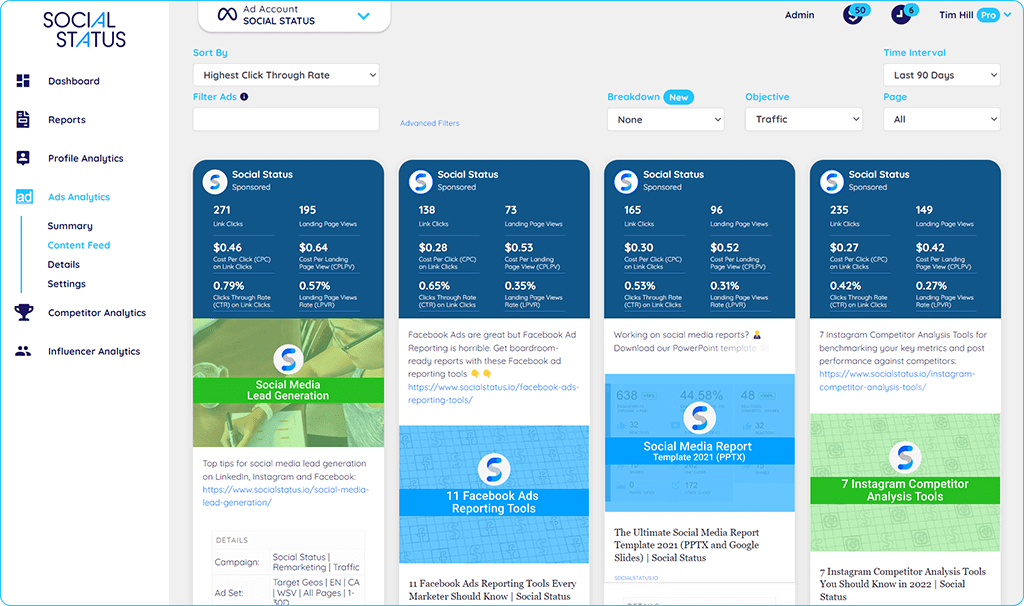
Social Status: Best for small businesses running ads and influencer partnerships. Social Status is a strong contender for small businesses managing both organic and paid social strategies, including influencer collaborations. It tracks essential KPIs (likes, impressions, comments, shares) and offers specialized features like automated ad reporting, real-time influencer campaign tracking, and user-generated content (UGC) analytics. This consolidation of diverse marketing insights into a single dashboard significantly simplifies performance measurement for busy small business owners. It offers a free plan, with paid plans starting at $9/month for small businesses.
-
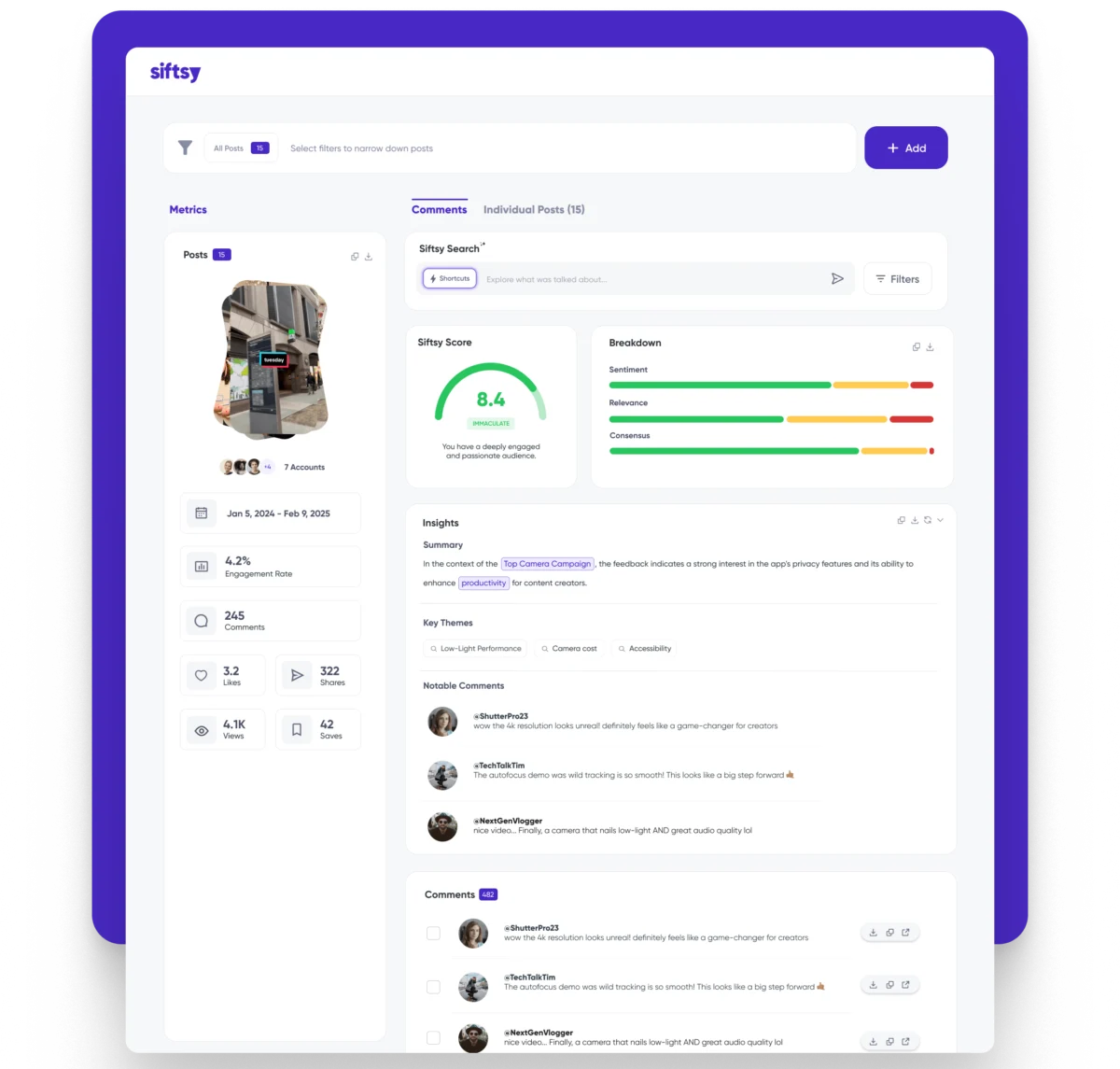
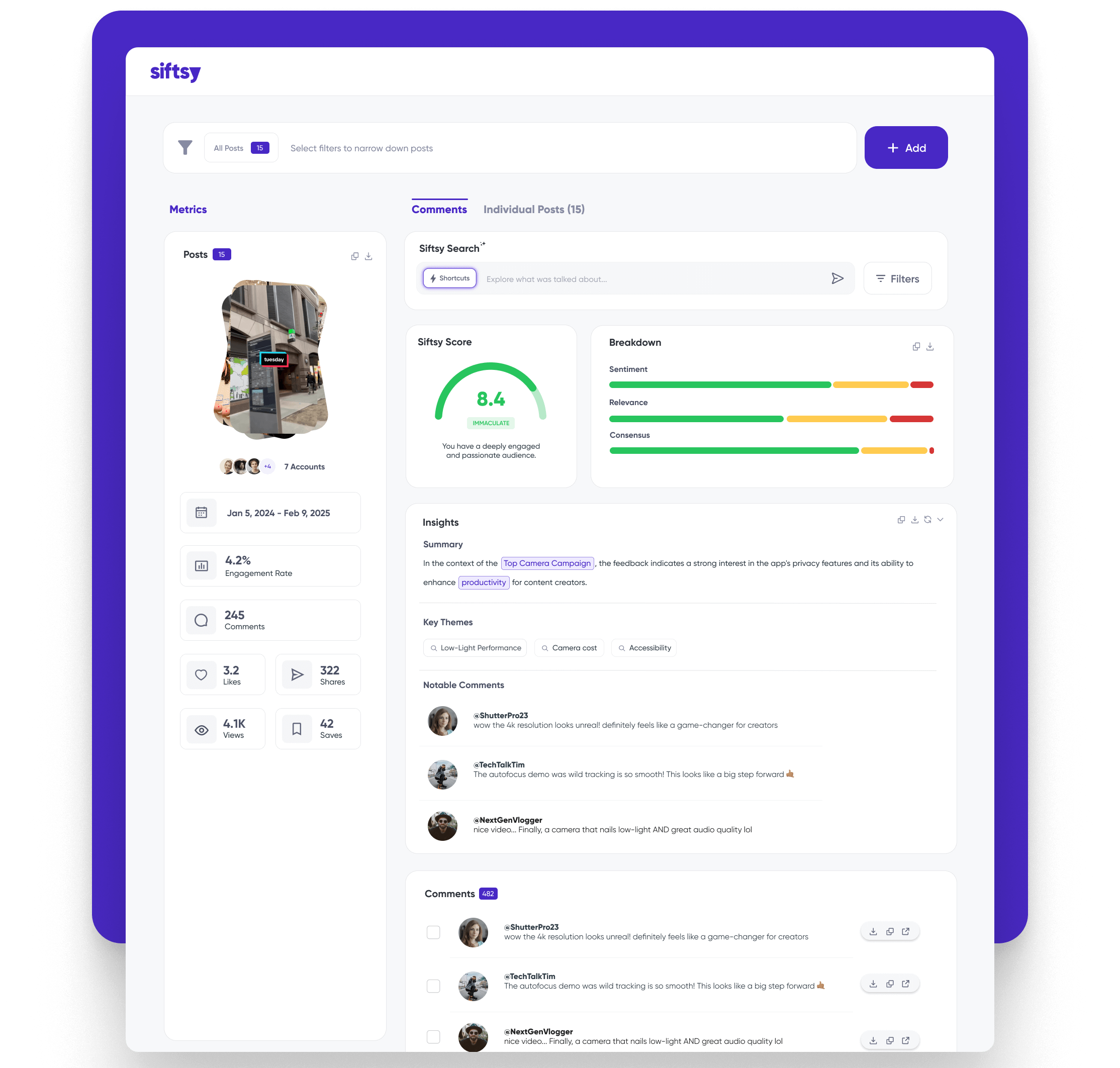
Siftsy: Best for analyzing comments. Siftsy uniquely focuses on extracting sentiment from comments across multiple channels. By uploading a CSV of post URLs and tagging campaigns, its AI analyzes qualitative feedback to uncover the "why" behind numeric data. This tool is invaluable for understanding audience sentiment during crises, identifying product improvement suggestions, or validating content effectiveness. Siftsy’s AI summarizes key takeaways and highlights valuable insights from specific conversations, bridging the gap between quantitative metrics and qualitative understanding. Pricing is not publicly available.
-
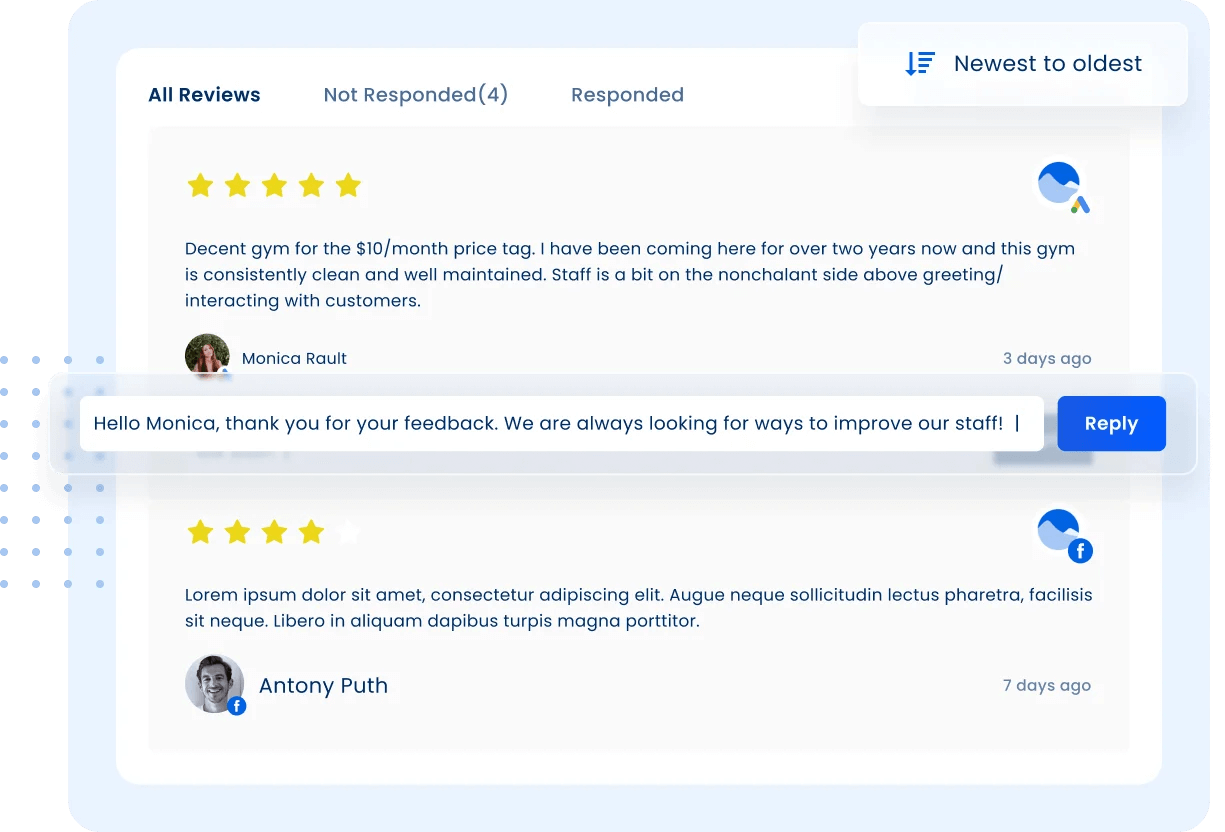
Vista Social: Best for tracking reviews and social metrics. Vista Social offers a comprehensive suite encompassing post scheduling, comment management, social inbox, social listening, and robust review management. Its standout feature is the ability to centralize feedback from numerous review sites into one dashboard, enabling businesses to monitor ratings, respond to reviews efficiently, and identify trends in customer feedback. This makes it an essential tool for managing online reputation alongside social media presence. Plans start at $79/month, with a 14-day trial.
-
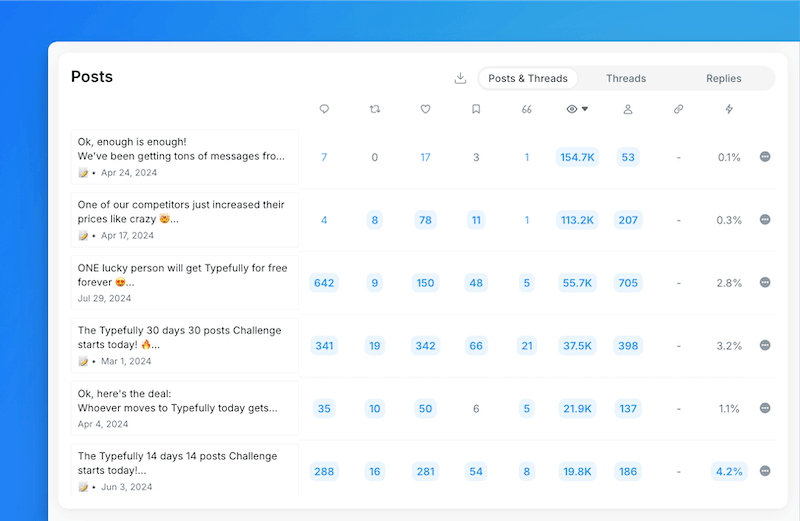
Typefully: Best if you’re only focused on X (formerly Twitter). Typefully provides an unparalleled experience for X users, excelling in both content creation (especially for threads) and analytics tailored to the platform’s unique dynamics. It offers X-specific metrics, such as "profile conversion rate," which indicates how many profile visitors convert into followers – a crucial insight for optimizing bio and content strategy on X. Beyond standard metrics, it helps users understand the effectiveness of their X presence in attracting and retaining followers. It offers a free plan for 15 posts/month, with paid plans starting at $16/month (yearly billing).
-
Tailwind: Best for businesses relying on Pinterest traffic. Tailwind is the go-to tool for businesses leveraging Pinterest for traffic generation, recognizing its dual role as a social channel and a search engine. Its integration with Google Analytics allows users to precisely determine which pins drive the most website traffic, facilitating the optimization of Pinterest strategy. Tailwind provides granular analytics from overall board performance to individual pin engagement, including repins, clicks, and impressions. This detailed data helps users master Pinterest’s unique ecosystem for maximum impact. A free plan is available for five posts/month, with paid plans starting at $29.99/month.
-
DashThis: Best for an all-in-one marketing dashboard. DashThis is not solely a social media tool but a powerful marketing dashboard designed to consolidate data from various sources into a unified report. It allows marketers to combine social media metrics with data from Google Analytics, ad platforms (e.g., TikTok Ads, Meta Business Suite, Google Ads), SEO tools, and more (over 30 integrations). This capability is invaluable for demonstrating social media’s contribution to the broader marketing strategy and proving ROI to stakeholders who prefer a consolidated view. Its unlimited users and data sources make it ideal for large marketing teams. Plans begin at $54/month, with a 15-day free trial.
-
Socialinsider: Best for AI-driven content pillar insights. Socialinsider offers advanced, AI-driven insights into content pillar performance, helping marketers identify which thematic categories resonate most with their audience. Higher-tier plans include AI-driven competitor analysis, allowing users to assess the effectiveness of competitor content pillars and inform their own strategies. The post-tagging feature is particularly useful for grouping and monitoring the collective performance of campaigns or content themes, providing strategic clarity. While powerful, its advanced features are typically in higher-tier plans, making it more suitable for larger budgets. Plans start at $99/month, with a 14-day trial.
-
Talkwalker: Best for in-depth audience insights. Talkwalker excels in providing deep audience analytics, drawing insights from diverse sources like customer calls, support tickets, and online communities. Its audience segmentation features allow for granular analysis based on demographics, revealing specific interests and behaviors of different audience segments—an invaluable asset for global brands or those targeting niche markets. The platform’s AI assistant, Yeti, provides quick access to relevant audience insights. Following its acquisition by Hootsuite in 2024, Talkwalker’s advanced capabilities are now integrated into Hootsuite’s ecosystem, offering a more comprehensive social media management solution, though its premium features are found in higher-tier Hootsuite plans. Pricing is not publicly available.
Strategic Application: Transforming Data into Actionable Insights
Acquiring a powerful analytics tool is only half the battle; the true value lies in transforming raw data into actionable insights that refine social media strategy. A structured approach is essential:
- Start with Your Goal, Not the Metric: Avoid getting lost in a sea of numbers by first defining clear social media goals. Whether it’s increasing brand awareness, driving website traffic, or boosting sales, align specific metrics (e.g., reach, click-through rate, conversion rate) to each goal. Metrics that don’t directly contribute to a defined objective can often be deprioritized.
- Get Everything into One View: The friction of logging into multiple native dashboards is a significant impediment to effective analysis. A unified dashboard, like Buffer’s Insights, which aggregates data from 10+ networks, streamlines the process, allowing for direct comparison of performance across platforms and saving invaluable time.
- Look for the ‘Why,’ Rather Than Just the ‘What’: Raw numbers tell what happened; true insight comes from understanding why. Diagnostic features, such as Buffer’s Takeaways, which analyze performance patterns and provide context, are crucial. This helps identify which post types attract new followers, which topics spark conversations, and what underlying factors drive engagement.
- Set a Cadence You’ll Stick To: Consistency is key. A brief weekly review is sufficient for spotting immediate trends and optimizing content for the coming days. A more in-depth monthly analysis is ideal for evaluating long-term trends, refining overarching strategy, and assessing month-over-month progress. During active campaigns, daily check-ins may be necessary.
- Turn It into a Repeatable Report: For ongoing reporting to clients or internal stakeholders, create templates that can be regenerated with a few clicks. Exportable PDF and CSV reports eliminate manual copy-pasting, ensuring efficiency and professionalism. Advanced tools even allow direct data transfer to AI tools for further analysis and report generation.
The Future of Social Media Analytics
The landscape of social media analytics is continuously evolving, driven by advancements in artificial intelligence and machine learning. We can anticipate even more sophisticated predictive and prescriptive capabilities, offering proactive strategy recommendations rather than just retrospective analysis. The integration of social media data with broader business intelligence systems will also become more seamless, providing a holistic view of customer behavior and market trends. As the digital sphere grows in complexity, these tools will become even more critical for competitive differentiation and sustainable growth.
Ultimately, effective social media management transcends mere content creation; it is deeply rooted in understanding and responding to data. By leveraging the right social media analytics tools and adopting a disciplined, data-driven approach, businesses and creators can optimize their strategies, maximize their return on investment, and forge stronger connections with their audiences. Tools like Buffer offer an accessible entry point, allowing users to explore the power of integrated scheduling and analytics without an initial financial commitment, paving the way for more informed and impactful social media endeavors.