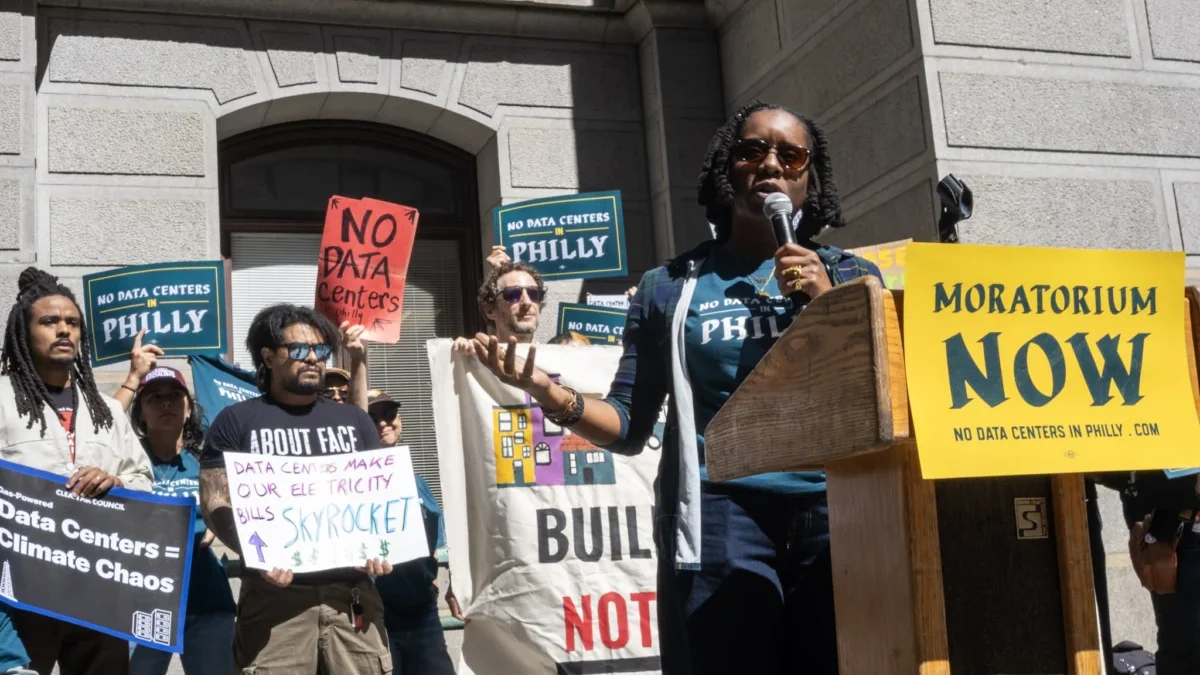
The rapid acceleration of the artificial intelligence industry has triggered an unforeseen consequence: a nationwide collision between the high-tech aspirations of Silicon Valley and the environmental health of local communities. As tech giants scramble to secure the immense computing power required to fuel generative AI, they have set their sights on industrial zones across the United States. However, these plans are increasingly meeting fierce, organized opposition from residents who fear that the construction of massive data centers will replicate the health and environmental hazards of the industrial era they thought they had left behind.
From Philadelphia to Reno, a groundswell of grassroots activism is challenging the narrative that data centers are engines of inevitable economic prosperity. For many, these facilities are not just server farms; they are perceived as energy-hungry, resource-draining, and polluting neighbors that prioritize corporate profit over public health.
The Grays Ferry Precedent: A History of Industrial Trauma
In Philadelphia’s Grays Ferry neighborhood, the skepticism toward new industrial development is not merely a matter of ideology—it is a byproduct of lived experience. For decades, residents lived in the shadow of the Philadelphia Energy Solutions (PES) oil refinery, once the largest and oldest on the East Coast.

The relationship between the community and the facility reached a breaking point in 2019, when a massive explosion ripped through the refinery, serving as a visceral reminder of the risks posed by industrial proximity. While the refinery eventually shuttered, the long-term health consequences for the surrounding population remained. Shawmar Pitts, a lifelong resident and current managing co-director of the environmental advocacy group Philly Thrive, recalls the moment he connected his family’s health struggles to their environment.
"I looked at the list of sicknesses associated with the refinery emissions, and I saw my mother, my sister, and my neighbors on that list," Pitts stated. His experience mirrors that of many in the community, including Sonya Sanders, the board president of Philly Thrive, whose husband succumbed to a rare form of bone cancer in 2020. For residents like Sanders, the arrival of any new large-scale industrial facility, even one as modern as a data center, is viewed through a lens of existential caution.
The AI Energy Paradox: A Growing Resource Burden
The primary driver of the current conflict is the staggering energy consumption required to train and maintain AI models. According to recent projections from BloombergNEF, the demand is expanding at an exponential rate. As of late 2026, forecasts suggest that by 2035, U.S. data centers could consume more natural gas than Germany and Japan combined. This estimate represents a near-doubling of projections made just nine months prior, underscoring how difficult it is for utility grids to keep pace with the hyper-growth of the AI sector.
This demand creates a "resource crunch" that pits data centers against residential utility users. The infrastructure required to power these facilities—substations, massive cooling systems, and backup diesel generators—places significant stress on the local power grid. During peak heat waves, which are becoming more frequent due to climate change, grid operators may turn to these backup generators to stabilize supply. Environmental advocates argue that this effectively turns data centers into localized polluters that operate during the times when air quality is most compromised.

A Chronology of Regulatory Friction
The tension has culminated in a wave of legislative pushback across the country. The following timeline tracks the emergence of this municipal resistance:
- 2019: The PES refinery in Philadelphia suffers a catastrophic explosion, leading to its closure and sparking a local movement for restorative justice.
- 2024: National reports begin to quantify the "AI energy boom," highlighting the massive carbon footprint associated with large language models.
- Early 2026: Cities including Denver, Indianapolis, and Asheville pass formal moratoriums on data center construction to study the long-term impact on local infrastructure and water usage.
- July 2026: New York Governor Kathy Hochul issues an executive order pausing new data center permits, citing concerns over utility costs and the preservation of natural resources.
- September 2026: The "No Data Centers in Philly" campaign hosts a major rally at Philadelphia City Hall, signaling the transition of local frustration into a formal political movement aimed at preventing development in potential sites like Northeast Philadelphia and Grays Ferry.
Official Responses and the Economic Argument
The industry perspective, often championed by regional economic development boards, emphasizes the tax revenue, construction jobs, and technical infrastructure that data centers bring to a city. Proponents argue that these facilities are essential for maintaining American competitiveness in the global AI race. In private sector briefings, data center operators often point to their investments in renewable energy credits and carbon-offset programs as evidence of their commitment to sustainability.
However, critics remain unconvinced by these corporate social responsibility efforts. At the September 2026 rally in Philadelphia, attorney Annie Fox of the Clean Air Council argued that the environmental cost of these facilities is non-negotiable. "Fossil fuel-hungry data centers will worsen climate change, making the very heatwaves that strain our grid more frequent and more severe," Fox noted.
The economic critique is equally pointed. Residents and local activists argue that the "jobs" created by data centers are often highly specialized and few in number once the initial construction phase concludes. They argue that the long-term cost to the city—in terms of degraded air quality, strained water tables, and higher electricity rates for residents—far outweighs the short-term tax benefits.

The Broader Implications for Urban Planning
The debate in Philadelphia is a microcosm of a much larger struggle defining the future of American urban centers. As the digital economy demands more physical space, city planners are forced to navigate the competing interests of tech capital and community well-being.
The current trend toward moratoriums is not necessarily a permanent rejection of the technology, but rather a demand for greater transparency. Municipalities are increasingly insisting on "community benefit agreements" that require developers to provide tangible improvements to local infrastructure, such as upgrading aging power grids or investing in public water management, before they are granted land-use permits.
Furthermore, the data center debate is forcing a conversation about "surveillance and access," as noted by residents like Donna Greenberg. There is a growing public anxiety regarding the concentration of data infrastructure in neighborhoods that have historically lacked a voice in municipal planning. This concerns not just the environmental impact of the machines, but the societal impact of the industry they support.
Conclusion: A New Era of Citizen Advocacy
As the "No Data Centers in Philly" campaign continues to gain traction, it joins a nationwide movement of citizens demanding a seat at the table. The shift in public sentiment is clear: the era of "move fast and break things" is increasingly being countered by a local insistence on caution, sustainability, and accountability.

Whether these moratoriums will lead to more responsible development or a total exodus of AI infrastructure from major urban centers remains to be seen. What is certain is that the energy-intensive nature of the AI revolution has created a new class of industrial conflict—one where the health of the planet and the health of the neighborhood are now inextricably linked to the servers powering the next generation of software. The success of these activists in influencing city council members and state governors will ultimately set the precedent for how the United States balances the digital future with the physical realities of its residents.