The traditional narrative of the American dream—one defined by personal independence and the ability to build a household through individual labor—is undergoing a profound structural shift. As the costs of essential services like childcare, housing, and education soar, a growing segment of the population is pivoting toward a model of intergenerational dependency. According to the latest BMO Real Financial Progress Index, nearly two in five parents with young children, or 37%, now anticipate receiving some form of financial assistance from their own parents or grandparents over the next year. This trend signals more than just a temporary budgetary shortfall; it highlights a systemic affordability crisis that is forcing millions of families to rely on familial capital rather than solely on their own earnings.
A Crisis of Rising Costs and Declining Autonomy
The financial pressure on American households has reached an inflection point. The BMO report reveals that 82% of American parents believe the cost of raising children has spiraled out of control. The data is corroborated by the persistent rise in daily expenses—daycare, after-school programming, summer camps, and basic school supplies—which 86% of parents cite as the primary barrier to securing their children’s long-term financial futures.
This environment has created what experts call a feat of "financial engineering." Families are no longer merely balancing budgets; they are performing triage between urgent daily needs and long-term savings goals. For many, the math simply does not align. When the cost of childcare alone consumes an average of 20% of a family’s annual income—with one in five households spending in excess of $30,000 annually—the federally recommended benchmark of 7% becomes a distant, unattainable reality.
The Chronology of an Affordability Squeeze
To understand the current reliance on the "Bank of Mom and Dad," one must look at the trajectory of the past decade.
- 2020–2022: The onset of the pandemic fundamentally disrupted childcare markets, leading to widespread closures and the loss of low-cost, institutionalized care. This forced many dual-income households to rely on retired grandparents as primary caregivers.
- 2023–2024: High inflation rates, particularly in housing and food, eroded the purchasing power of Millennial and Gen Z earners. Savings accounts, often earmarked for home down payments or 529 college savings plans, were frequently liquidated to cover basic operational costs.
- 2025: The "Cost of Care" reached a new peak, prompting widespread reports of parental burnout. Data from the 2025 fiscal year suggested a decline in mental health outcomes among working parents, as the "always-on" nature of modern parenting began to take a quantifiable toll.
- 2026 (Current Status): The reliance on extended family has shifted from an emergency stopgap to a standard economic pillar. Younger generations are now proactively integrating grandparental support into their financial planning rather than waiting for inheritances.
The Great Wealth Transfer and the Reality of Inequality
Economists have long discussed the "Great Wealth Transfer," an estimated $124 trillion expected to pass from Baby Boomers to their heirs by 2048. Nearly $100 trillion of this is projected to originate from the Boomer generation. However, the BMO findings suggest that younger families are not waiting for the end of life to receive these assets. They are demanding liquidity now, in the form of childcare services, down payment assistance, and recurring financial gifts.
Despite the promise of this massive transfer, the benefits remain highly stratified. Federal Reserve data from the second quarter of 2026 indicates that the top 1% of households control approximately 30% of total national wealth, while the bottom 50% hold just 5%. This disparity means that while some families can rely on the "Bank of Mom and Dad" to bridge their affordability gaps, many others—whose parents lack significant savings—are left without a safety net, exacerbating the wealth gap across generations.
The Rise of the Sandwich Generation
The dynamic of relying on parents for support is rarely a one-way street. The BMO report identifies that 70% of parents who receive help from their families are simultaneously providing financial or emotional support to their own aging parents. This "sandwich generation" phenomenon creates a complex web of mutual obligation.
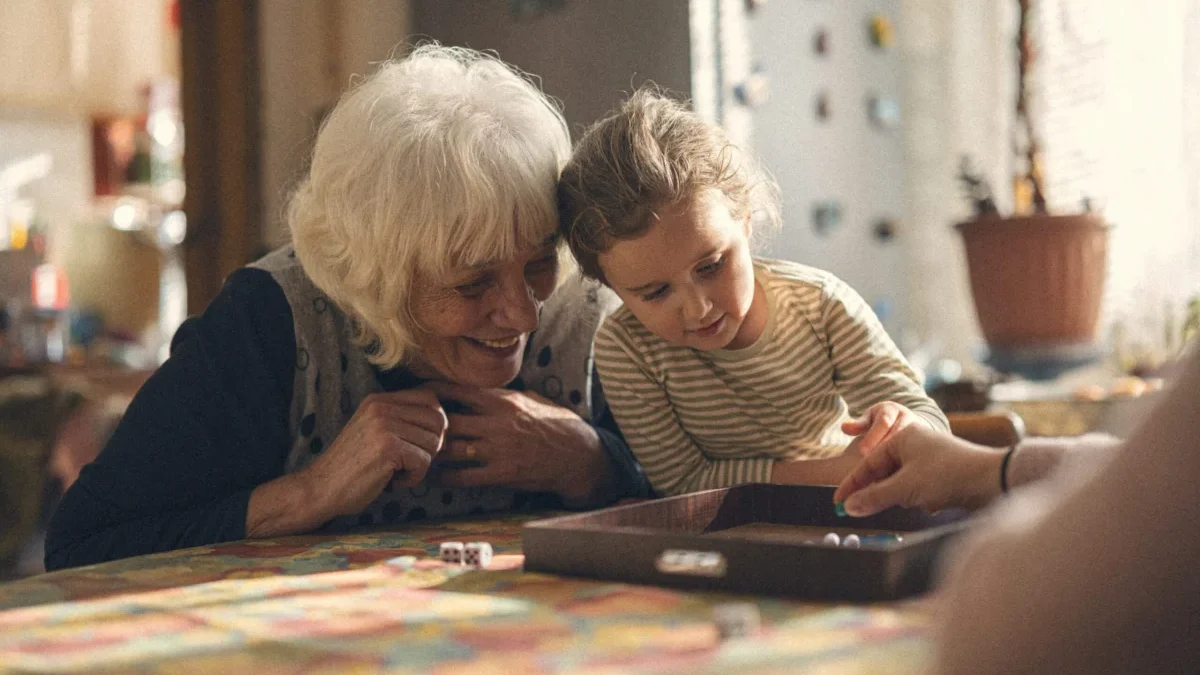
While 45% of families with young children live within proximity of extended family, allowing for a reduction in annual costs—specifically saving roughly $1,915 on childcare and $1,443 on groceries—the trade-offs are significant. The proximity that offers financial relief often increases the burden of eldercare. Robin Growley, BMO’s Head of Consumer Products, notes that these arrangements are often made with the heart rather than the spreadsheet. "Having a grandparent help raise your kids can be one of life’s greatest gifts," Growley observes, "but it is often a reciprocal arrangement, and it can be a lot when you’re already stretched thin."
Professional Implications and Mental Health Concerns
The human cost of this financial strain is becoming increasingly difficult to ignore. The 2026 Care.com report highlights a harrowing statistic: nearly 80% of parents spend almost every waking hour focused on the needs of others, leading to a documented 5% increase in parents considering self-harm or experiencing severe mental health crises.
Brad Wilson, CEO of Care.com, has issued a stark warning regarding the potential for mass attrition in the workforce. "Parents are being pushed well beyond their limits," Wilson stated. "If this continues, the risk is that more parents will be forced to cut back their hours or step away from their careers entirely." Should this occur, the economic impact would be twofold: a reduction in labor force participation and a deepening of the financial instability that is already plaguing the younger workforce.
Strategic Planning as the Only Defense
In the absence of systemic policy changes, financial experts are pivoting toward "actionable planning" as the only viable defense against the volatility of modern family life. For those expecting assistance, the strategy is shifting toward formalization.
Approximately 43% of parents now rely on grandparents for consistent childcare, while 26% utilize direct contributions to 529 plans or other investment vehicles. This represents a move away from sporadic, "emergency" help toward a structured, intergenerational economic model. By treating family support as a formal asset class within a household budget, families are attempting to mitigate the instability that arises from unexpected life events.
The Future of Family Economics
The data provided by BMO and Care.com paints a picture of a nation in transition. The reliance on family support is not merely a reflection of poor budgeting, as some critics might argue, but a rational response to an economic environment where the costs of basic necessities—housing, childcare, and healthcare—have decoupled from wage growth.
As the demographic shift continues and the Baby Boomer generation moves deeper into retirement, the "bank" they represent may eventually face its own liquidity constraints. The question remains whether the current reliance on intergenerational support can be sustained over the next two decades. For now, the American family has proven resilient, yet that resilience is being bought at the price of individual autonomy, as the boundaries between generations blur to ensure the survival of the next.
While the $124 trillion wealth transfer is expected to provide some relief, the immediate, daily struggle of the modern parent remains a significant socio-economic challenge that will likely necessitate both private family planning and broader public policy intervention in the years to come.