The landscape of digital advertising continues to undergo rapid transformation, presenting continuous challenges for social media managers and marketing professionals who must maintain brand visibility across heavily saturated digital ecosystems. Chief among these operational hurdles is the constant iteration of ad placement guidelines, dimension ratios, and technical parameters mandated by major tech conglomerates. Meta, the parent organization of Facebook and Instagram, frequently updates its platform interface requirements to accommodate emerging hardware capabilities, shifting user consumption habits, and evolving mobile-first design philosophies. For corporate marketing teams, utilizing an incorrect pixel ratio, uploading a compressed video asset, or failing to adhere to platform-specific text boundaries can result in heavily penalized ad delivery, inflated cost-per-click metrics, and severely diminished return on investment. Consequently, maintaining an accurate, comprehensive compendium of technical specifications has become an essential operational prerequisite for successful paid social campaigns.

To contextualize the financial implications of asset optimization, industry research indicates that digital ad campaigns utilizing properly formatted native resolutions experience engagement rates up to thirty percent higher than those relying on generic or improperly cropped creative assets. Meta’s advertising infrastructure relies heavily on automated quality ranking algorithms that evaluate user engagement, hidden metadata, and visual fidelity. When an ad asset fails to meet the recommended 1080 x 1080 pixel baseline or exceeds compression thresholds, the platform’s delivery system often deprioritizes the ad auction bid, resulting in restricted reach and wasted capital expenditure. Understanding the chronological evolution of these formatting guidelines provides insight into Meta’s strategic shift toward immersive, mobile-optimized visual experiences that prioritize vertical and square content over traditional landscape display ads.
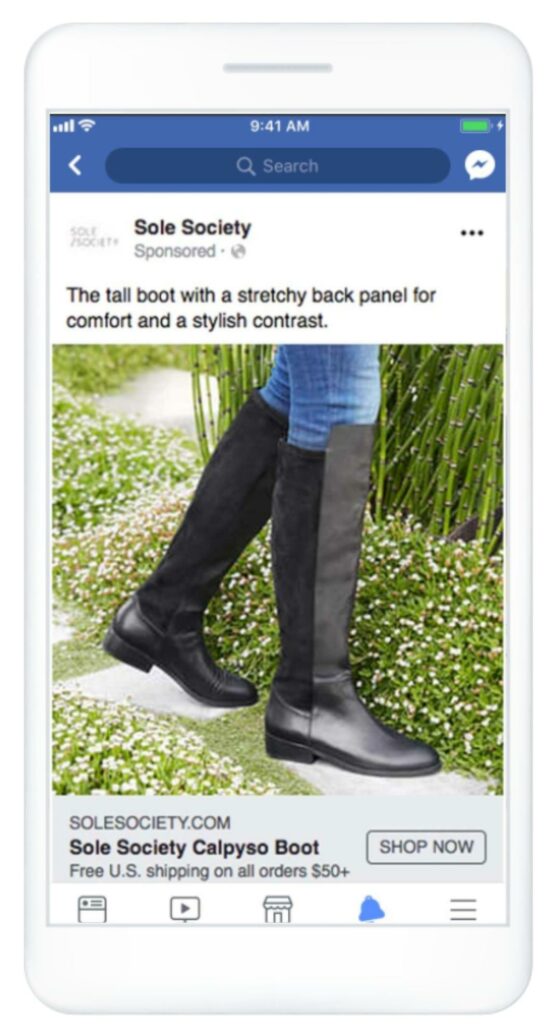
The foundational standard for any digital marketing strategy on the platform begins with the Facebook in-feed ad format. In-feed placements remain the most ubiquitous and cost-effective method for generating brand awareness, nurturing prospective consumer interest, and driving direct-response actions without requiring enterprise-level budgets. These native advertisements seamlessly integrate within the core user news feed, sitting adjacent to organic posts generated by friends, family members, and followed pages. Technical specifications for in-feed static images dictate a supported file format of either JPG or PNG, with a maximum file size limitation of 30 megabytes. While the absolute minimum dimension threshold is set at 600 x 600 pixels, industry best practices strongly recommend an optimal resolution of at least 1080 x 1080 pixels with an image ratio varying between 1.91:1 and 1:1. Text recommendations advise keeping primary text concise at approximately 125 characters, supported by a 27-character headline and a corresponding 27-character description field to prevent truncation on mobile viewports. For in-feed video assets, supported formats include MP4, MOV, and GIF files, capped at a maximum file size of 4 gigabytes. Videos can be rendered in a square 1:1 aspect ratio suitable for both desktop and mobile devices, or a vertical 4:5 ratio specifically optimized for mobile-dominant user bases, with lengths spanning anywhere from a single second to 241 minutes.
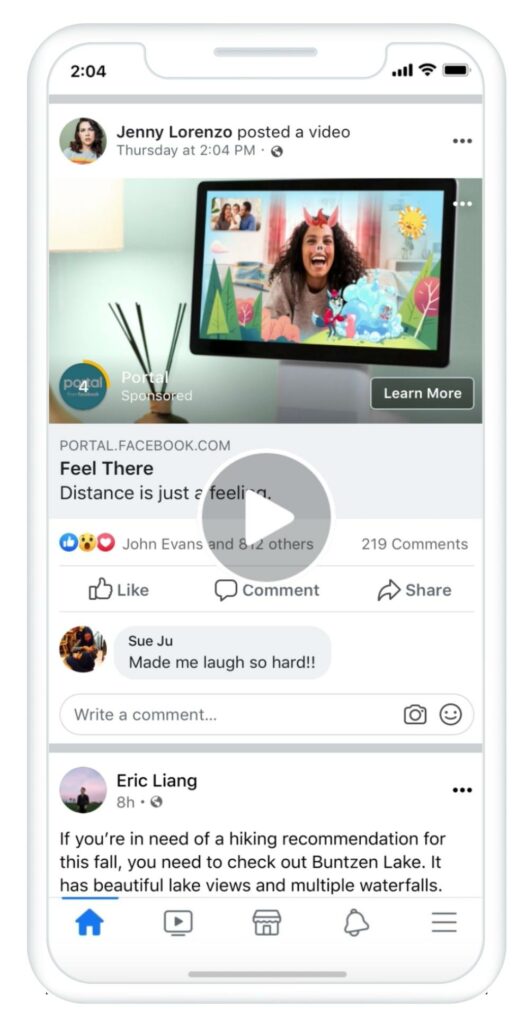
Moving beyond standard feed placements, advertisers seeking to capture high-intent traffic and maximize conversion rates frequently utilize in-stream video ad formats. These immersive video units are engineered to capture and retain audience attention during active media consumption. In-stream video advertisements are deployed across mobile devices in two distinct configurations: single videos and carousel formats that populate during live broadcasts. Specifically, carousel in-stream advertisements are triggered only after a user has actively engaged with a Facebook Live broadcast for a minimum duration of 60 seconds. Technical parameters for in-stream video components require a resolution of at least 1080 x 1080 pixels, utilizing MP4, MOV, or GIF file types with a 4 gigabyte maximum threshold. The acceptable aspect ratios for these video components are strictly limited to 16:9 or 1:1, with playback durations ranging from five seconds up to ten minutes. Accompanying static components within these campaigns mandate a 1.91:1 or 1:1 ratio, keeping primary text strictly bounded to 125 characters and headlines to 40 characters, while explicitly omitting any burned-in text on the underlying graphic assets to maintain compliance with automated delivery checks.
For brands managing extensive product catalogs or seeking to highlight multiple distinct value propositions within a single ad unit, the in-feed carousel format offers an exceptional structural framework. Carousel ads permit the integration of two to ten distinct scrollable cards, which can consist of either static images or dynamic video files. This modular design empowers marketers to deconstruct complex product features into digestible, bite-sized visual components. Furthermore, carousel architecture provides the unique capability to assign individual landing page URLs to each unique card, enabling retailers to showcase an entire product collection within a single advertising placement. The design specifications for carousel units require a strict 1:1 aspect ratio across all cards, with a minimum resolution of 1080 x 1080 pixels. Image file sizes are capped at 30 megabytes, while video files can scale up to 4 gigabytes, provided their playback duration remains between one second and 241 minutes. Text allocation for carousels is tightly constrained, recommending 125 characters for primary text, 32 characters for individual card headlines, and a brief 18 characters for descriptions.
E-commerce enterprises frequently leverage Facebook Collection ads to showcase comprehensive merchandise lines without overwhelming prospective buyers. Collection ads feature a prominent primary visual asset—typically a high-impact lifestyle video or high-resolution hero image—paired with a grid of three complementary product images directly underneath. Upon user interaction, the advertisement launches a localized, full-screen immersive landing environment known as Facebook Instant Experience. This streamlined interface allows consumers to browse inventory, evaluate specifications, and complete transactions entirely within the mobile application environment without experiencing friction associated with traditional mobile browser redirection. Collection ad guidelines mandate a 1:1 aspect ratio with a minimum resolution of 1080 x 1080 pixels, requiring the integration of a functional Instant Experience backend framework alongside mandatory landing page URLs, a 125-character primary text limit, and a 40-character headline ceiling.
Publishers and media companies heavily rely on Facebook Instant Articles ad formats to distribute fast-loading, text-based native content across the mobile ecosystem. Instant Articles utilize a mobile-optimized publishing architecture designed to accelerate content delivery speed and enhance user engagement. The structural design requirements for Instant Article placements mirror standard square parameters, enforcing a 1:1 aspect ratio with a minimum recommended resolution of 1080 x 1080 pixels for both static images and supporting video elements. File size limits remain consistent at 30 megabytes for static graphics and 4 gigabytes for video assets. Text recommendations advise adhering to the standard 125-character primary text limit paired with a 40-character headline to ensure optimal rendering across diverse smartphone screen sizes and operating systems.

The Facebook Marketplace environment represents another high-intent commercial channel, functioning as a localized digital bazaar where regional consumers discover and purchase consumer goods, real estate, and automotive assets. Paid advertisements embedded within Marketplace allow corporate brands and local retailers to target users who are actively in a transactional mindset. Marketplace ad specifications accommodate both static and dynamic video assets rendered in a 1:1 aspect ratio with a minimum resolution of 1080 x 1080 pixels. Text parameters for this placement allow for 125 characters of primary text, a 40-character headline, and a 30-character description field, ensuring that pricing, branding, and core value propositions remain immediately legible to prospective buyers browsing local inventory on mobile devices.
Historically, desktop-centric strategies frequently utilized Facebook right column ads, which display exclusively on desktop computer interfaces adjacent to the primary news feed. Although the continuous migration of global user traffic toward mobile devices has diminished the overall market demand for right column inventory, performance marketers continue to utilize these placements for retargeting campaigns and desktop-heavy enterprise software promotions. Right column ads display as compact landscape imagery or video units with a minimum width requirement of 254 pixels and a height of 133 pixels, scaling up to optimal square resolutions of 1080 x 1080 pixels. Due to spatial constraints, text recommendations are limited strictly to a 40-character headline, omitting lengthy primary text fields.

Ephemeral content formats, popularized by Snapchat and Instagram, have established a permanent foothold within the Meta ecosystem via Facebook Stories and Messenger Stories. These vertical, full-screen ad units occupy 100 percent of the mobile viewport and expire automatically after 24 hours in organic contexts, while paid story ads cycle at predetermined intervals during user consumption. Story ad design specifications mandate a strict vertical 9:16 aspect ratio with a minimum resolution of 1080 x 1080 pixels. Marketers must exercise extreme caution regarding text placement within story units; industry guidelines dictate leaving approximately 14 percent—or roughly 250 pixels—of both the top and bottom margins entirely free of critical text, logos, or call-to-action buttons to prevent user interface elements from obscuring vital campaign messaging.
To further amplify reach beyond the proprietary Facebook application, the Facebook Audience Network allows advertisers to syndicate campaigns across vetted third-party mobile applications, external websites, and integrated video player environments. Leveraging Meta’s advanced demographic and behavioral targeting algorithms, the Audience Network delivers native, banner, and interstitial ad units designed to scale brand awareness efficiently. Image and video assets deployed across the Audience Network must conform to standard technical thresholds, utilizing 9:16 ratios for static interstitials or 1:1 and 4:5 ratios for video placements, ensuring seamless integration across diverse external digital properties.

Ultimately, optimizing campaign performance and maximizing return on ad spend requires a systematic approach to placement selection and asset sizing. Industry analysts emphasize that media buyers should continuously audit their creative libraries against the most current technical specifications provided by Meta’s official business documentation. By systematically aligning creative asset dimensions with platform requirements, organizations can eliminate technical delivery penalties, enhance user experience metrics, and secure a distinct competitive advantage in an increasingly crowded digital advertising marketplace.