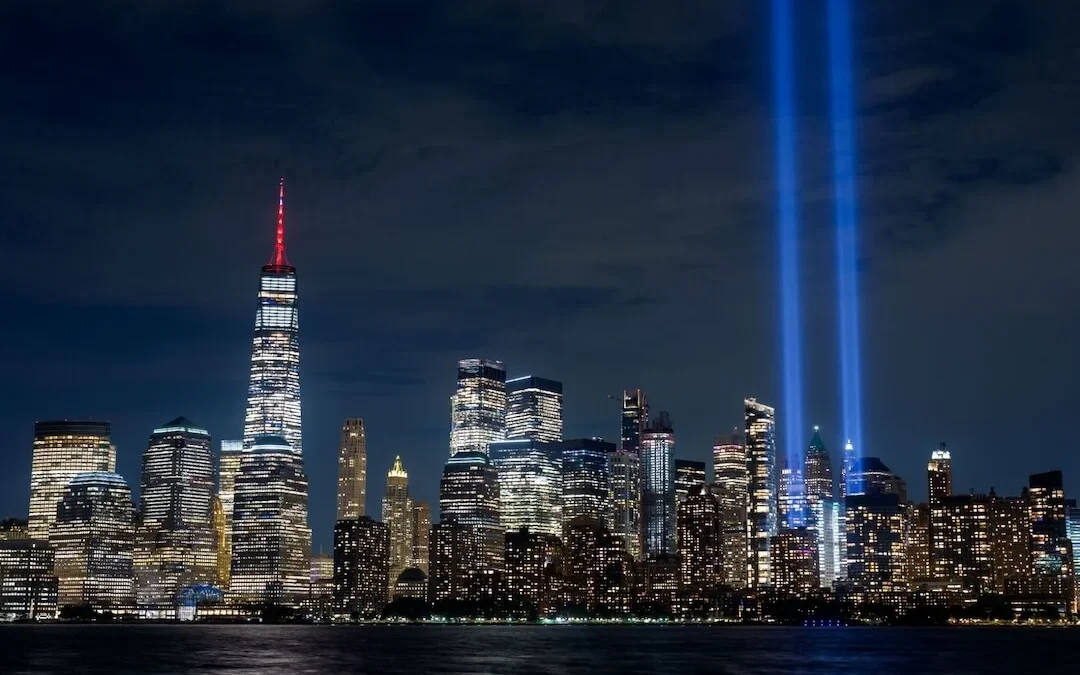
It was 25 years ago — September 11, 2001 — when the geopolitical and psychological fabric of the United States was irrevocably altered. A crisp, late-summer Tuesday morning, which began with the mundane rhythm of a typical work week, descended into a national nightmare that would redefine global security, domestic policy, and the American consciousness for a generation. As plumes of smoke billowed from the World Trade Center’s Twin Towers, the nation watched in collective disbelief. What followed was a rapid sequence of events: the collapse of the towers, the strike on the Pentagon, and the heroic sacrifice of passengers aboard United Airlines Flight 93 in a field near Shanksville, Pennsylvania.
The scale of the tragedy was unprecedented in modern American history. The coordinated terrorist attacks claimed the lives of 2,977 victims and sparked a series of wars, intelligence reforms, and societal shifts that continue to resonate today. A quarter-century later, the 9/11 attacks remain the primary historical touchstone for the American public, serving as a defining marker of the early 21st century.
The Lasting Impact: Polling and Public Memory
Data from the latest Ipsos polling underscores the deep-seated nature of the 9/11 memory. Three in four Americans report that they can vividly recall their precise location and emotional state at the moment the news broke. Furthermore, 47% of respondents identify the attacks as the most significant historical event in their lifetime, far outpacing the COVID-19 pandemic, which 31% cite as the most impactful.
The enduring legacy of September 11 is not merely one of trauma but of permanent societal adjustment. According to Gallup, approximately 30% of U.S. adults believe the attacks fundamentally changed their daily behaviors and overall quality of life. This shift encompasses everything from heightened security protocols in public spaces and transit to a lingering sense of national vulnerability. As noted by analysts at the Associated Press, the significance of the date persists even among younger generations who were born after the event or were too young to comprehend its immediate consequences, signaling that the "9/11 era" remains a structural reality of contemporary American life.
The Collision of Media and Regulation
As the nation reflects on the quarter-century anniversary, the media industry—the very institution that brought the horrors of 9/11 into American living rooms—finds itself navigating a complex and increasingly fraught regulatory environment. A recent controversy involving ABC late-night host Jimmy Kimmel and the Federal Communications Commission (FCC) highlights the growing tensions surrounding political speech and broadcast standards.
Kimmel recently moved an interview with Democratic U.S. Senate candidate James Talarico from the televised "Jimmy Kimmel Live!" program to the show’s YouTube channel. Kimmel cited concerns regarding the FCC’s current oversight and potential pressure on local affiliates as the primary driver for this decision. According to the host, editorial choices regarding guest bookings have come under intense scrutiny by the commission, leading to a climate of self-censorship to protect local stations from regulatory repercussions.
"Out of consideration for our local stations, especially our ABC affiliates in Texas who would have to deal with this nonsense, my interview tomorrow with James Talarico will not air on television," Kimmel stated during his monologue. He argued that the move to digital platforms is currently the only viable path to ensure unfiltered candidate coverage in the lead-up to the November elections.
The White House has vehemently denied these allegations. Davis Ingle, a spokesperson for the administration, characterized Kimmel’s claims as a "false narrative" and an "egocentric delusion." Ingle emphasized that FCC Chairman Brendan Carr has not issued threats or directives regarding the Talarico interview, challenging media outlets to provide evidence of such interference—a challenge that, as of this writing, remains unmet.
This situation reflects a broader anxiety regarding the "equal-time rule," a policy that mandates broadcast stations provide equitable opportunities to opposing political candidates. While late-night talk shows have traditionally enjoyed a degree of exemption from these requirements, the legal landscape is shifting. Earlier this year, former CBS host Stephen Colbert similarly moved an interview with Talarico to digital channels, citing concerns from network attorneys following an FCC inquiry into an appearance by the same candidate on the daytime program "The View." These instances illustrate a growing trend where political discourse is increasingly migrating from traditional broadcast television to unregulated digital spaces, driven by legal and regulatory uncertainty.
The Crisis in Local Journalism: McClatchy Layoffs
While national figures grapple with regulatory pressures, the backbone of American democracy—local news—is facing an existential threat. The recent wave of severe layoffs at the McClatchy media group serves as a stark reminder of the fragile state of local journalism. In a series of staff reductions, more than 90 journalists across the country were let go, impacting at least 13 newspapers across eight states.
The Miami Herald was among the most heavily impacted, losing 20 staff members and seeing 10 vacant positions eliminated. Carol Marbin Miller, deputy investigations editor at the Herald, noted that the cuts have effectively hollowed out essential beats, including city government and local education coverage. "Now, they can move chess pieces around, but how do you do that when you have no chess pieces left?" she remarked, noting that the newsroom, which once boasted 300 journalists in the year 2000, now operates with fewer than 50.
The consolidation of ownership under private investment firms, such as Chatham Asset Management, has accelerated these trends. Critics argue that the prioritization of cost-cutting over reporting capacity creates a "news desert" effect, where local government accountability is lost. For many observers, the depletion of local newsrooms is a secondary but profound consequence of the long-term economic shifts that have plagued the media industry since the early 2000s. The sentiment expressed by Marbin Miller—that the organization is "circling the drain"—reflects a broader, systemic fear that the foundational pillars of regional watchdog journalism are crumbling at a time when they are arguably needed most.
Contextualizing the 25-Year Arc
The 25th anniversary of 9/11 is a moment for historical synthesis. The timeline of the last quarter-century is defined by a progression from unity to fragmentation.
- 2001–2003: Immediate aftermath characterized by national unity, the creation of the Department of Homeland Security, and the initiation of the War in Afghanistan.
- 2004–2010: The expansion of surveillance via the Patriot Act, the Iraq War, and the professionalization of global counter-terrorism operations.
- 2011–2020: The death of Osama bin Laden, the rise of digital misinformation, and the polarization of political discourse as the "9/11 consensus" began to fracture.
- 2021–2026: A period defined by the withdrawal from Afghanistan, the rise of domestic regulatory battles over media content, and the acute decline of legacy local news infrastructure.
The implications of this trajectory are clear: the institutions that were established to protect and inform the public following the trauma of 9/11 are now being forced to adapt to a landscape where public trust is low and financial stability for independent reporting is scarce.
Analysis: A Nation in Transition
The convergence of these events—the solemn remembrance of a national tragedy and the ongoing erosion of media independence and local accountability—presents a complex portrait of modern America. The 9/11 attacks forced the country to look inward, examining its vulnerabilities and its collective identity. Today, the debate over FCC oversight of late-night programming and the shuttering of local newsrooms suggests that the nation is still struggling to balance the competing demands of security, regulation, and the preservation of a free, robust press.
As the U.S. looks toward the future, the lessons of 9/11 remain as relevant as ever. The event proved that external threats could be mitigated through coordination and resolve, yet the current challenges facing the media industry suggest that internal pressures—economic, regulatory, and political—pose a different, perhaps more insidious, threat to the health of the republic. The preservation of local reporting, as seen in the plight of the Miami Herald, is essential for maintaining the informed citizenry necessary to navigate the complexities of a post-9/11 world. As the country marks this milestone, the task is not only to remember the past but to safeguard the institutions that ensure the future remains transparent, informed, and accountable.