California Mail-In Ballot Rejections Surge in June Primary Amid Postal Delays and Voting Policy Shifts

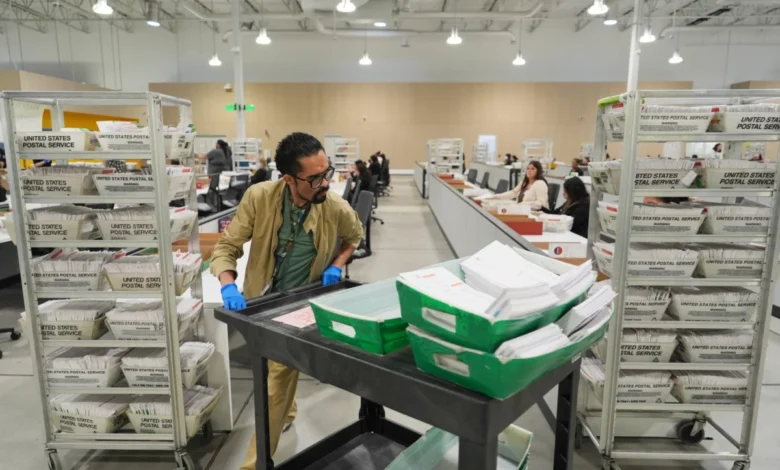
Nearly 150,000 California voters had their mail-in ballots rejected during the state’s June primary, marking a significant spike from recent election cycles. This increase in disqualified votes comes despite aggressive legislative efforts by California lawmakers to expand the franchise, simplify the voting process, and maximize participation. The latest data from the Secretary of State’s office highlights a growing tension between the state’s "voter-first" policies and the logistical realities of the United States Postal Service (USPS), alongside persistent issues with signature verification.
California has long faced scrutiny for its "ponderously slow" vote-counting process, which often stretches for weeks after Election Day. This delay is largely attributed to a series of reforms designed to increase turnout, including the 2021 law that made permanent the practice of mailing a ballot to every active registered voter. While these changes aimed to make voting more accessible, critics argue they have complicated the administrative landscape without significantly boosting turnout in every demographic. One of the most generous provisions in the state allows ballots to be counted as long as they are postmarked by Election Day and arrive at an election office within seven days. However, even this week-long grace period has proven insufficient for tens of thousands of Californians.
A Statistical Breakdown of the Rejection Surge
According to official state data, 148,241 mail-in ballots were rejected in the June primary, representing a rejection rate of 1.73% of all mail ballots cast. This is a notable increase from the 2024 primary, where 108,982 ballots were voided (a 1.56% rate), and the 2022 primary, which saw 105,818 ballots rejected.
The primary driver of these disqualifications was lateness. Of the total rejected ballots, 93,479 were excluded because they did not meet the legal deadline for arrival or postmarking. This figure is a sharp increase from the approximately 70,000 late ballots in the 2022 primary and 76,000 in the 2024 primary. While turnout fluctuates between election cycles, the proportion of ballots discarded due to timing has become a focal point for voting rights advocates and election officials alike.
Beyond timing, signature-related issues remained a significant hurdle. Nearly 44,000 ballots were set aside because the signature on the return envelope did not match the one on record in the state’s voter database. Additionally, over 8,300 ballots were rejected because the voter failed to sign the envelope entirely. Other less common reasons for rejection included voters attempting to cast multiple ballots (743 cases), missing ballots from envelopes, or multiple ballots being returned in a single envelope.
The Role of the U.S. Postal Service
Voting experts and lawmakers are increasingly pointing toward the U.S. Postal Service as a key factor in the rising rejection rates. Kim Alexander, president of the nonpartisan California Voter Foundation, noted that the spike in late ballots is inextricably linked to postal procedures. “Ballots rejected due to lateness are caused primarily by being postmarked too late to count, not because they arrived too late to count,” Alexander stated. This distinction is critical: a voter might drop their ballot in a mailbox on Election Day, but if the USPS does not apply a postmark until the following day, the ballot is legally void.
The concern over USPS efficiency is not limited to California. In January, a group of primarily Democratic U.S. Senators sent a formal inquiry to the Postal Service, expressing alarm that mail-processing consolidations could interfere with the integrity of mail-in voting. Updated USPS policies indicate that postmarks may no longer reflect the day mail is collected; instead, they reflect the day the mail is handled at a regional processing center. As the USPS continues to consolidate local facilities, mail is often transported further away to be processed, increasing the likelihood of a delayed postmark.
In California’s agricultural heartland, these delays appear more pronounced. Tulare County recorded the highest mail-in rejection rate in the state at 3.52%. It was followed closely by Alpine County and Merced County, both of which saw rejection rates of 3.36%. These regions often rely on more distant processing hubs, potentially exacerbating the lag between a voter mailing their ballot and the application of a valid postmark.
The Evolution of California’s Voting System
To understand the current crisis, one must look at the timeline of California’s electoral reforms. Over the last decade, the state has transitioned from a traditional precinct-based model to a "Voter’s Choice Act" model.
- 2016: The California Legislature passes the Voter’s Choice Act, allowing counties to replace traditional polling places with regional vote centers and mail every voter a ballot.
- 2020: In response to the COVID-19 pandemic, Governor Gavin Newsom signs an executive order to mail ballots to all 22 million registered voters, a move later codified by the legislature.
- 2021: Universal mail-in voting is made permanent.
- 2022-2024: Rejection rates remain relatively stable but begin to creep upward as postal service changes take effect.
- June Primary: Rejection numbers hit a new peak, sparking concerns about the upcoming general election.
While these reforms were intended to maximize participation, the "slow count" has become a hallmark of California elections. Unlike Florida or Texas, which have stricter deadlines and faster processing systems, California’s system prioritizes "voter intent" and "enfranchisement" over speed. However, the June data suggests that the very system designed to help voters may be failing those who wait until the final days of the campaign to return their ballots.
Political Reactions and National Scrutiny
The high volume of rejected ballots and the slow counting process have become fodder for national political debate. Following the June primary, President Donald Trump renewed his criticisms of California’s election integrity, labeling the state a "national laggard." The Republican-led Department of Justice also launched an investigation into Los Angeles County’s election procedures, though officials there maintain that the delays are a feature of a system designed to ensure every valid vote is counted.
Conversely, Democratic leaders have focused their ire on the federal government’s management of the USPS. In June, a federal judge halted an executive order from the Trump administration that sought to limit mail-in ballot distribution and create a federal voter list. In states like Wisconsin, high-profile Democrats such as Senator Tammy Baldwin and Governor Tony Evers have called for immediate USPS interventions to address delays that disenfranchised hundreds of voters in their local elections earlier this year.
Despite the political rhetoric, nonpartisan research continues to show that mail-in voting is secure. A 2025 report by the Brookings Institution found that cases of actual fraud are exceedingly rare, occurring at a rate of roughly four cases per 10 million ballots. The issue in California, experts argue, is not one of integrity, but of administration and voter education.
Analysis of Implications for Future Elections
The surge in rejected ballots in June serves as a warning for future election cycles. The data suggests that California’s generous "seven-day" arrival window is being neutralized by the technicality of postmarking. If the USPS continues to consolidate its processing centers, the "Election Day postmark" may become an increasingly difficult standard for voters to meet if they use standard blue mailboxes on the day of the election.
Mindy Romero, director of the Center for Inclusive Democracy, noted that the fluctuation in rejection rates demands a deeper investigation into voter behavior and institutional barriers. "The growing number of those set aside for lateness… does really demand the question why this is happening," Romero said. One theory is that a "late surge" of undecided voters in high-stakes races—such as the wide-open contest for Governor—led to a massive volume of ballots being mailed at the last possible moment.
To mitigate these issues, California election officials have begun a more aggressive public service campaign, urging voters to "mail it early" or use designated drop boxes, which do not require a USPS postmark. Drop boxes are collected directly by county election officials, bypassing the postal system entirely and ensuring that any ballot deposited by 8:00 p.m. on Election Day is counted.
The "Signature Curing" Process
One silver lining in California’s system is the "curing" process for signature issues. State law requires county officials to notify voters if their signature is missing or does not match the one on file. Voters are given an opportunity to provide a valid signature up to two days before the election results are certified.
Despite this safeguard, the high number of rejected signatures (over 52,000 combined) suggests that many voters either do not respond to the notification or are unaware of the opportunity to fix their ballots. This highlights a need for better communication between the state and its electorate, particularly for younger voters whose signatures may change over time or for elderly voters whose physical handwriting may decline.
As California looks toward the next major election, the balance between accessibility and administrative efficiency remains delicate. While the state has succeeded in putting a ballot in every voter’s hand, the logistical chain required to return that ballot and have it counted is facing unprecedented strain. Without significant coordination between state election officials and the federal postal system, the trend of rising rejections may continue, potentially impacting the outcomes of close races where the margin of victory is smaller than the number of discarded votes.
Related posts: