A comprehensive analysis of nearly two million YouTube videos has provided updated, data-backed guidance on the optimal times to publish content on the platform, revealing distinct patterns for long-form videos and YouTube Shorts. The study, conducted by Buffer, a social media management platform, highlights that while content quality remains paramount, strategic timing can significantly influence a video’s initial engagement, a critical factor for algorithmic promotion.
The digital landscape of video content has evolved rapidly, with YouTube at its forefront. From its inception as a simple video-sharing site, YouTube has transformed into a sophisticated ecosystem where creators and marketers vie for audience attention. The platform’s algorithm, a complex system designed to recommend relevant content, heavily relies on early engagement signals such as clicks, watch time, and likes to determine wider distribution. In an environment of increasing content saturation, understanding these algorithmic nuances and leveraging every possible advantage, including publishing time, has become indispensable for maximizing reach and impact.
Methodology and Evolving Trends
Buffer’s latest research encompassed 1.8 million videos, including both traditional long-form content and the increasingly popular YouTube Shorts. The analysis measured the median engagement of these videos, comparing performance across every hour and day of the week to pinpoint patterns of peak audience activity. A significant finding of this latest study, which builds upon previous analyses, is the divergence in optimal posting times between long-form videos and Shorts. This separation acknowledges the distinct consumption habits associated with each format and how YouTube’s recommendation engine treats them differently.
Notably, the findings mark a substantial shift from Buffer’s 2025 analysis, which previously indicated late afternoon on weekdays as the prime window for long-form videos. The current data points to a reversal, with mornings and weekends now demonstrating superior engagement. This evolution underscores the dynamic nature of online audience behavior, influenced by societal shifts, work-life patterns, and continuous platform updates. For instance, changes in remote work trends or increased leisure time during weekends could contribute to such shifts. The study’s methodology ensures that the recommended times are universally applicable in local time zones, simplifying implementation for a global creator base.
Optimal Timing for Long-Form YouTube Videos
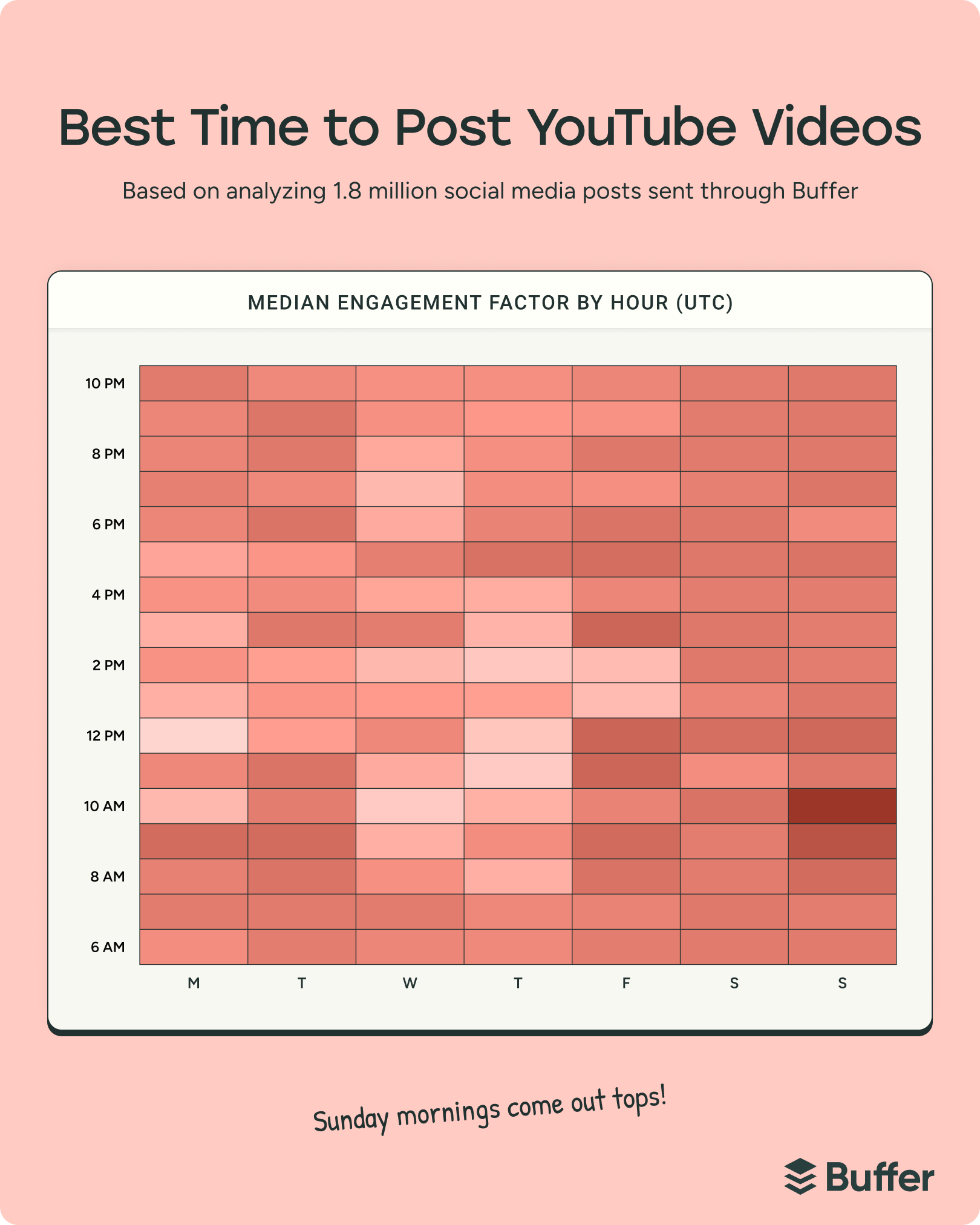
The study definitively identifies Sunday at 10 a.m. local time as the single best moment to upload long-form YouTube videos, exhibiting the highest engagement factor across the entire week. This particular slot scored an impressive 0.95 engagement factor, with 9 a.m. (0.80) and 12 p.m. (0.67) also performing significantly above average on Sundays. Generally, long-form content shared during the morning hours, specifically between 8 a.m. and 11 a.m., consistently garners the highest engagement. This pattern suggests that viewers are more receptive to longer-form content during weekend mornings, possibly while relaxing or engaging in leisurely activities.
A day-by-day breakdown for long-form content reveals further insights:
- Monday: 9 a.m. stands out, followed by 10 p.m. and 7 a.m. Monday mornings suggest viewers starting their week with content, while the late-evening slot captures those unwinding.
- Tuesday: 9 a.m. is optimal, with 11 a.m. and 8 a.m. also performing strongly. Tuesday is highlighted as one of the best overall weekdays for long-form uploads.
- Wednesday: 7 a.m. leads, followed by 3 p.m. and 5 p.m. Wednesday is noted as a weaker day for engagement, suggesting tempered expectations.
- Thursday: 5 p.m. is the best, followed by 6 p.m. and 7 a.m. Thursday registers as the weakest day overall for long-form engagement, with midday and early afternoon showing particularly low performance (e.g., 2 p.m. at 0.11 engagement factor).
- Friday: 12 p.m. is the top slot, with 11 a.m. and 3 p.m. also performing well. Interestingly, Friday at noon recorded one of the highest engagement factors of the week (0.70), marking it as a strong alternative to Sunday mornings.
- Saturday: 12 p.m. is optimal, followed by 10 a.m. and 3 p.m. Saturday’s engagement remains moderate and consistent throughout the day, suitable for audiences who are active on weekends.
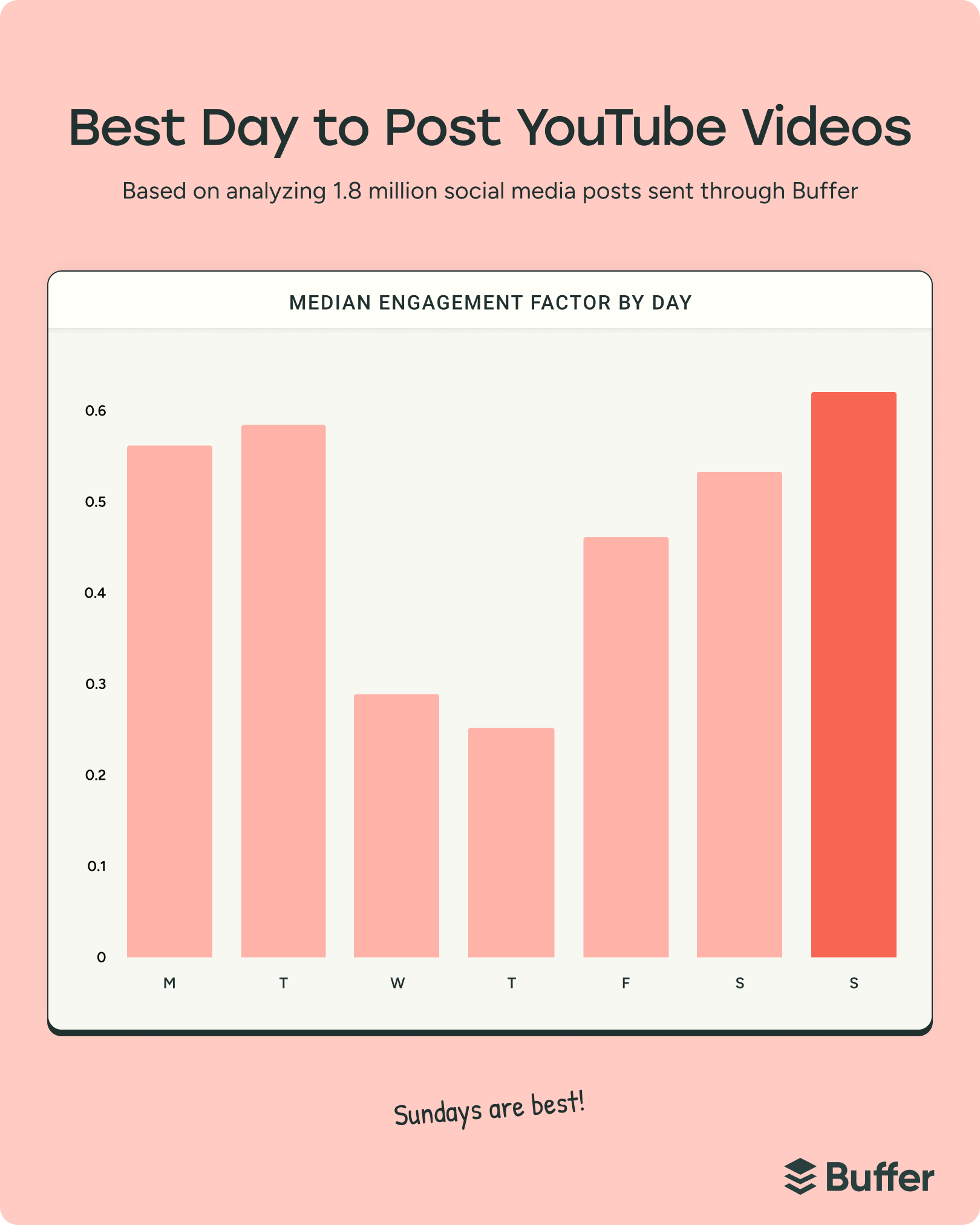
In terms of overall days, Sunday emerges as the strongest day for long-form video engagement, followed by Tuesday and Monday, all categorized as "strong" engagement territories. Conversely, Wednesday and Thursday consistently rank as the weakest days, falling below the neutral threshold. This strong preference for weekend and early-week mornings represents a clear reversal from prior trends, indicating a shift in how audiences integrate long-form video consumption into their weekly routines. For creators, this implies a need to consider publishing long-form videos an hour or two before the identified peak times to allow YouTube’s processing and indexing mechanisms to prepare the content for immediate surfacing when viewers come online.
Optimal Timing for YouTube Shorts
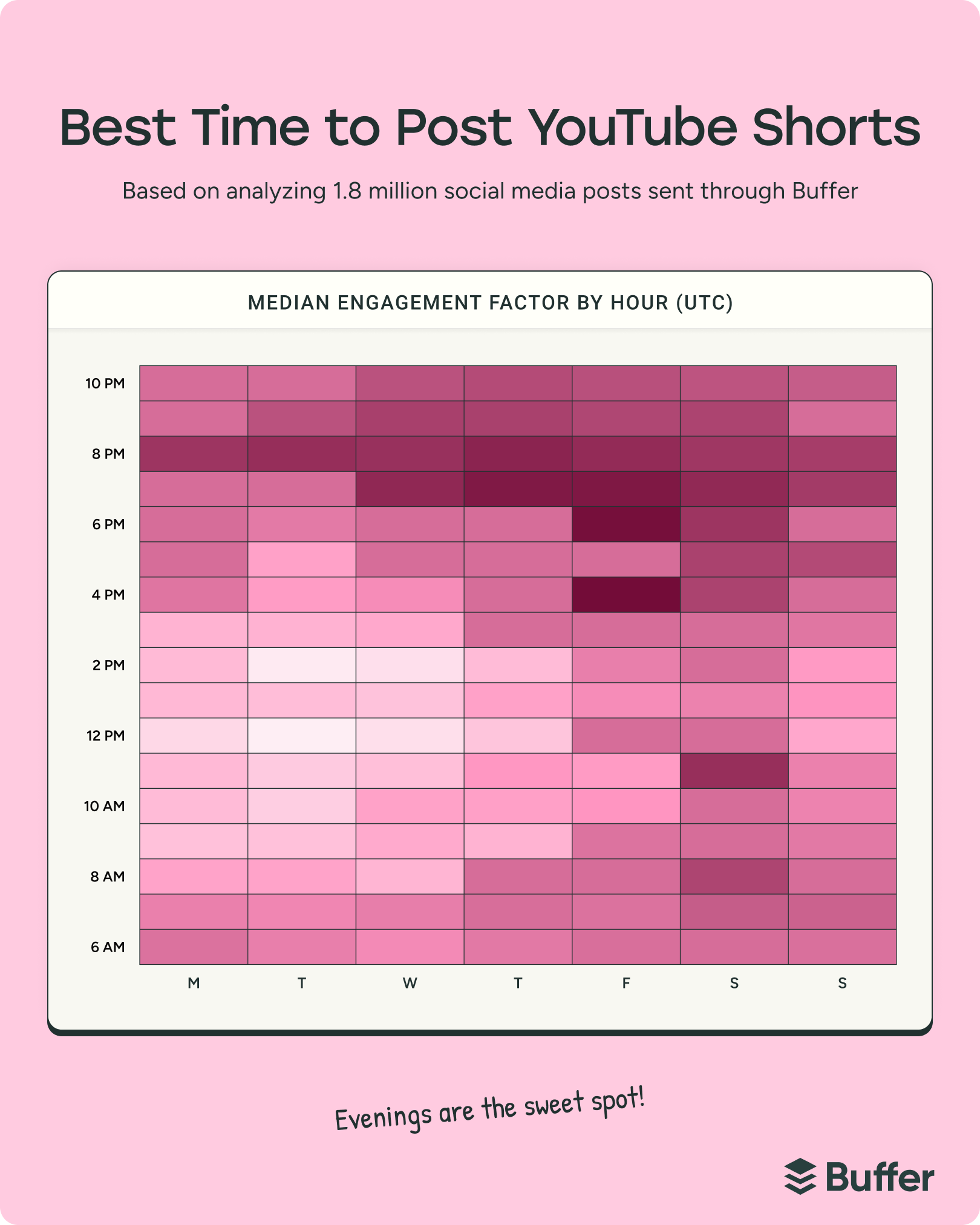
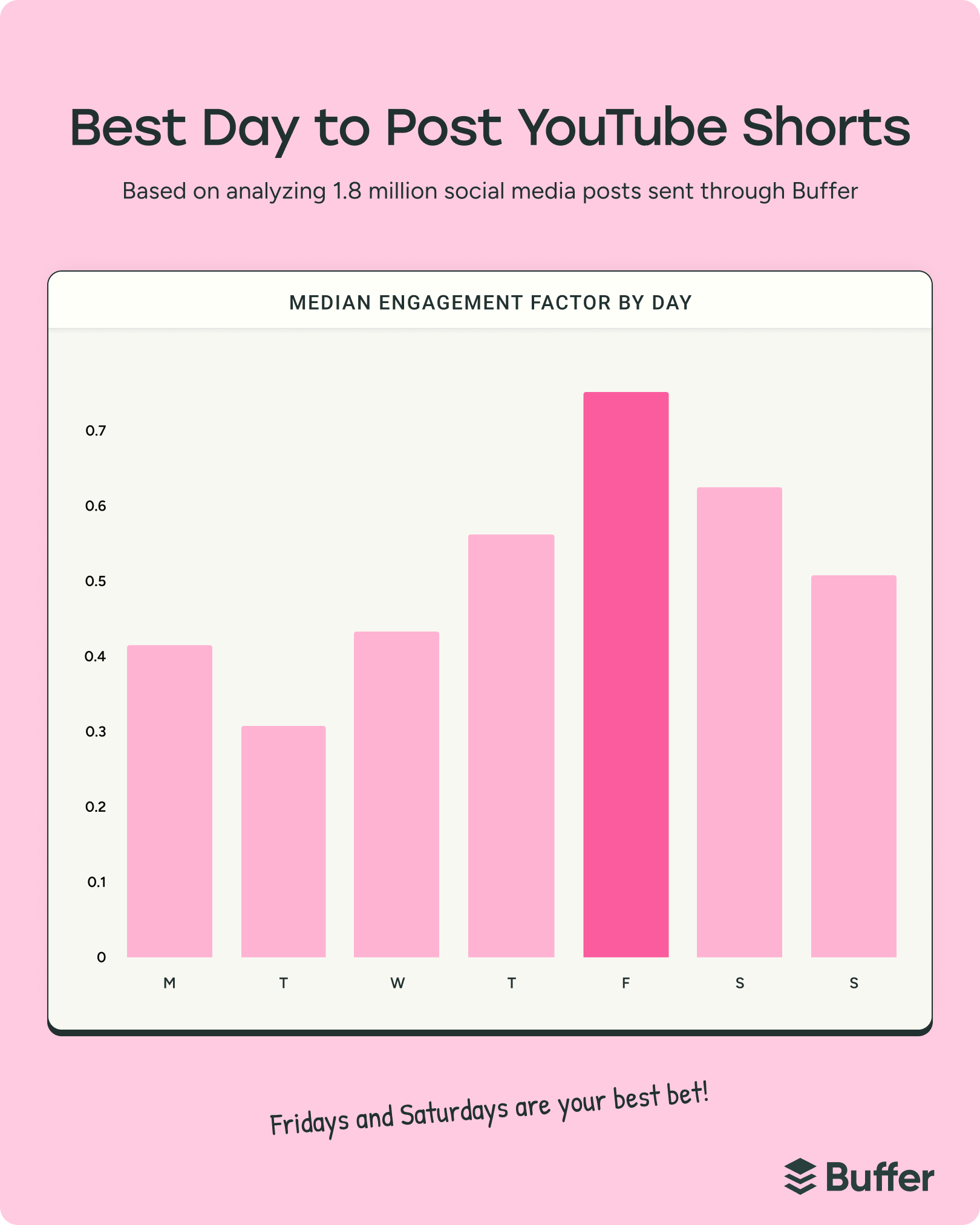
In a stark contrast to long-form content, YouTube Shorts exhibit entirely different peak engagement patterns. The Buffer study identifies Friday at 4 p.m., 6 p.m., and 7 p.m. local time as the top three slots for Shorts, making Friday the undisputed best day for this format. More broadly, Shorts engagement typically peaks in the evenings, generally between 6 p.m. and 11 p.m. This consumption pattern aligns with the nature of short-form content, which is often consumed casually during downtime, such as unwinding after work or during evening leisure.
The worst times to post YouTube Shorts generally fall between 12 p.m. and 5 p.m., with the exception of Friday’s late afternoon surge.
- Friday: Dominates, with the highest engagement in the late afternoon and evening.
- Saturday: An interesting anomaly, with 11 a.m. being one of the top three slots for the day, suggesting a potential morning window for Shorts on weekends. Other strong times are in the evening.
- Thursday: Shows strong evening performance.
Overall, Friday stands out as the best day for YouTube Shorts, followed by Saturday and Thursday. The weakest days for Shorts are Tuesday and Monday. This data suggests that creators focusing on Shorts should prioritize the latter half of the week, with Friday serving as a crucial anchor day for their publishing schedule. Unlike long-form videos, Shorts are continuously resurfaced by YouTube’s recommendation engine over days or even weeks. This characteristic means that while initial timing is still beneficial for an early boost, it is less "make-or-break" for a Short’s long-term performance compared to a long-form video.
Implications for Content Strategy and Creator Adaptation
The divergent optimal posting times for long-form videos and YouTube Shorts necessitate a dual-track content strategy for creators and marketers leveraging both formats. This means that a channel publishing both types of content can effectively schedule long-form uploads for morning peaks and Shorts for evening drops without internal competition. This strategic separation allows for optimized audience reach across different viewing habits.
For content creators, these findings offer actionable insights for refining their content calendars. By aligning publishing schedules with these peak engagement windows, channels can increase the likelihood of their videos being seen by a larger, more active audience, thereby generating the crucial early engagement signals that YouTube’s algorithm prioritizes. This data-driven approach moves beyond anecdotal evidence, providing concrete guidance based on a large dataset.
Industry experts, including hypothetical representatives from Buffer, emphasize the evolving nature of digital platforms. "The landscape of online video consumption is constantly shifting," a Buffer spokesperson might note. "What worked last year may not work today. Our continuous analysis helps creators stay ahead by providing current, actionable data. It’s about empowering them to make informed decisions that complement their creative efforts." This perspective underscores the need for creators to remain agile and adaptable in their strategies.
Personalized Optimization with YouTube Analytics
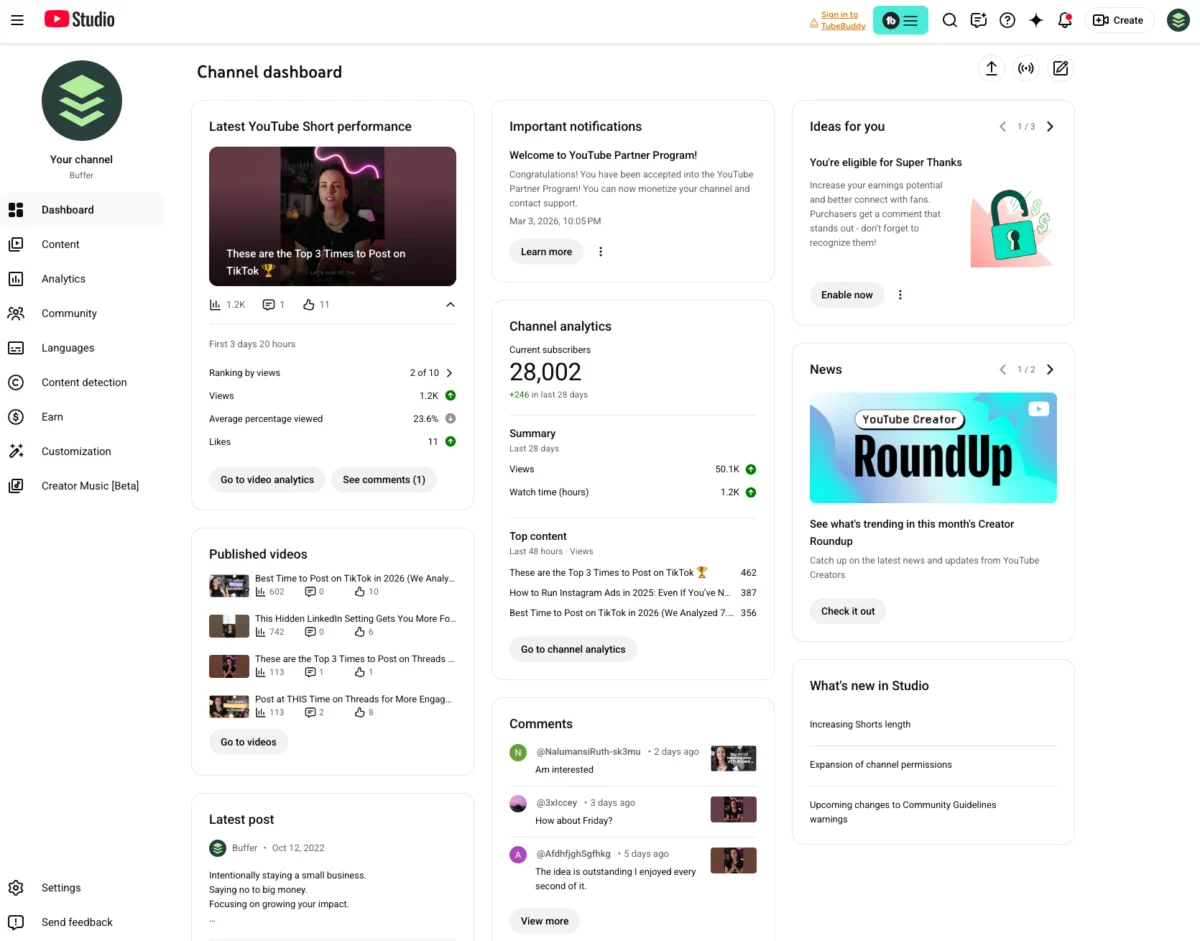
While Buffer’s global data offers valuable general recommendations, the most precise insights for any specific channel lie within its own YouTube Analytics. YouTube Studio provides a robust suite of metrics, updated in real-time, allowing creators to pinpoint their unique audience’s active hours.
To access this personalized data:
- Navigate to YouTube Studio: Creators should head to studio.youtube.com, their channel’s central control hub.
- Access Analytics: On the left-hand sidebar, click the "Analytics" tab. This section provides an overview of viewership, watch time, subscriber growth, and engagement metrics.
- Explore the Audience Tab: Within Analytics, select the "Audience" tab. Here, detailed demographics and viewing habits of the channel’s audience are available.
- Utilize ‘When your viewers are on YouTube’ Report: Scroll down to find this heatmap graph, which visually represents audience activity in local time. Darker purple slots indicate higher viewer activity, while lighter shades show lower activity. This report, reflecting the past 28 days, is the most direct indicator of a channel’s specific optimal posting times.
Regularly reviewing this personalized data is crucial, as audience behavior can fluctuate. Creators are encouraged to use Buffer’s broad findings as a starting point, then fine-tune their schedule using their own YouTube Analytics. This iterative process of testing and refinement ensures that publishing times are continuously optimized for their unique audience.
Broader Impact and Future Outlook
The insights from this study have significant implications for the broader content marketing landscape. Brands and marketers can leverage this data to schedule their YouTube campaigns more effectively, ensuring maximum visibility and engagement for product launches, promotional content, or brand storytelling initiatives. The clear distinction between long-form and Shorts timing also allows for more nuanced campaign planning, tailoring distribution strategies to the specific content format.
The ongoing "attention economy" means that platforms like YouTube are constantly evolving their algorithms to keep users engaged. Studies like Buffer’s provide a critical window into these algorithmic preferences, helping creators navigate the complexities of content distribution. As viewer habits continue to shift and new content formats emerge, the need for continuous data analysis and adaptive strategies will only grow. This dynamic environment suggests that creators who prioritize both high-quality content and data-informed distribution strategies will be best positioned for sustained success on YouTube.