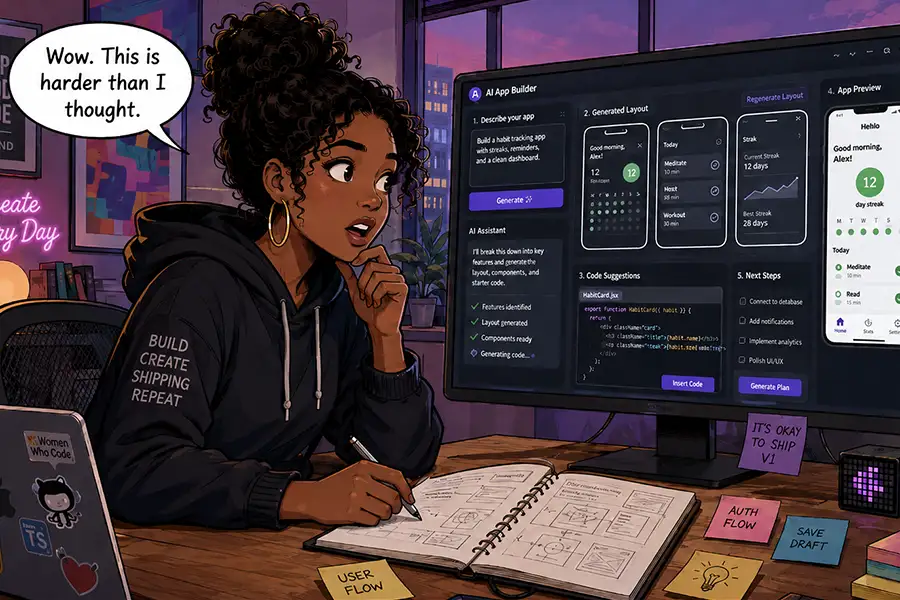
The emergence of sophisticated large language models (LLMs) has fundamentally altered the barrier to entry for software development. Tools such as Claude, GPT-4, and various IDE-integrated coding assistants have democratized the ability to generate complex, functional codebases from natural language prompts. This shift has empowered individual developers and small businesses to undertake projects—such as the replication of established Software-as-a-Service (SaaS) platforms—that historically required dedicated engineering teams, significant capital, and years of iterative development. While this trend promises increased autonomy and cost savings, it also introduces substantial technical debt, maintenance burdens, and security risks that often remain hidden behind the initial ease of "vibe coding."
The Economic Drivers of DIY SaaS Development
The current trend toward self-built software solutions is largely fueled by "subscription fatigue." As of 2024, the average enterprise manages hundreds of SaaS applications, with annual recurring costs often spiraling beyond initial projections. For individual professionals and small business owners, the move from perpetual licensing models—like those previously utilized by legacy accounting software—to mandatory, indefinite monthly subscriptions has created a financial incentive to repatriate essential business tools.
Economic data from industry analysts suggests that small-to-medium businesses (SMBs) spend approximately 15% to 20% of their annual IT budget on redundant or underutilized SaaS subscriptions. When these users identify gaps in functionality—such as the lack of niche features or the burden of proprietary data silos—the allure of using AI to generate a bespoke, portable alternative becomes increasingly compelling. By leveraging platforms like WordPress or cloud-native frameworks, developers can theoretically create lightweight versions of CRM, invoicing, and project management tools that prioritize specific workflow needs over generalized feature sets.

Chronology of an AI-Assisted Build
The lifecycle of an AI-assisted development project typically begins with a rapid prototyping phase, followed by a protracted period of refinement. Based on observed industry workflows, the project lifecycle often follows this trajectory:
- Ideation and Scope Definition (Weeks 1-2): The developer identifies a specific pain point in an existing tool. Using AI prompts, they generate the foundational architecture for a custom plugin or application.
- Prototype Generation (Days 1-5): LLMs are utilized to output boilerplate code, database schemas, and front-end skeletons. In many instances, functional prototypes are achieved in under 24 hours.
- The "Detail Gap" Realization (Weeks 3-8): The developer realizes that while the AI provided the core logic, essential edge cases—such as data validation, error handling, complex reporting, and user permission hierarchies—are missing.
- Integration and Maintenance Phase (Ongoing): The developer must address third-party API dependencies, security patching, and server-side infrastructure. It is at this stage that the project transitions from a "coding project" to a "product management responsibility."
Technical Implications and Security Risks
While AI can accelerate the writing of syntax, it does not currently replace the strategic oversight of a software architect. A primary concern for those attempting to replicate SaaS products is the "responsibility gap." Established SaaS providers allocate millions of dollars annually to security audits, compliance (such as GDPR, SOC2, or HIPAA), and infrastructure scaling. When a solo developer builds a localized replacement, they inadvertently assume the role of the security, DevOps, and support teams.
Fact-based analysis of these projects reveals that the most common failure point is not the initial code generation, but the long-term maintenance of external dependencies. APIs provided by payment processors (e.g., Stripe) or communication services (e.g., Twilio) are subject to frequent version updates and breaking changes. If the custom-built application lacks a robust testing suite and a dedicated maintenance schedule, the software risks becoming a liability rather than an asset.
Expert Perspectives on the "Vibe Coding" Phenomenon
Industry experts generally categorize the current surge in AI-generated software as a "Golden Age of Prototyping," though they caution against conflating a prototype with a production-ready system.

"AI tools are exceptional at reducing the ‘blank page’ problem," notes a lead software architect at a major cloud infrastructure firm. "However, the architecture of a professional-grade SaaS is not merely the sum of its functions. It is the result of thousands of hours spent resolving race conditions, optimizing database queries, and hardening endpoints against common exploits. Developers should be encouraged to build for their own use, but they must recognize that they are trading a monthly subscription fee for the ‘tax’ of constant maintenance and security oversight."
Assessing the Scalability and Future Utility
Before committing to a custom build, developers are advised to conduct a rigorous "Build vs. Buy" analysis. This assessment should focus on three critical dimensions:
- Complexity vs. Necessity: Does the intended project require complex state management or high-concurrency handling? If so, the overhead of building and maintaining that infrastructure may quickly outweigh the cost of an existing subscription.
- Regulatory and Compliance Requirements: If the application handles sensitive financial or personal data, the cost of ensuring compliance is often prohibitively high for a solo developer.
- Long-term Viability: Is the goal to learn new technology, or to save money? If the goal is cost-saving, the hidden costs of downtime, server hosting, and security breaches must be factored into the total cost of ownership (TCO).
Broader Industry Impact
The democratization of development is already impacting the SaaS market. As users become more capable of building "good enough" solutions, enterprise SaaS providers are being forced to justify their pricing models through superior support, platform stability, and deep integrations that are difficult for individual developers to replicate.
Furthermore, the rise of AI-generated code has prompted a shift in the developer skillset. The focus is moving away from rote syntax memorization toward systems thinking, API orchestration, and security-first architecture. While the dream of replacing an enterprise-grade platform with a few prompts remains largely aspirational, the process of attempting to do so provides unparalleled insight into the complexity of modern software.

Ultimately, the ability to build a SaaS replica is a testament to the speed of current AI tools, but it is not a shortcut to enterprise-grade quality. Users who choose to take this path must embrace the reality that they are not just developers; they are becoming product owners, with all the accountability that the role entails. While the temptation to build is great, the most successful projects will be those that balance the efficiency of AI with the patient, diligent work of sound software engineering.