Russia Returns World’s Most Heavily-Armed Warship To The Sea After $5B Facelift

A Legacy of Power and Prolonged Absence
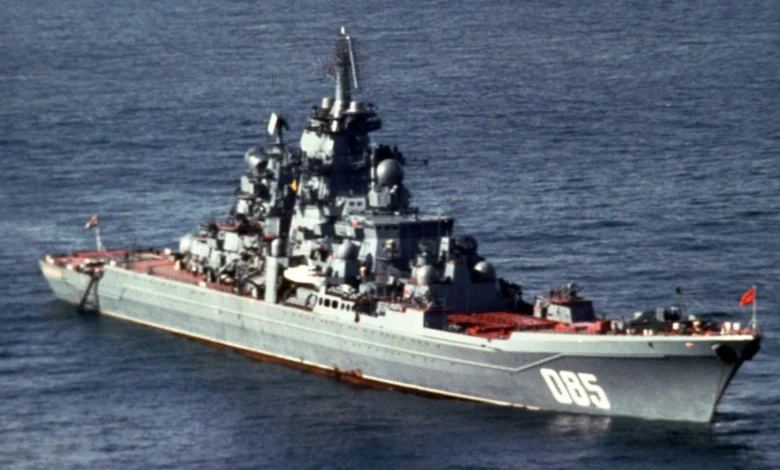
The Admiral Nakhimov, originally commissioned in 1988 under the name Kalinin, was renamed in 1992 following the dissolution of the Soviet Union. Weighing in at approximately 28,000 tons and stretching 823 feet in length, it stands as a unique entity in global naval arsenals, being the sole nuclear-powered surface warship in the world outside of aircraft carriers. Its operational career, however, was cut short in 1997 when it was decommissioned. For two years, it lay dormant at Severomorsk, the primary base of the Russian Northern Fleet, before being towed to the Severodvinsk shipyard and placed in dry dock. For an extended period, the vessel remained largely static, a testament to the complexities and challenges inherent in maintaining and modernizing such a formidable platform.
The Ambitious Overhaul: A Twenty-Year Journey
The serious undertaking to modernize the Admiral Nakhimov truly began in 2014. What was initially envisioned as a relatively modest refit, with an anticipated completion date around 2018, gradually ballooned into a vast and complex project. This protracted timeline, marked by continuous delays and unforeseen technical hurdles, ultimately led to the ship’s near three-decade hiatus from active naval deployment. The recent sighting of the cruiser conducting sea trials suggests that these extensive efforts are finally bearing fruit, signaling a potential revitalization of Russia’s naval power projection capabilities.
Unpacking the Modernization: Propulsion and Armament
The extensive refit of the Admiral Nakhimov has been a multifaceted endeavor, aimed at bringing the aging warship into the 21st century’s naval combat landscape. While the precise details of every upgrade remain classified, key aspects of its transformation are understood to be revolutionary, particularly concerning its propulsion and offensive capabilities.
Propulsion: Sustained Speed and Nuclear Endurance
The Admiral Nakhimov is renowned for its impressive speed, with a projected top speed estimated at around 32 knots (approximately 36.8 mph). This velocity surpasses that of most large surface combatants and even edges out the top speed of U.S. Navy aircraft carriers, providing a significant tactical advantage in maneuverability and response time. The immense power required to achieve these speeds is generated by two nuclear reactors, capable of producing a formidable 140,000 horsepower. While these reactors were not replaced during the refit, they underwent a comprehensive refurbishment and refueling process, bringing them back online by February 2025. The type of reactors employed are pressurized water reactors, a design that also happens to be the most common type of nuclear reactor globally, indicating a reliance on proven and mature technology for its core power generation. This nuclear propulsion system grants the Nakhimov virtually unlimited range, a critical asset for extended deployments and power projection far from home ports.
Armament: A Lethal Arsenal for a New Era
Perhaps the most dramatic transformation has occurred in the ship’s offensive capabilities. The original P-700 Granit anti-ship missile system, a potent but somewhat dated weapon, has been entirely removed. In its place, the Nakhimov has been equipped with a highly versatile and modernized suite of vertical launch systems. The ship now features ten eight-cell universal launch modules, collectively providing 80 vertical launch system (UKSK) cells. These modules are designed to accommodate a wide array of modern Russian missiles, significantly enhancing its multi-role capabilities.
This new missile armament includes advanced anti-submarine warfare (ASW) missiles, formidable anti-ship missiles, and sophisticated land-attack cruise missiles. Crucially, the UKSK system is also capable of launching the 3M22 Zircon missile, widely recognized as the world’s fastest hypersonic missile. The integration of the Zircon missile, with its unparalleled speed and maneuverability, represents a significant leap in Russia’s anti-access/area denial (A2/AD) capabilities, posing a severe threat to enemy naval assets. Beyond missiles, the Admiral Nakhimov is also believed to have received substantial upgrades to its sensor suites, including enhanced radar systems and more advanced air defense missile capabilities, bolstering its survivability and its ability to detect and engage threats across multiple spectrums.
Strategic Significance and Emerging Challenges
The return of the Admiral Nakhimov to operational status is poised to have considerable strategic implications for Russia. Its anticipated role as the flagship of the Northern Fleet is particularly noteworthy. The Northern Fleet is a cornerstone of Russia’s strategic defense, primarily tasked with safeguarding the nation’s most valuable naval assets: its ballistic missile submarine (SSBN) fleet. This fleet operates within what Russia terms a "bastion" defense strategy, designed to create secure operational zones in areas like the Barents Sea, allowing its SSBNs to conduct patrols with a high degree of impunity. A vessel with the Nakhimov’s speed, extensive range, and advanced offensive and defensive capabilities is intended to significantly bolster this bastioned defense, projecting power and deterring potential adversaries.
However, the operational environment into which the Admiral Nakhimov will re-enter is vastly different from the one it was designed for. The landscape of naval warfare has been dramatically reshaped by the proliferation of drone technology and asymmetric warfare tactics. The conflict in Ukraine has provided stark examples of this evolution. Despite significant disparities in naval resources, Ukraine’s effective use of unmanned aerial and maritime systems has severely constrained Russia’s naval operations in the Black Sea, forcing its larger surface combatants into more defensive postures and limiting their freedom of action.
The Admiral Nakhimov, despite being the most heavily armed surface warship in the world, now operates in an era where concentrating significant firepower and value into a single, large platform is increasingly viewed with caution within naval doctrine. The "eggs in one basket" approach faces new challenges from swarming tactics, precision-guided munitions, and the pervasive threat of inexpensive, yet highly effective, unmanned systems. This evolving threat environment is a key driver behind the U.S. Navy’s own exploration of long-range drone ships and other innovative platforms, signaling a global shift in naval strategy.
The ultimate effectiveness and relevance of the Admiral Nakhimov in this dynamic and rapidly changing maritime theater will be a critical factor to observe. While its technological upgrades are undeniable, its success will depend not only on its own capabilities but also on Russia’s ability to adapt its naval doctrine and operational strategies to counter the emergent threats of modern warfare. The coming years will likely reveal whether this formidable, albeit belatedly modernized, warship can truly fulfill its strategic mandate in an increasingly complex and contested global maritime arena.
A Timeline of Transformation:
- 1988: The Kirov-class battlecruiser Kalinin is commissioned into the Soviet Navy.
- 1992: Renamed Admiral Nakhimov following the dissolution of the Soviet Union.
- 1997: Decommissioned and taken out of active service.
- 1997-1999: Laid up at Severomorsk, the main base of the Russian Northern Fleet.
- 1999: Towed to Severodvinsk and placed in dry dock for extended storage and potential future refit.
- 2014: The extensive modernization and refit project officially commences, though initial plans were for a less comprehensive overhaul.
- 2018: Original projected completion date for the refit, which was subsequently missed due to persistent delays.
- February 2025: Refurbished and refueled nuclear reactors reported to be back online.
- June 25, 2026: Spotted undergoing sea trials in Kola Bay, indicating a significant step towards operational readiness.
- Post-2026 (Projected): Expected to be assigned as the new flagship of Russia’s Northern Fleet.