The Mechanism of Avian Navigation
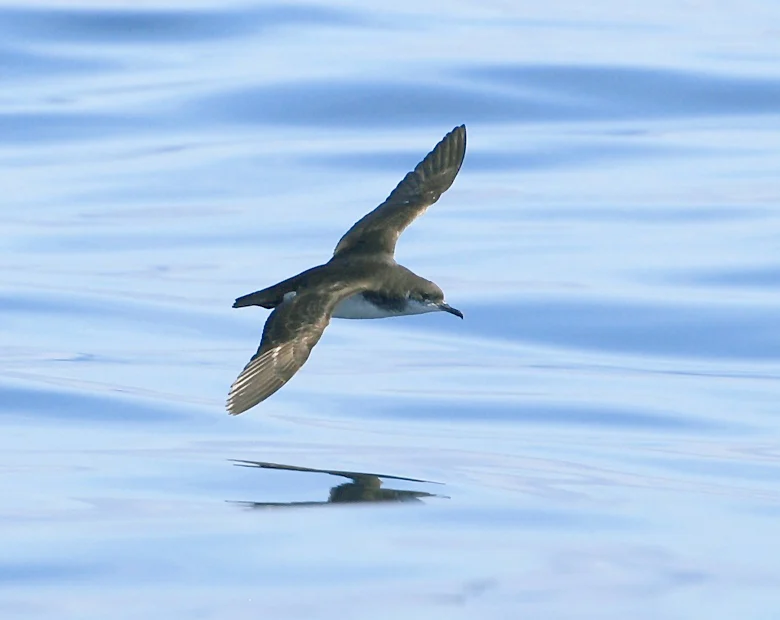
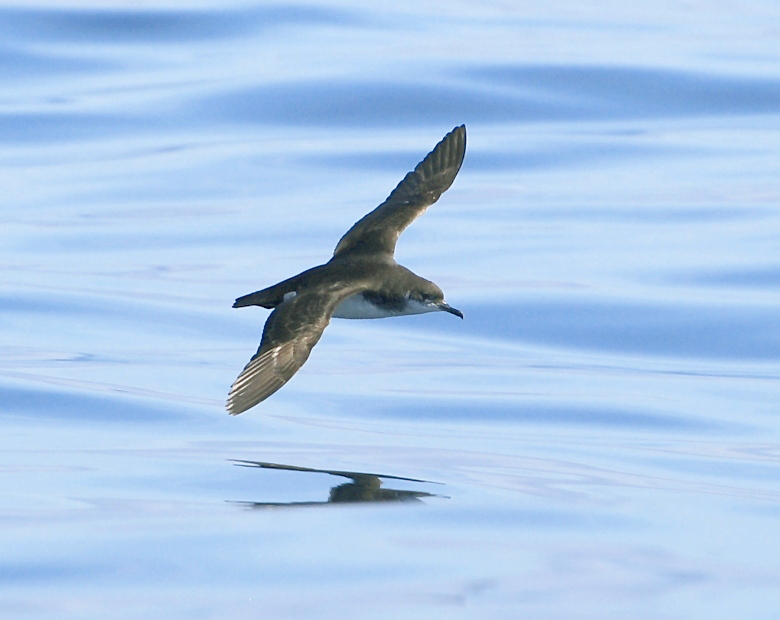
The Manx shearwater, a bird roughly the size of a pigeon, is a master of endurance. These seabirds spend significant portions of their lives traversing the North Atlantic, often nesting in coastal burrows throughout the United Kingdom and Ireland, with a particularly dense population concentrated in Wales. To return to these colonies after foraging trips that can span up to 1,000 kilometers, the shearwaters rely on a sophisticated, dual-layered navigation system.
Ecologists believe these birds utilize a "map sense"—likely informed by olfactory cues—to determine their approximate location. Once the bird has a sense of its position relative to its home burrow, it utilizes the sun as a celestial compass to maintain a steady flight path. However, this reliance on solar positioning introduces a significant vulnerability. Because the sun shifts its position in the sky throughout the day—moving from the east in the morning to the west in the evening—a bird must possess an accurate internal chronometer to correctly interpret the sun’s angle.
If a bird’s internal clock is even slightly out of sync with the local time, its perception of the sun’s position becomes distorted. As the bird moves across lines of longitude, its internal clock, which is typically reset at sunrise and sunset, fails to keep pace with the changing time zones. For every degree of longitude covered, the bird’s internal timing drifts by approximately four minutes. This discrepancy leads the shearwater to miscalculate its trajectory, causing it to veer off course—clockwise when flying east and counter-clockwise when flying west.
Two Decades of Tracking Data
The confirmation of this phenomenon is the result of an exhaustive longitudinal study spanning twenty years. Researchers Tim Guilford and Chris Perrins initiated the project in 2004, leveraging the advent of miniaturized GPS technology that allowed scientists to track the movements of medium-sized seabirds for the first time. Over the course of two decades, the research team compiled a comprehensive database comprising 3,688 individual foraging trips undertaken by 1,045 birds.
The scale of this dataset provided the statistical power necessary to detect a subtle effect that had previously eluded researchers. While previous studies in captive penguins had suggested that clock-shifting could influence navigation, proving it in wild, free-ranging birds was significantly more challenging. By isolating "homing flights"—defined by the birds’ shift into high-speed, direct flight paths as they return to their burrows—the team was able to map the birds’ actual flight paths against the predicted deviations that would be caused by a sun-compass error.
The data revealed that the navigational biases observed in the wild population mirrored the theoretical predictions of a sun-compass malfunction. Even though the temporal shifts were minor—typically ranging from 10 to 15 minutes, with a maximum observation of approximately one hour—the impact on the birds’ orientation was consistent and measurable. Across 335 homing flights conducted over open water, the shearwaters consistently veered in the directions expected by the researchers, providing strong evidence that internal clock drift is a persistent, if small, hurdle in avian migration.
Navigational Resilience and Error Correction
Despite the potential for these errors to derail a journey, the study indicates that Manx shearwaters possess remarkable mechanisms for error correction. A deviation of approximately seven degrees—the average error calculated for a 1,000-kilometer trip—might sound significant in isolation, but for a bird with a robust map sense, it is a manageable inconvenience.
The research suggests that these birds do not rely solely on the sun compass. When the birds are closer to land or following coastlines, they appear to integrate visual cues and familiar landmarks into their navigation, a process similar to the behavior observed in homing pigeons. This "parallel navigation" hypothesis posits that birds maintain two concurrent systems: one based on celestial orientation and one based on geographic memory. When the sun compass fails due to jet lag, the birds rely on land-based cues to recalibrate their position, ensuring that the total added distance to their journey remains negligible—often totaling no more than five kilometers.
Broader Implications for Animal Biology
The implications of this study extend far beyond the migratory habits of the Manx shearwater. Patrick Lewin, the study’s lead author, suggests that the "jet lag effect" is likely a common challenge for any species that travels long distances across multiple longitudes in short periods. This is particularly relevant for migratory species and animals living in high-latitude regions, where lines of longitude converge and even short distances can result in rapid changes in local solar time.

The findings also open new avenues for research into the health impacts of chronic circadian disruption. In human medicine, prolonged jet lag is associated with a variety of negative health outcomes, including sleep disorders, metabolic issues, and immune system suppression. The discovery that shearwaters experience these shifts as a routine part of their life cycle raises a compelling question: have these birds evolved specific biological mitigations to cope with frequent "jet lag," or do they simply absorb the physiological costs as a trade-off for their expansive range?
For scientists working in the field of bio-inspired autonomous navigation, these findings are particularly instructive. As engineers attempt to design artificial intelligence systems that can navigate across vast, featureless environments, understanding how natural systems compensate for sensory or temporal errors is invaluable. The shearwater’s ability to "check" its progress against secondary map-based information provides a blueprint for creating more robust, fault-tolerant robotic navigation systems.
Future Research Directions
While the current study successfully identifies the link between longitudinal travel and navigational bias, many questions remain. The research team noted that their current methods could not ascertain whether the birds suffer from other common symptoms of jet lag, such as sleep deprivation or altered foraging drive. Future studies will likely focus on the physiological markers of circadian stress in these birds, investigating how these temporal shifts impact foraging efficiency and, ultimately, breeding success.
Furthermore, the study highlights the necessity of long-term ecological monitoring. The fact that such a subtle biological phenomenon was only identified after twenty years of data collection underscores the importance of persistent, standardized research in understanding complex animal behaviors. As climate change continues to alter migratory patterns and environmental conditions, the ability of species like the Manx shearwater to maintain their navigational accuracy may become increasingly vital to their survival.
In the final analysis, the Manx shearwater serves as a sentinel for the hidden challenges of the natural world. Their reliance on the sun as a compass, while elegant, is inextricably linked to the rotation of the Earth—a reality that binds them to the same constraints as the international traveler. By decoding how these birds reconcile their internal timing with the external environment, scientists are gaining not only a deeper understanding of avian biology but also a broader perspective on the fundamental biological rhythms that govern life on a rotating planet. The study, published in the 2026 volume of Science, remains a landmark contribution to the fields of behavioral ecology and sensory biology, offering a nuanced look at the delicate balance between internal biological clocks and the navigational demands of the wild.