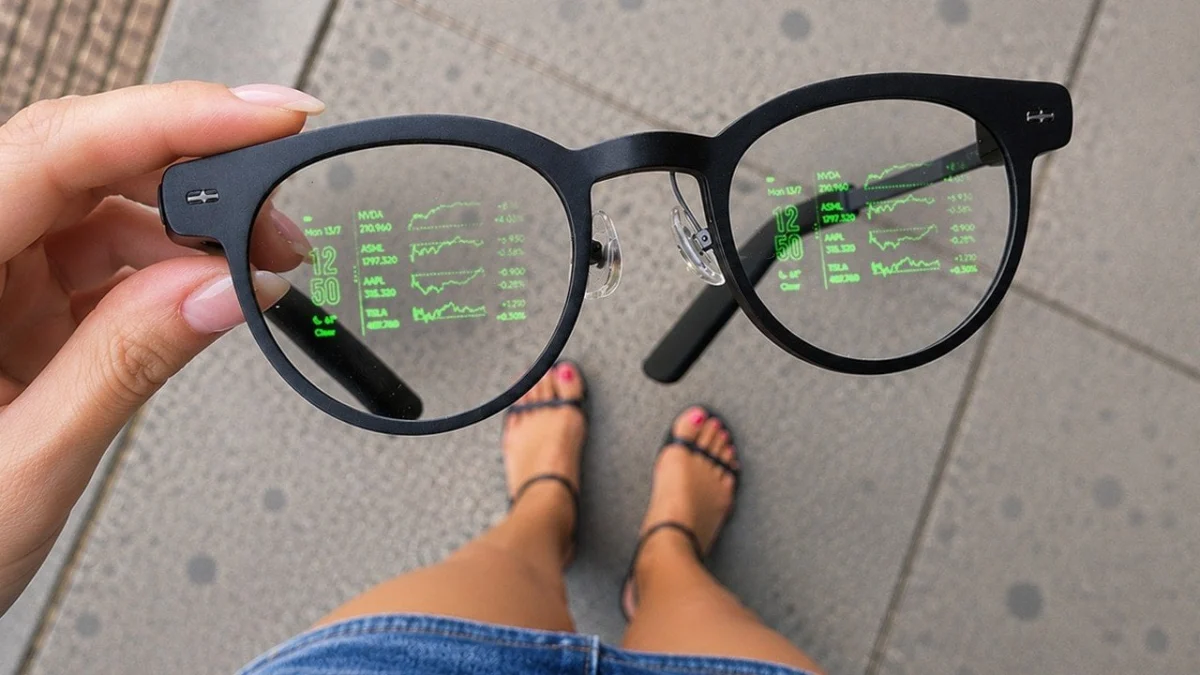
The smart glasses landscape is undergoing a significant shift, with MemoMind One emerging as a notable contender that deliberately eschews cameras in favor of advanced audio capabilities and a dual Heads-Up Display (HUD) system. This strategic decision, as highlighted by tech reviewer Nathie, signals a conscious effort to address mounting privacy concerns that have long shadowed wearable camera technology. Instead of visual recording, MemoMind One focuses on delivering sophisticated AI-driven features, including contextual memory, real-time transcription, and seamless navigation, all presented through an unobtrusive and lightweight design. Crafted with a titanium frame, compatibility with prescription lenses, and an automatic power-off mechanism when folded, these smart glasses aim to blend practicality with a discreet user experience, positioning themselves as a compelling option for individuals prioritizing productivity and information accessibility.
The MemoMind One’s innovative approach centers on its dual HUDs, designed to provide customizable, glanceable updates for a range of tasks. From immediate reminders and turn-by-turn navigation prompts to on-demand transcriptions and live language translations, the glasses aim to streamline daily interactions. This camera-free architecture not only simplifies the user interface but also fosters a sense of trust by eliminating a common point of privacy intrusion. The company emphasizes transparent data management, assuring users that collected information, primarily audio data, is not leveraged for AI model training, thereby reinforcing its commitment to a privacy-first ethos. This breakdown delves into the design, functionality, AI capabilities, audio performance, privacy considerations, target audience, and the inherent limitations and costs associated with MemoMind One, offering a comprehensive understanding of its unique proposition in the burgeoning smart wearables market.
Design and Engineering: A Focus on Durability and Discreet Functionality
MemoMind One distinguishes itself through a meticulously engineered design that prioritizes both longevity and user comfort. The foundation of its construction is a lightweight yet robust titanium frame, a material choice that ensures flexibility and resilience, making the glasses suitable for extended daily wear without causing undue pressure or discomfort. This attention to detail extends to the reflective lenses, which are subtly enhanced by a faint green glow emanating from the HUDs, adding a touch of futuristic aesthetic without becoming ostentatious or drawing unwanted attention.
Addressing the diverse needs of its user base, MemoMind One offers compatibility with prescription lenses, a crucial feature for widespread adoption. However, it’s important to note that the glasses do not support transition lenses, a limitation that may necessitate alternative solutions for users who rely on photochromic eyewear. For outdoor use, clip-on sunglasses are provided as a practical and readily available alternative, ensuring functionality across various lighting conditions.
A particularly innovative aspect of MemoMind One’s design is the deliberate absence of a traditional power button. Instead, the smart glasses employ an intelligent automatic power-off system that activates when the frames are folded. This streamlined approach not only simplifies the user experience by removing a potential point of confusion but also contributes significantly to battery conservation, ensuring that the device is ready when needed without unnecessary drain. This thoughtful integration of form and function underscores MemoMind One’s commitment to creating a wearable device that seamlessly integrates into a user’s daily routine, offering a user-friendly and efficient experience.
Display Technology: The Dual HUD System for Glanceable Information
The core of MemoMind One’s informational delivery lies in its sophisticated dual Heads-Up Display (HUD) system. Engineered with an emphasis on clarity and efficiency, these displays are designed to present essential information at a glance, minimizing power consumption without compromising readability. A key design consideration has been user adaptability, with the HUDs offering adjustable angles and positions. This allows individuals to fine-tune the display to their specific line of sight, ensuring a comfortable and ergonomic viewing experience tailored to their personal preferences.
The HUDs are primarily optimized for text-based content, making them exceptionally adept at delivering critical updates such as notifications from paired devices, step-by-step navigation prompts for seamless travel, and concise text messages. This functionality liberates users from the constant need to pull out their smartphones, fostering a more engaged and present experience in their immediate surroundings. The glasses excel in scenarios requiring rapid access to information, such as displaying reminders for appointments, providing teleprompter scripts for presentations, or projecting daily schedules. This capability positions MemoMind One as an invaluable tool for both personal productivity and professional applications, particularly for individuals who thrive on streamlined access to information and efficient task management. The minimal visual intrusion of the HUDs ensures that information is readily available without becoming a distraction, a delicate balance that many smart glasses struggle to achieve.
Artificial Intelligence Integration: Enhancing Daily Interactions
MemoMind One integrates a suite of advanced Artificial Intelligence (AI) tools meticulously designed to simplify and elevate everyday activities. At the forefront of these capabilities is the contextual memory feature, a standout innovation that records and intelligently organizes conversations into searchable summaries, actionable reminders, and comprehensive notes. This functionality is a powerful asset for individuals managing busy schedules, recalling critical details from meetings or discussions, or meticulously planning future endeavors. The ability to access and search past conversations transforms how users interact with information, making it readily retrievable and actionable.
Beyond memory augmentation, MemoMind One offers robust real-time transcription and translation services. These AI-powered features are instrumental in breaking down language barriers, facilitating smoother and more effective communication across diverse linguistic backgrounds. The teleprompter functionality further expands the utility of the glasses, enabling users to deliver speeches, presentations, or even informal remarks with enhanced confidence and precision, ensuring that key points are delivered seamlessly. Collectively, these AI-driven features render MemoMind One a remarkably versatile and practical tool, appealing to a broad spectrum of users, from busy professionals seeking to optimize their workflow to individuals aiming to enhance their personal organization and communication capabilities. The AI acts as a silent, intelligent assistant, working in the background to make daily tasks more manageable and information more accessible.
Audio and Control Mechanisms: Balancing Functionality and Limitations
MemoMind One is equipped with integrated speakers designed to facilitate AI interactions, handle phone calls, and enable basic media playback. While the audio quality is deemed sufficient for voice-centric tasks, such as interacting with the AI assistant or participating in calls, it falls short of delivering an immersive audio experience, particularly for music consumption. The limited bass performance means that audiophiles seeking rich, deep sound for entertainment purposes may find the glasses less than satisfactory. Consequently, MemoMind One is positioned more as a practical audio tool for functional needs rather than a primary entertainment device.
Interaction with the device is managed through a single, strategically placed button on the frame. This minimalist control scheme provides a straightforward method for navigating the device’s core functions. For users seeking more granular control and personalization, a companion mobile application offers extensive customization options. Within the app, users can configure notification preferences, manage and tailor the AI features to their specific requirements, and generally fine-tune the smart glasses to align with their individual usage patterns. This synergy between the hardware’s simplified controls and the app’s advanced customization capabilities ensures a personalized yet accessible user experience, striking a balance between ease of use and tailored functionality.
Privacy and Data Management: A User-Centric, Camera-Free Philosophy
A cornerstone of MemoMind One’s product philosophy is its unwavering commitment to privacy, most notably demonstrated by its deliberate exclusion of cameras. This design choice directly confronts the pervasive privacy anxieties associated with many camera-equipped smart glasses, which have often been criticized for their potential to record without explicit consent. Instead of visual capture, MemoMind One relies on microphones for its audio-centric functionalities.
The company assures users that these microphones are only active when explicitly enabled by the user. Furthermore, comprehensive privacy controls allow individuals to schedule recording times or filter specific conversations, providing a high degree of agency over their data. All data collected by the glasses is securely synced to the accompanying MemoMind application and cloud storage. Crucially, MemoMind One explicitly states that conversations are not utilized for training its AI models. This transparent and user-focused approach is designed to build trust by addressing potential privacy concerns head-on, offering a reassuring alternative for individuals who prioritize data security and control in their wearable technology choices. This privacy-first stance is a significant differentiator in a market where data collection practices are under increasing scrutiny.
Target Audience and Applications: Accessibility and Productivity for All
MemoMind One is engineered to serve a broad and diverse user base, encompassing everyday consumers seeking enhanced productivity and individuals with specific needs who can benefit significantly from its assistive technologies. The glasses present particularly compelling advantages for users facing challenges such as memory impairments, Attention Deficit Hyperactivity Disorder (ADHD), or hearing loss. Features like contextual memory and live transcription are specifically designed to augment daily functionality, providing critical support for organization, information recall, and communication.
While MemoMind One is not classified as a medical device, its capabilities offer substantial benefits in terms of accessibility and enhanced productivity. It provides practical solutions for a wide array of everyday challenges, making it an attractive choice for users looking for wearable technology that can genuinely improve their quality of life and streamline their daily routines. The device’s focus on augmenting cognitive functions and communication makes it a valuable tool for a variety of personal and professional contexts, aiming to empower users by making information more accessible and tasks more manageable.
Limitations and Cost Implications: Navigating the Value Proposition
Despite its innovative feature set, MemoMind One is not without its limitations, which potential users should carefully consider. The advanced contextual memory feature, a significant draw for many, is contingent upon a $20 monthly subscription fee. This recurring cost may represent a barrier for budget-conscious consumers or those who are hesitant to commit to ongoing subscription services for wearable technology.
Furthermore, the microphones, while central to the device’s functionality, can occasionally encounter challenges in accurately distinguishing the user’s voice from ambient background conversations. This can lead to potential transcription errors, impacting the reliability of the recorded information. As previously noted, the compact speaker design, while functional for voice, limits the quality of music playback, making it a less ideal choice for users who prioritize a rich audio experience for entertainment. These factors collectively influence the overall value proposition of MemoMind One, necessitating a careful evaluation of its cost relative to its benefits and potential drawbacks.
Ethical Considerations: Balancing Technological Advancement with Responsibility
While MemoMind One proactively addresses visual privacy concerns by omitting cameras, the continuous listening capability of its microphones introduces its own set of ethical considerations. Although the device grants users substantial control over microphone activation and data recording, the inherent presence of always-on audio capture mechanisms can still spark important ethical discussions surrounding data collection, usage, and the potential for surveillance. The company’s commitment to user control and transparent data policies is crucial in mitigating these concerns, but the broader societal implications of ubiquitous audio recording devices warrant ongoing dialogue.
In conclusion, MemoMind One represents a thoughtful and innovative approach to smart glasses, seeking to strike a balance between cutting-edge functionality and user responsibility. Its feature set is geared towards enhancing productivity, improving accessibility, and offering unparalleled convenience. However, potential purchasers are advised to thoroughly assess the associated subscription costs, acknowledge the limitations in audio performance, and carefully consider the privacy implications before making a purchase decision. The device offers a compelling glimpse into a future of wearables that prioritize information access and cognitive assistance, but its success will hinge on its ability to transparently address user concerns and deliver tangible value that justifies its cost and inherent trade-offs.