In the modern media ecosystem, corporate communications and public relations strategies are increasingly tested by the velocity of digital dissemination, the permanence of digital footprints, and the shifting expectations of public accountability. This week’s executive crisis roundup examines three distinct case studies: University of Texas quarterback Arch Manning’s fallout from an insensitive reaction to an artificial intelligence-generated video; the multi-party tour dispute involving Macklemore, Ed Sheeran, and New England Patriots owner Robert Kraft; and landmark quantitative research from Augur Intelligence that assigns a tangible dollar figure to corporate reputation during a crisis. Together, these events underscore that in contemporary communications, the medium of delivery, the inevitability of action over neutrality, and pre-existing equity reserves dictate the ultimate survival of a brand or public figure.
Arch Manning and the Press Conference AI Video Controversy
The intersection of sports, politics, and artificial intelligence-generated media produced a significant crisis management test for University of Texas at Austin quarterback Arch Manning. The incident began following the Longhorns’ dramatic 24-23 comeback victory over the Ohio State Buckeyes. During the postgame media obligations, Texas head coach Steve Sarkisian abruptly cut short a live television interview with veteran ESPN sideline reporter Holly Rowe, prompting intense online speculation and commentary.
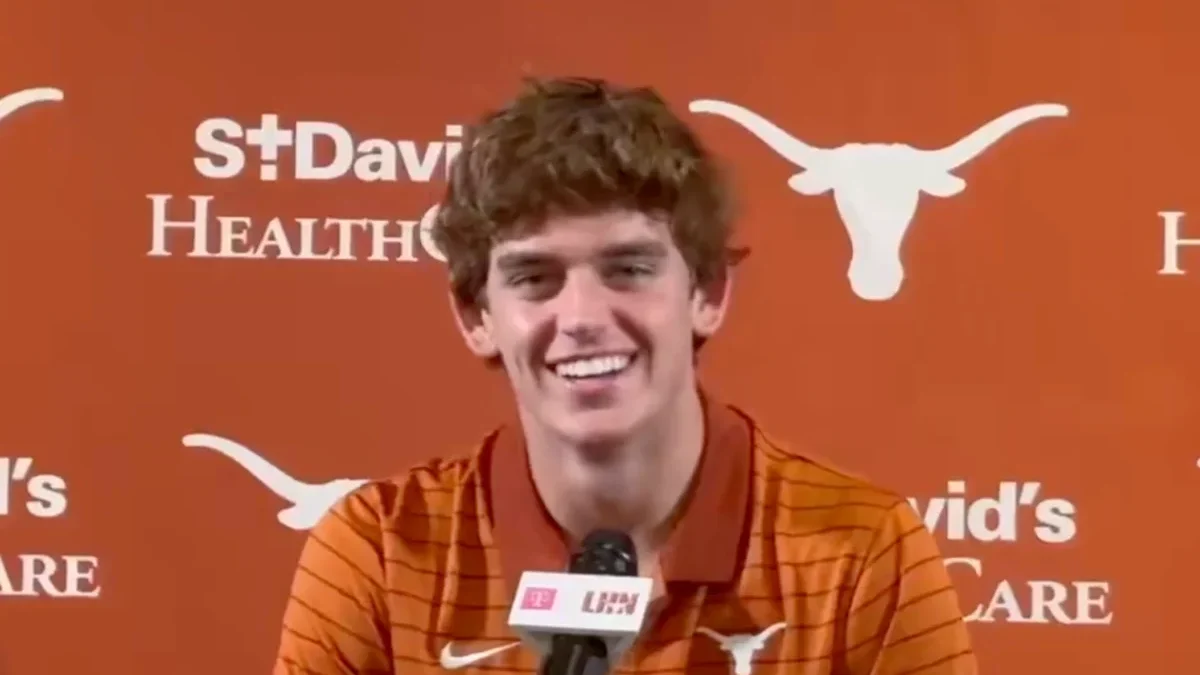
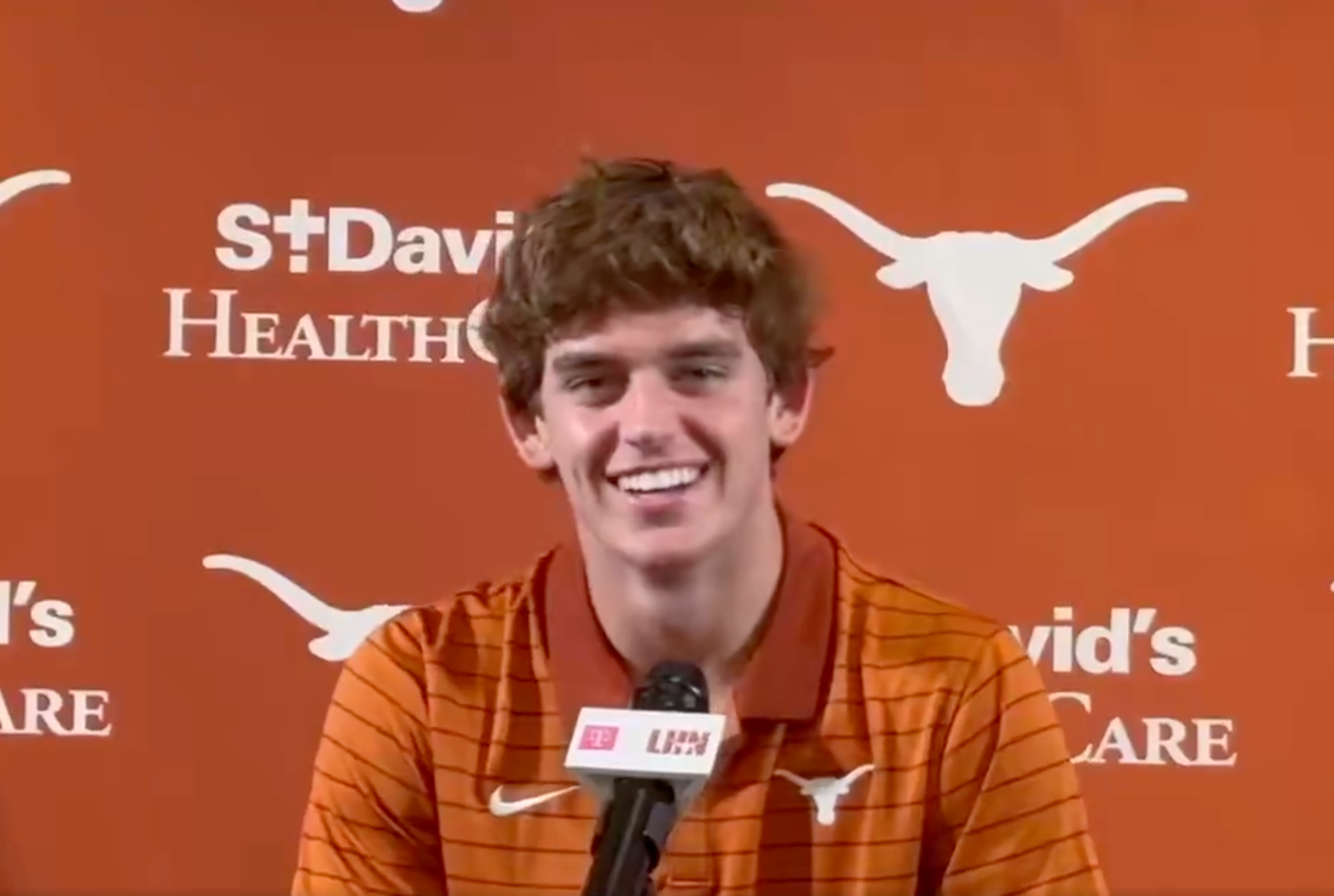
Shortly thereafter, an anonymous user generated a deepfake video depicting Sarkisian physically striking Rowe and shouting aggressively toward the camera. During his regularly scheduled Monday press conference, Manning was asked about the synthetic clip. In a move that immediately drew widespread condemnation, Manning laughed openly at the video, characterized it as "hilarious," and prompted reporters in the room to confirm whether they had viewed it, appearing entirely oblivious to the gravity of the media environment he was engaging with.
Chronology of the Response and Apology
The public and professional backlash was instantaneous, highlighting the precarious nature of public appearances for high-profile collegiate athletes who hold massive NIL (Name, Image, and Likeness) valuations and institutional platforms. Recognizing the severe reputational threat, Manning’s communications advisors orchestrated a swift retraction and apology within 24 hours of the initial press conference.
By Tuesday, Manning utilized his Instagram Story to publish a formal, direct written apology. "In my press conference yesterday, I made an insensitive comment about an AI video," Manning wrote. "There is nothing funny about it. It’s easy to say I didn’t mean it, but I know my words and actions were hurtful to a lot of people. I do not take that lightly and am deeply sorry for that."
Crucially, Manning addressed Holly Rowe directly in a subsequent section of the statement. "I specifically want to apologize to Holly Rowe for what she has personally had to deal with because of my comments. I have a ton of respect for her and appreciate her showing me grace in this moment."
Rowe subsequently addressed the public via her own social media channels, posting a brief message on her Instagram Story confirming receipt of the communication. "Thank you Arch," Rowe wrote. "I appreciate our conversation about this which will remain private. Apology accepted. We move forward with respect and kindness for one another."
Communications Analysis: The Medium and the Message
Crisis communication professionals widely praised the core elements of Manning’s apology—noting that it was immediate, specific, and personal, containing no deflective language or qualifying caveats. However, industry veterans pointed out critical flaws in the execution of the delivery, emphasizing that the chosen medium undermined the gravity of the message.
Eric Yaverbaum, CEO of Ericho Communications, noted that while the text of the apology was well-crafted, its deployment via a disappearing Instagram Story—a platform feature that automatically deletes content after 24 hours—sent conflicting signals. "Because of the mediums we use to communicate today, the 22-year-old Manning’s apology seems incomplete," Yaverbaum observed. "Manning apologized via Instagram Story, which disappears after 24 hours. And yes, while the apology has been screenshotted and shared all over social media, the nature of the medium makes the message come off a bit sheepish."
Yaverbaum highlighted a broader strategic pattern on Manning’s official digital channels, noting that permanent posts on his feed are almost exclusively dedicated to commercial brand partnerships and promotional content. Moving the formal crisis apology to his permanent feed, he argued, would have imbued the statement with the necessary institutional and personal weight. "Part of growing up is owning your mistakes," Yaverbaum said. "Even if that means living with them for more than 24 hours."
The underlying lesson for public figures and corporate executives is clear: in an era of ubiquitous recording and synthetic media, impromptu reactions during live press conferences carry the same regulatory and public relations weight as deliberate, scripted statements.
The Macklemore, Ed Sheeran, and Robert Kraft Tour Dispute
While individual remarks can ignite rapid localized controversies, complex multi-party disputes present some of the most difficult challenges in modern crisis management. This fall, a concert-based political protest escalated into a sprawling international communications flashpoint involving music artists, major stadium owners, tour promoters, and humanitarian advocates.
The controversy originated on September 4 and 5 at MetLife Stadium in New Jersey, during the opening performances of Ed Sheeran’s stadium tour. Rapper Macklemore, serving as a supporting act, utilized his stage time to deliver outspoken pro-Palestinian remarks. Dressed in a traditional keffiyeh, Macklemore displayed graphic footage of structural destruction and humanitarian suffering in Gaza on the stadium’s massive screens, and led the assembled crowd in chants of "Free Palestine."
The immediate reaction fractured the entertainment and philanthropic sectors. Prominent Jewish public figures and artists voiced sharp public criticism. Among them was pop artist Pink, who publicly condemned the performance on social media, writing that Macklemore had "stood in front of a stadium full of music-loving families, with violent images from a war on the screens" and told "all of the Jews in the stadium that it wasn’t about them."
Confronted with mounting pressure from stakeholders and public figures, New England Patriots owner Robert Kraft—who also serves as the founder of the Foundation to Combat Antisemitism—confirmed that he directly lobbied Ed Sheeran to remove Macklemore from all remaining dates of the tour. Kraft coordinated with leadership at other major sporting venues scheduled to host the tour, arguing that Gillette Stadium and comparable arenas maintained a strict commitment to providing a welcoming environment free from hate speech.
Escalation, Boycotts, and Humanitarian Commitments
Faced with mounting operational pressure, the tour promoters officially dropped Macklemore from the remaining eight stops of the tour. This administrative decision triggered a secondary wave of departures. In solidarity with Macklemore, all four of Sheeran’s remaining supporting acts—Finneas, Aaron Rowe, Beoga, and Lukas Graham—voluntarily withdrew from the tour.
Macklemore utilized Instagram to announce his formal removal from the tour, a post that generated nearly 800,000 reposts within 24 hours and attracted vocal backing from politicians, civil rights advocates, and prominent cultural figures, including children’s media creator Ms. Rachel. Concurrently, Ed Sheeran released a statement attempting to distance himself from the administrative decision, placing the responsibility squarely on the tour’s corporate promoter. Reports also emerged indicating that Sheeran had asked Kraft to commit $2 million toward Palestinian humanitarian aid to help balance the scales of the escalating dispute.
The Illusion of Neutrality in Corporate and Artistic Strategy
From a public relations perspective, the dispute offers a masterclass in the impossibility of maintaining neutrality once an entity has executed a decisive action. Tina Kozak, CEO of Franco, analyzed the strategic missteps and realities of managing high-stakes political friction in the entertainment sector.
"Ed Sheeran has every right to avoid weighing in publicly on political issues," Kozak stated. "But once Macklemore was removed, neutrality became much harder to claim. Regardless of who ultimately made the decision, when your name is on the tour, audiences will associate you with what happens under that banner."
Kozak noted that conventional public relations wisdom has historically dictated a defensive posture: minimize risk, avoid polarizing topics, and protect brand equity through calculated silence. However, she emphasized that this playbook is increasingly obsolete. "Audiences increasingly expect public figures and organizations to demonstrate what they stand for, and actions often communicate more loudly than statements."
Furthermore, Kozak evaluated Macklemore’s response as an example of message and action alignment. By publicly pledging his tour earnings to organizations supporting humanitarian relief in Palestine, Macklemore shifted the narrative away from mere rhetoric and demonstrated tangible commitment. Similarly, she noted that Sheeran’s subsequent engagement with humanitarian funding provided crucial context, proving that a desire to remain politically unaligned does not equate to a lack of empathy for human suffering. The overarching takeaway for communicators is that in deeply polarized environments, attempting to satisfy all factions simultaneously is a strategic impossibility that often exacerbates the crisis.
Quantifying Reputation: The $1.2 Billion Crisis Valuation Study
For decades, corporate communications professionals have faced a persistent internal challenge: convincing executive boards and chief financial officers to view corporate reputation as a measurable financial asset rather than an intangible soft metric. New empirical research released this quarter has fundamentally altered that dynamic by establishing a definitive actuarial link between pre-crisis reputation value and equity retention.
A comprehensive three-year study conducted by Augur Intelligence Corp analyzed 139 corporate crises across 114 publicly traded companies. The research platform, which adapts insurance industry actuarial standards to corporate valuation, tracked events spanning 13 distinct categories—including product recalls, major data breaches, labor strikes, sudden CEO departures, high-profile layoffs, activist investor campaigns, and corporate reversals on Diversity, Equity, and Inclusion (DEI) or environmental sustainability initiatives.
The study measured each subject company against a strictly matched set of industry peers on a weekly basis, beginning from the initial ignition of the crisis through a full 12-month post-event window.
The Financial Cost of Weak Reputation Reserves
The study’s most striking finding provides a concrete numerical metric for the value of proactive reputation management: companies that entered a crisis during their weakest quarter for reputation value suffered a median valuation loss of 20.1% relative to industry peers at the trough of the event. In stark contrast, companies that entered a crisis with strong pre-crisis reputation reserves experienced a median loss of only 8.5%.
For a baseline corporation with a $10 billion market capitalization, that 11.7-percentage-point difference translates to a staggering $1.2 billion in preserved shareholder value.
Aidan Ryan, founder and CEO of Augur Intelligence and a former senior crisis advisor for prominent global agencies such as Edelman and WE Communications, emphasized the profound implications of the findings for modern corporate governance. "Reputation moves enterprise value, and the tools most companies rely on to measure it are slow, costly, and questionable," Ryan stated. "By the time the numbers arrive, the window to act has closed—and none of them put a dollar figure on what a reputational issue actually costs."
Long-Range Equity Damage and Strategic Implications
Another critical insight highlighted by Ryan is the extended temporal arc of financial damage associated with corporate crises. Traditional communications metrics often evaluate the success of a crisis response based on short-term media sentiment immediately following the event. However, Augur Intelligence’s empirical data demonstrates that equity damage caused by reputational failures accrues over months, rather than weeks.
"Equity damage from a reputational event is drawn out over months, not weeks, meaning that losses often continue to accrue even after a company has stood down its situation room and resumed business as usual," Ryan explained, attributing the prolonged decline to executive decision-making based on incomplete data.
For communications directors and chief marketing officers, this data provides the missing economic justification required to secure adequate budgetary and strategic resources for brand protection and stakeholder engagement. By framing reputation management not as a reactive insurance policy for emergencies, but as an active balance-sheet asset capable of buffering billions of dollars in enterprise value, corporate communicators are now equipped to navigate the boardrooms of the future with empirical authority.