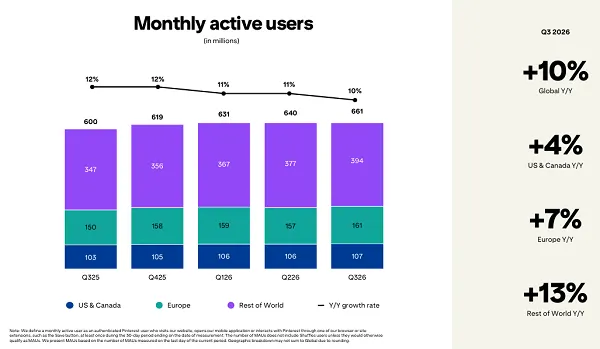
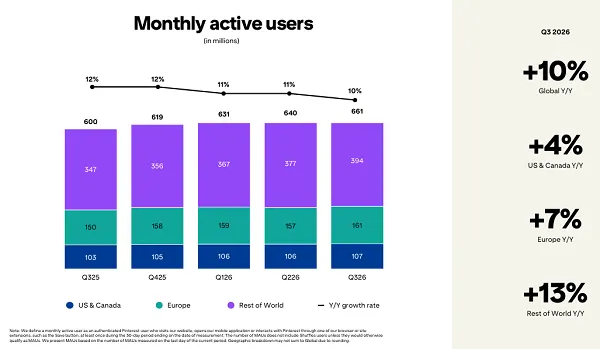
Pinterest has officially released its financial and operational results for the third quarter of 2026, showcasing a robust period of expansion characterized by accelerated user acquisition, double-digit revenue growth, and deeper integration of artificial intelligence across its advertising and discovery ecosystems. Published on October 29, the Q3 report revealed that the visual discovery platform successfully added 21 million global monthly active users (MAUs) compared to the previous quarter, pushing its total global user base to an impressive 661 million.
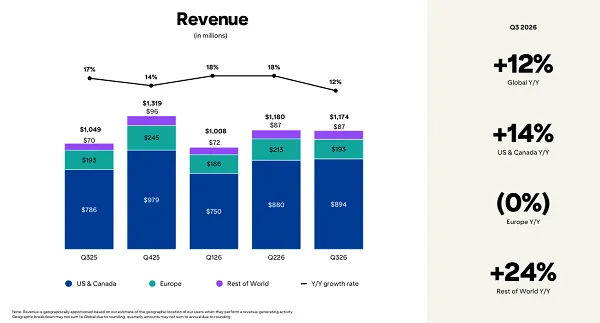
The latest figures highlight a particularly encouraging rebound in European user growth—a region that had experienced stagnation and slight declines over the preceding year. Furthermore, the company reported $1.17 billion in revenue for the quarter, marking a 12% increase year-over-year. As digital platforms increasingly lean into artificial intelligence to optimize user retention and ad performance, Pinterest’s latest financial disclosures offer a comprehensive look at how a niche discovery-driven network can scale effectively while maintaining its core identity.
Main Facts and Financial Performance
The core of Pinterest’s Q3 2026 earnings report centers on steady financial gains and substantial audience expansion. Total revenue reached $1.17 billion, reflecting a 12% year-over-year growth trajectory. Regionally, the United States and Canada continue to be the platform’s primary monetization engines, with revenue in those markets increasing by 14% compared to the same period last year.
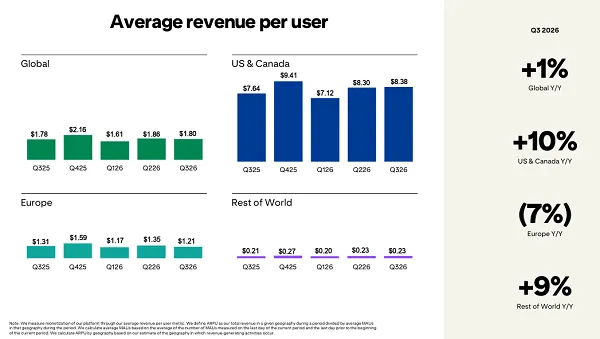
However, international revenue growth faced minor headwinds. Pinterest noted that international financial progress was impacted by evolving regulatory changes across Europe, which specifically complicated cross-border selling frameworks for merchants operating within the European Union. Despite these regulatory hurdles, user growth in Europe bounced back significantly, ending a prolonged period of flatlining metrics.
Globally, the platform added 21 million MAUs quarter-over-quarter. While the vast majority of this numerical growth—approximately 17 million users—stemmed from the "Rest of the World" category, the revitalization of the European market remains vital due to the higher average revenue per user (ARPU) traditionally generated in Western economies. Demographically, Pinterest continues to cement its appeal among younger demographics, revealing in its accompanying earnings notes that Generation Z now accounts for a staggering 57% of its total global audience.
Chronology and Recent Strategic Rollouts
The third quarter of 2026 represents the culmination of a multi-quarter strategy focused on streamlining advertising formats, integrating machine learning, and expanding creator monetization tools. Over the past year, Pinterest has systematically rolled out infrastructure designed to capitalize on high user intent.
In the second quarter of 2026, the platform began heavily leaning into AI-driven performance models to enhance ad relevance. This momentum carried into Q3 with the global rollout of Pinterest’s new programmatic buying solution across all operating regions, broadening the avenues through which enterprise advertisers can purchase inventory.
Additionally, October saw the official launch of visual search ads, a feature designed to place targeted promotions directly within Pinterest search results and close-up Pin views. This launch followed a series of aggressive creator-focused initiatives earlier in the year, including the expansion of sponsored creator Pins and the continuation of branded collaborations—such as the platform’s dedicated showcase program on Roku TV—where creators highlight physical products listed within the application. By bridging the gap between digital curation and physical commerce, Pinterest has systematically prepared its platform to handle the more than 80 billion searches conducted by its users every month.
Supporting Data and Engagement Metrics
A deeper dive into the platform’s operational metrics reveals that user engagement is not only scaling in volume but also deepening in quality. In the U.S. and Canada, in-app activity has noticeably risen across critical foundational pillars: search queries, custom board creation, and outbound click-through rates.
The platform’s advertising efficacy has similarly benefited from technological upgrades. Pinterest highlighted the continuous improvement of its ad relevance metrics, driven by an expanding array of behavioral signals integrated into its broader AI-powered targeting architecture. This technical sophistication allows advertisers to target users based on active aesthetic and lifestyle intents rather than passive scrolling habits.
Financially and demographically, the metrics underscore a platform successfully transitioning into a multi-generational utility. With Gen Z comprising well over half of the audience, brands are finding fertile ground to execute targeted awareness and conversion campaigns. The massive volume of monthly searches—surpassing 80 billion—demonstrates that consumers treat Pinterest less as a traditional social media network and more as a functional visual search engine for real-world projects, fashion choices, and home renovation plans.
Official Responses and Strategic Vision
While Pinterest’s executive team has focused heavily on financial stability and technological integration, company communications emphasize a deliberate philosophical stance regarding screen time and digital wellness. Unlike competitors that engineer their algorithms to maximize endless scrolling and trap user attention indefinitely, Pinterest has actively marketed its utility as a bridge to real-world experiences.
The company’s strategic vision involves encouraging users to find inspiration online and then step away from their screens to execute those ideas in the physical world. This philosophy has guided Pinterest’s restraint regarding radical, disruptive artificial intelligence updates. Rather than deploying experimental generative features that alienate its core user base, Pinterest has confined its AI implementations primarily to discovery, visual search optimization, and ad-targeting relevance.
Broader Impact, Industry Implications, and Challenges
Pinterest’s Q3 2026 performance arrives at a complex juncture for the digital advertising and social media industries. As platforms universally grapple with the economic and technical realities of artificial intelligence, Pinterest faces both opportunities and vulnerabilities.
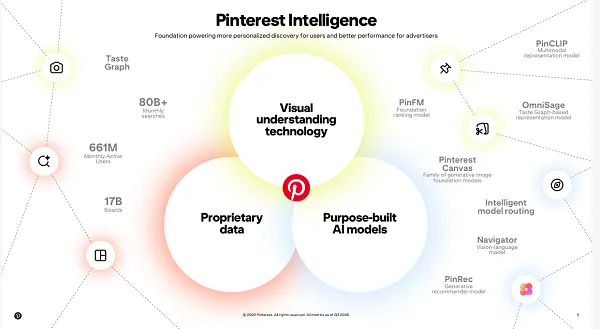
On one hand, the successful deployment of programmatic buying solutions, visual search ads, and AI-driven ad targeting has proven that the company can grow its top-line revenue without compromising user experience. By aligning ad placements with high-intent search behavior, Pinterest provides a brand-safe environment that contrasts sharply with the chaotic ad ecosystems found on short-form video platforms.
On the other hand, the platform is not entirely immune to broader industry trends. Most notably, Pinterest is currently contending with an influx of AI-generated content—often colloquially referred to as "AI slop"—clogging up user feeds. Because Pinterest relies heavily on pristine, authentic visual curation and human-driven aesthetic inspiration, the proliferation of low-quality, automated imagery has emerged as a prominent concern among its user base.
The challenge facing Pinterest, much like its industry peers, is finding a delicate equilibrium: leveraging advanced machine learning to maximize ad revenue and content discovery while strictly mitigating the overuse and misuse of generative tools. As a visual-first platform, Pinterest’s long-term reputation will depend heavily on its ability to preserve the integrity of human creativity. Whether the company will implement stricter technical barriers against AI-generated content in upcoming quarters remains a critical question for advertisers and investors alike as the platform marches toward the close of fiscal year 2026.