Pew Research Center stands as a cornerstone of modern data-driven journalism and social science, operating from its headquarters at 901 E St. NW, Suite 300, in Washington, D.C. Since its inception, the organization has carved out a unique space as a nonpartisan "fact tank," dedicated to providing the public with unbiased insights into the issues, attitudes, and trends that define contemporary society. By eschewing policy advocacy and political posturing, the Center has become a primary resource for policymakers, journalists, and global citizens seeking to understand the shifting landscape of human demographics, political behavior, and technological evolution.
The Foundations of Nonpartisan Inquiry
The institutional philosophy of Pew Research Center is rooted in the conviction that informed democratic discourse requires high-quality, nonpartisan data. As a subsidiary of The Pew Charitable Trusts, the Center benefits from a stable funding structure that allows it to maintain a focus on long-term trends rather than short-term news cycles. This structural independence is critical to its mission; by refusing to take policy positions, the Center preserves its credibility across the ideological spectrum.
The Center’s methodology is diverse, encompassing a wide range of techniques including public opinion polling, demographic analysis, and computational social science. This multidisciplinary approach ensures that the organization can tackle complex global challenges—from the erosion of democratic norms in international affairs to the rapid integration of artificial intelligence into the workforce—with a high degree of analytical rigor.
Core Research Domains and Global Impact
The breadth of the Center’s research is categorized into several distinct pillars, each designed to capture the nuance of modern life. These pillars include Politics & Policy, International Affairs, Immigration & Migration, Race & Ethnicity, Religion, Age & Generations, Gender & LGBTQ issues, Family & Relationships, Economy & Work, Science, Internet & Technology, and News Habits & Media.
Politics, Policy, and International Affairs
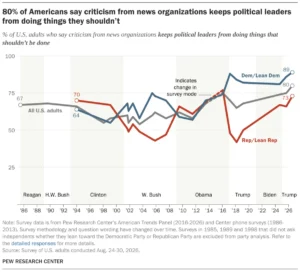
In an era of intense political polarization, the Center’s political research serves as a vital barometer for the health of democratic institutions. By tracking partisan divides, the Center provides data on how voters’ attitudes toward government, the judiciary, and electoral integrity are evolving. Simultaneously, its International Affairs arm offers global perspectives, frequently surveying citizens in dozens of countries to compare how international perceptions of global powers shift over time.
The Digital Frontier: Technology and Media
Perhaps no area of study has become more critical in the last decade than the Center’s work on Internet & Technology. As social media platforms become primary vectors for information and misinformation, the Center’s "News Habits & Media" research has provided foundational data on how Americans consume news. This research is instrumental in understanding the "filter bubble" effect and the decline of traditional journalistic gatekeepers.
Historical Context and Evolution
The history of Pew Research Center is one of constant adaptation to the changing ways in which data is collected. Founded in the 1990s as a project within The Pew Charitable Trusts, it was formally established as a distinct entity to provide a more focused look at public opinion.
- 1990s: The Center began by focusing primarily on traditional telephone-based polling, which remained the gold standard for social science for decades.
- 2000s: As the digital revolution took hold, the Center expanded its purview to include the societal impacts of the internet, mobile telephony, and the rise of the millennial generation.
- 2010s: The organization pivoted to address the challenges of declining response rates in telephone surveys, pioneering new methodologies such as the American Trends Panel (ATP).
- 2020s: Today, the Center has integrated advanced computational methods and high-volume data analysis to keep pace with the digital transformation of society.
Methodological Rigor: The Modern Toolkit
The transition from telephone surveys to online probability-based panels represents one of the most significant shifts in the Center’s history. The American Trends Panel (ATP) is the current engine of much of the Center’s domestic research. By recruiting a representative sample of adults through rigorous mail-based sampling, the Center ensures that its data remains statistically sound even in an age where cold-calling is increasingly ineffective.
Beyond polling, the Center’s "Methodological Research" division is a hidden engine of the institution. This team constantly experiments with survey design to account for social desirability bias, the challenges of non-response, and the ethics of using large-scale web-scraped data. This commitment to transparency—often publishing full methodology reports alongside their findings—sets the industry standard for research ethics.
Data-Driven Insights: A Snapshot of Current Trends
The data produced by the Center consistently serves as the primary citation for major legislative debates and academic literature. For instance, their long-running tracking of the "generation gap" has fundamentally changed how economists and political scientists understand the wealth disparity between Baby Boomers and younger cohorts like Gen Z.
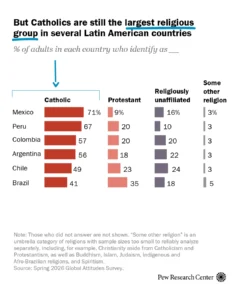
Furthermore, their demographic projections regarding global religion and migration patterns provide the empirical bedrock for humanitarian planning and geopolitical risk assessment. By quantifying trends that might otherwise be discussed only in anecdotal terms, the Center provides a common language for debate.
Institutional Response and Public Responsibility
While the Center does not offer policy solutions, its research often creates a mandate for action. When the Center releases data on the widening partisan gap in news consumption, for example, it implicitly challenges media organizations to reconsider their editorial strategies. When it reports on the decline of religious affiliation in the United States, it provides religious institutions with the necessary data to adjust their outreach strategies.
The leadership of the Center has frequently emphasized that their role is not to tell the public what to think, but to provide the tools for the public to think for themselves. In a media environment saturated with opinion-led content, the Center’s focus on the "what" and "why" of social data acts as a necessary corrective to emotional or ideologically charged reporting.
Broader Implications for Global Society
The impact of the Center’s work extends far beyond the Beltway. By providing comparable data on international attitudes, the Center allows observers to see how local issues—such as the rise of populism—are actually symptoms of global phenomena. This comparative research is crucial for understanding the interconnectedness of modern societies, where a technology policy change in Silicon Valley or a demographic shift in Europe can have ripple effects worldwide.
Moreover, the Center’s commitment to "computational social science" acknowledges that the modern world is too complex to be mapped by surveys alone. By combining large-scale data sets with qualitative interviews, they are able to bridge the gap between abstract numbers and human experience. This is perhaps best exemplified in their work on the changing structure of the American family, where the shift from nuclear households to more diverse arrangements is tracked not just through statistics, but through the lived realities of diverse groups.
Looking Toward the Future
As artificial intelligence begins to reshape how data is gathered and interpreted, the Pew Research Center is positioned to be a primary arbiter of truth. The challenges of the next decade—climate change, AI-driven automation, and the further fragmentation of the public square—will require the same level of nonpartisan, empirical focus that the Center has provided since its founding.
By remaining committed to its core values—non-advocacy, transparency, and scientific rigor—the Center provides a lighthouse in an often turbulent informational sea. Whether analyzing the implications of a new religious movement or the impact of a shifting labor market, the organization remains an essential participant in the global conversation. As long as there is a need for objective facts in the face of political and social complexity, the work conducted at 901 E St. NW will continue to be a vital public good.
In conclusion, the Pew Research Center serves not just as an information provider, but as a stabilizing force in the democratic process. By meticulously documenting the evolution of public thought, they allow society to see itself clearly, warts and all. Their research remains a testament to the belief that even in a post-truth era, facts matter, and they remain the most effective tool we have for building a more informed, cohesive, and resilient global society.