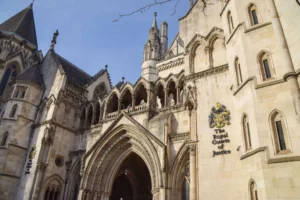
The Oslo District Court has delivered a decisive preliminary ruling in favor of Norwegian media organizations, halting Meta Platforms’ controversial implementation of new terms and conditions that would have granted the tech giant sweeping rights to scrape publisher content for artificial intelligence development and commercial operations. The court ordered that the legality of Meta’s updated terms must undergo formal judicial review before they can take effect, imposing a 1 million Norwegian kroner (£81,000) cost penalty on the social media conglomerate.
This legal milestone represents the tip of the spear for an unprecedented, cross-border coalition of news publishers, copyright associations, and regulatory bodies challenging the dominant platforms over intellectual property rights in the generative AI era. The dispute centers on contractual changes introduced by Meta that publishers argue force an untenable binary choice: surrender copyrighted material for uncompensated AI training and product enhancement, or delete their accounts and forfeit critical distribution channels necessary to reach digital audiences.
Chronology of the Dispute and Escalation
The friction between Meta and the global publishing ecosystem intensified in October when the company announced sweeping updates to its terms of service for Facebook and Instagram. Initially scheduled to take effect on October 30, the amendments sent shockwaves through international newsrooms.
By October 27, Norwegian publishers represented by the Norwegian Media Businesses’ Association (Mediebedriftenes Landsforening, or MBL)—which encompasses major groups such as Schibsted, Amedia, Polaris, Mentor Media, Dagens Næringsliv, NRK, and TV2—filed an urgent request for a temporary injunction in the Oslo District Court. Facing intense international pushback and looming regulatory scrutiny, Meta announced a temporary delay of the implementation date to November 20.
Despite this pause, MBL pursued its injunction to secure a definitive legal firewall. On October 28, the Oslo District Court ruled in favor of the publishers, validating concerns over the legality of the unilateral contract modifications. Meta spokesperson Andy Stone subsequently confirmed that the company would engage in formal consultations with industry groups and leaders, noting that the rollout would be delayed further if consultations extend past the November deadline.
Industry-Wide Mobilization Across Scandinavia and Beyond
The legal action in Norway is mirrored by a synchronized wave of resistance across Europe and North America. In Denmark, the national newspaper association Danske Medier and the Danish Press Publications’ Collective Management Organisation (DPCMO) jointly petitioned the national competition authority. In Sweden, publisher associations—led by Utgivarna—formally reported Meta to competition watchdogs, warning that legal action will follow if domestic regulators or the European Commission fail to enforce fair market practices.
Thomas Mattsson, vice chair of Utgivarna, noted the historic solidarity of the media sector. Industry leaders, journalists’ unions, and copyright bodies have united in a manner previously unseen, aiming to compel Meta to negotiate fair compensation for journalistic investments.
In North America, the response has been similarly sharp. Paul Deegan, president and CEO of News Media Canada, characterized Meta’s terms as a unilateral act of aggression against creators of text, imagery, and audio. News Media Canada, alongside WAN-IFRA and the U.S.-based News/Media Alliance, published coordinated op-eds across major international publications, urging global competition authorities to intervene before November 30 to prevent the uncompensated appropriation of copyrighted works.
Regulatory Interventions and Political Pressure
As litigation unfolds, government authorities and lawmakers are mobilizing to scrutinize Meta’s market power. In the United Kingdom, the Competition and Markets Authority (CMA) confirmed it has engaged in urgent discussions with Meta, noting that it will closely monitor the company’s revised timeline and assess whether further interventions are necessary.
Political figures have also entered the fray. U.S. Senator Adam Schiff of California dispatched an official correspondence to Meta CEO Mark Zuckerberg, demanding a comprehensive response regarding the company’s strategy for addressing publisher grievances by November 2. Schiff criticized Meta’s policies as a gross abuse of dominant platform power, arguing that corporations cannot bypass federal intellectual property protections and fair market competition through fine-print modifications in terms of service agreements. Furthermore, lawmakers and regulators have demanded that Meta provide explicit technical guarantees protecting established content barriers, such as paywalls and robots.txt protocols, which dictate whether automated web crawlers can access site data.
Implications for Intellectual Property and the Generative AI Economy
The core grievance of the global media industry lies in the economics of modern journalism. Producing high-integrity news requires substantial capital investment in human capital, investigative reporting, and editorial oversight. Publishers contend that allowing artificial intelligence developers to harvest this intellectual property without authorization or financial remuneration undermines the sustainability of the free press.
Although Meta previously removed explicit references to AI model training from its revised terms following initial backlash, publishers argue that the updated language—which permits scraped data to be used for developing, improving, researching, and maintaining advertising and business products—still encompasses the company’s generative AI ecosystem. While Meta has expressed a willingness to respect robots.txt exclusion standards, these commitments remain absent from the binding legal terms of service, leaving publishers vulnerable to unilateral policy reversals.
The outcome of the Norwegian court proceedings and concurrent international regulatory reviews will likely establish a critical legal precedent. If courts and competition authorities successfully block Meta’s terms, it could redefine the boundaries of data harvesting, intellectual property rights, and platform accountability in the digital age. Conversely, failure to intervene could accelerate a trend where digital gatekeepers unilaterally absorb publicly hosted creative works, fundamentally altering the economic model of global journalism.