In what legal experts and digital rights advocates are calling a watershed moment in the global battle against digital abuse, law enforcement authorities in New York have executed a sweeping operation to dismantle a vast network of illicit deepfake pornography platforms. The Manhattan District Attorney’s Office announced the seizure of 12 distinct domain names that operated as commercial hubs for the unlawful publication, distribution, and monetization of nonconsensual intimate imagery (NCII). This decisive legal action represents perhaps the largest coordinated state-level takedown of explicit synthetic media infrastructure since generative artificial intelligence technologies entered mainstream public awareness nearly a decade ago.
The targeted websites functioned as aggressive repositories for manipulated media, hosting explicit videos and images that falsely depicted approximately 1,200 individuals. The vast majority of the victims identified in these repositories were women, spanning a wide array of high-profile professions including actors, musicians, social media influencers, elite athletes, prominent activists, and elected political figures. By leveraging sophisticated facial-mapping algorithms, operators of these domains substituted the faces of real public figures into pre-existing adult film footage, creating hyper-realistic, multi-minute explicit videos designed to deceive viewers, damage reputations, and generate revenue through web traffic and affiliate marketing schemes.
The Evolution and Proliferation of Generative Artificial Intelligence Abuse
The emergence of commercially viable deepfake technology in late 2017 fundamentally transformed the landscape of online harassment and digital exploitation. What began as a niche technical hobby requiring specialized coding knowledge and high-end computational hardware has rapidly evolved into an automated, highly accessible shadow industry. Today, a sprawling network of unregulated applications, messaging-platform bots, and specialized websites allows bad actors to instantly "undress" photographs or synthesize high-definition graphic videos with minimal technical proficiency.
While nonconsensual digital forgery affects individuals across all demographics—frequently impacting private citizens, students, and everyday women within localized or private social media forums—the targeting of public figures has brought widespread systemic vulnerabilities to the forefront of public discourse. Celebrities, corporate executives, and lawmakers have increasingly spoken out regarding the profound psychological distress, professional fallout, and systemic barriers associated with attempting to scrub synthetic intimate content from the internet once it has been indexed by search engines and shared across peer-to-peer networks.
Prior to the recent Manhattan seizures, legal avenues for victims were notoriously sluggish and fragmented. Federal frameworks in the United States, such as the emerging Take It Down Act, have slowly begun to offer statutory mechanisms for expedited removal and domain seizures. However, local state-level prosecutors have historically lacked the unified jurisdictional reach or technical infrastructure required to disrupt transnational web hosting networks. The successful intervention by the Manhattan District Attorney’s Office signals a significant shift in judicial willingness to aggressively apply state criminal procedure laws to cross-border digital offenses.
Chronology of the Investigation and Enforcement Operations
The culmination of the Manhattan District Attorney’s investigation unfolded in late January, when independent digital researchers and cybersecurity watchdogs observed sudden changes to the homepages of several prominent deepfake distribution hubs. Rather than displaying their typical catalogues of synthetic pornography, the targeted domain names displayed standardized seizure notices informing visitors that the web addresses had been commandeered pursuant to judicial warrants authorized by the New York State Supreme Court.
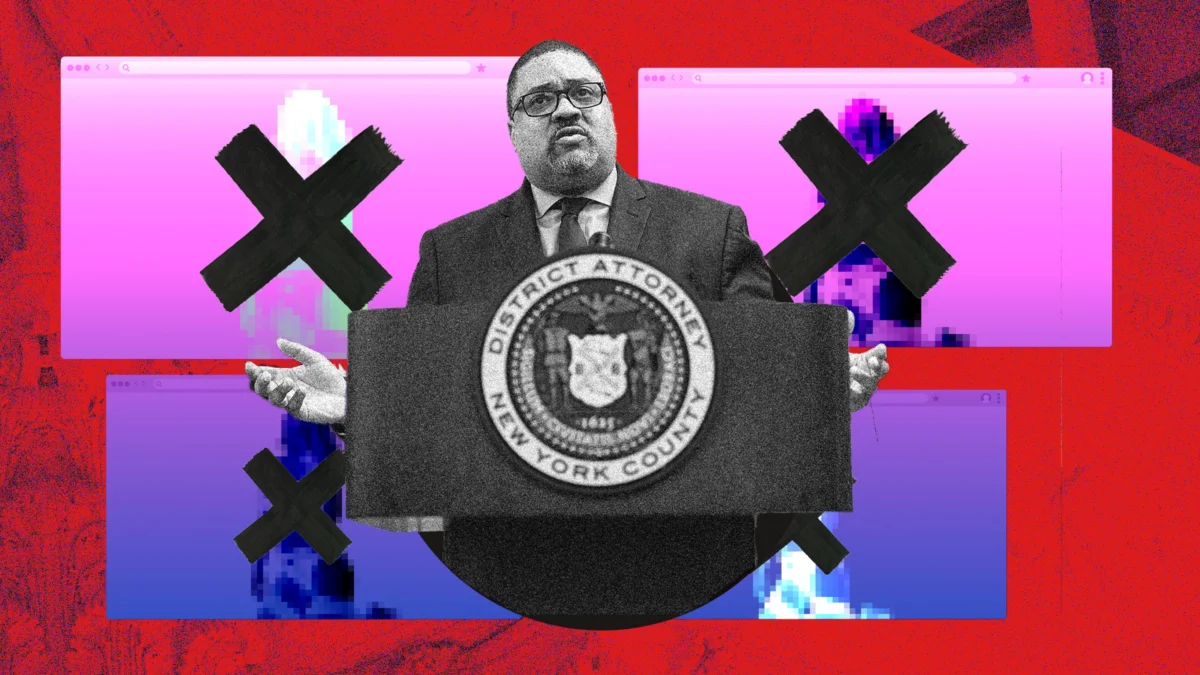
Days after the initial digital blackout, Manhattan District Attorney Alvin Bragg formally detailed the scope of the operation during a press briefing. The investigation revealed that the seized domains had collectively accumulated millions of views, with certain archived pages indicating continuous operation since 2018. Investigators noted that the infrastructure relied heavily on search engine optimization strategies, utilizing explicit keywords such as "celebrity sex" and "real deepfakes" to drive organic web traffic. Furthermore, forensic analyses of the seized servers indicated that much of the content hosted on these 12 domains consisted of mirrored archives originally popularized by notorious legacy deepfake platforms—such as the now-defunct MrDeepFakes website—which had previously been forced offline only after investigative journalists unmasked their principal operators.
Supporting Data and the Scale of Political Targeting
The breadth of the targeted material underscores the indiscriminate and pervasive nature of modern synthetic exploitation. According to data released by the Manhattan District Attorney’s Office and corroborated by digital threat research organizations, the 1,200 identified victims included prominent figures spanning international jurisdictions.
Benjamin Shultz, lead researcher at the non-profit American Sunlight Project, highlighted the alarming integration of political targets within the seized networks. According to Shultz’s ongoing tracking of deepfake abuse targeting governance structures, at least two of the seized websites featured dedicated user profiles for elected officials. These profiles systematically organized manipulated content into standardized directories complete with the politicians’ full names, official titles, and grids of corresponding forged videos. Broader academic and threat-intelligence tracking indicates that over the past year, more than 50 European politicians, nearly two dozen United States lawmakers, and high-profile figures in the United Kingdom have been directly targeted by coordinated campaigns utilizing similar hosting infrastructures.
The economic engine driving these websites remains a critical focus for investigators. Many of the seized platforms operated on tiered membership models, charging users subscription fees for priority access to high-definition video conversions, or monetizing heavy traffic flows through unregulated advertising networks and illicit affiliate marketing programs. The sheer volume of engagement—with individual videos frequently surpassing tens of thousands of views—demonstrates the lucrative nature of commercialized NCII platforms.
Official Responses and Expert Analysis
The legal action has drawn widespread praise from digital safety advocates, legal scholars, and artificial intelligence policy researchers, who view the coordinated seizure as a vital blueprint for future enforcement actions.
"These horrific violations of privacy follow victims into their careers and personal lives and take an immense toll on emotional and mental well-being," stated Manhattan District Attorney Alvin Bragg during his public announcement. Bragg emphasized that the office’s cybercrime bureau is actively pursuing leads to identify both the administrative operators of the seized domains and the individual users who uploaded malicious content, urging any additional victims to step forward.
Leonie Oehmig, a researcher at the Institute for Strategic Dialogue (ISD) who specializes in synthetic nonconsensual intimate imagery ecosystems, characterized the development as a monumental achievement for cross-jurisdictional enforcement. "The takedowns are a significant win in the fight against synthetic nonconsensual intimate imagery," Oehmig noted, pointing out that initial technical checks confirm the domains remain entirely inaccessible even when users attempt to bypass regional blocks via virtual private networks (VPNs). "This shows that meaningful, coordinated enforcement is achievable even where regulation itself remains fragmented across jurisdictions."
Broader Implications and the Path Forward
Despite the undeniable success of the Manhattan District Attorney’s operation, industry experts caution that seizing a dozen web domains is merely a tactical victory in a much larger structural war. The digital forgery ecosystem is decentralized, highly resilient, and quick to adapt to law enforcement pressure. When major domains are seized, operators frequently migrate their databases to decentralized hosting providers, utilize offshore proxy services, or pivot their distribution networks to encrypted messaging applications and alternative social media channels.
Consequently, policy analysts argue that comprehensive mitigation strategies must transcend reactive domain seizures. Effective intervention requires a multi-pronged approach that targets every tier of the illicit synthetic media supply chain. This holistic framework encompasses tightening legislative restrictions on the developers of "undressing" software applications, compelling domain registrars and cloud infrastructure providers to enforce stricter terms of service, dismantling the payment processing networks and affiliate marketing schemes that monetize the abuse, and establishing rapid-response mechanisms for victims to intercept synthetic media before it achieves viral distribution.
As artificial intelligence models continue to advance in fidelity and decrease in operational cost, the legal and technical boundaries surrounding digital likeness rights will remain heavily contested. For now, the New York seizures have established a formidable precedent, demonstrating that state-level judicial authorities possess the legal instruments necessary to disrupt the commercialized distribution of deepfake pornography and hold bad actors accountable for digital violations of privacy.