The architecture of online discovery is undergoing a structural transformation. For over two decades, traditional search engines like Google and Bing served as the undisputed gateways to the internet, indexing web pages based on domain authority, keyword matching, and backlink profiles. Today, however, a massive cohort of digital consumers—led predominantly by Generations Z and Alpha—are bypassing the traditional search bar entirely. Instead, they are turning to platforms like TikTok, Instagram, LinkedIn, YouTube, Pinterest, and Reddit, utilizing social media search engines to query information, evaluate products, and navigate the web using a single thumb on a mobile screen.

This active behavioral shift has profound implications for digital marketers, content creators, and brand strategists. As social networks evolve from casual entertainment feeds into robust information retrieval systems, understanding the distinct ranking mechanics of these platforms has become an absolute business imperative.
The Rise of Intentional Social Discovery

To understand the scope of this phenomenon, one must look at shifting consumer habits documented extensively by research institutions. According to data from the Pew Research Center, roughly 90% of U.S. teens utilize YouTube, while 63% actively engage with TikTok. Furthermore, approximately one in five teens report being on TikTok and YouTube almost constantly. As Generation Alpha matures into their teenage years, they enter the digital ecosystem with these exact expectations, treating social platforms as their primary entry point for everything from local restaurant recommendations to complex technical tutorials.
Recognizing this monumental behavioral change, platform developers have aggressively integrated advanced discovery features. TikTok, Instagram, and YouTube now feature AI-assisted search tools, contextual query suggestions within comment threads, and keyword indexing that reaches far beyond simple hashtags. Search is no longer a secondary or ornamental feature on these apps; it has evolved into a core surface layer.
This consumer preference is driven by the desire for curated, highly visual, and easily digestible results delivered by trusted creators and peers rather than anonymous corporate websites. Consequently, social search frequently outperforms traditional search engines for users seeking inspiration, peer validation, and real-time community consensus.
Contrasting Mechanics: Social Search Versus Traditional SEO

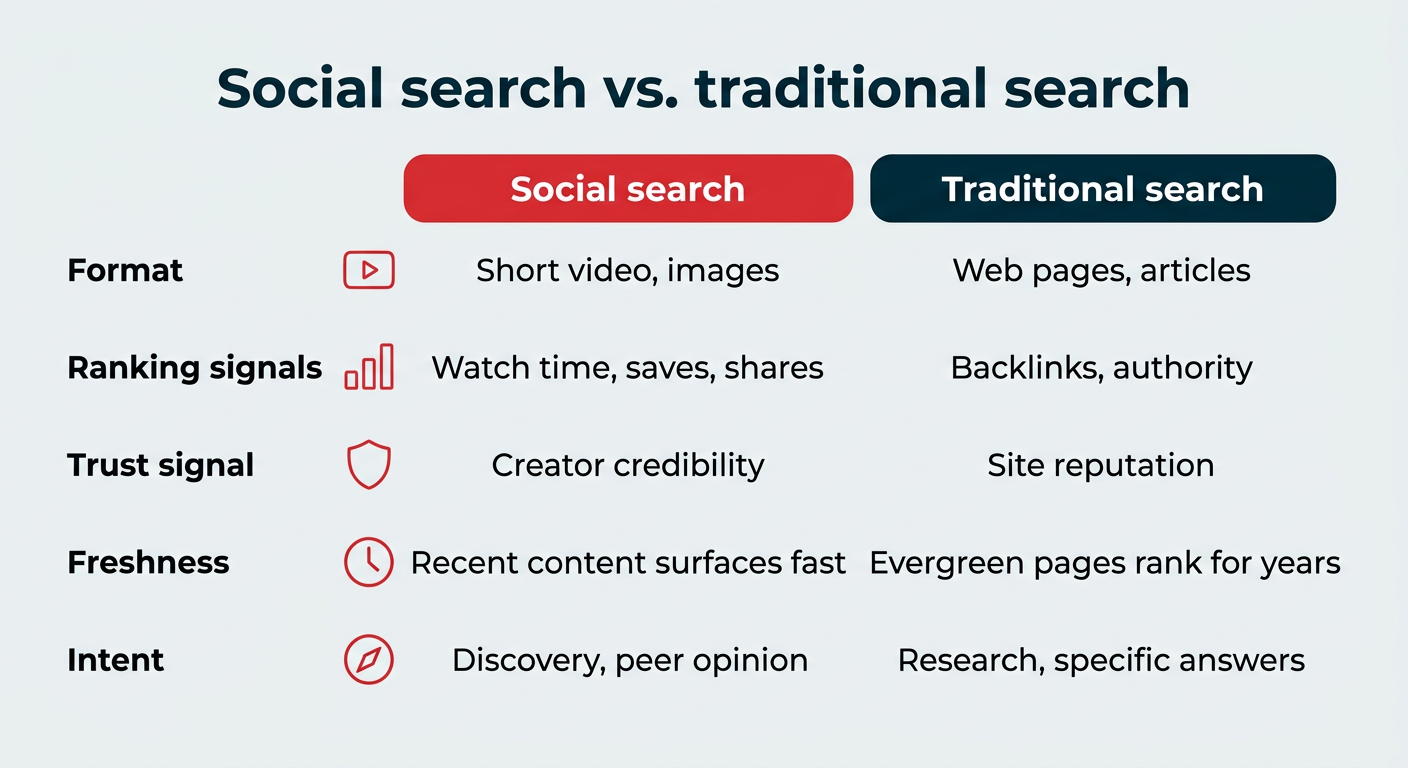
For modern marketers, realizing that social search requires a completely different playbook than traditional search engine optimization (SEO) is critical. While traditional search rewards static web pages, domain authority, and structured data, social search engines prioritize creator credibility, video retention, user engagement, and contextual keywords.
On Google, a page’s ranking heavily relies on external citations and backlink profiles. On platforms like TikTok or Instagram, however, a post surfaces based on keyword placement in captions and on-screen text, audio transcripts, watch time, and robust engagement signals such as saves and shares. Notably, the freshness bias on social platforms is exceptionally high; a brand-new account with zero followers can rapidly outrank an established corporate entity if its piece of content matches user intent and performs exceptionally well against engagement metrics.

Despite these differences, traditional and social search systems increasingly feed into one another. Major search engines now routinely index social media content from platforms like Reddit, TikTok, LinkedIn, and Instagram, displaying them prominently on standard results pages. This means a single, highly optimized social post can secure digital visibility across multiple ecosystems, capturing consumers both when they are casually exploring ideas and when they are actively conducting research.
Platform-by-Platform Breakdown: Decoding the Mechanics

Because search mechanics vary significantly across the digital landscape, a universal optimization checklist rarely yields success. Brands must tailor their strategies to the unique environments of individual platforms:
TikTok: Processing more than three billion searches daily, TikTok relies heavily on natural-language keywords. The platform’s algorithm reads captions, on-screen text, audio transcripts, and even comment sections to contextualize video content. To rank effectively, creators must naturally speak target keywords aloud, display them visually on screen, and incorporate them into descriptive captions.

Instagram: Transitioning far beyond simple hashtags and account handles, Instagram search now processes plain, conversational keywords. Typing queries such as "ergonomic desk setup" yields accounts, Reels, and static posts, with short-form video content typically dominating top positions. By analyzing captions, alt text, and embedded text, Instagram rewards content that matches authentic user language.
LinkedIn: Functioning as the premier search engine for B2B professionals, LinkedIn indexes profiles, company pages, and published articles based on job titles, verified skills, industry classifications, and professional headlines. For corporate entities and individual executives, optimizing these fields ensures visibility when potential clients or partners research vendors prior to initiating contact.

YouTube, Pinterest, and Reddit: YouTube operates as a dual-purpose giant, functioning simultaneously as a premier video-sharing network and the world’s second-largest search engine, where titles, chapters, transcripts, and watch time dictate visibility. Pinterest acts as a specialized visual search engine driven by boards and descriptive pin titles. Meanwhile, Reddit commands massive search momentum, largely because Google frequently surfaces Reddit threads for authentic peer reviews and consumer opinions.
Strategic Implications for Brand Awareness and Competitive Intelligence
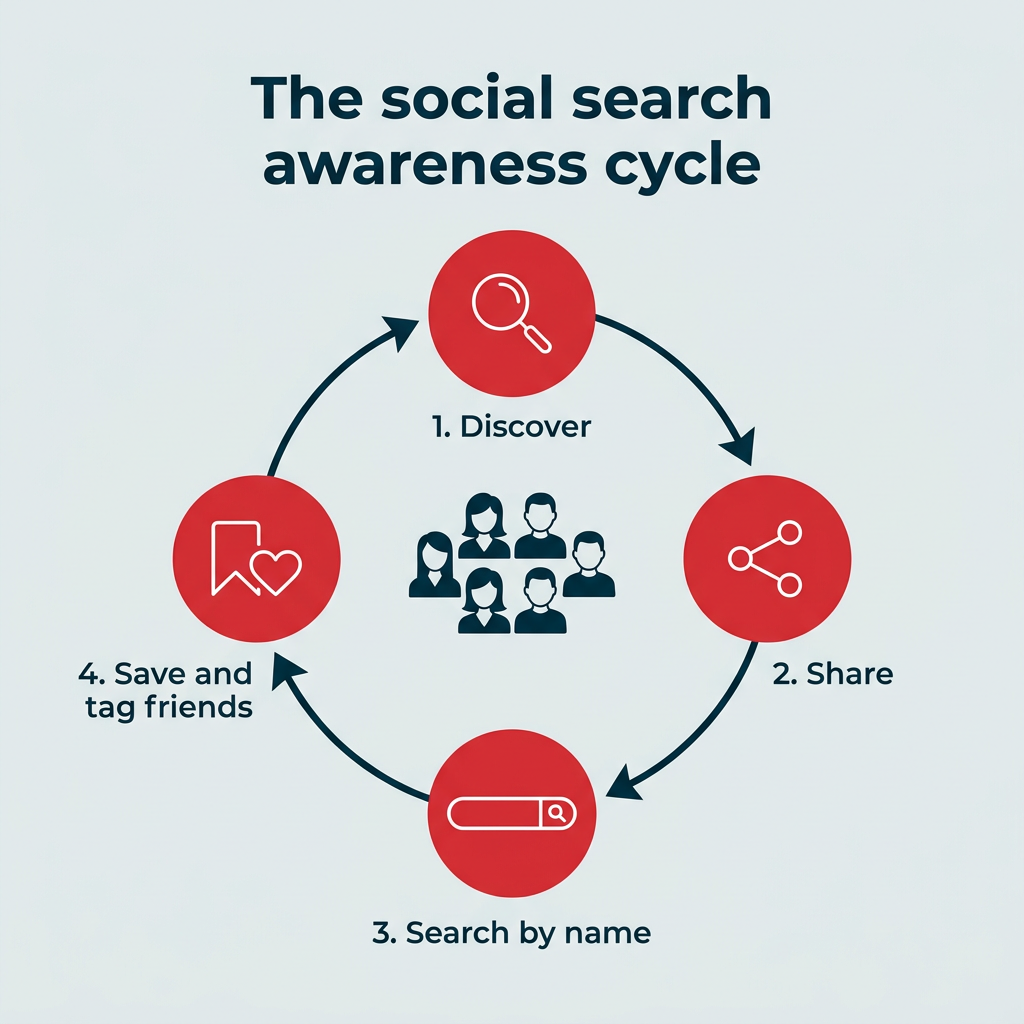
Integrating social SEO into a broader digital marketing strategy yields compounding benefits for brand awareness. Digital natives frequently discover brands through algorithmic feeds or deliberate social lookups, subsequently sharing those discoveries with peers through word-of-mouth. This behavior sparks secondary searches by name, driving traffic to user-generated content and brand-owned profiles alike.
Furthermore, social search serves as an invaluable tool for competitive intelligence. By monitoring the exact keywords, hashtags, and vernacular used by target audiences within specific niches, brands can uncover unmet consumer needs, evaluate competitor positioning, and identify potential brand advocates for influencer marketing campaigns. Analyzing terms such as "alternative to" or "how to fix" provides unfiltered market research directly from the community, completely free of charge.

Best Practices for Social Search Optimization
To elevate content visibility across social search engines, digital strategists should implement a cohesive set of optimization steps:

- Optimize Profiles Comprehensively: Ensure that every profile utilizes descriptive, keyword-rich language within handles, bios, and "About" sections while fully completing all location, category, and contact fields.
- Integrate Natural Keywords: Incorporate relevant search terms organically into captions, on-screen text, and spoken video dialogue to assist platform transcription engines.
- Leverage Location and Accessibility Features: Apply accurate location tags to capture high-intent local searchers and travelers, and utilize detailed alt-text descriptions for images.
- Prioritize Engagement-Driven Metrics: Focus on creating content that prompts users to save and share, as these signals heavily influence long-term algorithmic ranking.
As consumer behavior continues to permanently lean toward mobile-first, decentralized discovery, brands that adapt by treating social networks as fully fledged search engines will secure sustained visibility. By harmonizing social listening tools with rigorous optimization practices, organizations can ensure they are found not just by their existing followers, but by new audiences actively searching for solutions at the earliest stages of the buyer journey.