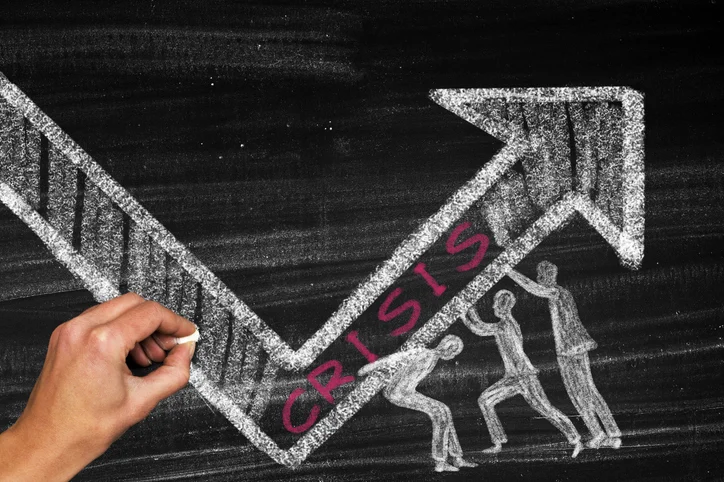
In today’s hyper-connected, 24-hour news cycle, the question for corporate communicators is rarely whether a crisis will strike, but rather when and how severely it will impact operations. While many organizations search for a universal crisis communications playbook, industry experts agree that a one-size-fits-all model is inherently flawed. A global hospital system, a multinational fast-food franchise, and an emerging software-as-a-service (SaaS) startup face vastly different regulatory environments, public expectations, and operational vulnerabilities. Consequently, their crisis protocols must be uniquely tailored to their specific risk landscapes.
Despite these industry-specific variances, foundational commonalities unite every effective crisis management plan. Modern frameworks require clear escalation triggers, explicitly defined leadership roles, pre-approved message anchors, rigorous drills, and a comprehensive post-event evaluation process. As organizations grapple with evolving threats ranging from executive misconduct to artificial intelligence failures, building a dynamic, resilient crisis framework has become a critical boardroom priority.
Defining the Modern Crisis Communication Framework
A crisis communication framework is the institutional architecture an organization utilizes to orchestrate its response when an adverse event occurs. It establishes who must be involved in decision-making, what information needs to be conveyed, and the precise timeline for dissemination. Rather than forcing a communications team to draft statements from scratch under intense pressure, a robust framework combines pre-established escalation triggers, tiered response plans, and pre-approved messaging templates.
According to Linda Barnhart, senior director at strategic communications firm APCO, organizations benefit greatly from instituting a quantitative severity scoring system. By evaluating incidents against an objective scorecard, teams can implement a graduated response plan mapped specifically to the severity level of the event. This ensures that minor operational hiccups do not trigger unnecessary panic, while catastrophic events receive an immediate, enterprise-wide mobilization.
Makini Nyanteh, chief communications officer at the American Institutes for Research, emphasizes that the strongest crisis plans remain fluid rather than rigidly scripted. A modern playbook must clearly articulate an organization’s baseline risks, designate who leads the response under various scenarios, and outline how decisions escalate through the corporate hierarchy. Furthermore, it must identify critical stakeholder audiences, establish approved messaging pillars, and mandate regular simulations before a real-world crisis materializes.
The Anatomy of Proactive Preparation
Establishing an effective framework begins long before a crisis hits. Experts stress the importance of identifying early warning signs and systematically closing the gap between corporate rhetoric and actual business practices. According to Gregg Feistman, professor of practice at Temple University’s Klein College of Media and Communication, most severe crises do not erupt from nowhere; rather, they stem from missed warning signals or inadequate initial explanations. Consequently, comprehensive vulnerability audits must be conducted proactively, rather than reactively in the wake of a disaster.
One of the most persistent vulnerabilities in corporate governance is executive misconduct. Executive crises are rarely sudden anomalies; instead, they are preventable failures that often simmer for months or even years. Too frequently, human resources, legal, and communications departments treat these emerging risks as someone else’s responsibility. A well-designed crisis framework explicitly assigns ownership of these risks before they escalate into public relations disasters.
Recognizing the Tipping Point: Identifying a Brewing Crisis
Understanding the precise moment an issue transitions into a full-scale crisis is essential for timely intervention. Corporate communicators track several key indicators to monitor potential escalations, including sudden spikes in negative social media sentiment, inquiries from tier-one investigative journalists, unusual regulatory inquiries, sudden drops in consumer trust metrics, and internal whistleblowing activity. Integrating these metrics into a continuous monitoring plan allows communication teams to intervene during the incubation phase of a crisis, potentially neutralizing the threat before public exposure occurs.
The Integration of Artificial Intelligence: Risk and Readiness
The rapid adoption of enterprise artificial intelligence has fundamentally altered the crisis landscape, introducing novel categories of risk while simultaneously offering advanced tools for rapid response. AI-driven incidents—such as customer service chatbots hallucinating corporate policies or automated models inadvertently exposing sensitive consumer data—require dedicated protocols.
Katelyn Ringrose, an advisor at the Center for AI Strategy, notes that an AI incident response plan must sit alongside traditional crisis protocols. These plans must define precise technical triggers, operational roles, pre-approved language, and strict ethical guardrails to manage automated system failures swiftly.
Conversely, AI serves as a powerful asset for preparedness. Danielle Grossman, director of communications at the Houston Livestock Show and Rodeo, observes that while AI cannot predict the exact nature of a future crisis, it significantly enhances organizational readiness. Recent research from Microsoft highlights that AI tools can rapidly draft initial holding statements, analyze vast quantities of real-time sentiment data, and model potential outcomes based on historical precedent. However, industry experts caution that while AI accelerates administrative tasks, human strategic thinking, ethical judgment, and stakeholder relationship management remain irreplaceable.
The Post-Crisis Phase: Reflection, Revision, and Rebuilding Trust
A comprehensive crisis framework extends far beyond the immediate containment of an event. Once operational normality is restored, organizations must initiate a formal reflection phase to evaluate the effectiveness of their response and integrate lessons learned back into the playbook.
Karen Naumann-Blevins, an adjunct professor in crisis communications at West Virginia University, points out that the post-crisis period is frequently overlooked in corporate training regimens. While immediate readiness and response dominate preparation, the process of evaluating what worked, revising structural vulnerabilities, and systematically rebuilding institutional trust is vital for long-term brand resilience. Without this feedback loop, organizations risk repeating past mistakes during subsequent emergencies.
Proportion, Strategy, and the "Mount Everest Mindset"
Ultimately, crisis management relies heavily on proportion and foundational decision-making. No communication framework can compensate for a fundamentally flawed business decision. Response strategies must scale appropriately to the actual impact of the situation rather than defaulting to the loudest possible reaction. Furthermore, measurement metrics must track tangible business impacts—such as customer churn, regulatory penalties, and operational downtime—alongside traditional media coverage volume. A noisy social media environment may not necessitate a massive public relations intervention if core business metrics remain stable.
Brand strategy and communications executive Shrita Hernandez underscores that when a crisis exposes a legitimate organizational failing, no statement can completely resolve the issue. Communicators must have a substantive voice in executive decision-making, ensuring they influence the underlying actions rather than merely managing the rhetoric surrounding them.
To ensure readiness when pressure peaks, organizations must cultivate what Tim Gilman, external communications lead at Oshkosh Corp., describes as the "Mount Everest mindset." Drawing an analogy from elite mountaineering expeditions where team members build instinctive muscle memory through surprise simulations, Gilman stresses that crisis frameworks earn their true value through repetition, not paperwork. By the time a crisis strikes, the response should be second nature, allowing the organization to act decisively rather than hesitating in the moment of impact.