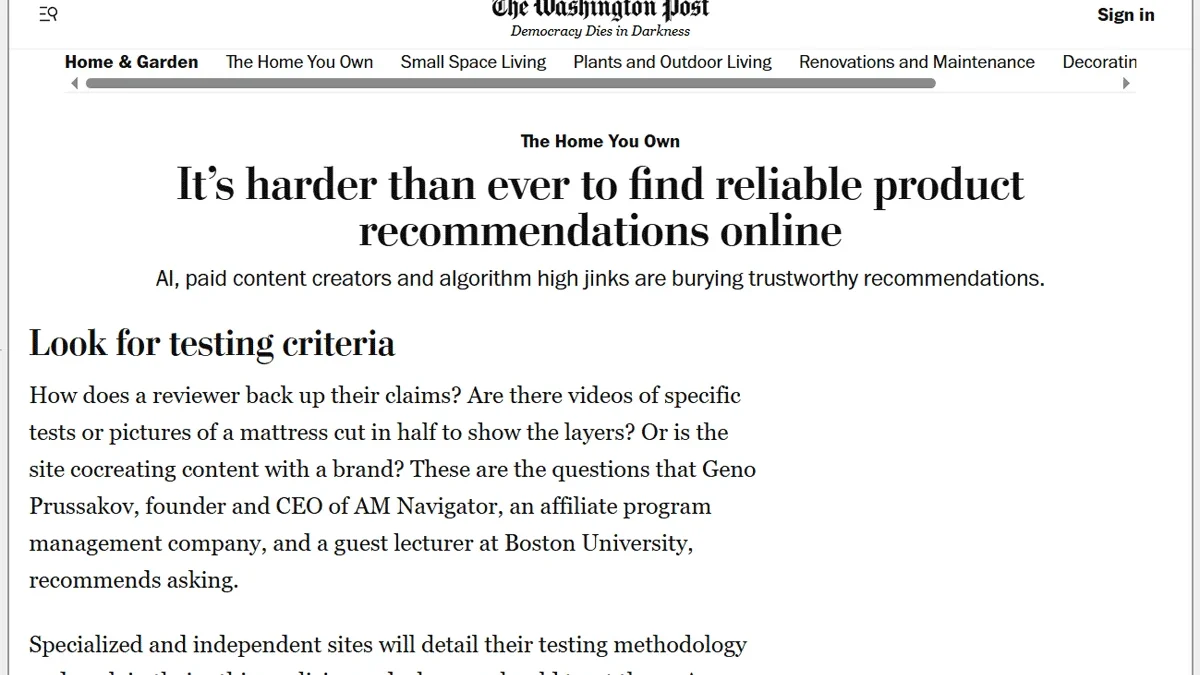
Earlier this year, a prominent feature in The Washington Post brought national attention to a burgeoning digital phenomenon: the widespread publication of online product recommendation lists and curated shopping roundups by major media organizations. While mainstream newsrooms and legacy publishing houses have historically drawn strict boundaries between editorial independence and commercial revenue, the economic pressures of the digital age have radically transformed this landscape. Today, household names in journalism routinely monetize their brand equity by publishing product reviews, "best of" lists, and gift guides embedded with affiliate links that generate commissions when readers make purchases.
This evolution has sparked a broader debate among consumers, SEO experts, and industry analysts regarding the integrity of online product roundups. When a trusted news outlet recommends a specific brand of vacuum cleaner, mattress, or software suite, consumers naturally assume the endorsement is driven entirely by rigorous, objective journalism. However, the financial reality behind these articles is far more complex, involving sophisticated partnerships, commercial negotiations, and performance-based marketing incentives.
The Rise of Search Engine Authority Monetization
Over the past decade, the digital publishing industry has faced severe economic headwinds. Traditional revenue streams, such as print subscriptions and display advertising, have experienced significant declines, prompting media companies to explore alternative monetization strategies. One of the most lucrative avenues discovered by publishers is the monetization of search engine authority.
Because legacy media outlets have spent decades building robust domain authority and high trust metrics in the eyes of search engine algorithms, their articles frequently rank at the very top of search engine results pages (SERPs) for high-intent commercial queries. For example, if a consumer searches for the "best ergonomic office chairs," articles published by major media brands routinely occupy the premier positions. Recognizing this immense organic reach, publishers realized they could capitalize on their search dominance by integrating affiliate links directly into their content.
This shift has blurred the lines between traditional journalism and commercial e-commerce. What began as occasional holiday gift guides has expanded into massive, dedicated e-commerce desks staffed by product reviewers, SEO specialists, and affiliate managers. While these operations generate vital revenue that helps sustain independent journalism, they also introduce potential conflicts of interest that require careful scrutiny from the reading public.
Behind the Scenes: How Major Media Publishers Vet Products
Despite the commercial incentives involved, industry experts emphasize that most reputable media organizations approach affiliate marketing with a high degree of seriousness and professionalism. Operating an e-commerce review desk that damages a publication’s core journalistic reputation can have devastating long-term consequences for brand trust. Consequently, leading publishers typically implement rigorous internal standards before recommending products to their audiences.
Based on industry practices observed by digital marketing and affiliate management agencies, reputable media outlets generally adhere to several key vetting procedures:

- Independent Product Testing: Many established publishers maintain dedicated testing laboratories or rely on a network of subject-matter experts who physically handle, test, and compare products over extended periods rather than merely aggregating manufacturer claims.
- Editorial Independence and Clear Disclosures: Leading outlets maintain a strict firewall between their commercial departments and their editorial staff. Furthermore, regulatory bodies such as the Federal Trade Commission (FTC) mandate clear, conspicuous disclosures informing readers when an article contains affiliate links that generate revenue for the publisher.
- Editorial Guidelines and Fact-Checking: Product roundups are subjected to the same rigorous editing, fact-checking, and ethical oversight as traditional news reporting, ensuring that technical specifications, pricing details, and performance claims are accurate.
- Consumer Feedback Integration: Reputable publishers frequently update their recommendation lists based on long-term user reliability, customer service experiences, and emerging product flaws or recalls.
The Financial Realities: When Commercial Arrangements Influence Rankings
Notwithstanding these internal safeguards, industry analysts acknowledge that the commercial mechanics of affiliate marketing can occasionally introduce biases into product rankings. The relationship between merchants and publishers is not always limited to standard, flat-rate commission structures. In some competitive niches, a product’s placement on a prestigious "best of" list can be influenced by various financial arrangements negotiated between the advertiser and the publisher’s commercial team.
Common financial mechanisms that can subtly sway product visibility include:
- Placement Fees: Upfront fees paid by merchants to guarantee inclusion or prominent positioning within a high-traffic seasonal gift guide or product roundup.
- Inflated Affiliate Commissions: Offering higher-than-average percentage payouts to publishers, incentivizing them to prioritize a specific brand over competitors that offer lower margins.
- Earnings Per Click (EPC) Guarantees: Arrangements where publishers prioritize merchants who demonstrate a proven ability to convert traffic into sales, sometimes squeezing out superior products that lack aggressive conversion optimization.
- Hybrid Compensation Models: Combinations of fixed placement costs and performance-based commissions designed to maximize revenue for both parties.
These financial incentives underscore the reality that while major media reviews can be valuable guides, they operate within a commercial ecosystem designed to generate revenue.
Consumer Empowerment: Four Strategies for Evaluating Online Roundups
Given the interplay between editorial curation and commercial monetization, consumers must approach online product recommendations with a discerning eye. Relying solely on a brand’s reputation is no longer sufficient in an era where search rankings can be optimized for profit. To make informed purchasing decisions, buyers can utilize four practical strategies:
- Cross-Reference Multiple Sources: Never rely on a single recommendation list. Compare reviews across dedicated enthusiast forums, independent testing sites, customer feedback aggregators, and multiple mainstream publications to identify consistent consensus versus outlier praise.
- Scrutinize the Methodology: Look for articles that explicitly detail how products were tested. Vague superlatives ("the best," "our favorite") without supporting data or specific testing metrics should be treated with skepticism.
- Check for Update Timestamps: The e-commerce landscape changes rapidly. Ensure that the product roundup has been recently updated, as older lists may recommend discontinued models or fail to account for newer, superior market entrants.
- Understand the Disclosure Statements: Read the affiliate disclosure typically found at the beginning or end of the article. Knowing that a publisher earns a commission helps contextualize the motivation behind the roundup, reminding the consumer to balance the review with independent research.
Broader Industry Implications and Future Outlook
The maturation of big media affiliate marketing represents a permanent structural shift in the digital publishing economy. As artificial intelligence-generated content and search engine algorithm updates continue to disrupt traditional web traffic patterns, reliance on e-commerce revenue is likely to deepen.
For publishers, the challenge lies in balancing commercial viability with uncompromised editorial integrity. If consumer trust in media-led product reviews erodes due to perceived commercial bias, the core asset that drives search engine authority—brand trust—will be irreparably damaged. Consequently, industry observers anticipate that future regulatory scrutiny and consumer demand for transparency will push publishers toward even stricter ethical standards and clearer separation between sponsored placements and organic editorial reviews.
Ultimately, online product roundups published by major media brands can serve as immensely useful starting points for consumer research, provided they are consumed with an awareness of the financial mechanisms operating behind the scenes. By combining the curated insights of mainstream media with independent verification and rigorous cross-referencing, modern consumers can navigate the digital marketplace with confidence.