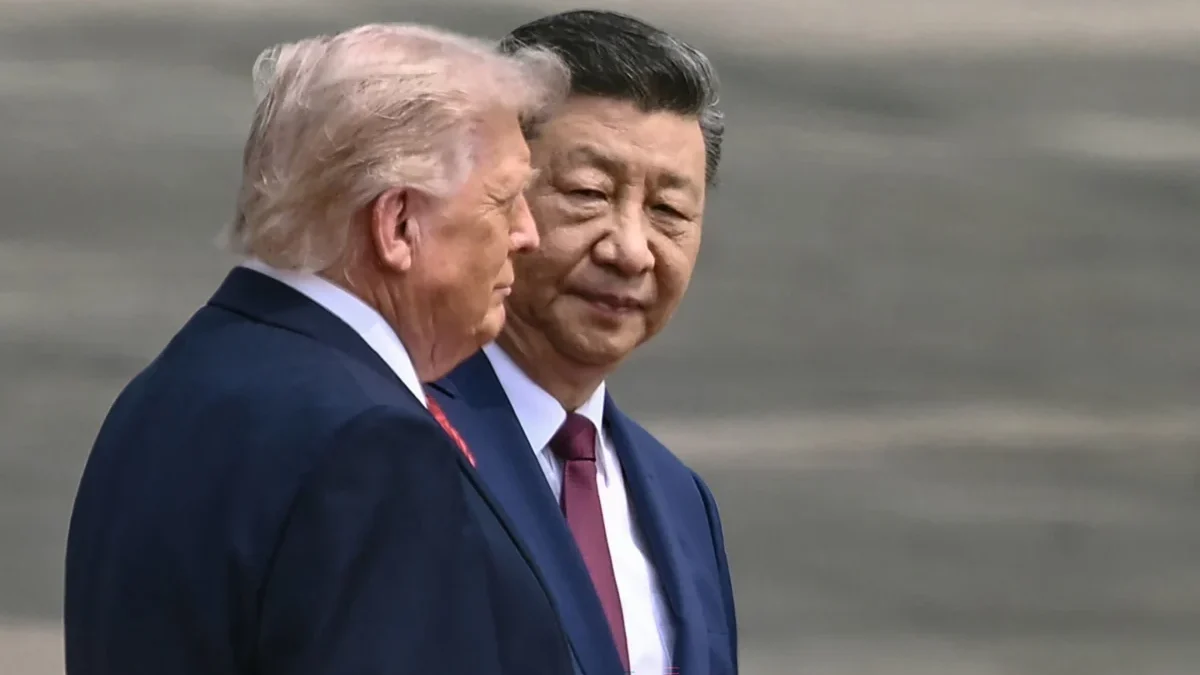
Amid a bustling week of global diplomacy centered around the United Nations General Assembly in New York, the diplomatic community’s attention is overwhelmingly fixed on an upcoming bilateral summit in the nation’s capital. US President Donald Trump and Chinese President Xi Jinping are set to meet face-to-face at the White House in what is widely regarded as the most consequential geopolitical encounter of the year. In a striking departure from standard diplomatic protocol, President Trump is scheduled to personally welcome President Xi at Joint Base Andrews on Wednesday, September 23. US presidents rarely travel to airport facilities to receive foreign counterparts, rendering this personal greeting a deliberate and highly symbolic gesture aimed at setting a tone of high-level engagement before formal negotiations commence.
The groundwork for this high-profile presidential meeting is currently being laid through intensive preliminary talks. A high-level American delegation, led by Treasury Secretary Scott Bessent and United States Trade Representative Jamieson Greer, is engaged in rigorous agenda-setting sessions in Washington with He Lifeng, China’s vice premier of the State Council. These preparatory discussions aim to narrow the scope of differences across multiple complex domains, including bilateral trade, supply chain resilience, technological competition, and critical geopolitical friction points such as Taiwan and the Middle East, where ongoing conflicts threaten broader international stability.
The Expiring Busan Trade Truce and Economic Pressures
At the heart of the economic agenda is the looming expiration of the trade truce brokered during Trump and Xi’s meeting in Busan last year. Scheduled to lapse on November 10, the agreement currently prevents a resurgence of severe trade barriers by keeping aggressive US tariff threats at bay and temporarily freezing port fees. With the deadline rapidly approaching, both administrations face mounting pressure to determine whether to extend the existing framework, renegotiate its terms, or allow the truce to expire and risk renewed economic confrontation.
Negotiators are actively weighing several potential deliverables to justify an extension. Among these proposals are binding purchase targets for vital U.S. commodities, including agricultural products, energy supplies, and commercial aircraft manufactured by Boeing. Furthermore, ongoing discussions involve a potential $30 billion package targeting approximately ten categories of non-sensitive goods, though diplomats have yet to finalize the precise scope and scale of these commodities.
A central point of contention during the Busan negotiations involved China’s temporary export restrictions on rare earth elements and critical minerals. These materials are indispensable for modern industrial ecosystems, underpinning the manufacturing of electric vehicles, defense systems, advanced electronics, and the specialized hardware required for artificial intelligence infrastructure. By temporarily lifting these export limits, Beijing demonstrated its formidable leverage in global supply chains. As the United States seeks long-term security and diversification for its critical mineral imports, China continues to leverage its near-monopoly on these resources to pressure Washington into broader trade concessions.
Chronology of US-China Trade and Diplomatic Engagements
To understand the trajectory of the upcoming Washington summit, it is necessary to examine the timeline of key diplomatic milestones that have shaped bilateral relations over the past several years:
- January to November: Persistent tensions over intellectual property, technology transfers, and market access dominated bilateral exchanges, punctuated by incremental tariff escalations.
- Busan Summit: Presidents Donald Trump and Xi Jinping met in Busan, successfully negotiating a temporary trade truce that lowered immediate tariff threats, paused port fees, and lifted Chinese restrictions on critical rare earth minerals. This agreement was given an expiration date of November 10 of the following year.
- May Beijing Dialogue: President Trump and President Xi held a high-profile summit in Beijing. Despite significant symbolic pageantry, the meeting yielded few concrete policy concessions or structural breakthroughs, underscoring the deep distrust and divergent strategic goals of both superpowers.
- September Preparatory Talks: Ahead of the United Nations General Assembly, Treasury Secretary Scott Bessent and U.S. Trade Representative Jamieson Greer convene with Chinese Vice Premier He Lifeng in Washington to draft the agenda for the upcoming presidential summit.
- September 23 (Upcoming): President Trump personally welcomes President Xi Jinping at Joint Base Andrews prior to their formal bilateral negotiations at the White House.
- November 10 (Upcoming): The expiration date of the Busan trade truce, creating a hard deadline for the extension or renegotiation of bilateral economic agreements.
The Frontier of Artificial Intelligence and National Security
Beyond traditional manufacturing and agriculture, the summit will address the rapidly evolving domain of artificial intelligence development and national security. According to Treasury Secretary Scott Bessent, AI safety and governance will feature prominently on the bilateral agenda. This inclusion responds directly to sustained lobbying from corporate leaders and technology executives, though the broader business community remains deeply divided on desired regulatory outcomes.
Beijing has consistently pushed for the United States to ease restrictions on Chinese technology firms, particularly concerning advanced semiconductors and data center infrastructure. Conversely, domestic pressures within the United States present a complex paradox. While a growing chorus of scientists and safety advocates urge a coordinated slowdown in advanced AI development to manage systemic risks, prominent voices within Silicon Valley warn that deceleration could cede technological supremacy to Beijing.
President Trump has largely dismissed domestic calls for stringent federal AI regulation, complicating the administration’s negotiating posture. Consequently, AI safety discussions are inextricably linked to broader trade talks concerning export controls on computer chips, lithography equipment, and advanced computing materials.
Geopolitical Flashpoints: Taiwan, Iran, and Global Influence
While economic and technological issues dominate the foreground, underlying geopolitical flashpoints threaten to derail diplomatic progress. The sensitive status of Taiwan remains a persistent tripwire in US-China relations. Beijing has repeatedly warned that any formal authorization of new U.S. arms sales to Taiwan could prompt Chinese officials to withdraw from the summit entirely. Despite these warnings, diplomatic channels remain open, with delegations expected to address secondary issues, including China’s economic and diplomatic ties with Iran and the status of detained foreign nationals in both jurisdictions.
Both nations are engaging in what analysts describe as global strategic maneuvering, exercising influence across secondary chessboards in regions such as Africa and Latin America. Washington is actively pursuing broader market access, reliable critical mineral supply chains, and security assurances. Simultaneously, Beijing seeks relief from crippling tariffs and technology export bans. Analysts suggest that both superpowers are intensely motivated to compartmentalize their disputes, ensuring that regional conflicts over Taiwan and maritime security do not entirely rupture their interdependent economic relationship.
Expert Analysis and Expectations for the Summit
As the global community looks toward the White House meetings, international trade analysts caution against expecting a comprehensive grand bargain. The fundamental structural competition between the two economic giants limits the likelihood of sweeping resolutions.
"I think there will be some show of deliverables because of the fact that it’s a presidential summit coming, but I don’t feel like we’re on the verge of some sort of breakthrough," Anna Ashton, a China trade analyst and founder of Ashton Intelligence, observed in comments to CNBC. "I think status quo is probably both sides’ general best expectation."
This measured outlook reflects the reality of modern US-China relations. While both administrations possess powerful incentives to project stability and secure tactical wins—such as extending the trade truce or establishing frameworks for AI safety communication—deep-seated strategic rivalries ensure that the underlying competition will persist long after the delegations depart Washington.