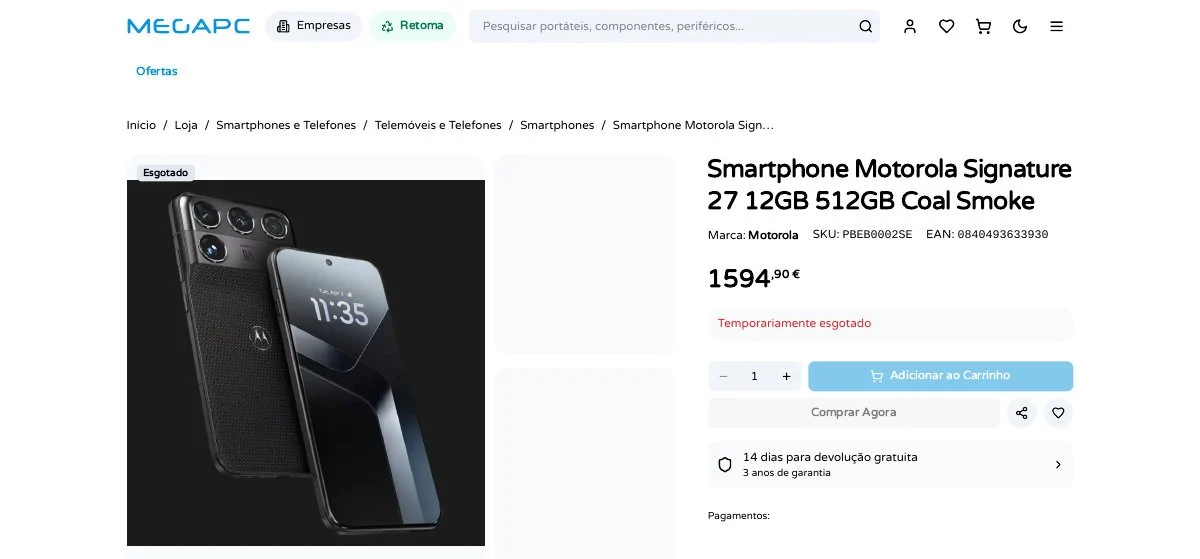
The mobile technology sector has been set abuzz following the emergence of early retail listings for two of Motorola’s most anticipated upcoming flagship devices. Portuguese retailer MegaPC has published product pages for the Motorola Signature 27 and the enigmatic Motorola Razr Flex, offering the most concrete evidence to date regarding the pricing and hardware configurations of these handsets. While Motorola officially teased the Signature 27 during Qualcomm’s Snapdragon Summit last month, these new listings bridge the gap between initial hardware announcements and the commercial availability of the company’s next generation of mobile computing power.
A New Standard in Flagship Hardware
The Motorola Signature 27, which serves as the direct successor to the current Signature series, is positioned at the intersection of luxury craftsmanship and high-performance engineering. According to the MegaPC listing, the device will retail for €1,594.90. For this premium price point, consumers are slated to receive 12GB of RAM paired with a generous 512GB of internal storage. The specific variant listed appears in a sophisticated "Pantone Coal Smoke" finish, signaling Motorola’s continued commitment to its long-standing design partnership with the Pantone Color Institute.
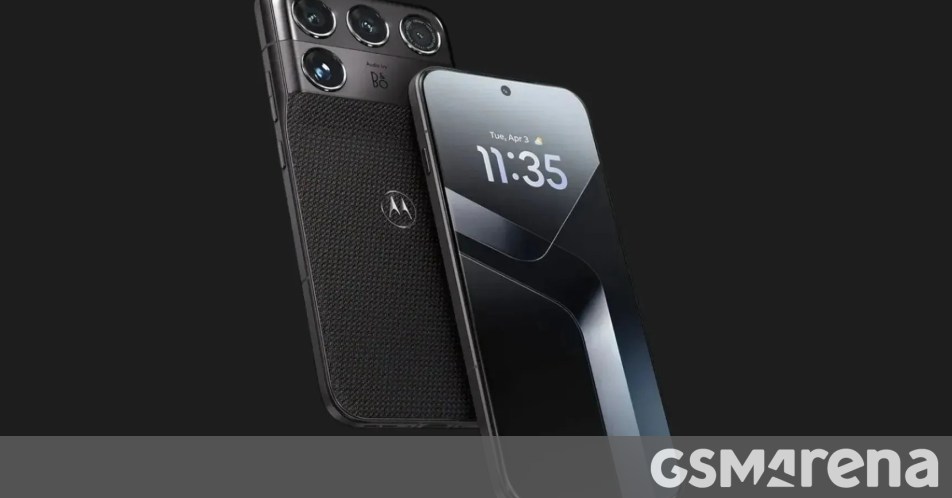
The technical specifications revealed in the listing confirm that the Signature 27 is built to compete at the absolute top tier of the smartphone market. At the heart of the device lies the Qualcomm Snapdragon 8 Elite Extreme Gen 6 chipset. This processor is expected to leverage advanced 3nm architecture to provide significant gains in both computational throughput and power efficiency compared to the Snapdragon 8 Gen 4 series. To manage the thermal output of such a potent SoC, the device incorporates a sophisticated 3D vapor chamber cooling system.
The camera array is perhaps the most defining feature of the Signature 27. The device centers its photographic capabilities around a 50MP Sony Lytia 910 main sensor, renowned for its excellent dynamic range and low-light performance. This is bolstered by an ambitious 200MP periscope telephoto lens, an inclusion that suggests a focus on long-range optical clarity and high-resolution cropping capabilities. The hardware is encased in an aerospace-grade aluminum frame with high-durability ceramic glass, and the audio experience is further refined through a partnership with Bang & Olufsen, ensuring that the device caters to audiophile-grade media consumption.
The Razr Flex Mystery
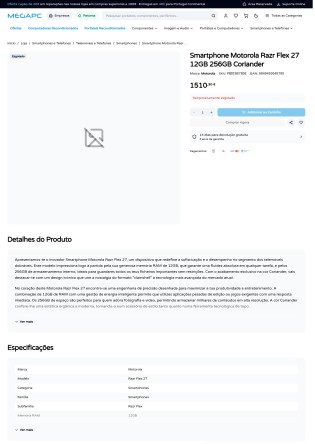
While the Signature 27 follows a predictable evolutionary path for the brand, the listing for the Motorola Razr Flex presents a more complex narrative. The retailer has listed two color variants—"Pantone Coriander" and "Pantone Dark Botanical Garden"—both featuring 12GB of RAM and 256GB of storage, priced at €1,510.90.
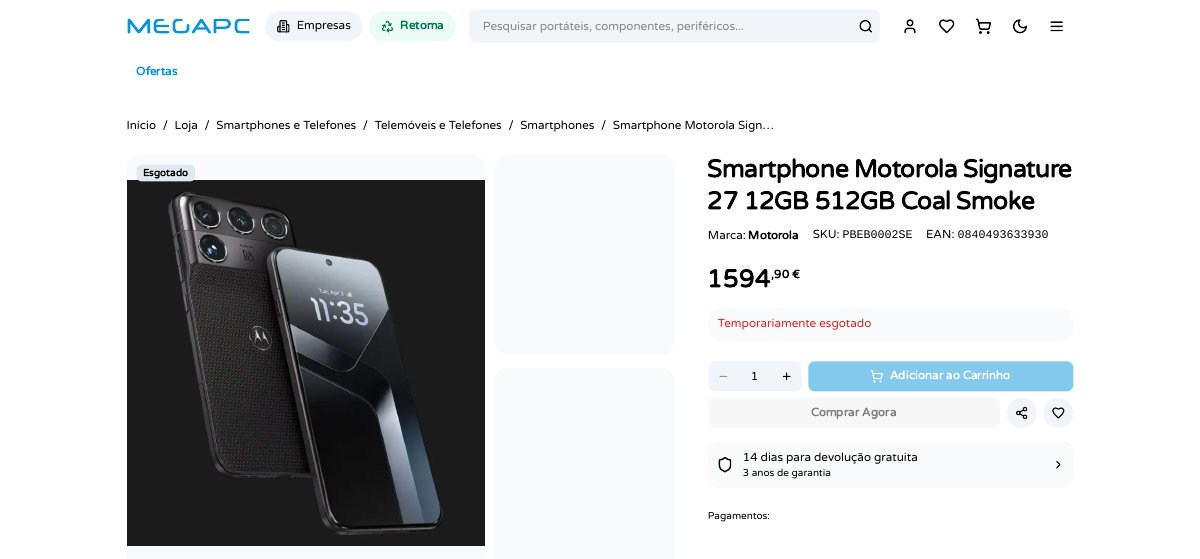
Industry analysts have been tracking the development of the Razr Flex for several months, particularly following its appearance on Geekbench. Recent synthetic benchmarks indicated that the device may run on a Snapdragon 8 Gen 5 chipset and launch with the Android 17 operating system. Despite these high-level specifications, the retail listing contains notable inconsistencies. The product description erroneously refers to the device as a "clamshell," a term traditionally reserved for the vertical-folding Razr 70 series. Given that the Razr Flex is widely expected to be a book-style, wide-format foldable—a direct competitor to the Samsung Galaxy Z Fold series—this terminology suggests that the retailer may be using placeholder text.
Furthermore, the price gap of only €84 between the high-end Signature 27 and the foldable Razr Flex has prompted skepticism among market observers. Such pricing strategies would be uncharacteristic for a premium, large-screen foldable device, which typically commands a higher bill-of-materials cost than standard bar-style flagships. Consequently, the industry consensus is that these listings should be viewed as preliminary placeholders rather than definitive retail configurations.
Chronology of Development
The trajectory of these devices began to solidify during the Qualcomm Snapdragon Summit held in October. Motorola used the event to provide a controlled unveiling of the Signature 27, specifically highlighting the integration of the Snapdragon 8 Elite Extreme Gen 6. This strategic move was intended to align Motorola’s brand identity with the cutting edge of silicon performance.

Following the summit, the digital footprint of these devices began to expand. The Geekbench entry for the Razr Flex, which surfaced in early November, provided the first major clue regarding the potential software environment, confirming that the device would be one of the first to ship with a mature iteration of Android 17. The appearance at MegaPC in late November marks the transition from conceptual leaks to the preparation of retail supply chains. While the devices are currently marked as "temporarily out of stock," their presence in a live database indicates that European distribution channels are already being primed for a late-year or early-Q1 2025 release cycle.
Market Context and Strategic Implications
The release of the Signature 27 and the Razr Flex arrives at a pivotal moment for Motorola. Since the brand’s resurgence under Lenovo’s ownership, Motorola has focused on two distinct pillars: the revival of the iconic Razr flip-phone series and the establishment of the Signature line as a "no-compromise" flagship.
The Signature 27 represents a defensive and offensive play against the incumbent market leaders. By utilizing the Sony Lytia 910 and a 200MP telephoto system, Motorola is signaling that it intends to capture the high-end photography demographic that has historically been dominated by Huawei, Samsung, and Google. The inclusion of aerospace-grade materials and Bang & Olufsen audio tuning serves to differentiate the product in a market where raw internal specifications are increasingly becoming a commodity.

The Razr Flex, meanwhile, represents a necessary expansion of Motorola’s foldable portfolio. While the vertical-folding Razr 70 has been a successful exercise in nostalgia and compact design, the market for "power users" remains dominated by the book-style foldable form factor. Entering this segment is essential for Motorola if it hopes to reclaim significant market share in the premium enterprise and professional sectors.
Analytical Outlook
The pricing, while subject to change, offers a baseline for consumer expectations. An entry price hovering around €1,500 places these devices firmly in the "ultra-premium" category. For Motorola to succeed at these price points, the user experience must match the hardware pedigree. This involves not only the physical build quality but also the long-term viability of software support. The rumored inclusion of Android 17 on the Razr Flex suggests that Motorola is preparing to offer a long-term commitment to its software ecosystem, a critical factor for enterprise customers and long-term flagship users.
Observers should also note the potential for supply chain volatility. The listing of the Signature 27 in only one color and storage configuration, combined with the placeholder nature of the Razr Flex description, suggests that the final retail lineup may be more diverse than what is currently visible. As the anticipated mid-December launch window approaches, more details regarding regional availability, specific camera software features, and bundled accessories are expected to emerge through official press releases.
Ultimately, these listings serve as a testament to the maturation of Motorola’s product cycle. By moving toward a more transparent, albeit still early, retail presence, the company is effectively building anticipation. The success of the Signature 27 and the Razr Flex will depend on how effectively Motorola can translate these high-end specifications into a daily user experience that justifies the substantial investment required from the consumer. With the holiday season approaching and the launch window closing in, the industry remains focused on when the company will move from these accidental leaks to formal, global availability.