Meta Verified represents a significant strategic shift for Meta Platforms Inc., introducing a paid subscription bundle across its flagship social platforms: Instagram, Facebook, and WhatsApp. Launched initially for individual creators and later expanded to businesses, this service provides a blue verification badge along with a suite of enhanced features designed to offer greater security, visibility, and direct support. This initiative positions Meta alongside other major social media entities that have embraced subscription models, reflecting a broader industry trend towards revenue diversification beyond traditional advertising.
The Genesis of Meta Verified: A Strategic Pivot
The concept of verification on social media platforms traditionally served as a mark of authenticity for public figures, celebrities, and prominent brands, often granted free of charge based on strict notability criteria. However, the landscape began to shift dramatically with the introduction of paid verification services by platforms like X (formerly Twitter), which sought to democratize the blue checkmark while simultaneously exploring new revenue streams. Meta, under the leadership of CEO Mark Zuckerberg, quickly recognized the potential of such a model.
Meta Verified was officially announced in February 2023, with initial testing commencing in Australia and New Zealand, before a gradual rollout to other key markets, including the United States, and eventually, most countries where Instagram, Facebook, and WhatsApp operate. This phased deployment allowed Meta to gather feedback, refine its offerings, and scale its infrastructure to support the new service. The move was widely interpreted as a direct response to the success and controversy surrounding X’s subscription service, but also as a proactive measure to address persistent issues such as impersonation, account security, and the long-standing demand for direct customer support from creators and businesses.
Mark Zuckerberg himself articulated the vision, stating Meta’s intention "to build a subscription offering that’s valuable to everyone, including creators, businesses and our community at large." This commitment underscores Meta’s ambition to transform the blue badge from an exclusive status symbol into a utility-driven service, accessible to a wider user base willing to pay for tangible benefits. The financial implications have been substantial; by Q3 2025, Meta reported that its non-ad revenue, significantly bolstered by Meta Verified subscriptions, reached $690 million, highlighting the program’s growing contribution to the company’s financial health and its broader pivot towards a services-oriented economy.

Understanding the Dual Verification System
A crucial aspect of Meta Verified is the coexistence of two distinct verification pathways: the original "legacy" verification and the new paid subscription model. While both result in the familiar blue checkmark, their underlying criteria and associated benefits differ significantly.
Legacy Verification: This traditional method remains available for public figures, celebrities, and established brands who meet Meta’s strict notability requirements. To qualify, an account must be authentic, unique, complete, and notable, often requiring significant media coverage or public recognition. This verification is free of charge and primarily serves to confirm the identity of high-profile entities, protecting against impersonation. However, it does not include the additional benefits bundled with Meta Verified, such as enhanced support or proactive monitoring. Accounts that possess legacy verification can still opt to subscribe to Meta Verified to gain access to these supplementary features.
Meta Verified (Paid Subscription): This pathway is open to individuals and businesses who meet specific eligibility criteria and are willing to pay a monthly fee. It provides the blue badge upon identity verification, signaling to the community that the account is authentic and has undergone a rigorous check. Unlike legacy verification, the paid subscription offers a comprehensive suite of benefits, positioning it as a value-added service rather than just a status symbol.
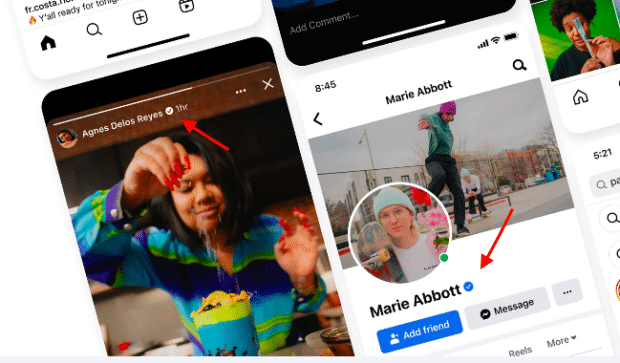
The visual indistinguishability of the two badges has sometimes led to confusion among users, prompting discussions about the evolving meaning of "verification" on social media. Nevertheless, Meta has maintained that both badges signify an authenticated account, ensuring a baseline level of trust. All verified accounts, regardless of how they obtained their badge, are mandated to adhere to Meta’s Community Standards to retain their status, reinforcing the platforms’ commitment to maintaining a safe and respectful online environment.
Pricing Structure and Accessibility
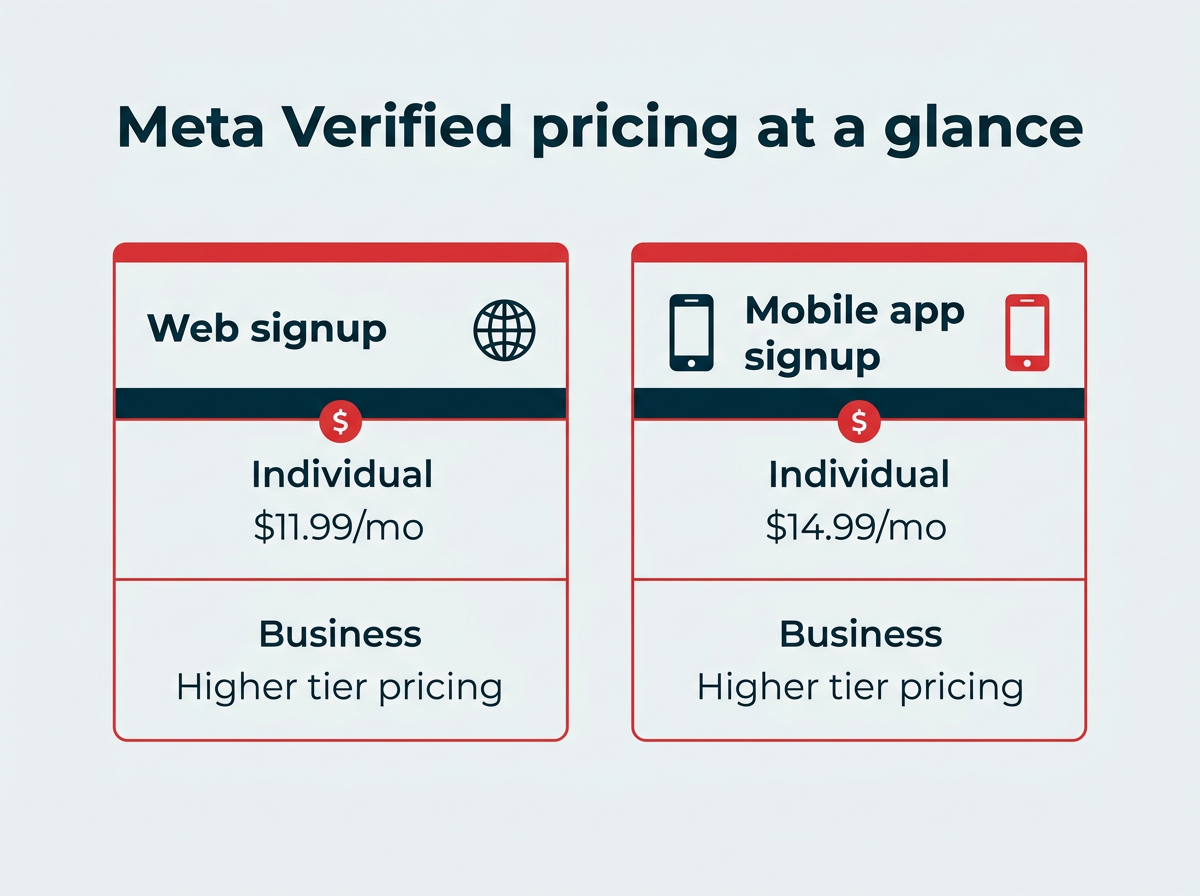
The cost of a Meta Verified subscription varies based on the platform used for signup and the subscriber type (individual or business). This tiered pricing strategy reflects the different operational costs and value propositions associated with each access point.

Individual Pricing:
For creators and individuals, the standard Meta Verified subscription is priced at:
- $11.99 per month when signing up through the Facebook web interface.
- $14.99 per month when signing up through the Instagram or Facebook mobile application (iOS/Android).
The higher cost for mobile app subscriptions is attributed to the fees levied by Apple’s App Store and Google’s Play Store on in-app purchases, a common practice across the digital economy. It is important to note that each platform is billed separately; verifying an Instagram account and a Facebook account requires two distinct subscriptions, even if they belong to the same individual. This granular billing structure allows users to selectively apply verification to the platforms most critical to their online presence.
Business Pricing:
Meta Verified for Business operates on a separate, higher-tiered pricing model. The exact costs are variable, depending on the chosen feature set, the number of add-ons, and the specific region. Businesses can subscribe on Facebook, Instagram, and WhatsApp, with each platform being billed independently. Meta advises businesses to consult the Meta Business Help Center for current rates applicable to their specific country and desired plan level, as these rates are subject to change and regional adjustments. The increased cost for businesses reflects the enhanced features and dedicated support tailored to commercial entities, which often have more complex needs for brand protection, customer engagement, and platform reliability.
This flexible pricing strategy aims to make Meta Verified accessible to a wide spectrum of users, from emerging creators to established enterprises, while accounting for operational expenses and market dynamics.
Core Benefits for Individuals and Creators
Meta Verified is marketed as a comprehensive bundle of advantages, extending far beyond a simple blue checkmark. These benefits are particularly attractive to individuals and creators who rely on Meta’s platforms for audience engagement, content distribution, and personal branding.
-
Verified Badge: The most visible benefit is the iconic blue checkmark, displayed next to the account name. This badge instantly communicates authenticity and credibility, helping users distinguish genuine profiles from impersonators or fan accounts. For creators, it can foster trust with their audience, signaling a legitimate and officially recognized presence on the platform.
-
Impersonation Protection: A significant value proposition of Meta Verified is its proactive account monitoring. Meta employs advanced machine learning systems and a dedicated team of experts to identify and mitigate impersonation attempts. Subscribers benefit from enhanced vigilance against accounts that might mimic their name, profile picture, or content, helping to protect their digital identity and audience from fraudulent activities. This proactive defense mechanism is a crucial safeguard for individuals with growing online audiences who are frequently targeted by malicious actors.
-
Access to Customer Support: One of the most consistently requested features by Meta users has been direct access to human customer support. Meta Verified addresses this by providing subscribers with live chat support agents. This allows for prompt assistance with common issues such as login problems, hacked accounts, content disputes, or technical glitches. For creators whose livelihood depends on their social media presence, this direct line to support can be invaluable in resolving critical issues swiftly and minimizing potential disruption.
-
Exclusive Stickers and Stars: Subscribers gain access to a collection of exclusive stickers for Stories on both Facebook and Instagram, along with unique Reels stickers on Facebook. While a minor aesthetic enhancement, these exclusive creative tools can add a touch of personalization and differentiation to content, appealing to creators who seek unique ways to engage their audience. Additionally, Meta offers a certain number of "Stars" (Facebook’s digital currency) to subscribers, which can be used to support other creators or unlock premium content.
-
Increased Reach and Visibility: Meta has explicitly stated that Meta Verified participants may experience enhanced visibility across Facebook and Instagram. This includes potentially higher placement in comments, search results, recommendations, and suggested accounts. The impact is reportedly more noticeable for accounts with smaller followings, as their content is more likely to be surfaced to new audiences. This boost in organic reach can be a powerful tool for creators looking to expand their audience and grow their presence without relying solely on paid advertising. However, Meta emphasizes that content must still adhere to recommendation guidelines, and understanding the platform’s algorithms remains essential for maximizing engagement.
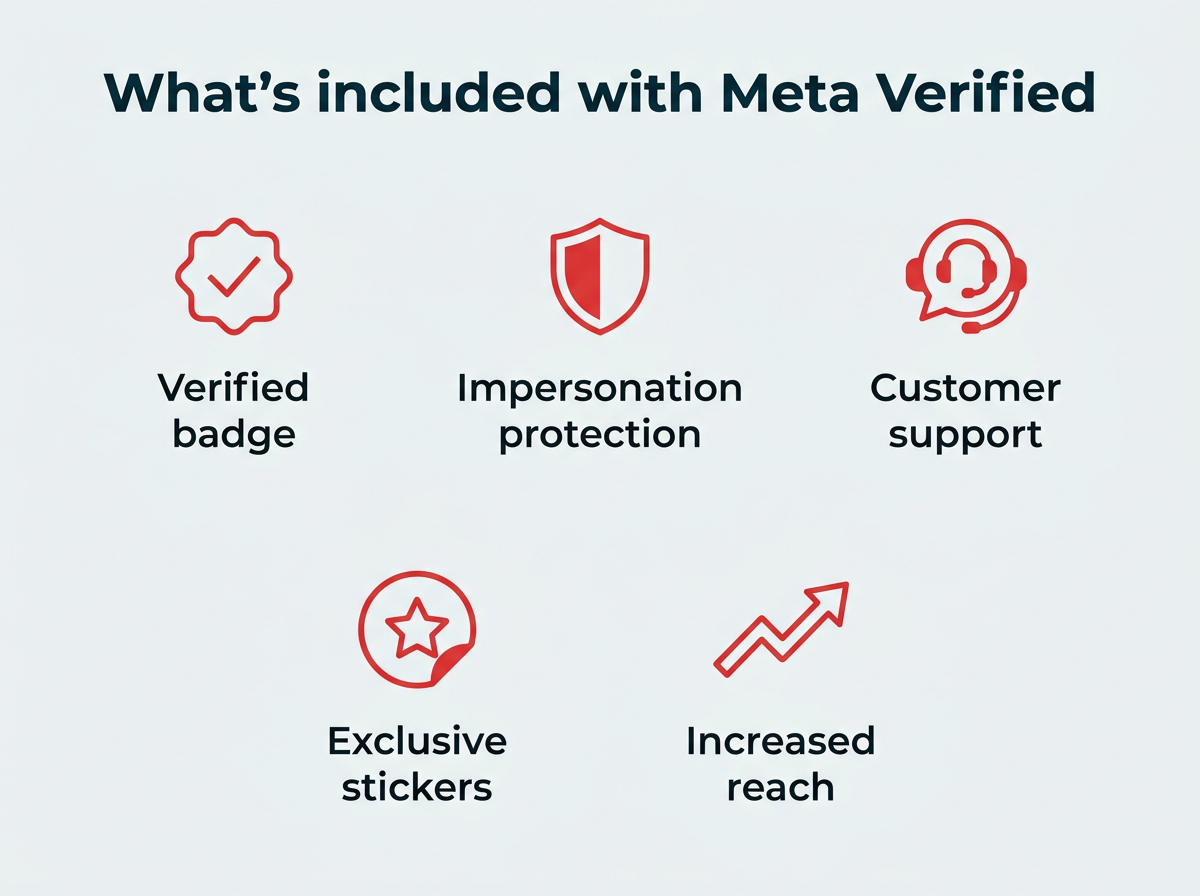
These benefits collectively aim to empower individuals and creators, providing them with tools for authenticity, security, support, and growth in an increasingly competitive digital landscape.
Strategic Advantages for Businesses
Meta Verified for Business extends the subscription model to commercial entities, offering a tailored suite of features designed to enhance brand credibility, customer engagement, and operational efficiency across Facebook, Instagram, and WhatsApp. For many smaller businesses that previously could not meet the stringent notability criteria for legacy verification, this program provides a direct pathway to a blue checkmark and its associated advantages.
A business subscription typically includes:
- Verified Badge: Similar to individual accounts, businesses receive a blue badge that signifies authenticity and trustworthiness. This is particularly important for e-commerce brands and service providers, as it assures customers they are interacting with the official entity, not a fraudulent page.
- Impersonation Protection: Businesses are frequent targets of impersonation, which can lead to reputational damage, customer confusion, and financial losses. Meta Verified offers proactive monitoring to detect and address accounts mimicking a business’s name, logo, or branding, safeguarding the brand’s integrity.
- Access to Account Support: Direct access to human customer support agents through live chat is a critical benefit for businesses. This enables quick resolution of account issues, advertising problems, or technical challenges that could impact sales or customer service.
- Enhanced Profile Features (Higher Tiers): Depending on the subscription tier, businesses may gain access to additional profile enhancements, such as specialized modules for showcasing products, services, or customer testimonials directly on their verified profiles. These features can improve conversion rates and provide a richer brand experience.
- Increased Visibility: While not as pronounced as for individual creators, businesses may also experience a modest boost in visibility, helping their profiles and content reach a broader audience, especially in search and recommendations.
Meta Verified on WhatsApp: The integration of Meta Verified into the WhatsApp Business app and Platform is a significant development for companies leveraging WhatsApp for customer communication. A verified badge next to the business name in chats and on the business profile assures customers that they are interacting with the official company, fostering trust in crucial customer service and sales interactions. Beyond the badge, WhatsApp business subscribers also benefit from impersonation monitoring and dedicated account support, ensuring secure and reliable communication channels. This feature is particularly relevant in markets where WhatsApp is a primary mode of business-customer interaction.
For businesses, Meta Verified represents an investment in brand protection, customer trust, and operational continuity, offering a structured approach to leveraging Meta’s platforms more effectively.
Eligibility Criteria
To maintain the integrity of the verification process, Meta has established clear eligibility requirements for both individuals and businesses applying for Meta Verified. These criteria ensure that only genuine and compliant accounts receive the badge and benefits.
Requirements for Individuals:
- Minimum Age: The applicant must be at least 18 years old.
- Public Profile: The profile must be public and represent a real person.
- Full Profile: The profile must have a complete profile picture (featuring the user’s face) and a bio.
- Real Name: The profile name must match the name on the government-issued identification document.
- Government ID: A valid government-issued photo ID (e.g., driver’s license, passport) is required to verify the applicant’s identity. The name and photo on the ID must match the profile’s name and picture.
- Activity History: The account must have a consistent posting history, demonstrating active engagement on the platform.
- Two-Factor Authentication: Two-factor authentication must be enabled on the account for enhanced security.
- Community Standards Compliance: The account must adhere to Meta’s Community Standards and Terms of Use.
- Previous Verification: The account must not have previously violated Meta’s policies or been penalized for misrepresentation.
Requirements for Businesses:
- Business Profile: The account must be a legitimate business profile on Facebook, Instagram, or WhatsApp.
- Business Verification: The business must complete Meta’s business verification process, which typically involves submitting legal documents and proof of business operations.
- Public Presence: The business profile must be public and complete, with a profile picture, bio, and consistent activity.
- Community Standards Compliance: The business account must comply with Meta’s Community Standards, Commerce Policies, and Terms of Service.
- Two-Factor Authentication: Two-factor authentication must be enabled for the business account.
- No Policy Violations: The business must have a good standing history, without significant policy violations.
These stringent requirements are designed to ensure that Meta Verified remains a credible indicator of authenticity, preventing abuse and maintaining user trust.
Navigating the Sign-Up Process
Applying for Meta Verified is a straightforward process, accessible through multiple interfaces, ensuring convenience for users across different platforms.
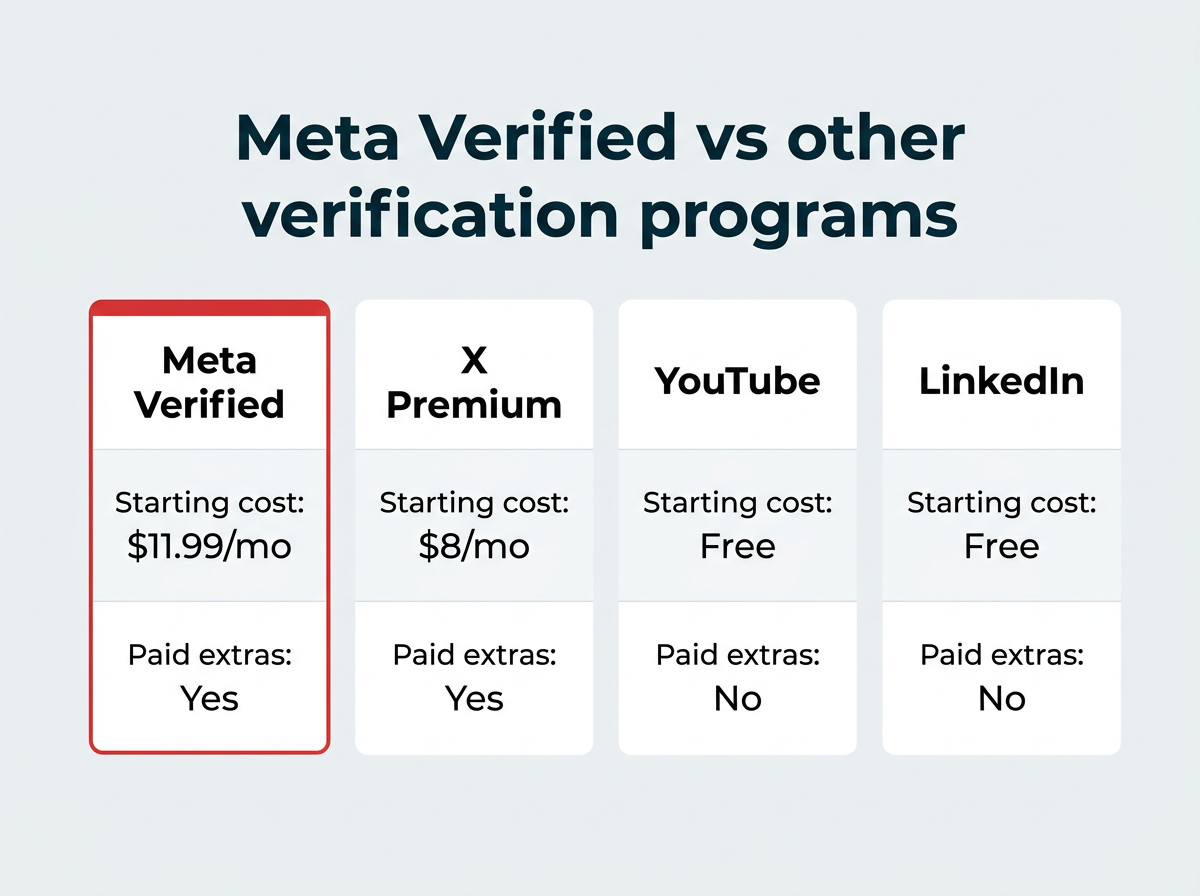
How to Sign Up on Instagram or Facebook (Mobile App):
- Open the Instagram or Facebook app on your mobile device.
- Navigate to your profile and tap the three lines/hamburger icon (for Instagram) or the menu icon (for Facebook) to open the settings.
- Select Settings and Privacy, then tap Accounts Center.
- Under "Accounts Settings," tap Meta Verified.
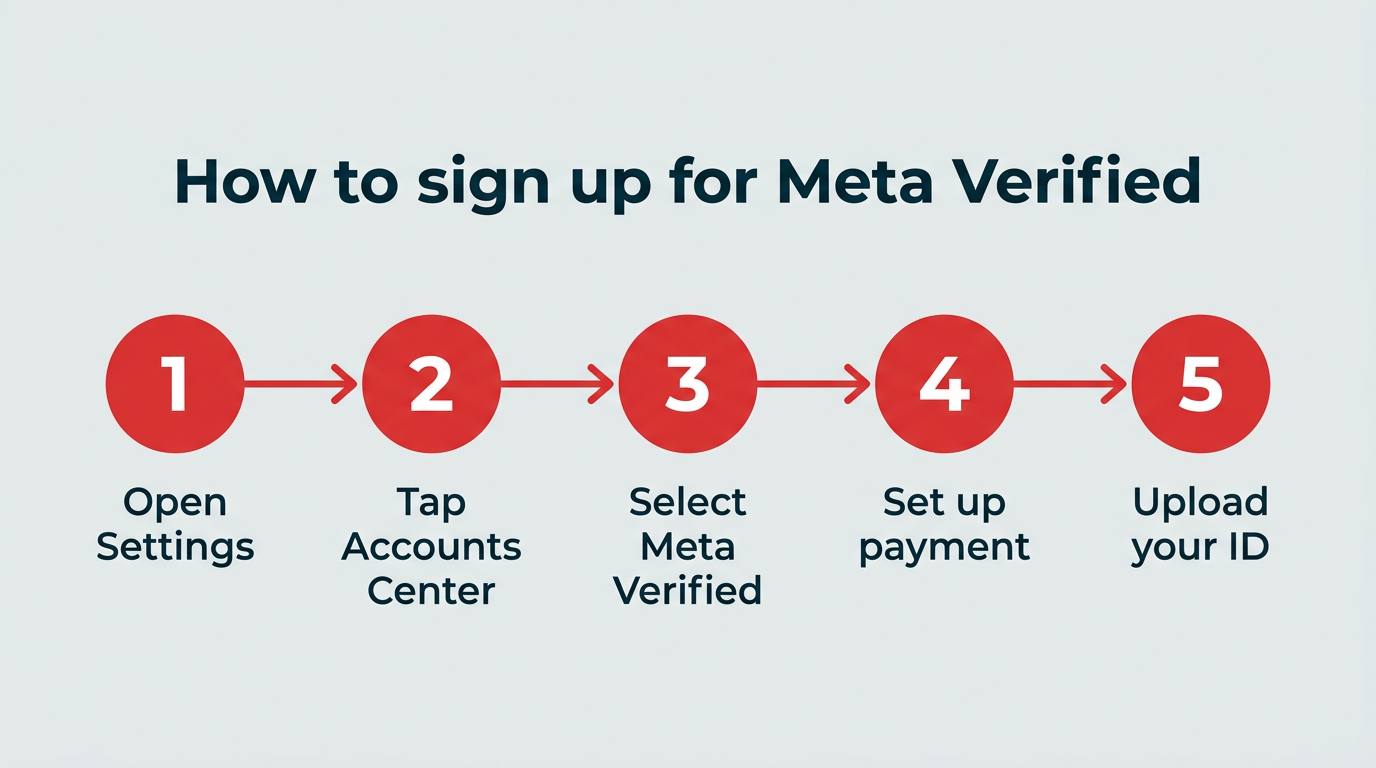
- If eligible, you will see the option to subscribe. Follow the on-screen prompts to select your subscription plan and set up payment.
- You will then be asked to upload a photo of your government-issued ID for identity verification. Ensure the name and photo on your ID match your profile details.
- Complete the process, and Meta will review your application, typically within 48 hours.
How to Sign Up on Facebook (Web):
- Log in to Facebook on your web browser.
- Go to your profile page.
- Click the three dots icon next to your profile name.
- Select Subscribe to Meta Verified.
- Follow the prompts to complete the payment and identity verification steps.
How to Sign Up for Meta Verified for Business:
- Access the Meta Business Suite or the Meta Business Help Center.
- Look for the Meta Verified for Business option.
- Initiate the application process, which will involve verifying your business identity and selecting a suitable subscription tier.
- Provide all required business documentation and complete payment.
Upon successful verification, the blue badge will appear on your profile. It’s crucial to note that once verified, certain profile details such as the username, profile name, date of birth, or profile photo cannot be changed without undergoing the re-verification process, to prevent potential misuse. While the service is called "Meta Verified," individuals and businesses must apply and pay separately for verification on each platform (Instagram, Facebook, WhatsApp) where they desire the badge and benefits.
Analysis: Is Meta Verified a Worthwhile Investment?
The decision to subscribe to Meta Verified hinges on individual and business needs, the extent of reliance on Meta’s platforms, and existing eligibility for free legacy verification. A balanced assessment considers both the advantages and potential drawbacks.
Reasons to Consider Subscription:
- Enhanced Credibility and Trust: The blue badge provides instant recognition of authenticity, which is invaluable for creators building a personal brand and businesses seeking to assure customers.
- Superior Account Security: Proactive impersonation protection offers peace of mind, especially for accounts with a growing public profile that are frequently targeted.
- Direct Customer Support: Access to human support agents can be a game-changer for resolving critical account issues quickly, minimizing downtime and potential losses.
- Potential for Increased Reach: For smaller creators or new businesses, the promised boost in visibility can accelerate audience growth and content discovery.
- Exclusivity and Engagement Tools: Exclusive stickers and Stars offer minor but distinct advantages for content creation and community interaction.
Reasons to Exercise Caution:
- Cost: The monthly fee, especially for multiple platforms or higher business tiers, can accumulate, requiring a clear return on investment.
- Dilution of Verification Meaning: Some critics argue that paid verification diminishes the traditional symbolic value of the blue checkmark, making it a purchasable commodity rather than an earned mark of notability.
- Limited Impact for Established Entities: Very large creators or brands who already possess significant organic reach and legacy verification might find the "increased reach" benefit less impactful.
- Redundancy for Free Verification: If an account already qualifies for free legacy verification, the core badge benefit is already present, making the additional features the primary draw.
- Platform Dependence: Subscribing deepens reliance on Meta’s ecosystem, potentially reinforcing vendor lock-in.
Who Gets the Most Value from Meta Verified:
- Emerging Creators and Influencers: Those actively trying to grow their audience and establish credibility. The enhanced reach and security are particularly beneficial.
- Small and Medium Businesses (SMBs): Especially those in e-commerce or customer service, where trust and direct support are paramount. It offers an accessible path to verification previously out of reach.
- Public Figures or Professionals Without Legacy Notability: Individuals who are prominent in their niche but may not meet broad legacy notability criteria can still gain a verified status and its benefits.
- Accounts Highly Vulnerable to Impersonation: Anyone whose identity or brand is frequently copied or exploited by scammers will find significant value in the proactive protection.
For those who prioritize the badge above all else and meet the notability criteria, pursuing free legacy verification remains an option. However, it’s important to remember that this route provides only the badge, without the accompanying suite of support, security, and visibility enhancements offered by the paid subscription.
Meta Verified in the Broader Social Media Landscape
The emergence of Meta Verified is not an isolated event but rather a reflection of broader social media trends in 2026, particularly the pivot towards diversified revenue streams. Paid verification has become a common feature across major platforms, each offering a distinct bundle of features and eligibility requirements.
Comparison with Other Verification Programs:
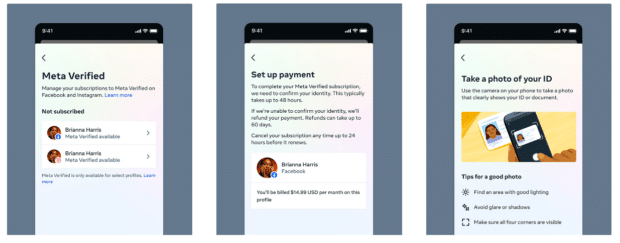
- X Premium (formerly Twitter Blue): Starting at $8/month (web), X Premium offers a blue checkmark, reduced ads, longer posts, an edit button, and reply boosting. Its primary focus is on enhancing the user experience and giving subscribers more control over their content and interactions. Eligibility is generally based on basic activity requirements.
- YouTube Verification: This remains a free service, granting a channel verification checkmark to channels with 100,000+ subscribers or those deemed notable by YouTube. It offers no additional features beyond the badge itself, serving purely as an authenticity indicator.
- LinkedIn Verification: Also free, LinkedIn offers verified identity or workplace badges. Users can verify their identity through third-party services or confirm their employment with specific organizations. This program focuses on professional credibility and network trustworthiness, again without bundled premium features.
Meta Verified positions itself distinctly in this landscape. While it is among the priciest social media subscriptions, it bundles critical services like direct customer support and proactive impersonation protection that free programs like YouTube and LinkedIn do not offer. Compared to X Premium, Meta Verified emphasizes security and support for creators and businesses, whereas X Premium leans more into content creation tools and a premium browsing experience. This differentiation highlights Meta’s strategy to provide a utility-driven subscription, aiming to solve tangible problems for its user base rather than solely offering aesthetic or superficial perks.
The trend towards paid verification underscores the increasing pressure on social media companies to diversify their revenue beyond advertising, explore direct-to-consumer models, and provide enhanced value to power users, creators, and businesses who rely heavily on their platforms.
The Future of Paid Verification
The trajectory of Meta Verified and similar programs suggests a significant shift in how social media platforms will operate and generate revenue in the coming years. As the digital advertising market faces increasing scrutiny and regulatory challenges, subscription models offer a stable, recurring revenue stream.
The future implications of paid verification include:

- Further Feature Expansion: Meta is likely to continue evolving Meta Verified, potentially adding more exclusive features, analytics tools, or advanced support options in higher tiers, similar to how software-as-a-service (SaaS) products develop.
- Increased Monetization for Creators: The "increased reach" benefit, if consistently applied and effective, could indirectly empower creators to monetize their content more effectively by expanding their audience base.
- Enhanced Platform Integrity: While initially controversial, a robust paid verification system could, in theory, lead to a cleaner platform by deterring bots and fake accounts, especially if the identity verification process remains stringent.
- Standardization Across Platforms: As more platforms adopt paid models, a de facto industry standard for what constitutes "verified" in the paid era may emerge, influencing user expectations.
- Ethical Considerations: Ongoing discussions will persist regarding the accessibility of verification, the potential for a two-tiered system of users, and the ethical implications of monetizing authenticity.
In conclusion, Meta Verified is more than just a paid blue badge; it is a strategic investment by Meta Platforms into a subscription-based future, offering a comprehensive bundle of security, support, and visibility benefits to individuals and businesses across its vast ecosystem. While the debate over the value and implications of paid verification continues, its growing financial contribution and widespread adoption signal a new era for social media, where authenticity, support, and enhanced reach come with a price tag.