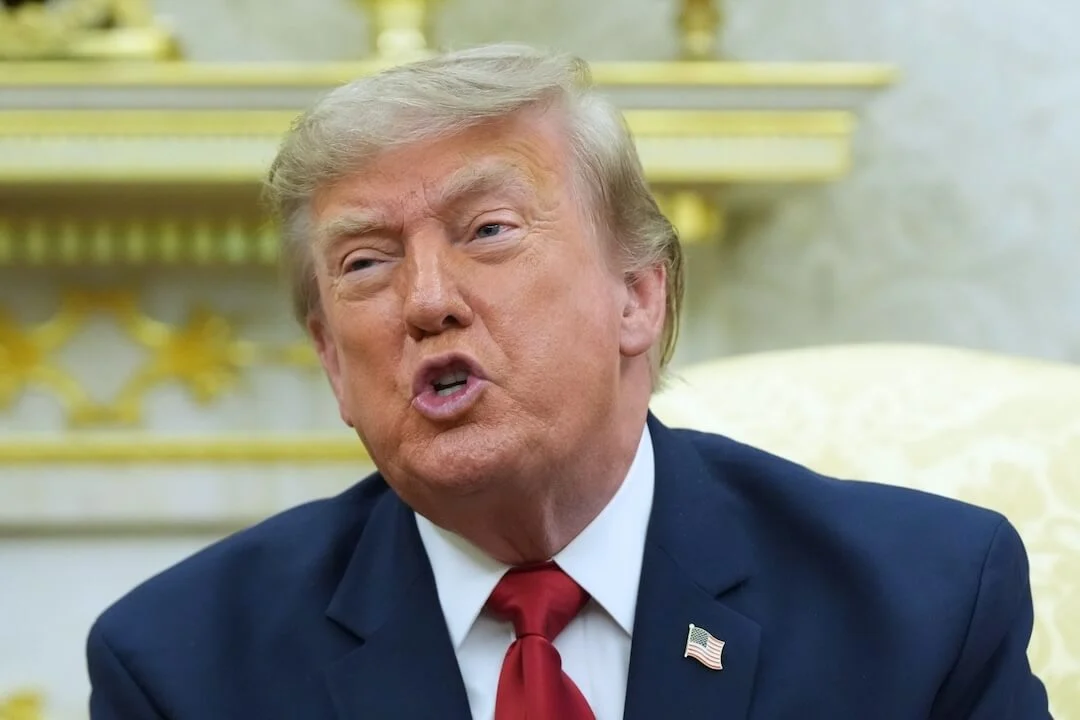
Presidential addresses to the nation are traditionally reserved for moments of profound national significance, such as declarations of war, responses to national emergencies, or the unveiling of critical policy shifts concerning the economy or healthcare. These prime-time broadcasts typically convey information deemed absolutely vital for the American populace. Therefore, when President Donald Trump announced earlier this week his intention to deliver a prime-time address on Thursday evening, initial assumptions widely pointed to the ongoing conflict in Iran.
However, subsequent reports from outlets like MS NOW and others swiftly contradicted this expectation, indicating that the President’s address would not center on the war, but rather on his long-standing grievances regarding the 2020 election. This pivot immediately ignited a contentious debate within news organizations: Should they grant live airtime to an address expected to rehash unproven allegations about past election results?
The Unprecedented Presidential Address: Election Claims Take Center Stage
On Tuesday, President Trump appeared to confirm these reports, offering a cryptic but definitive response when asked if his speech would focus on "election machines and election integrity." "It will concern that subject and a couple of other things," Trump stated. "I’d rather save it, but it’s really big news. It’s really, really big news. Our country has to shape up. But that’s what we’re going to be talking about Thursday, it doesn’t get bigger. Without free and fair elections you don’t have a country. We’ll be discussing other things too, but it’s going to be a very big announcement."
While the President has refrained from publicly detailing the speech’s exact contents, The Washington Post reported on July 14, 2026, that the President intends to "press his long-standing allegations of foreign interference in the 2020 election, the results of which he has never accepted." Sources, who spoke anonymously due to the plan not being made public, indicated that the address would specifically highlight claims of China accessing U.S. voter data and also discuss findings related to Venezuela. White House press secretary Karoline Leavitt, in response to these reports, maintained an air of mystery, stating, "Anonymous sources are speculating about what President Trump will say during his speech on Thursday evening. The truth is, nobody knows yet what President Trump will ultimately say, which is why everyone should tune in."
A Decade-Long Media Conundrum: Truth, Airtime, and Responsibility
The prospect of a presidential address dedicated to unsubstantiated claims about a past election, now six years removed, presents a profound and recurring challenge for media outlets. This dilemma is not new; it has plagued news organizations for over a decade in their coverage of President Trump. The fundamental tension lies between the journalistic imperative to report on the words of the sitting president and the ethical responsibility to avoid amplifying misinformation or baseless conspiracy theories.
As of Tuesday evening, major television and cable news networks, including ABC, CBS, NBC, CNN, Fox News, and MS NOW, had not publicly announced their decisions regarding live coverage. The Washington Post also noted that the White House had not formally requested airtime from the major broadcast networks by late morning Tuesday. This uncertainty underscores the gravity of the decision facing network executives.
The core questions confronting these media gatekeepers are stark: Should networks cede prime-time airwaves for President Trump to disseminate unproven allegations of a rigged election? Should they provide an unfettered platform for the continued peddling of misinformation about election results that have been repeatedly affirmed by various audits, recounts, and court rulings?
Historical Context of Election Integrity Claims
The 2020 presidential election was subjected to an unprecedented level of scrutiny and numerous post-election challenges. Following the election, scores of lawsuits filed by President Trump’s campaign and its allies alleging widespread fraud were rejected by state and federal courts, including the Supreme Court. Election officials across the country, both Republican and Democratic, affirmed the integrity of the results. The Cybersecurity and Infrastructure Security Agency (CISA), a federal agency within the Department of Homeland Security, released a joint statement in November 2020 declaring the election "the most secure in American history," explicitly stating there was "no evidence that any voting system deleted or lost votes, changed votes, or was in any way compromised."
Despite these findings, President Trump has consistently reiterated false claims, including that mail ballots are broadly insecure, that voting by noncitizens is widespread, and the overarching baseless assertion that the 2020 election was rigged. The New York Times, reporting on July 14, 2026, highlighted these persistent, unproven claims. The Post’s reporting further detailed that President Trump intends to use "findings from reexamined government files to argue that the country’s election infrastructure has vulnerabilities." Advisors like Bill Pulte, the acting director of national intelligence, and John Solomon, a former conservative journalist who temporarily joined the White House to review government records, are reportedly urging this announcement. Solomon has a history of questioning investigations surrounding Trump and advocating for the release of FBI files related to alleged election interference. Critically, The Post added that "Since Trump returned to office, multiple federal agencies have pursued allegations of tampering with the 2020 vote that had previously been investigated and rejected." This re-examination of debunked claims adds another layer of complexity to the media’s decision.
Network Options and Broader Implications
News networks face a spectrum of choices for covering such an event:
- Live Broadcast: Air the speech in its entirety, potentially with immediate fact-checking overlays or post-speech analysis.
- Delayed or Edited Broadcast: Record the speech, edit out unsubstantiated claims, and then broadcast only the verifiable or policy-relevant segments.
- Post-Speech Analysis Only: Refrain from airing the speech live or in full, and instead provide a curated news report after the fact, summarizing any genuinely newsworthy information and contextualizing or debunking any false claims.
The third option, providing post-speech analysis, appears to be the most prudent approach for many media ethics experts. This method allows for responsible reporting without directly amplifying misinformation. President Trump’s previous national address in April concerning Iran, for instance, largely reiterated existing positions without offering significant new information. Networks are wary of providing a platform solely for airing grievances. If the address contains genuinely new and significant policy announcements — for example, a shocking new proposal on election conduct or critical updates on the Iran situation — such information can still be reported effectively and accurately after the speech, with appropriate journalistic vetting.
However, a counter-argument exists: by heavily editing or "censoring" the President’s full remarks, networks risk being accused of normalizing his more outlandish commentary and presenting him as more sensible than his actual statements might suggest. This could inadvertently obscure the true nature of his rhetoric from a segment of the public.
Ultimately, under normal circumstances, granting the President airtime for a national address would be an unquestioned journalistic obligation. But President Trump’s addresses, particularly those focused on election claims, operate outside conventional norms. This exceptionalism continues to challenge media organizations in devising the most responsible and ethical coverage strategies. New York Democratic Rep. Alexandria Ocasio-Cortez articulated a strong stance, telling MeidasTouch reporter Pablo Manríquez that she believes there is "an ethical obligation not to air things that undermine our elections and are not rooted in fact."
Senator McConnell’s ‘Proof of Life’ Photo Under Scrutiny in the AI Era
In a separate but equally illustrative example of contemporary media challenges, Senator Mitch McConnell, a Kentucky Republican, released a photograph on Sunday aimed at quelling a month of intense speculation about his health and proving his recovery. The image depicted McConnell seated, clad in a red-and-white checkered button-down shirt and blue jeans, with his wife, Elaine Chao, by his side. Notably, McConnell held Sunday’s sports section of The Washington Post in his right hand.
This seemingly straightforward "proof of life" photo, however, immediately became the subject of widespread dissection and conspiracy theories, a predictable outcome in an era defined by digital skepticism and the pervasive influence of artificial intelligence. Jokes quickly circulated, not about McConnell’s vitality, but about the continued existence of The Post’s sports section, which had seen cuts in February before a partial reinstatement of sports journalists.
The critical questions quickly emerged: Was the photo genuine? Was it current? Had it been doctored, perhaps by AI? And, echoing old hostage photos, was the specific placement of that day’s newspaper a deliberate tactic to establish temporal authenticity?
The Washington Post’s Ben Binday reported on July 15, 2026, that the newspaper had reviewed "a copy of the original photo — provided by McConnell’s office at The Post’s request — and found that its metadata appears to show it was taken Sunday." Further bolstering its authenticity, an "independent digital forensics expert also said there appeared to be no evidence that the image is fake." PolitiFact staff writer Caleb McCullough similarly examined the claims in an article titled, "The internet says Mitch McConnell’s hospital photo is fake. The evidence says otherwise." McCullough consulted multiple digital and multimedia forensic experts, all of whom found no indication of AI generation. He added, "We also checked the images against image verification tools from OpenAI and Google, which can check for markers that the image was generated using ChatGPT or Gemini. Neither detected signals associated with those generation tools."
Despite these rigorous verifications, speculation regarding Senator McConnell’s health is likely to persist until he is seen speaking or appearing physically in public. Nevertheless, the consensus among forensic experts indicates that the photo released on Sunday is indeed legitimate, underscoring the growing importance of digital forensics in verifying visual information in an increasingly distrustful and AI-permeated media landscape.
Remembering a Legend: The Enduring Legacy of Pat Oliphant
The world of political commentary and journalism recently mourned the passing of Pat Oliphant, the revered, prize-winning cartoonist often hailed as the "dean of political cartoonists." He died at the age of 90, leaving behind a profound legacy that spanned half a century.
The New York Times’ Robert D. McFadden, in his remembrance on July 13, 2026, chronicled Oliphant’s career, noting how he "drew and sometimes eviscerated a rogues’ gallery of presidents, pedophile priests, warmongers and other editorial-page villains for American newspaper and online readers." Born in Australia, Oliphant made an indelible mark on American political discourse with his sharp wit, distinctive style, and often provocative imagery. His cartoons were characterized by their incisive commentary, frequently featuring a small, ever-present bird named Punk on a branch, offering cynical asides that amplified the main cartoon’s message.
Oliphant’s professional career included a significant milestone in 1967 when he won a Pulitzer Prize for Editorial Cartooning during his tenure at The Denver Post. For many journalists, a Pulitzer represents the pinnacle of professional achievement. For Oliphant, however, this particular award became a source of lasting irritation and a testament to his uncompromising artistic integrity. As Alec Dent of The Washington Post detailed, Oliphant had submitted 12 cartoons for consideration, of which he was proud of 11. The twelfth, which he personally disliked, was submitted because he believed it might appeal to the jury’s political leanings.
Dent recounted, "He won the prize — for the one cartoon he didn’t like, an image of North Vietnamese leader Ho Chi Minh holding a dead body, captioned, ‘They won’t get us to the conference table … will they?’ Mr. Oliphant was enraged. For years afterward, he condemned the Pulitzers, never again submitting his work for a prize that was awarded, in his view, more on the basis of politics than skill. ‘It’s a fraudulent award,’ he said." This incident highlighted Oliphant’s fierce independence and his refusal to compromise his artistic vision for accolades.
Throughout his illustrious career, Oliphant earned widespread recognition. In 1990, The New York Times Magazine lauded him as "the most influential editorial cartoonist now working." His work, while celebrated for its piercing insight and artistic merit, also drew heavy criticism from those who felt he frequently "crossed the line" with his often-scathing and unflinching depictions. He was known for his unflappable conviction, regardless of public or political backlash, always prioritizing the message he believed needed to be conveyed. His dedication to using his art as a powerful tool for social and political critique cemented his place as a giant in the field. His passing marks the end of an era for political cartooning, but his influence will undoubtedly continue to resonate.
The convergence of these events—a President challenging media ethics with claims about past elections, a politician’s health photo scrutinized for digital manipulation, and the remembrance of a cartoonist who embodied uncompromising truth-telling—underscores the ongoing, complex challenges facing journalism in the 21st century. Media organizations continually navigate the delicate balance of informing the public, verifying facts, and upholding democratic principles amidst a rapidly evolving landscape of information and misinformation.