The Evolution of E-Reader Form Factors
The landscape of e-reading has traditionally been dominated by two distinct form factors: the standard 6-to-7-inch e-reader, modeled after the classic paperback book, and the 10-inch-plus digital note-taking tablet. While larger screens offer expansive real estate for PDF annotation and technical diagrams, they are often cumbersome for travel. Conversely, while smartphones have become the default reading device for many, they present significant drawbacks: battery drain, blue-light-induced eye strain, and the persistent intrusion of notifications.

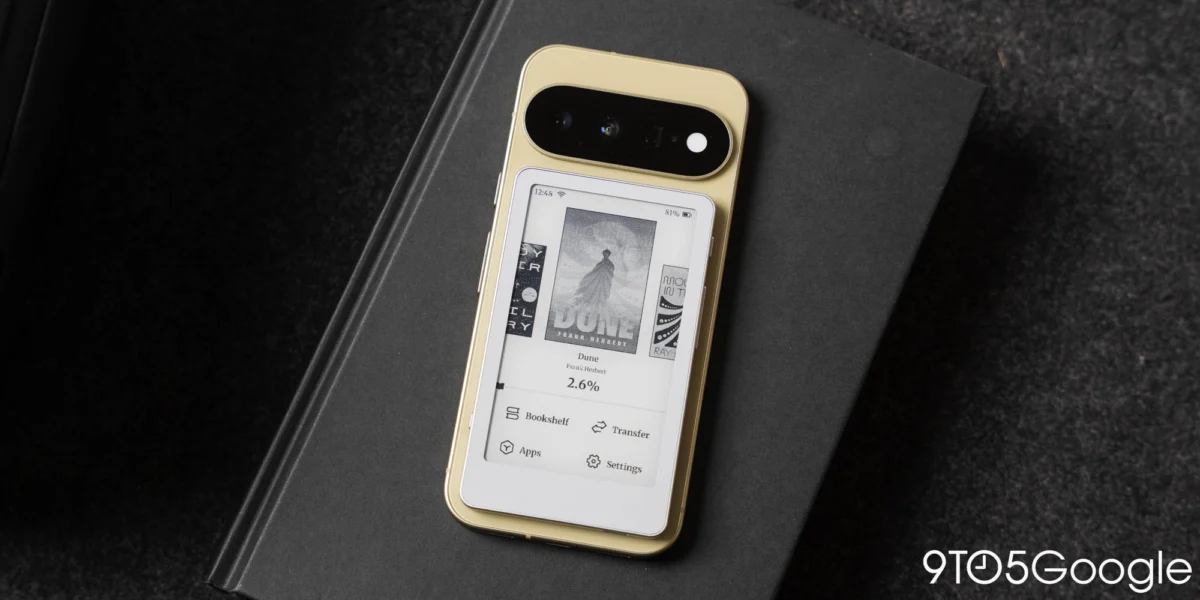
The Boox Picco enters the market as a hybrid solution. Measuring just 4.15 inches in height with a 3.97-inch display, it is designed to exist in the peripheral space of a user’s mobile ecosystem. Its dimensions are comparable to common magnetic smartphone accessories, such as MagSafe wallets or Qi2 charging packs. This intentional sizing allows the device to be carried alongside a primary smartphone, effectively offloading the reading experience from the phone’s high-power OLED screen to a low-power, eye-friendly E Ink panel.
Technical Specifications and Design Philosophy
Unlike its predecessors in the Boox catalog, the Picco does not run the Android operating system. This is a critical design choice that separates the device from the broader "E Ink tablet" category. By eschewing Android, the manufacturer has eliminated the overhead of background processes, third-party app stores, and the potential for software bloat.

Instead, the Picco functions as a dedicated repository for EPUB files. Users manage their library via a companion application installed on their primary smartphone. A secure, direct-transfer protocol allows for the movement of files between the phone and the Picco. This closed-loop system ensures that the device remains focused on its singular objective: reading.
The hardware includes a physical switch to control the integrated front light—a feature that provides a tactile, reliable alternative to the software-based brightness sliders found on most modern mobile devices. Additionally, the side-mounted buttons are mapped specifically for page-turning, ensuring that the user’s reading flow remains uninterrupted by screen interactions.

Chronology of the Product Launch
The development of the Boox Picco follows a series of shifts within the portable electronics industry toward "digital detox" hardware. The device was first previewed to the public at the IFA Berlin trade show in late 2026. During the exhibition, industry observers noted the company’s intent to explore the sub-4-inch display market.
Following the initial unveiling, the company initiated a phased pre-order rollout throughout the final quarter of 2026. The official market release in November 2026 marked a departure from the company’s usual focus on high-performance productivity tablets, signaling a pivot toward lifestyle-oriented accessories. The move has been viewed by analysts as a test case for whether consumers are willing to return to single-purpose hardware in an era of hyper-connected, multi-functional devices.

Implications of the "Companion Device" Model
The integration of the Picco into a user’s mobile workflow—specifically via its magnetic attachment capabilities—highlights a broader trend in mobile technology: the "stackable" hardware philosophy. By utilizing Qi2 and MagSafe-style magnetic arrays, the Picco can be mounted directly to the back of a standard slab-style smartphone.
However, this design also presents specific ergonomic challenges. Attaching a secondary device to a phone increases the overall thickness and weight of the user’s primary handset. For users of foldable devices, such as the Samsung Galaxy Z Fold 8, the physical geometry of the phone may not accommodate the Picco’s magnetic mounting as effectively as a standard flat-backed smartphone.

Despite these physical considerations, the value proposition remains the separation of concerns. By moving the reading experience to the Picco, the user gains a dedicated, high-contrast, glare-free environment that is immune to the distractions of social media, email, and messaging platforms that are inherently present on a smartphone.
Market Context and Consumer Reception
At its current price of $109, the Boox Picco occupies a competitive middle ground. While it is more expensive than some budget e-ink displays, it is significantly cheaper than flagship e-readers. The lack of app support is, for many, the primary hurdle to adoption. Without access to Kindle, Google Play Books, or Libby, users are restricted to their own local libraries of DRM-free EPUB files.

Market analysts suggest that the success of the Picco will depend on a specific demographic: power readers who already maintain personal archives of digital books and who are actively seeking ways to reduce their daily screen time. For these users, the device acts as a "digital companion" rather than a replacement for their smartphone or computer.
Furthermore, the battery efficiency of the Picco is a significant selling point. Given the device’s minimal hardware requirements and the inherent low-power nature of E Ink technology, it is capable of sustaining a full week of moderate reading on a single charge. This longevity, combined with the device’s ability to remain in a low-power standby state for extended periods, makes it an ideal candidate for long-term travel or emergency preparedness kits.

The Future of Minimalist Tech
The introduction of the Boox Picco suggests that we may be seeing the start of a "post-tablet" era, where users prefer to break their digital needs into smaller, specialized tools rather than relying on a single, all-encompassing device.
The decision to omit a control panel in favor of a gesture-based, minimalist interface reflects a design trend toward "calm technology." By stripping away the need to manage settings, notifications, and connectivity, the device allows the user to focus entirely on the text.

While it remains to be seen if this level of minimalism will appeal to the general consumer market, early feedback indicates a strong reception among those who feel overwhelmed by the current digital landscape. The Picco does not attempt to disrupt the smartphone market, nor does it attempt to compete with the high-end e-ink tablets used by academics and professionals. Instead, it carves out a unique space as a purposeful tool for leisure and mental clarity.
Final Analysis
The Boox Picco is a calculated risk in an industry that usually pushes for "more": more pixels, more apps, and more connectivity. By choosing "less," the device offers a refreshing, if highly specialized, experience. Its viability will ultimately be determined by the willingness of the reading public to manage their own digital files rather than relying on the convenience of cloud-based ecosystem-locked libraries.

For those who prioritize the aesthetic and functional simplicity of an e-reader, the Picco represents one of the most accessible and portable options currently available. As the market for digital wellness and distraction-free technology continues to grow, it is likely that other manufacturers will look to the Picco as a blueprint for how to integrate legacy reading experiences into the modern, mobile-first lifestyle. Whether it becomes a staple in the everyday carry (EDC) community or remains a niche curiosity will depend on the continued evolution of its companion software and the user base’s commitment to maintaining a personal library of digital literature.