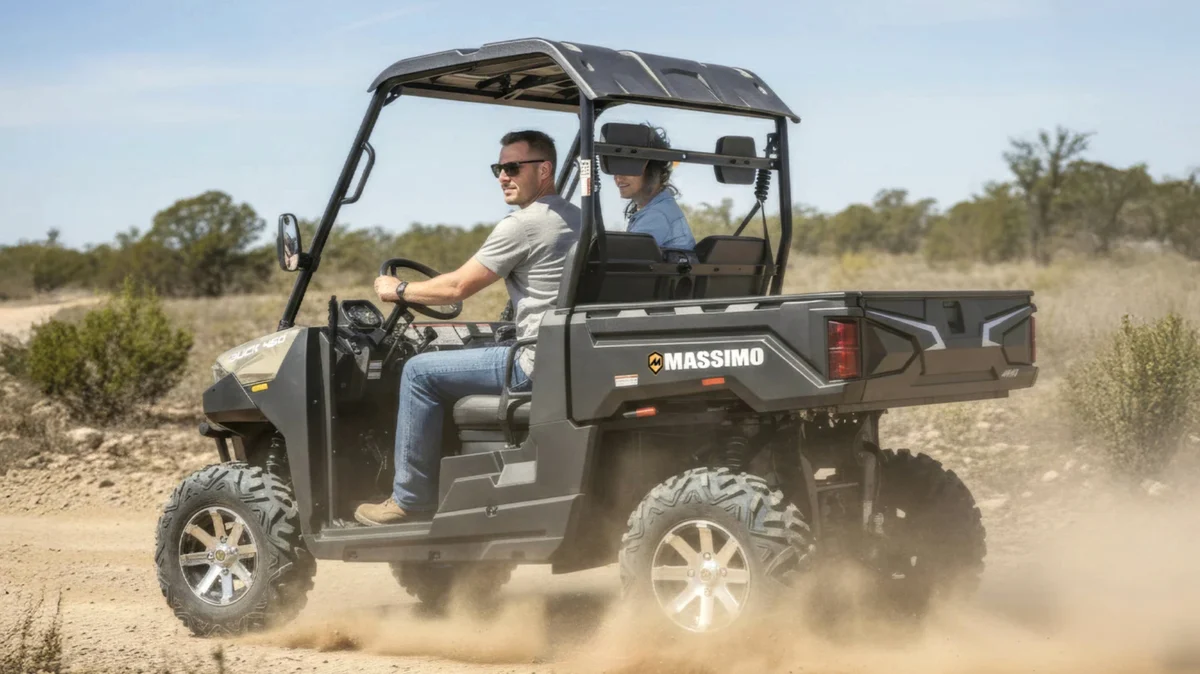
Since its inception in 2009, the Garland, Texas-based Massimo Motor has navigated a strategic path through the highly competitive powersports and utility vehicle market. By positioning itself as a value-oriented manufacturer, the company has successfully expanded its footprint from specialized dealerships to the aisles of national retailers such as Walmart and Tractor Supply Company. This shift in distribution strategy has democratized access to off-road vehicles, ranging from entry-level mini-motorcycles and go-karts to heavy-duty UTVs and golf carts. However, as the brand’s market penetration grows, so does the demand for a secondary ecosystem of products designed to augment the capability, utility, and longevity of these machines.
The Evolution of the Massimo Ecosystem
The rise of Massimo Motor mirrors a broader trend in the automotive and powersports sector: the "platform-plus-accessory" business model. When the company was founded nearly two decades ago, the primary objective was to offer affordable, reliable transportation for agricultural and recreational use. Today, the brand’s product portfolio reflects a sophisticated understanding of its consumer base—ranchers, weekend adventurers, and small-property owners who require versatility.
As Massimo transitioned into major retail outlets, the company recognized that the initial vehicle purchase was only the beginning of the consumer journey. The introduction of an expansive accessory catalog is a logical evolution, allowing owners to customize their vehicles to meet specific environmental challenges. This strategy serves two purposes: it increases the total lifetime value of each customer and ensures that the brand remains the primary point of contact for ongoing maintenance and customization needs.
Climate-Responsive Engineering: The 50L Electric E-Kooler
One of the most notable examples of Massimo’s pivot toward lifestyle-integrated hardware is its line of electric cooling solutions. Recognizing that their primary market—Texas—is characterized by extreme heat, the company has bypassed traditional passive ice-chest designs in favor of active, compressor-based refrigeration.
The Massimo 50L Electric E-Kooler, retailing at $389, represents a bridge between high-end, adventure-grade cooling and accessible consumer technology. Unlike traditional coolers that rely on thermal mass and ice replenishment, this unit utilizes an electric compressor capable of maintaining temperatures ranging from -4 degrees Fahrenheit to 68 degrees Fahrenheit. This functionality provides a critical advantage for long-term field work or extended off-grid stays, where access to fresh ice is inconsistent. By integrating support for both DC vehicle outlets and portable power stations, the device acknowledges the nomadic nature of the modern UTV user, effectively turning a utility vehicle into a mobile base of operations.
Operational Efficiency: The Accessory Tool Rack
For users who utilize Massimo T-Boss models for agricultural tasks, space management is a perennial challenge. The standard bed of a UTV, while functional, is often insufficient for transporting long-handled tools such as shovels, hoes, and picks without risking damage to the vehicle or the equipment itself.
The introduction of the Accessory Tool Rack for the T-Boss 550, 560, 750, and 760 series reflects a direct response to field-use feedback. By mounting the rack to the rear roll-cage poles—the structural members that define the cab—Massimo engineers have optimized the vehicle’s vertical space. The modular nature of the system, with brackets sold separately, allows for a high degree of customization. This specific accessory demonstrates how the company addresses "utility friction," where the design of the vehicle occasionally creates logistical hurdles for the end user. At a price point of approximately $195 for the primary fixture, it represents a cost-effective modification that significantly enhances the vehicle’s role as a work tool.
Asset Protection: Garage Floor Management
As the ownership of UTVs has shifted from purely commercial, outdoor-storage-based scenarios to residential garage storage, the requirement for floor protection has increased. A UTV returning from a job site is typically covered in debris, mud, and potentially harmful fluids. The Dual Layer Carpeted Garage Floor Mats are the company’s answer to this maintenance issue.
Available in three distinct sizes—4×6, 6×8, and 6×10 feet—these mats serve as a barrier between the vehicle and the flooring of the user’s home. Beyond simply catching dirt, the mats serve as a psychological and organizational anchor in the garage. By providing a dedicated "landing zone" for the machine, owners are more likely to adhere to cleaning and maintenance schedules. The price range, spanning from $79.99 to $159.99, is positioned as a preventative maintenance expense, costing far less than the potential remediation of stained concrete or epoxy garage flooring.
Environmental Shielding: Windshields and Cab Enclosures
A common critique of entry-level UTVs is the lack of cabin protection, which exposes operators to the elements and trail debris. Massimo has addressed this by offering a robust catalog of modular windshields, hard doors, and soft cab enclosures.
The financial implications of these additions are significant; while a base model vehicle may be priced aggressively to attract a buyer, the eventual addition of a full "hard" cabin kit—often costing upwards of $1,399—brings the total investment closer to that of premium-tier manufacturers. However, the modularity is a strategic advantage. It allows the consumer to defer the cost of cabin comfort until the need becomes apparent. For instance, the inclusion of a 3,000-pound winch in the Buck 450 accessory kit demonstrates a holistic approach to vehicle capability, bundling recovery tools with environmental protection to create a truly "trail-ready" machine.
Powering the Off-Grid Experience
Perhaps the most significant indicator of Massimo’s brand maturation is its entry into the portable power station market. The 2,000-watt power station, priced at $1,699.99, signifies an attempt to capture the growing "glamping" and mobile-work demographic.
This device is not merely an accessory for the UTV; it is a standalone product that competes with dedicated power-tech manufacturers. By utilizing lithium-ion battery technology and a pure sine wave inverter, the station is capable of powering sensitive electronics, power tools, and appliances. While the price point is premium compared to some generic alternatives, the integration with Massimo’s existing ecosystem—such as the ability to recharge via a vehicle’s DC outlet—provides a seamless experience for the user. It highlights the company’s ambition to be a holistic lifestyle brand rather than just an equipment manufacturer.
Market Implications and Future Outlook
The shift toward an accessory-heavy business model is a calculated response to the saturation of the UTV market. As the performance ceiling of these vehicles reaches a point of diminishing returns for the average consumer, differentiation is increasingly found in the "lifestyle" experience. Massimo Motor is effectively moving toward a "total vehicle solution" approach.
The fact that these accessories are increasingly available through the same retail channels as the vehicles themselves creates a high barrier to entry for smaller, third-party aftermarket companies. By curating a catalog that covers everything from cargo management to mobile power and garage maintenance, Massimo is capturing the full lifecycle of the consumer’s investment.
Moving forward, the primary challenge for Massimo Motor will be maintaining quality control across such a diverse range of products. As the brand continues to scale, its ability to integrate these accessories into the initial purchase experience—perhaps through bundled financing or dealership installation services—will likely determine its long-term success. For the consumer, this consolidation of options simplifies the purchasing process but necessitates a thorough evaluation of long-term needs, as the cost of these "essential" upgrades can substantially alter the total cost of ownership. The current trajectory suggests that Massimo will continue to blur the lines between agricultural utility and recreational lifestyle, reinforcing its position as a major player in the American powersports landscape.